Sound Association Phonics Worksheets for Ages 3-6 - Page 2
26 filtered results
-
From - To
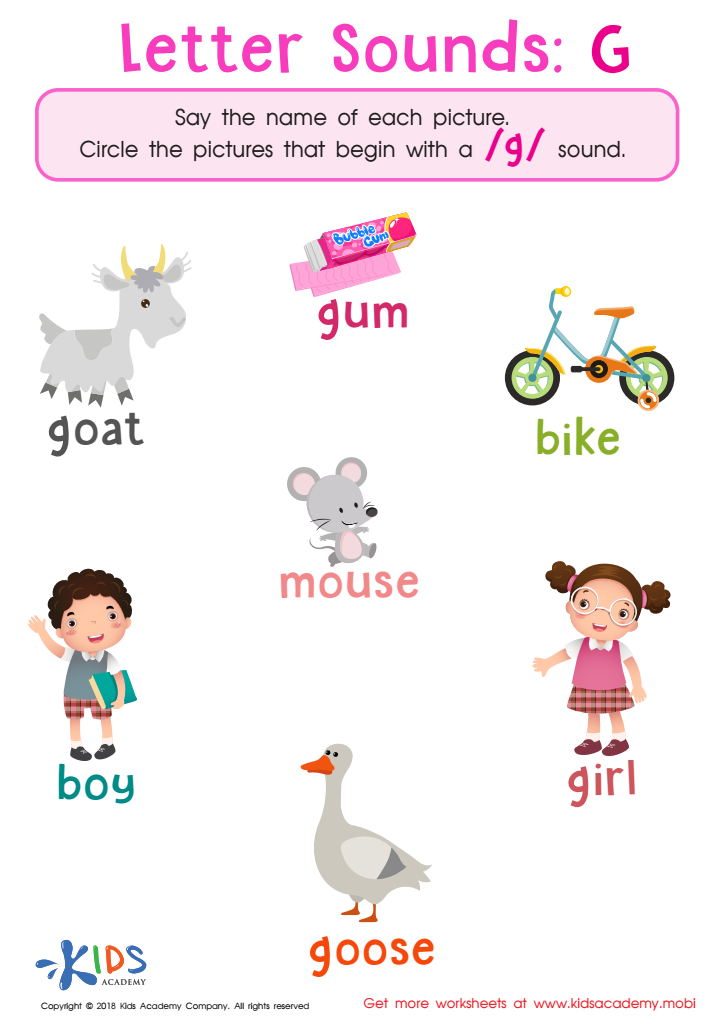
Letter G Sounds Worksheet
 Assign to My Students
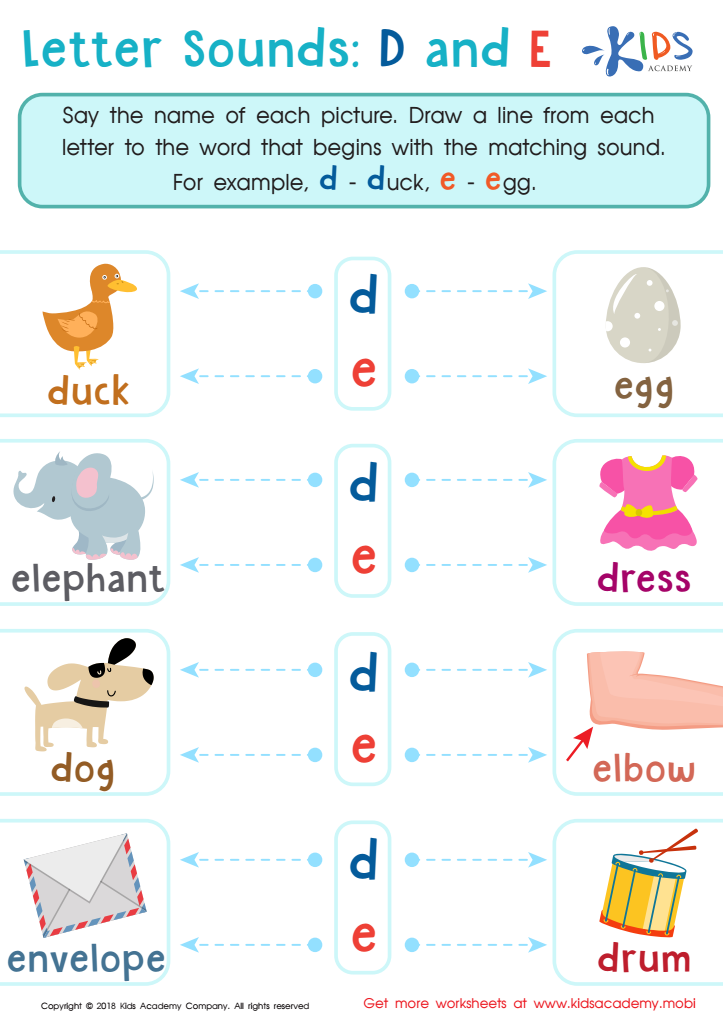
Letter D and E Sounds Worksheet








Sound association phonics is critical for children ages 3-6 as it forms the foundation of literacy skills. During these formative years, children are developing basic language skills crucial for effective communication. By focusing on sound association, parents and teachers can help children recognize the relationships between sounds and letters, which is essential for developing reading and writing abilities.
Caring about phonics instruction means understanding its impact on a child's overall academic success. Early mastery of phonics enables children to decode new words independently, fostering a love for reading and boosting confidence in their abilities. Moreover, sound association activities can enhance listening skills, auditory discrimination, and enhance vocabulary, all of which are vital for language development.
Additionally, early phonics intervention can support children struggling with literacy, ensuring they don't fall behind. In a classroom setting, structured phonics programs create a shared learning experience, promoting collaboration among peers and facilitating language play.
Ultimately, investing in sound association phonics empowers children not only to read fluently but also to develop critical thinking and problem-solving skills. Ultimately, a strong literacy foundation nurtures lifelong learners, preparing them for future academic challenges. Parents and teachers play a pivotal role in this essential phase of development.







