Phonics practice Short Vowels Worksheets for Ages 3-6
3 filtered results
-
From - To
Enhance your child's reading skills with our Phonics Practice Short Vowels Worksheets for ages 3-6. Designed to make learning fun and effective, these worksheets focus on short vowel sounds, an essential element of early literacy. Through engaging exercises, children can practice matching, tracing, and reading short vowel sounds. Whether at home or in preschool, our worksheets support foundational phonics skills, preparing young learners for future reading success. Boost your child's confidence and love for reading with our expertly crafted worksheets. Start your child's phonics journey today—download our short vowels worksheets now!
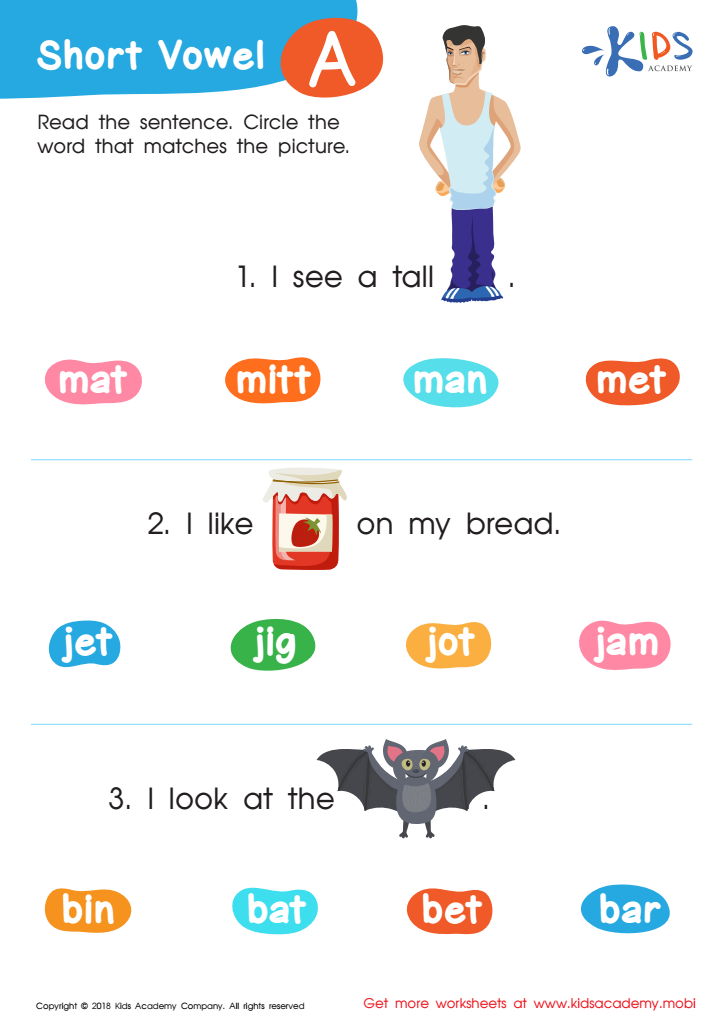
Short Vowel /a/ Worksheet
 Assign to My Students
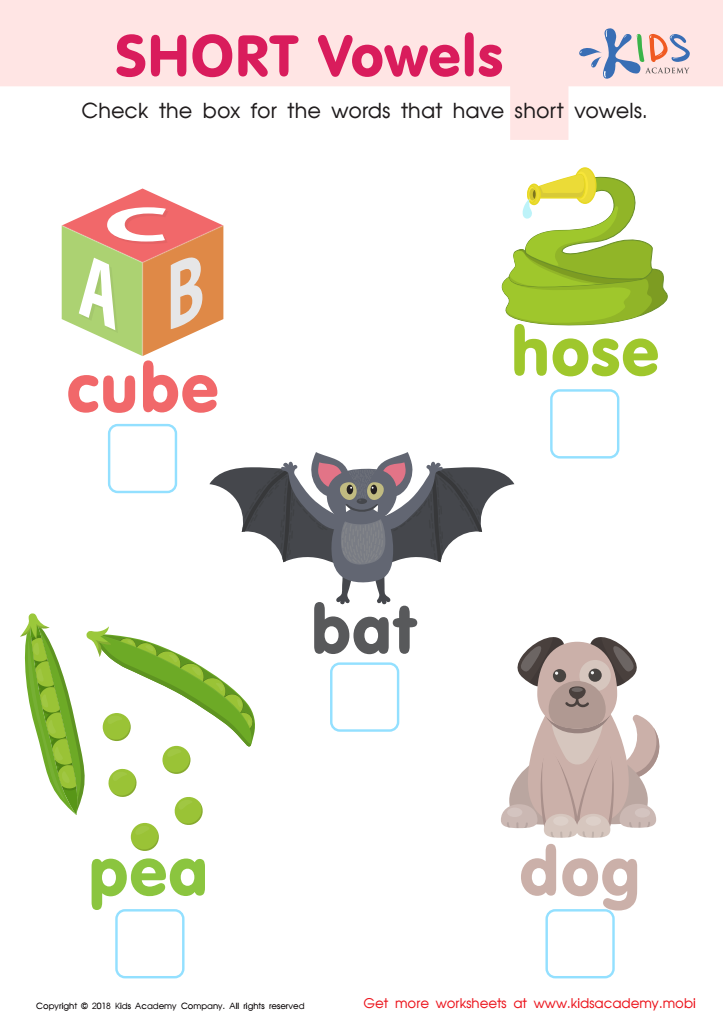
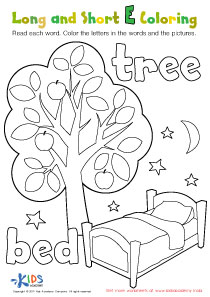
short vowels Worksheet
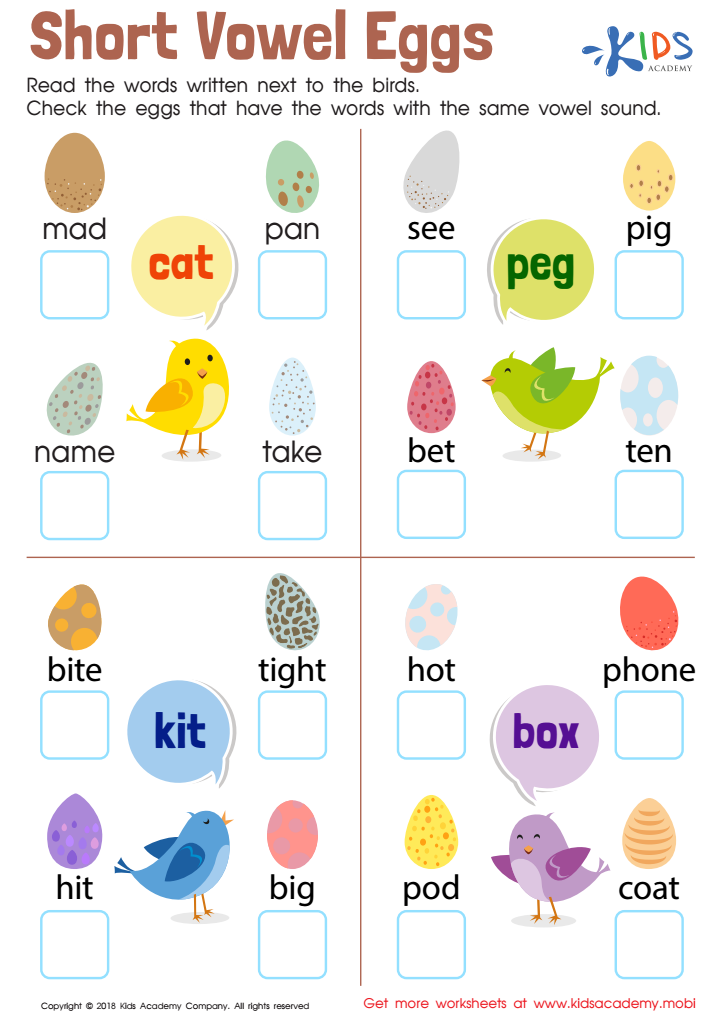
Short Vowel Eggs Worksheet



Phonics practice, particularly focusing on short vowels, is crucial for children aged 3-6 as it lays the foundation for proficient reading and writing skills. At this developmental stage, children are highly receptive to language acquisition and phonemic awareness, which is the understanding that words are made up of smaller sounds called phonemes. Short vowels are among the basic building blocks of this understanding.
Providing early practice in short vowels helps children recognize patterns in sounds, leading to improved decoding skills — the ability to sound out words. This, in turn, enhances reading fluency, which is essential for comprehension. If children struggle with this foundational aspect, they may face difficulties in more complex reading tasks later on.
For teachers and parents, investing time in phonics practice promotes a child’s confidence in their reading abilities. Activities like singing vowel songs, playing matching games, and reading aloud short vowel stories can make learning engaging and enjoyable. Additionally, reading proficiency is a critical factor in academic success across all subjects, as it facilitates independent learning.
Ultimately, consistent phonics practice strengthens neural connections related to language processing, setting the stage for lifelong literacy and a love for reading. For children, this early intervention can lead to academic success, better self-esteem, and a greater overall enjoyment of learning.