Filters

28 filtered results

Clear all filters
Favorites
With answer key
Interactive

28 filtered results

Difficulty Level

Grade


Check out this FREE Trial Lesson on Tracing Letters for age 3-6!

Tracing Uppercase Letters S-Z

Favorites
With answer key
Interactive
  • 3-6
  • Alphabet Recognition
  • Tracing Letters
Uppercase Letters Y Z Worksheet

Uppercase Letters Y Z Worksheet

Help your child learn their ABCs with this fun tracing activity! They must trace and write Y and Z in uppercase form, starting from the red dot. Kids will love the fun images for extra engagement. Guiding their hand carefully will help them practice and perfect their writing skills.
Uppercase Letters Y Z Worksheet
Worksheet
Lowercase Letters g h i Worksheet

Lowercase Letters g h i Worksheet

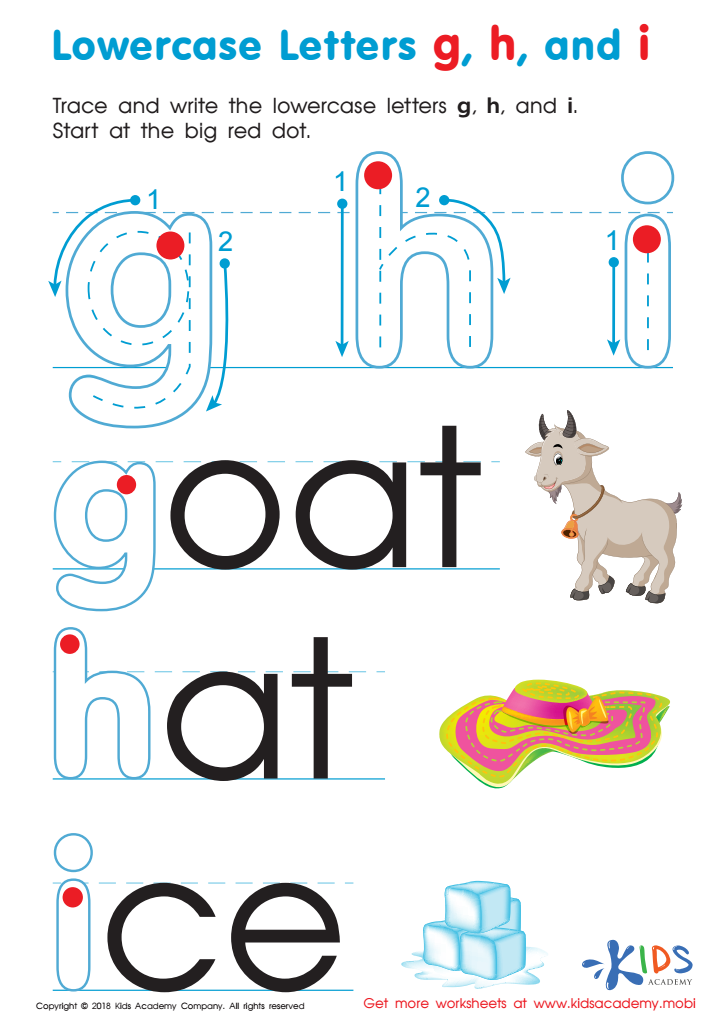
Learning is fun for your youngster with color and an enjoyable exercise. Help them build their understanding of the alphabet by starting at the big red dot drawn on each letter and carefully following the dotted lines to draw g, h, and i.
Lowercase Letters g h i Worksheet
Worksheet
Letter L and P Tracing Worksheet Preview

Letter L and P Tracing Worksheet

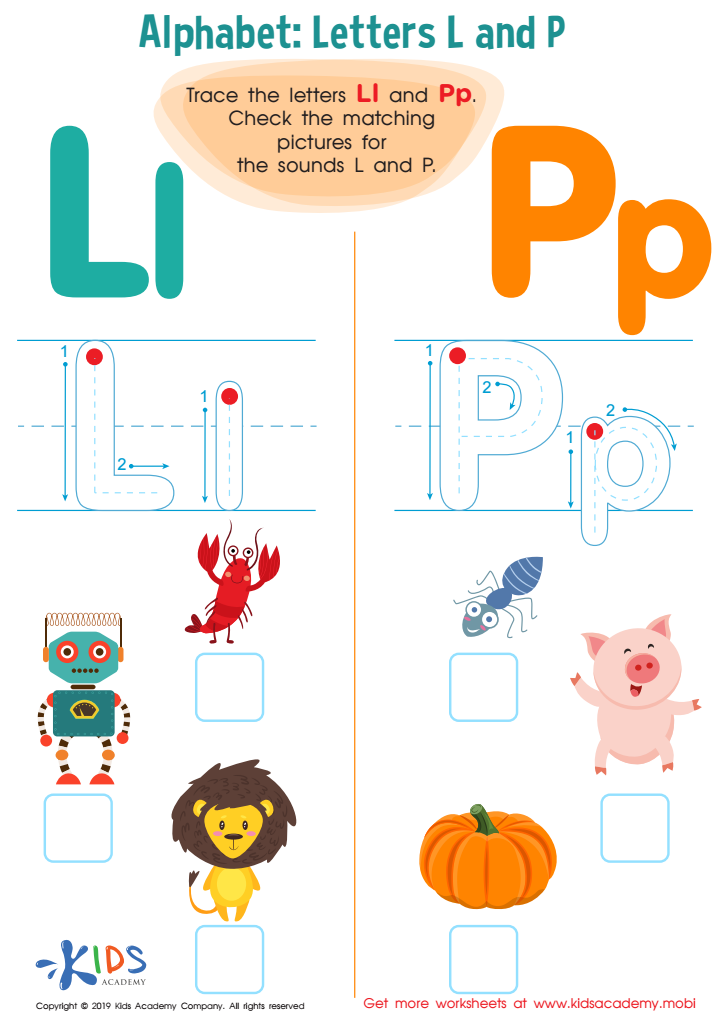
This traceable worksheet can motivate your students to learn and practice core skills. They'll trace the letters 'L' and 'P' and identify the pictures next to them. With this exercise, they'll unlock their learning abilities and excel in the subject!
Letter L and P Tracing Worksheet
Worksheet
Lowercase Letters a b c Worksheet


Lowercase Letters a b c Worksheet

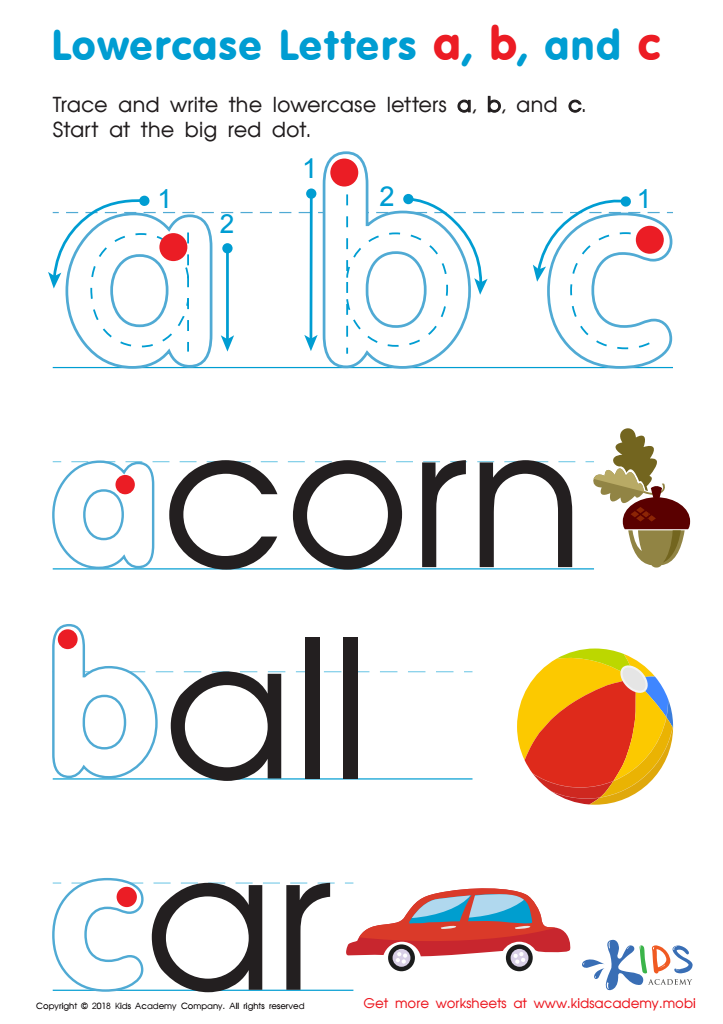
Help your child trace and write the lowercase letters of the alphabet with this fun worksheet. Start by following the arrows and directions from the red dot, and watch them improve their writing skills! Vibrant illustrations make it easy and enjoyable.
Lowercase Letters a b c Worksheet

Worksheet


Alphabet recognition and tracing letters are critical foundational skills for children aged 3-6, laying the groundwork for literacy development. At this age, children are incredibly receptive to learning new concepts, making it an ideal time for them to familiarize themselves with letters, sounds, and their shapes. Parents and teachers should care about these activities because they enhance a child's ability to read and write, which are essential skills for academic success.

Tracing helps develop fine motor skills, hand-eye coordination, and muscle memory, allowing children to gain confidence as they practice writing. Furthermore, recognizing letters assists in phonics understanding, helping them connect sounds to visual symbols. This stage is also important for developing cognitive skills, as children learn to differentiate letters and understand their functions in words.

Encouraging letter tracing also fosters a love for writing, as children begin creating their own letters and words. Involving parents in this process can create a supportive learning environment, strengthening the bond between parent and child. Overall, focusing on alphabet recognition and tracing lays the essential groundwork for literacy, contributing to a child’s future academic and social success.