
Letter-sound association Tracing Letters Worksheets for Ages 3-6
5 filtered results
Difficulty Level
Grade
Age
-
From - To
Subject
Activity
Standards
Enhance your child's literacy skills with our engaging Letter-Sound Association Tracing Letters Worksheets, designed specifically for ages 3-6! These worksheets not only promote letter tracing but also reinforce essential phonetic connections, making learning fun and effective. Your little ones will enjoy tracing letters while discovering the sounds they make, helping solidify foundational reading skills. With captivating illustrations and easy-to-follow activities, these worksheets keep children motivated and eager to learn. Perfect for homeschooling, preschool, or supplementary learning at home, our resources provide a vibrant, interactive way to introduce letters and sounds. Start building a strong literacy foundation today!
Favorites
With answer key
Interactive
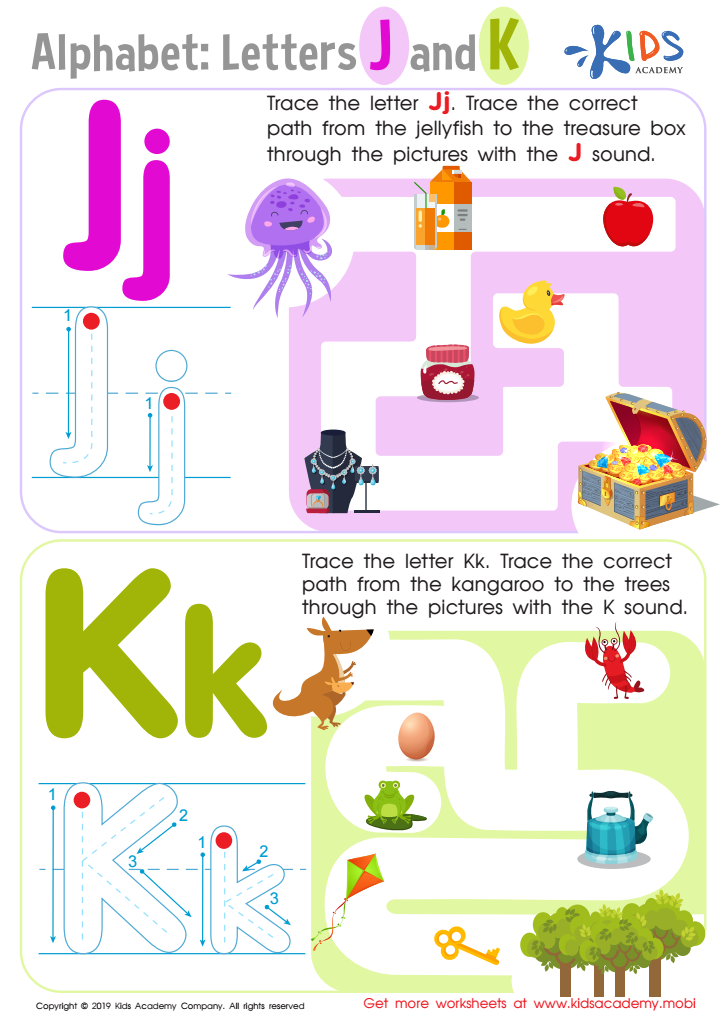
Letters J and K Tracing Worksheet
Tracing the letters «J» and «K» is the first step. Help the jellyfish find a path to the treasure chest with pictures of the «J» sound, and assist the kangaroo in finding a path to the trees with pics of «K». Fun, educational and enjoyable for children!
 Assign to My Students
Letters J and K Tracing Worksheet
Worksheet
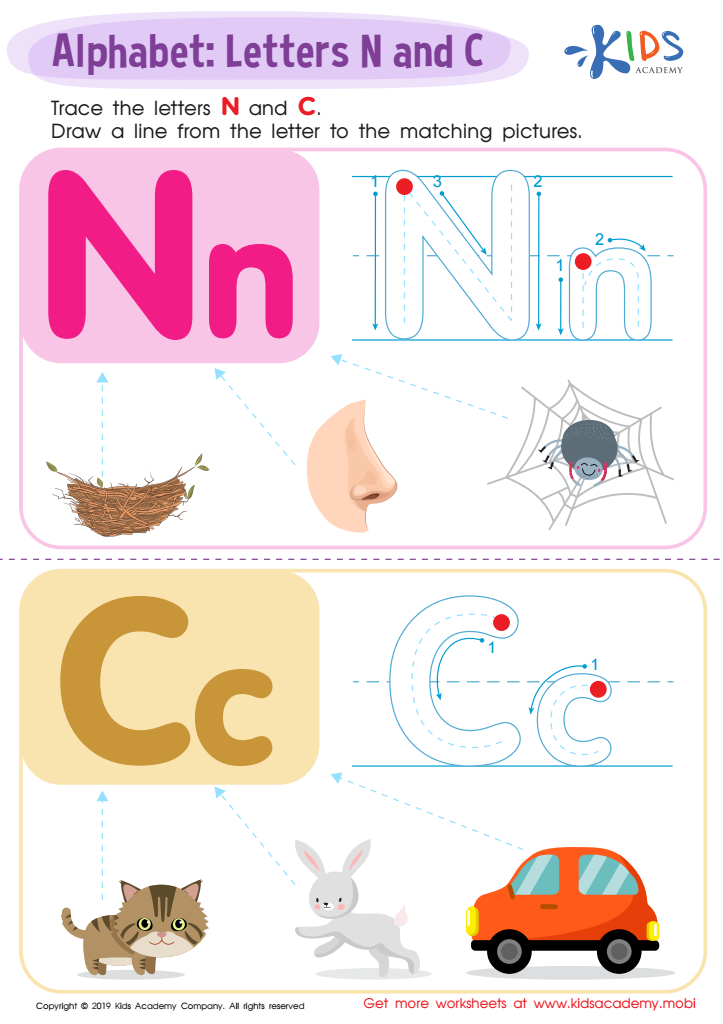
Letter N and C Tracing Worksheet
Kids can trace the letters N and C, then draw a line to the words starting with each letter. This worksheet helps them practice letter writing, distinguish capital and lowercase letters, and match pictures with the right letter. It also teaches essential skills for learning letters efficiently.
Letter N and C Tracing Worksheet
Worksheet
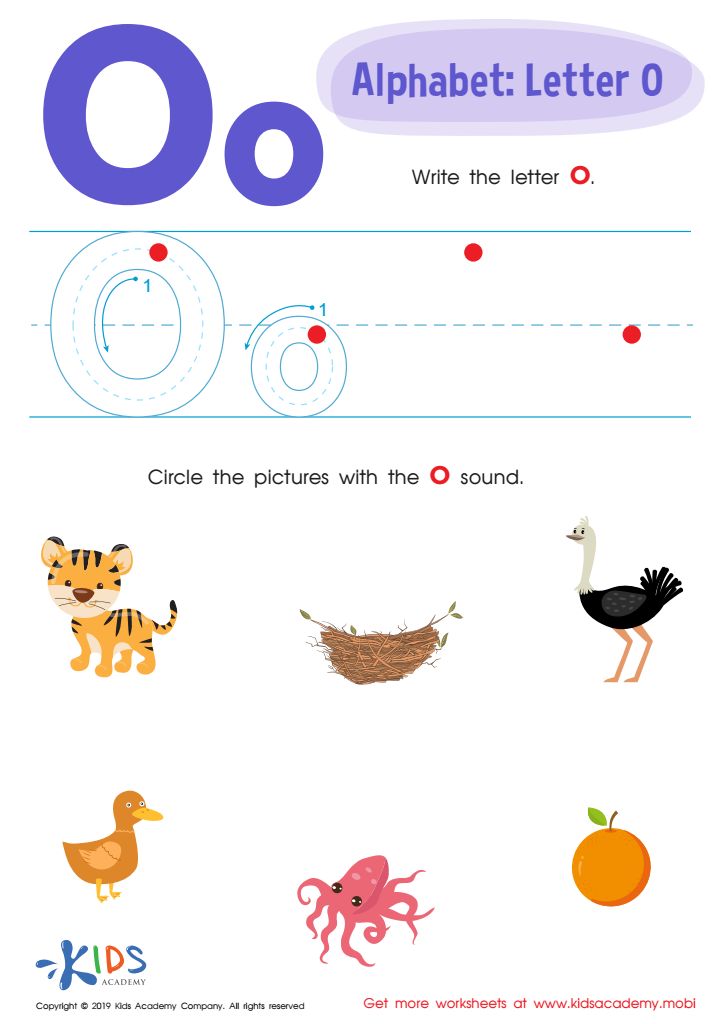
Letter O Tracing Worksheet
This worksheet gives kids the chance to trace the letter "O" while also circling pictures that have the "O" sound. Visual and hands-on learners will benefit from the visuals and tracing, helping them learn the letter "O" with ease. It's the perfect way to learn what "octopus" and "ostrich" start with!
Letter O Tracing Worksheet
Worksheet
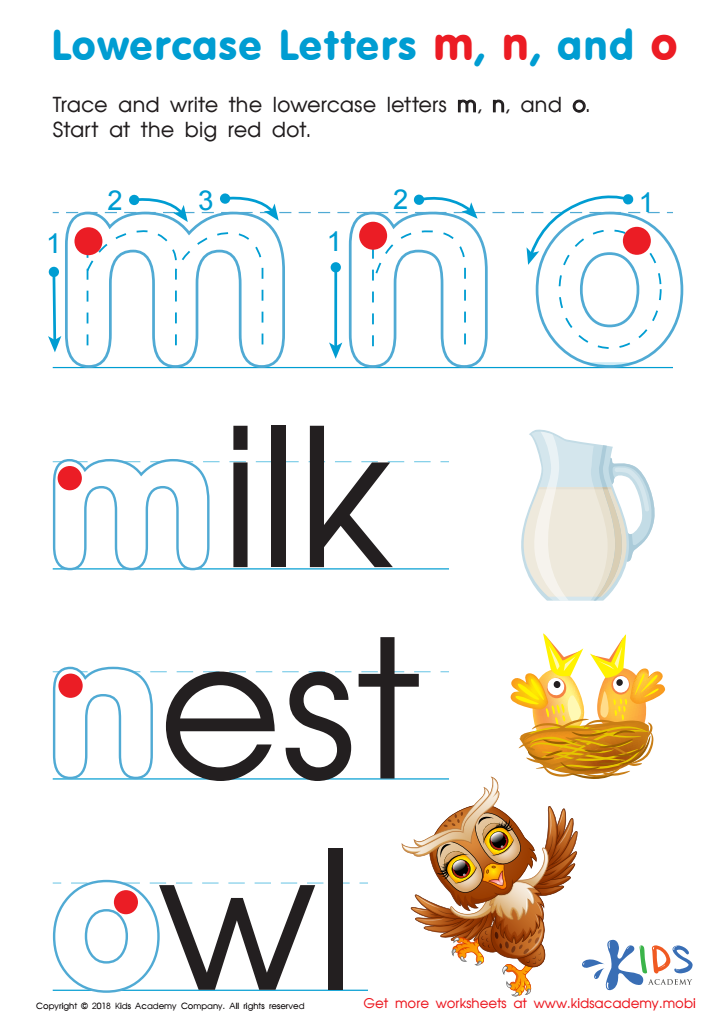
Lowercase Letters m n o Worksheet
Help your child learn the alphabet with letter tracing. Show them the difference between uppercase and lowercase letters by working through this free worksheet, tracing and writing lowercase m, n and o.
Lowercase Letters m n o Worksheet
Worksheet
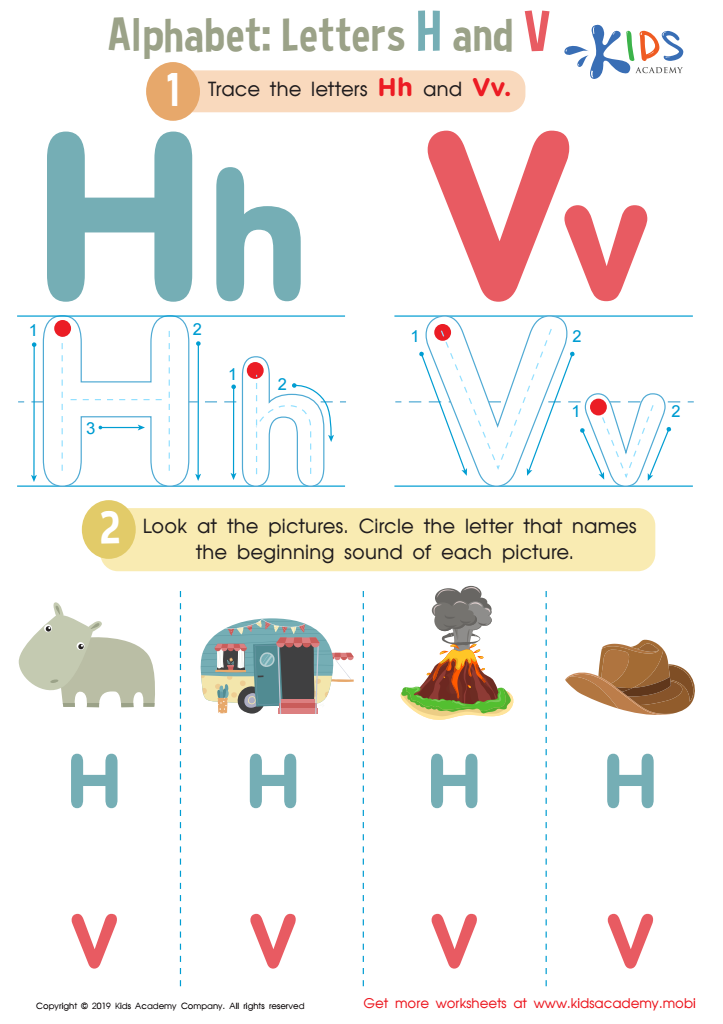
Letters H and V Tracing Worksheet
Kids will trace the letters H and V and circle the letter of the beginning sound of each picture. This helps strengthen writing and identify objects with their beginning sound, with two letter options to choose from.
Letters H and V Tracing Worksheet
Worksheet
Join Kids Academy for Free
Who is primarily going to use this learning content?







Letter-sound association and tracing letters are essential skills for children aged 3-6, serving as foundational building blocks for reading and writing. Understanding letter-sound relationships helps children decode words, fostering their ability to read fluently. When children learn to associate a letter with its sound, they begin to develop phonemic awareness, a critical component of literacy that impacts their future academic success.
Tracing letters enhances fine motor skills, hand-eye coordination, and muscle memory, paving the way for proficient writing. These skills are crucial as children transition to more complex tasks, such as forming sentences and expressing their thoughts in writing. Additionally, tracing letters while articulating their associated sounds promotes auditory processing and reinforces memory retention.
Furthermore, engaged parents and teachers can create a nurturing environment where children feel comfortable exploring literacy. By introducing fun tracing activities and incorporating play-based learning, adults can instill a love for reading and writing early on, setting an optimistic tone for lifelong learning. Thus, prioritizing letter-sound association and tracing in early childhood education not only cultivates essential literacy skills but also encourages curiosity and enthusiasm for learning, ultimately benefiting each child's developmental trajectory.








