Visual discrimination skills Upper & Lowercase Letters Worksheets for Ages 3-6
4 filtered results
-
From - To
Unlock your child's learning potential with our Visual Discrimination Skills Worksheets for Upper and Lowercase Letters, designed specifically for ages 3-6! These engaging and interactive activities help young learners develop essential visual discrimination skills by recognizing and differentiating between various letter forms. Each worksheet introduces playful illustrations and captivating exercises that ensure children are both entertained and educated. As they work through the activities, your little ones will not only enhance their letter recognition but also improve their overall cognitive abilities. Ideal for homeschooling or classroom settings, these worksheets provide a fun and effective way to master the alphabet. Start their learning journey today!

Find Uppercase Letters A, B, and C Worksheet
 Assign to My Students

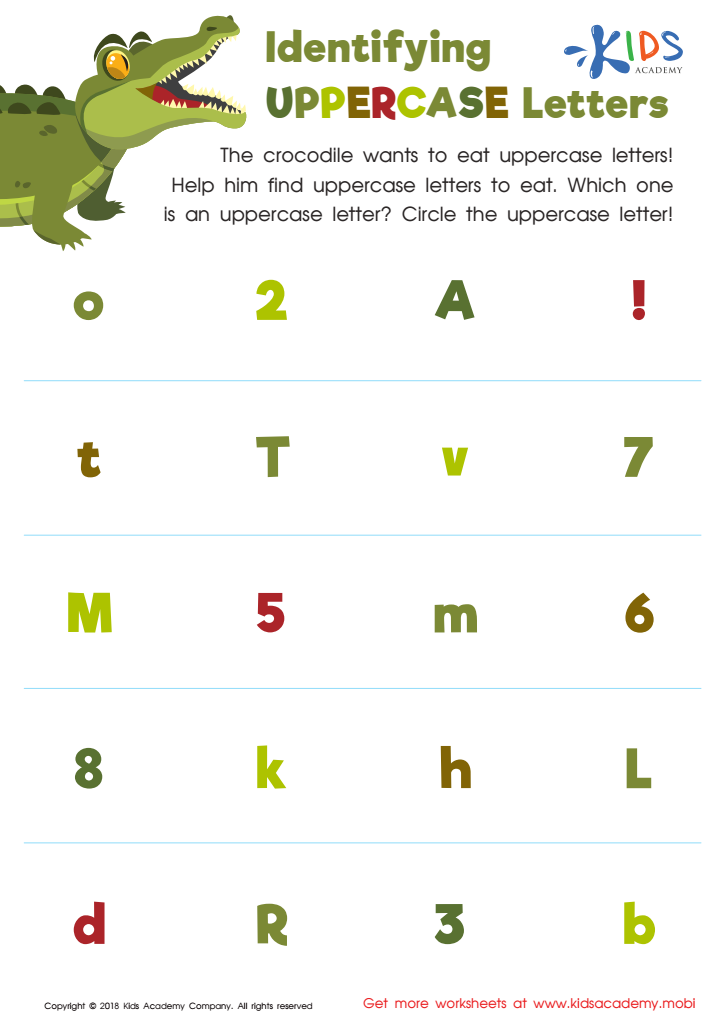
Identifying Uppercase Letters Worksheet

Find lowercase letters a b c Worksheet

Find Lowercase Letters v w x Worksheet






Visual discrimination skills are crucial for children ages 3-6, particularly in recognizing uppercase and lowercase letters, as this foundation supports their overall literacy development. These skills enable young learners to distinguish between similar shapes, letters, and symbols, ultimately fueling early reading and writing abilities. When children can easily differentiate between letters like ‘b’ and ‘d’ or ‘p’ and ‘q’, they develop stronger spelling and comprehension skills, which are vital for academic success.
Parents and teachers should care about fostering visual discrimination because it can significantly impact children's confidence and enthusiasm for learning. A solid grasp of letter recognition not only helps mitigate early reading difficulties but also enhances their participation in classroom activities, improving social engagement and motivation. Implementing engaging, playful activities such as letter matching games, sorting tasks, and alphabet puzzles can make learning enjoyable while developing these essential skills.
Thus, promoting visual discrimination in uppercase and lowercase letters during these formative years sets a strong foundation for future literacy development, paving the way for lifelong learning success. Ensuring children master these critical visual skills empowers them for meaningful interaction with text, fostering a love of reading and learning that lasts a lifetime.







