Spelling Skills Vowels Worksheets for Ages 3-6
3 filtered results
-
From - To
Discover our engaging "Spelling Skills Vowels Worksheets" designed for children aged 3-6! These fun, interactive worksheets are perfect for young learners to master their understanding of vowels while enhancing their spelling abilities. Each activity encourages children to identify, match, and use vowels in various words, fostering essential literacy skills in a playful way. Our vibrant designs and clear instructions keep kids motivated as they develop their language foundation. Ideal for both at-home learning and classroom settings, these printable resources are perfect for parents and teachers looking to make learning vowels entertaining and effective. Start your child's spelling journey today!
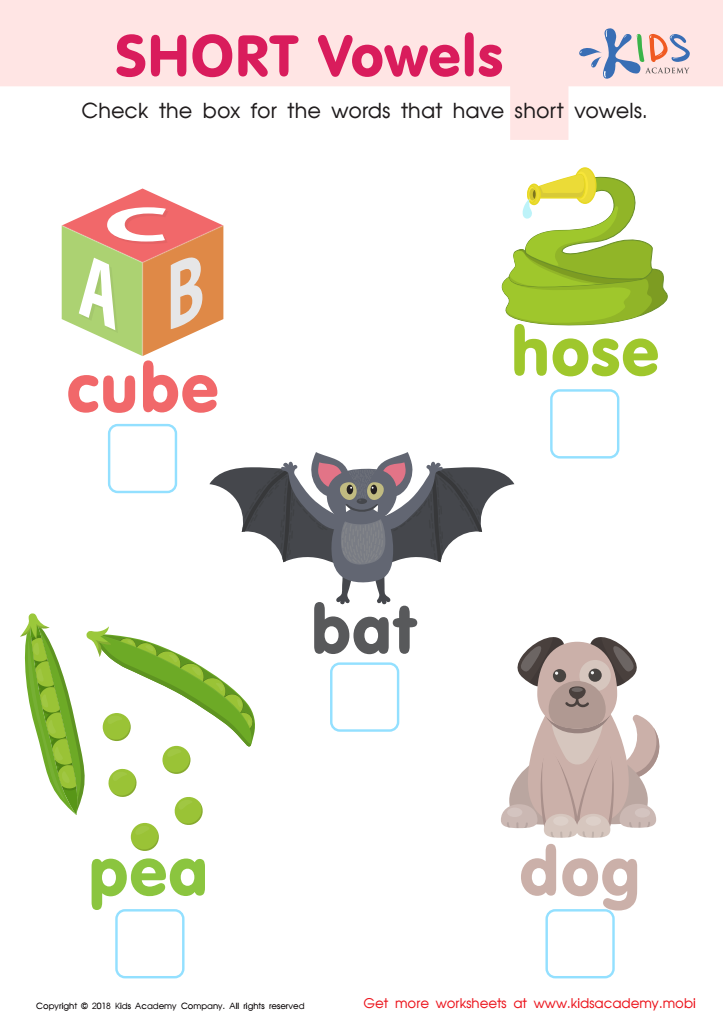
short vowels Worksheet
 Assign to My Students
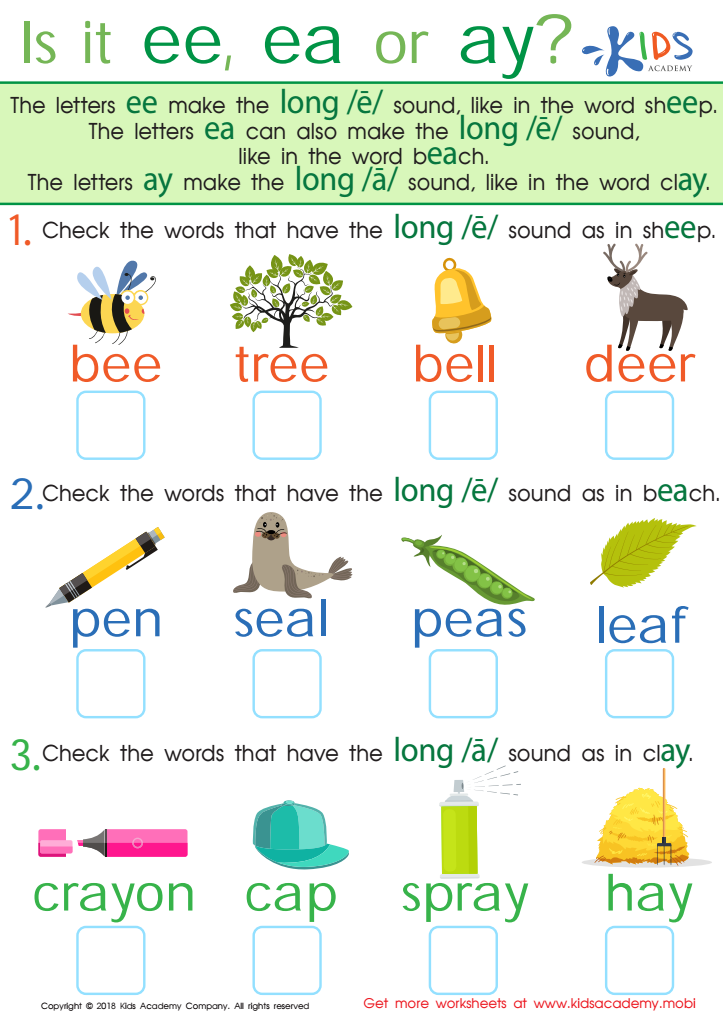
Is It EE, EA, or AY? Worksheet
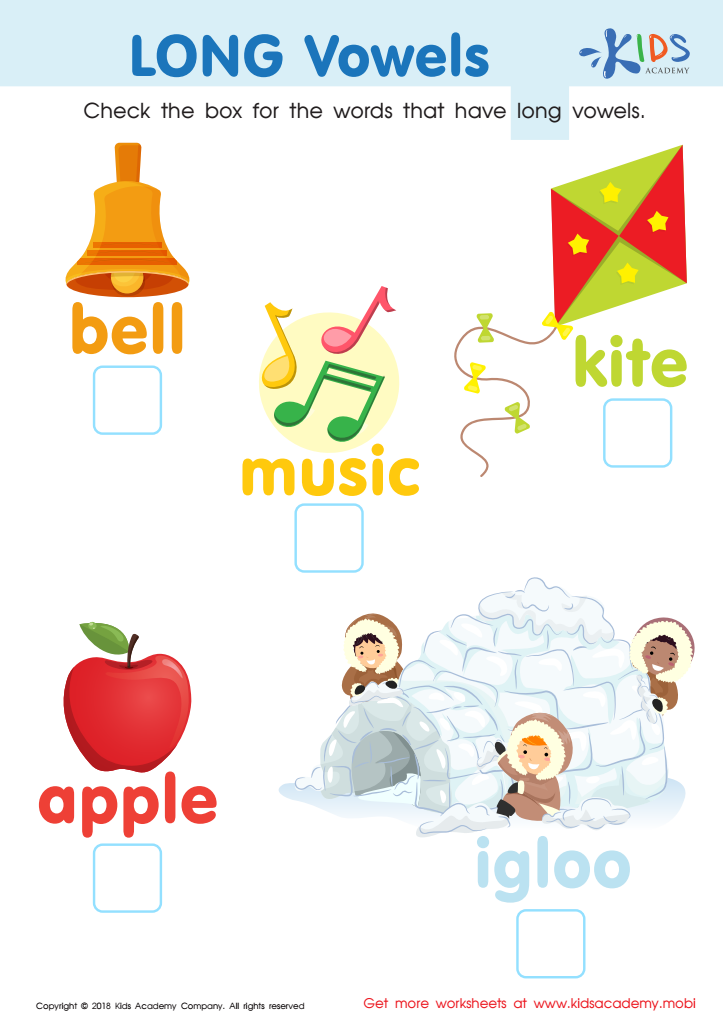
long vowels Worksheet





Spelling skills, particularly focusing on vowels, are crucial for children aged 3-6, as this early stage sets the foundation for literacy development. Understanding vowels contributes significantly to phonemic awareness, which is essential for reading and writing. When children grasp the concept of vowels, they can decode and spell words more effectively, leading to increased reading fluency and comprehension.
Additionally, many foundational literacy programs emphasize the importance of vowel recognition, as vowels are integral to word formation. Young children learn best through play and engaging activities; therefore, incorporating fun spelling exercises can enhance their motivation and interest in literacy. Parents and teachers can aid in this process by providing interactive games, songs, and rhymes that highlight vowels, making learning enjoyable.
Moreover, strong spelling skills foster confidence in children, enabling them to express themselves clearly in writing. As they develop these skills, they become better equipped to navigate their academic journeys. By prioritizing spelling skills and vowels, parents and teachers support not only literacy development but also overall cognitive and social-emotional growth, ensuring that children are prepared for the challenges of future schooling. Investing time in enhancing these skills at a young age can lead to long-term educational success.







