Enhancing problem-solving skills Chess Worksheets for Ages 3-6
3 filtered results
-
From - To
Unlock your child's potential with our "Enhancing Problem-Solving Skills: Chess Worksheets for Ages 3-6." These engaging, interactive worksheets introduce young learners to the fundamental concepts of chess while honing critical thinking and problem-solving abilities. Designed specifically for preschool to kindergarten-aged children, our resources use fun themes and colorful illustrations to maintain attention and encourage participation. Your child will practice strategy, decision-making, and logical reasoning through age-appropriate challenges. Whether you're a parent or educator, these worksheets provide a valuable tool for guiding early learners in developing essential skills that lay the foundation for future academic success. Start your chess adventure today!
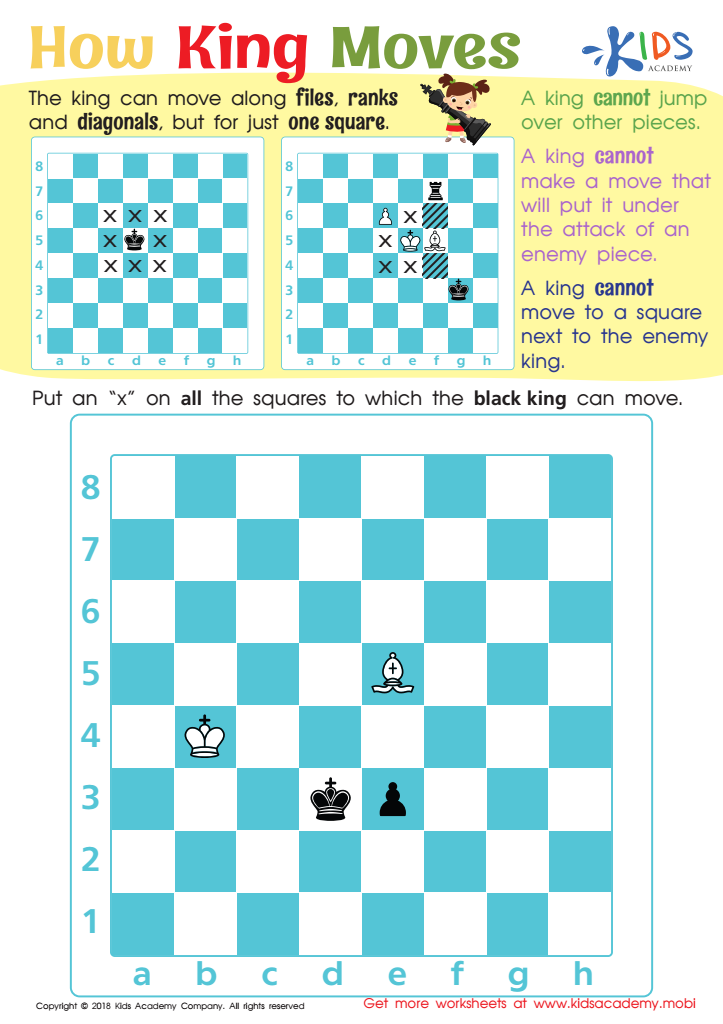
How King Moves Worksheet
 Assign to My Students
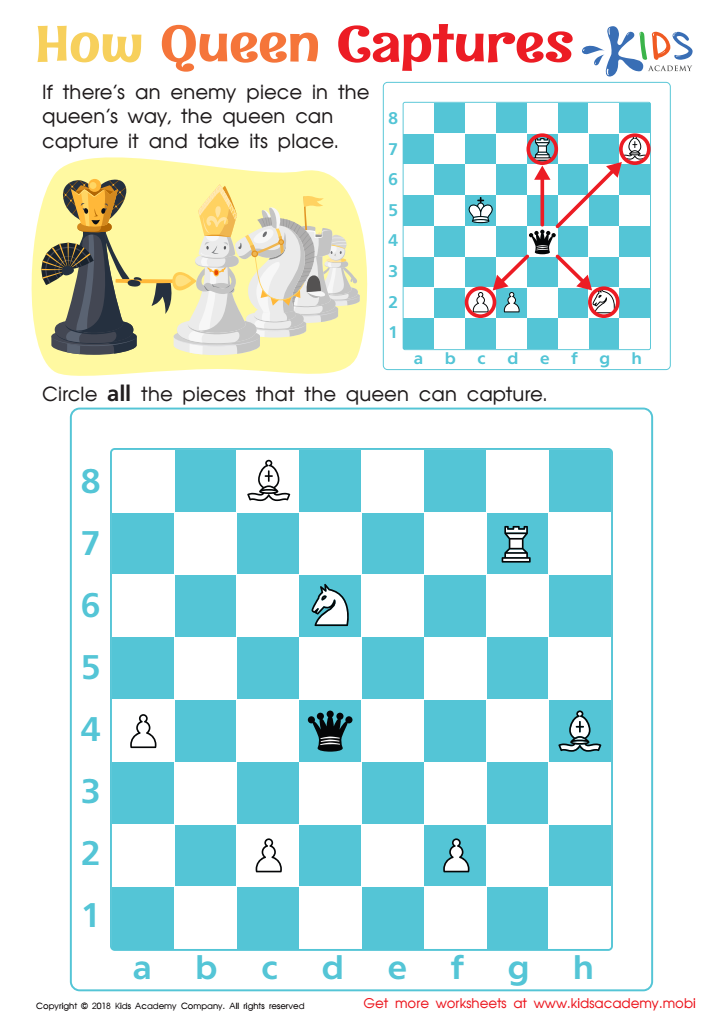
How Queen Captures Worksheet
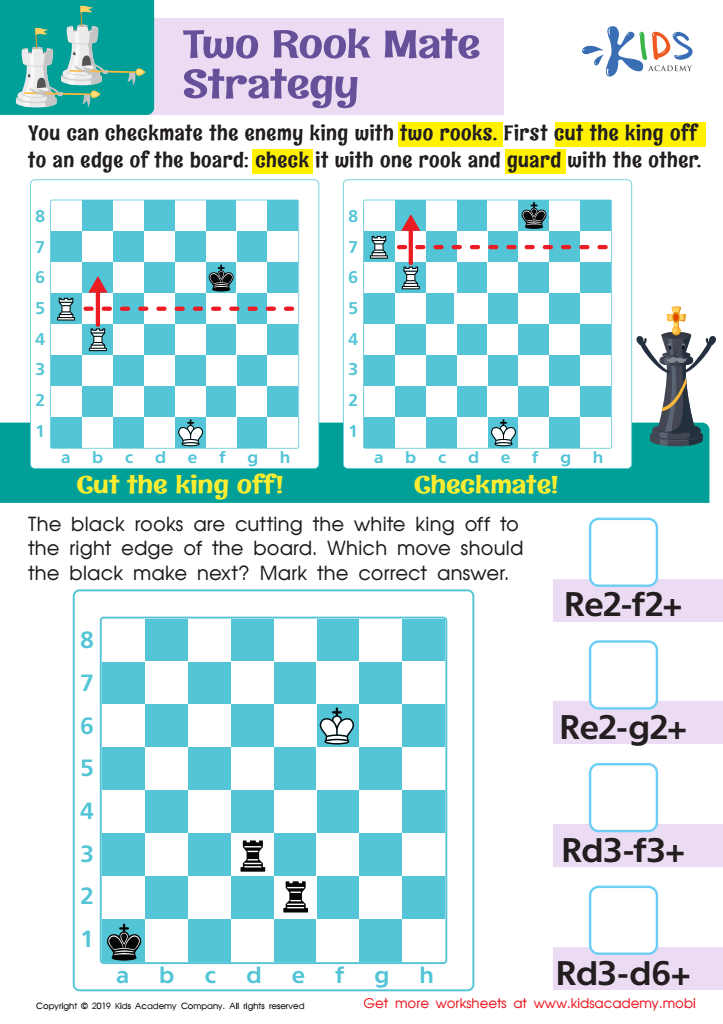
Two Rook Mate Strategy Worksheet






Enhancing problem-solving skills through chess for children aged 3-6 is essential as it lays the foundation for critical thinking and cognitive development. At this young age, children are naturally curious and eager to learn, making it an ideal time to introduce activities that foster strategic thinking. Chess teaches children how to analyze situations, make decisions, and anticipate consequences. This game encourages patience, as they learn to think several moves ahead and consider different outcomes.
Moreover, chess promotes social skills, as children often play in pairs or small groups, allowing them to learn cooperation, sportsmanship, and respect for others. By engaging with chess, young learners embody resilience, learning that mistakes are part of the learning process, which is a valuable life lesson.
Research indicates that children who engage in chess tend to excel in math and reading, as the game enhances logical reasoning skills and boosts concentration. Overall, introducing chess in early education not only equips children with essential problem-solving abilities but also nourishes their familial interactions and builds a love for learning. Parents and teachers should care, as these skills can significantly impact a child's academic journey and their capacity to tackle challenges throughout life.