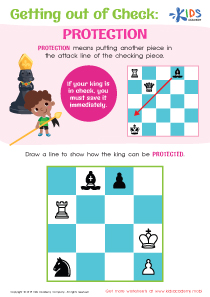
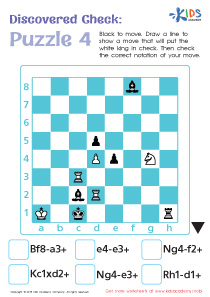
Logical thinking development Chess Worksheets for Ages 3-6
3 filtered results
Difficulty Level
Grade
Age
-
From - To
Subject
Activity
Standards
Unlock your child's potential with our "Logical Thinking Development Chess Worksheets for Ages 3-6"! Designed to make early learning fun, these engaging activities introduce young minds to chess, helping them develop crucial logical thinking and problem-solving skills from an early age. Each worksheet combines colorful illustrations and age-appropriate challenges to ignite curiosity and foster cognitive growth. Perfect for home or classroom use, our printable resources ensure children are having fun while learning. Set the foundation for future success by incorporating these thoughtfully crafted chess worksheets into your child's daily routine. Start their logical thinking journey today!
Favorites
With answer key
Interactive
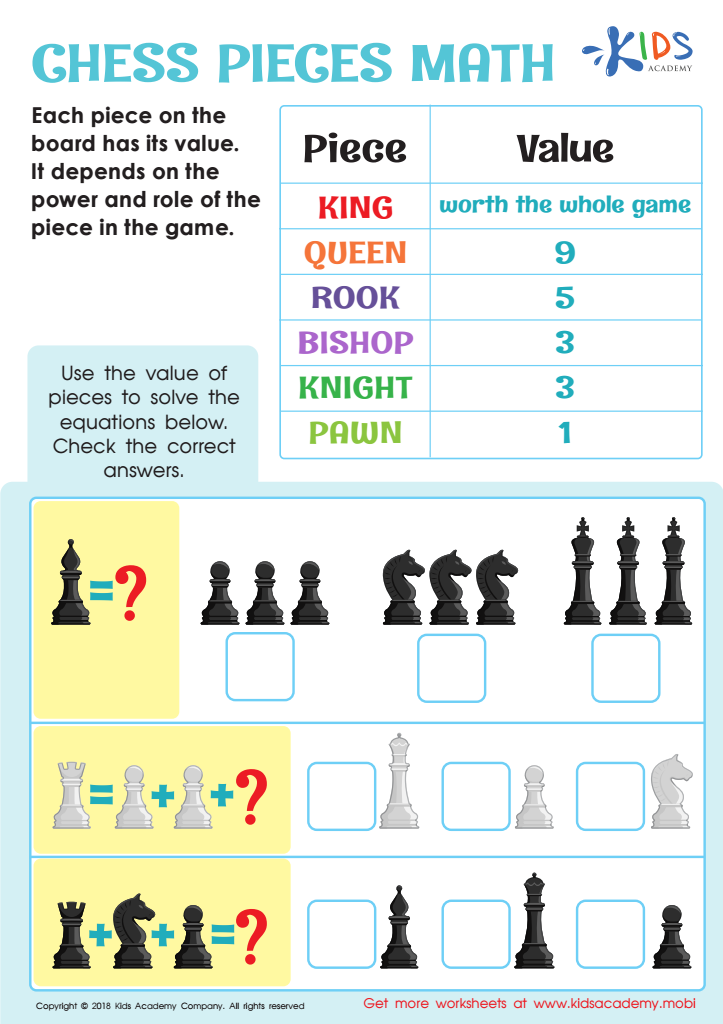
Chess Pieces Math Worksheet
Chess involves math! Each piece has its own value, from the king (worth the entire game) to the queen (9 points), varying according to their power and role. In the worksheet, your child must use these values to solve the equations at the bottom.
 Assign to My Students
Chess Pieces Math Worksheet
Worksheet
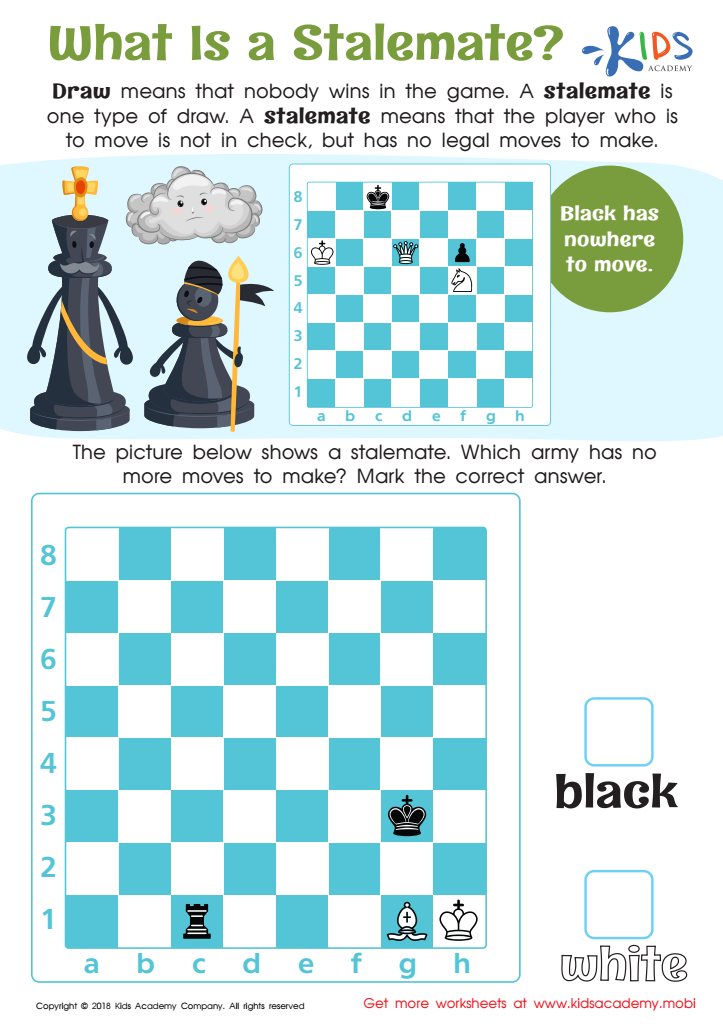
What Is a Stalemate? Worksheet
Chess is an ideal way to develop logic, strategizing, problem-solving and more! Even kids can learn it. With this worksheet, children can learn about draws and stalemates. Sample boards will help them decide which team, black or white, is at a stalemate.
What Is a Stalemate? Worksheet
Worksheet
Setting up the Chessboard: Part 1 Worksheet
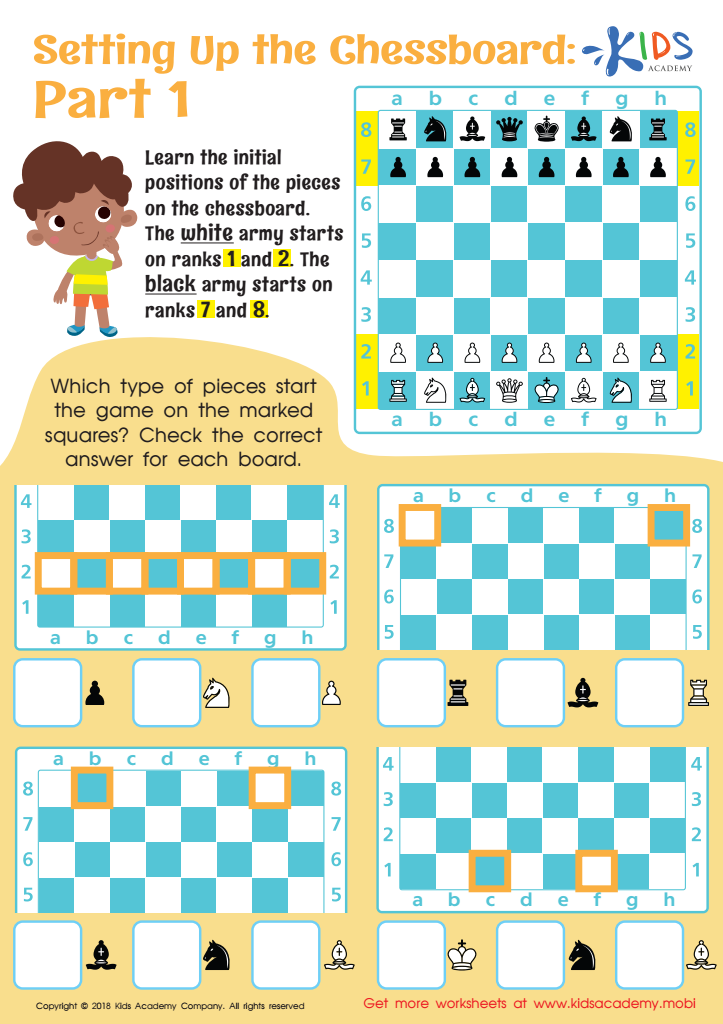
Teach your child the starting positions of the black and white armies on the chessboard. Black pieces are placed on ranks 7 and 8, and white pieces on ranks 1 and 2. Have them check the highlighted boxes on the chessboard to make sure they know the correct pieces to start with.
Setting up the Chessboard: Part 1 Worksheet
Worksheet
Join Kids Academy for Free
Who is primarily going to use this learning content?







Developing logical thinking in young children is foundational for their cognitive development, and chess is an excellent tool for this age group (ages 3-6). At this early stage, children's brains are highly adaptable and capable of learning complex skills through playful and engaging methods. Introducing chess helps them build critical thinking abilities, enhance problem-solving skills, and improve concentration.
Firstly, logical thinking equips children with the ability to analyze situations, evaluate potential outcomes, and make informed decisions. These skills are not just pivotal in games but are also essential for academic success and everyday decision-making. Chess, with its clear rules and infinite strategies, offers a structured environment for children to practice these skills.
Secondly, playing chess encourages patience and discipline. Children learn to think ahead and anticipate opponents' moves, promoting foresight and planning – valuable traits for both personal and educational contexts. Furthermore, losing a game can teach resilience and the importance of strategic thinking over hasty, impulse-based actions.
Lastly, early exposure to chess nurtures a love for learning and intellectual challenge. The 게임 demands attention and memory, which helps strengthen the child's focus and perseverance. By incorporating chess into early education, parents and teachers lay a strong foundation for lifelong cognitive and emotional development.