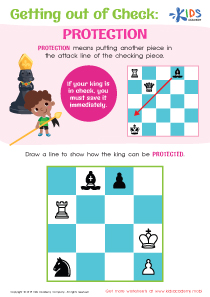
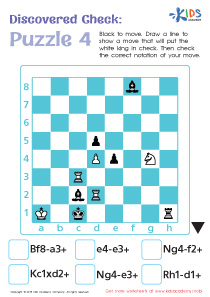
Memory enhancement Chess Worksheets for Ages 3-6
3 filtered results
Difficulty Level
Grade
Age
-
From - To
Subject
Activity
Standards
Boost your child's cognitive skills with our "Memory Enhancement Chess Worksheets for Ages 3-6"! These engaging activities are designed to foster memory development while introducing the basics of chess. Each worksheet combines fun visuals with educational tasks, making it perfect for young learners. Children will enjoy exercises that promote concentration, pattern recognition, and critical thinking as they explore the exciting world of chess. Ideal for parents and teachers alike, our worksheets provide a structured approach to learning through play. Help your little one enhance their memory and strategic thinking skills in an enjoyable way with these delightful resources today!
Favorites
With answer key
Interactive
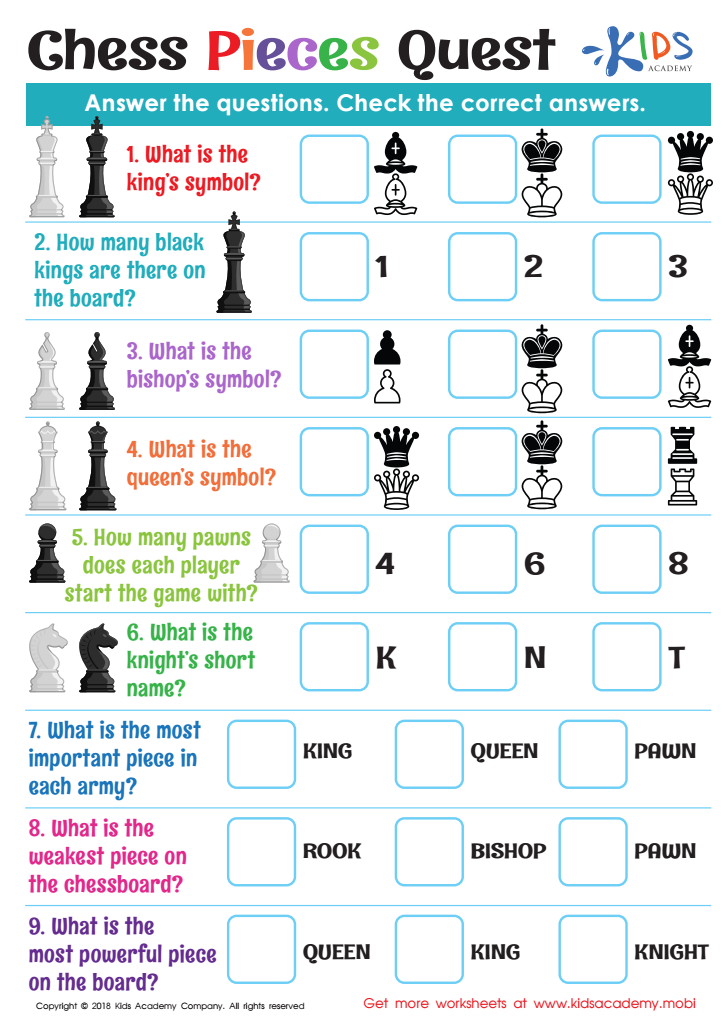
Chess Pieces Quest Worksheet
Help your child prepare for the chess quest by refreshing their knowledge of the symbols and characteristics of each chess piece. Then, have them try the 9 questions on this worksheet. These questions will assess their understanding of the symbols and how many pieces each player starts with.
 Assign to My Students
Chess Pieces Quest Worksheet
Worksheet
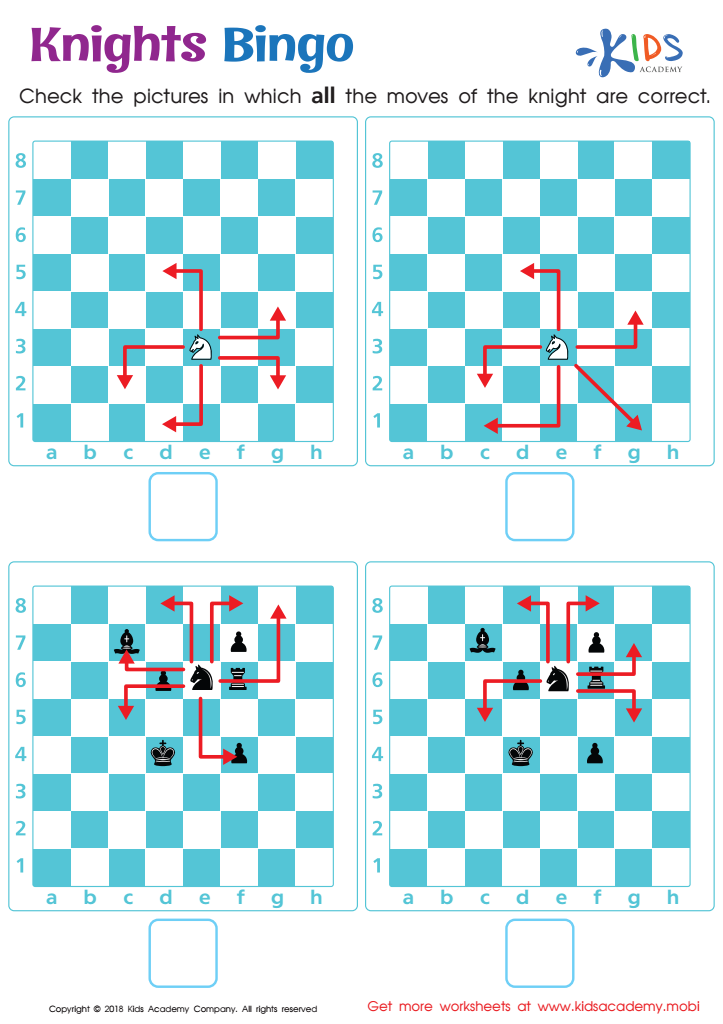
Knights Bingo Worksheet
Help your child identify legal knight moves in this easy worksheet. Review each picture with them, questioning if the knight moves are correct. Then have them verify pictures with correct moves.
Knights Bingo Worksheet
Worksheet
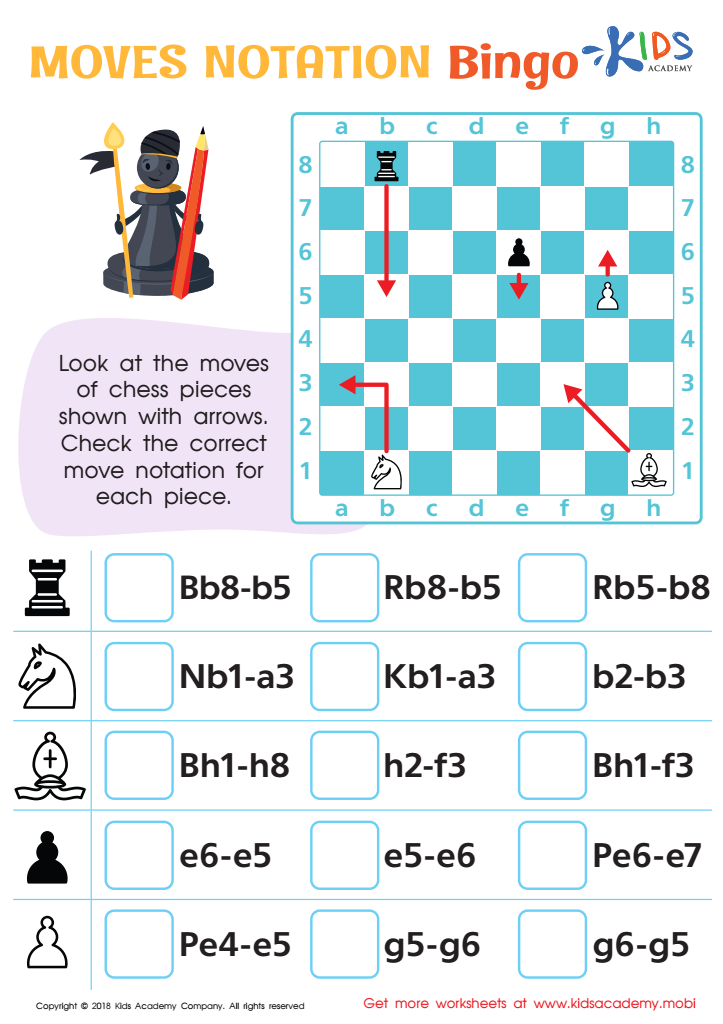
Moves Notation Bingo Worksheet
Test your child's chess notation skills with this simple worksheet. Download the PDF which shows a chess board and arrows pointing to pieces. Ask your child to identify the moves and note them down correctly. The notations needed are for bishop, pawn, rook and knight. Up to 80 words.
Moves Notation Bingo Worksheet
Worksheet
Join Kids Academy for Free
Who is primarily going to use this learning content?






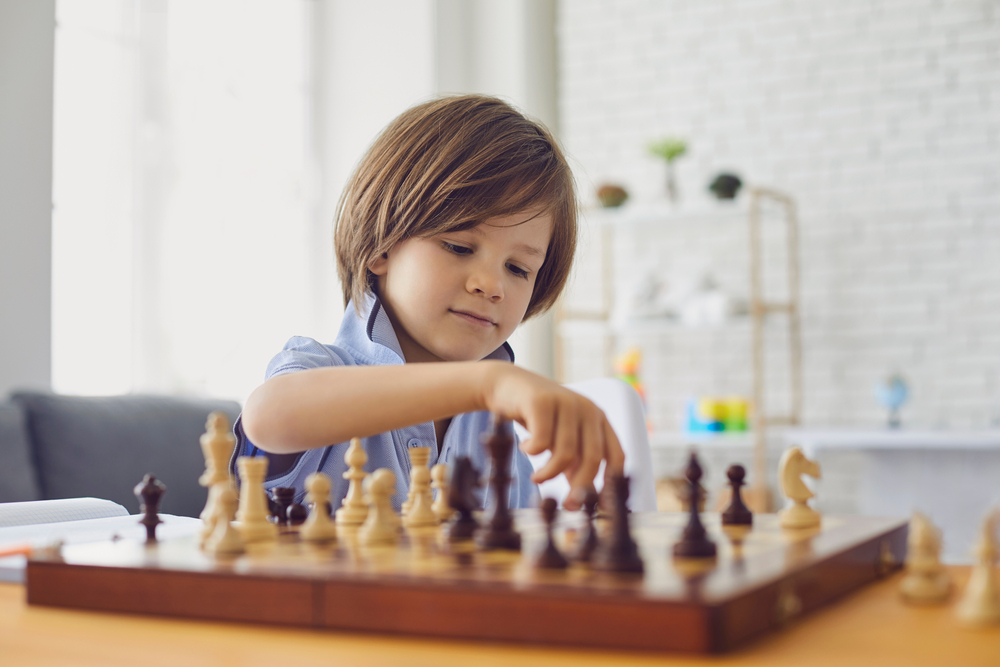

Memory enhancement through chess for children aged 3-6 is crucial, as it fosters cognitive development and essential skills early on. Playing chess introduces young children to strategic thinking, problem-solving, and decision-making, laying a strong foundation for academic learning. Engaging in chess helps improve memory by requiring players to remember various moves, positions, and strategies, enhancing their visual and auditory recall.
Moreover, chess teaches patience and concentration, as children learn to focus on the game rather than getting distracted. This concentration is fundamental for success in later stages of education and can translate into improved attention in classroom settings. Chess also encourages social interaction, as children often play in pairs or small groups, promoting teamwork and communication skills.
For parents and teachers, supporting memory enhancement initiatives like chess offers a fun and engaging way to combine play with learning. It cultivates a love for learning while equipping children with vital life skills. By encouraging early engagement with chess, parents and teachers contribute to developing not only well-rounded individuals but also future critical thinkers capable of tackling challenges with creativity and foresight. Investing time in activities like chess is a proactive step toward nurturing resilient, capable learners.