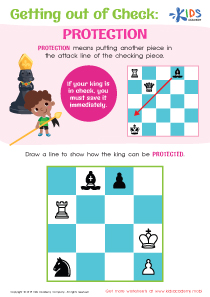
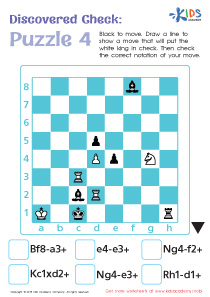
Problem-solving abilities Chess Worksheets for Ages 3-6
3 filtered results
-
From - To
Discover our "Problem-solving Abilities Chess Worksheets for Ages 3-6," designed to engage young minds in fun and challenging activities! Our worksheets introduce basic chess concepts while enhancing critical thinking and logic skills. Each engaging exercise encourages children to think systematically and develop strategies, fostering creativity and analytical skills through playful learning. With colorful illustrations and age-appropriate challenges, these resources help instill a passion for chess and build the foundation for future problem-solving capabilities. Ideal for home or classroom use, our worksheets are perfect for nurturing young learners' cognitive growth while enjoying the timeless game of chess! Explore now!
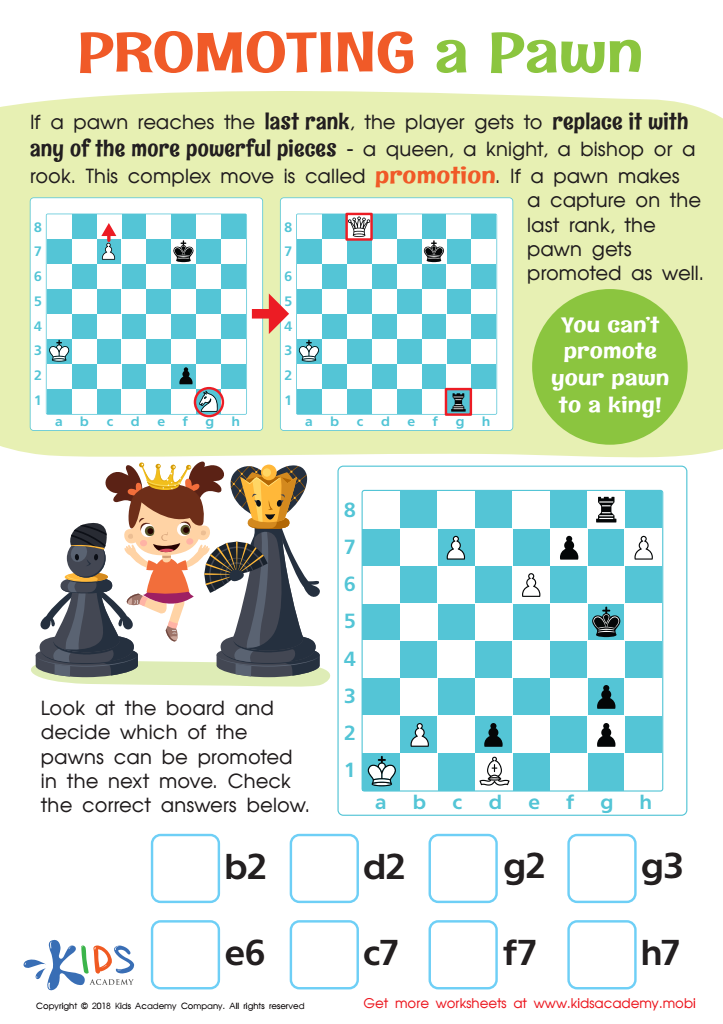
Promoting a Pawn Worksheet
 Assign to My Students
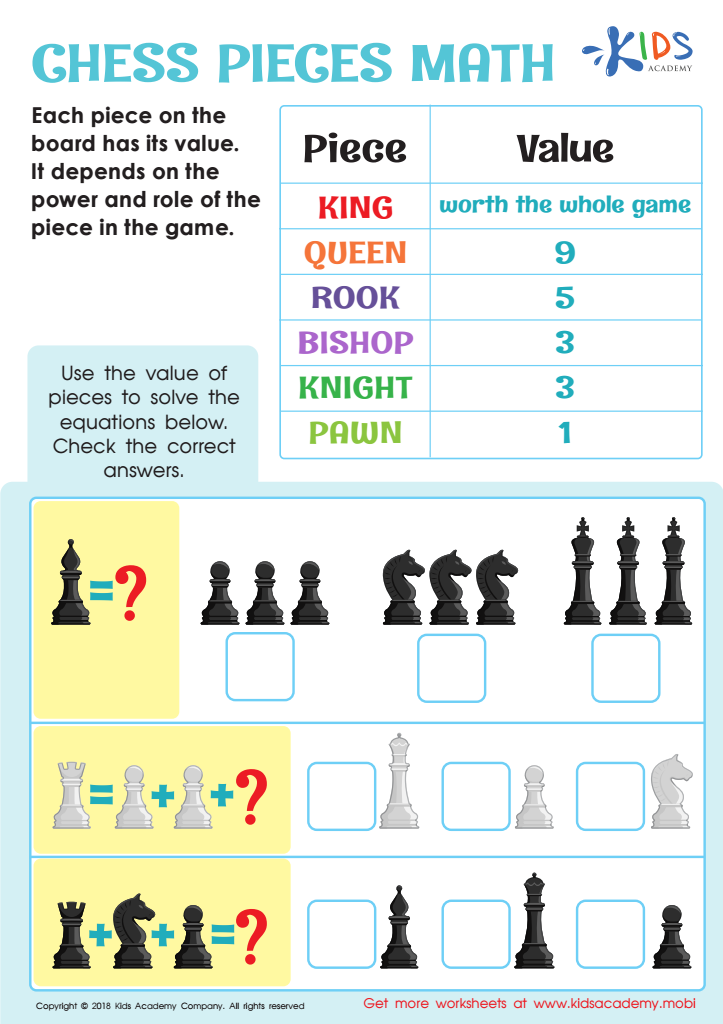
Chess Pieces Math Worksheet
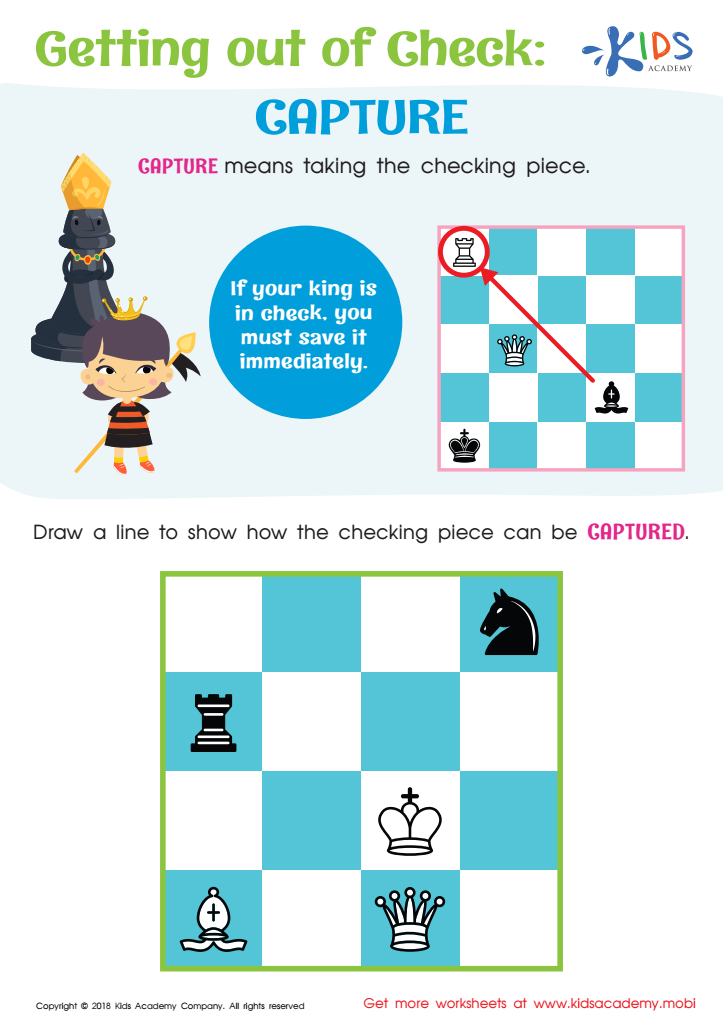
Getting out of Check: Capture








Parents and teachers should care about problem-solving abilities in chess for children ages 3-6 because developing these skills at an early age fosters critical thinking and cognitive growth. Chess teaches young learners essential skills such as planning, foresight, and strategic thinking. As they navigate the board, they learn to anticipate their opponent's moves, which encourages them to think two or three steps ahead—an invaluable skill for future academic and life challenges.
Moreover, engaging in chess enhances concentration and patience, as children learn to focus on the game and wait for their turn. These activities cultivate social skills too, as they interact with peers or adults, learning about sportsmanship and collaboration.
From a developmental perspective, the game introduces basic concepts such as taking turns and understanding rules, which can generalize to classroom settings. As they experience both wins and losses, they practice resilience and adaptability, learning to handle challenges and setbacks constructively.
By integrating chess into the educational curriculum or at home, parents and teachers are not just teaching a game, but equipping children with foundational problem-solving skills that will benefit their academic journey and personal lives. Overall, promoting problem-solving through chess can lead to well-rounded, intellectually curious children.