Problem-solving skills development Chess Worksheets for Ages 3-6
3 filtered results
-
From - To
Enhance your child's problem-solving abilities with our engaging Chess Worksheets designed for ages 3-6! These printable resources introduce fundamental chess concepts through fun activities, promoting critical thinking and strategic planning. Kids will learn to analyze situations, make decisions, and understand the consequences of their moves, all while having a great time. Our user-friendly worksheets feature colorful illustrations and age-appropriate challenges, ensuring that children stay motivated and excited about learning. Perfect for at-home reinforcement or classroom use, these resources inspire creativity and cognitive development. Equip your child with essential problem-solving skills through the captivating game of chess today!
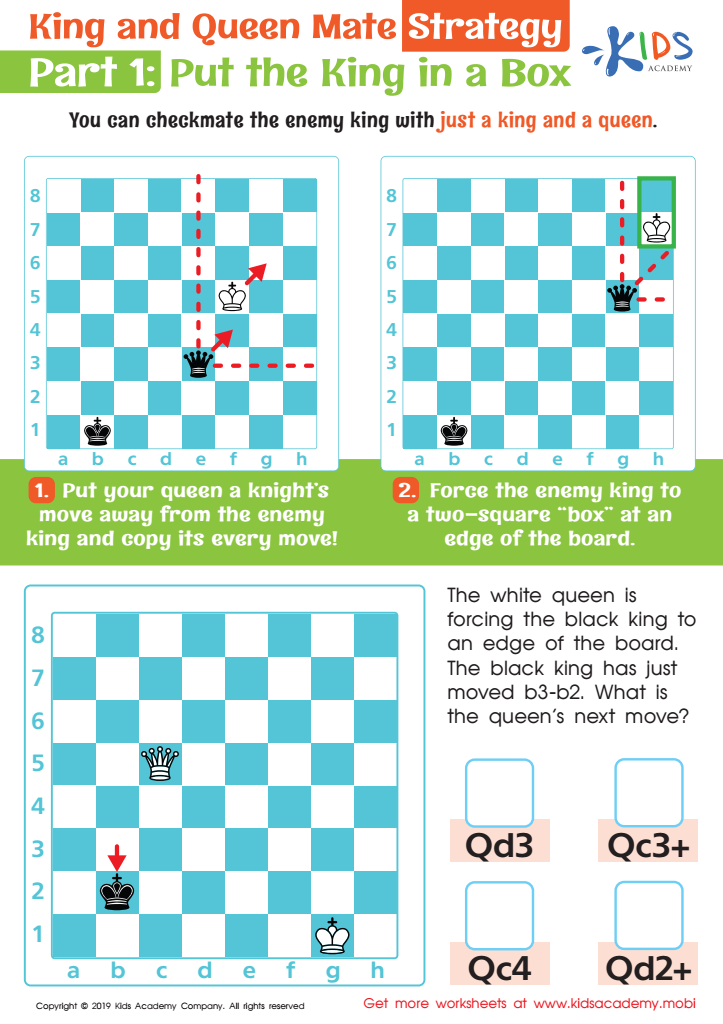
King and Queen Mate Strategy: Part 1 Worksheet
 Assign to My Students
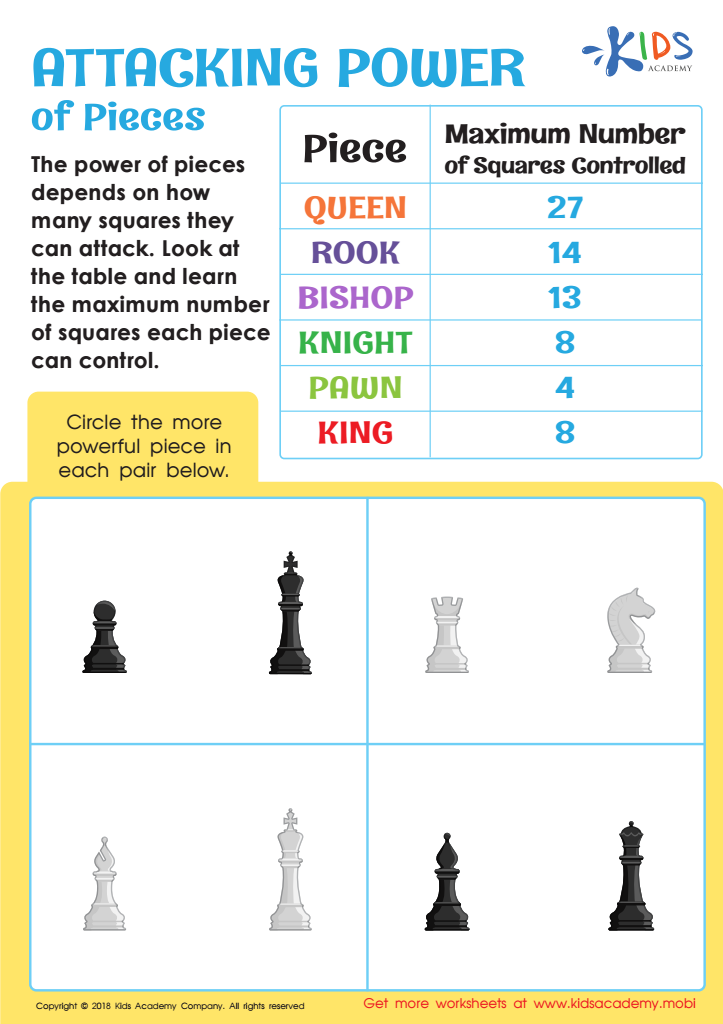
Attacking Power of Chess Pieces Worksheet
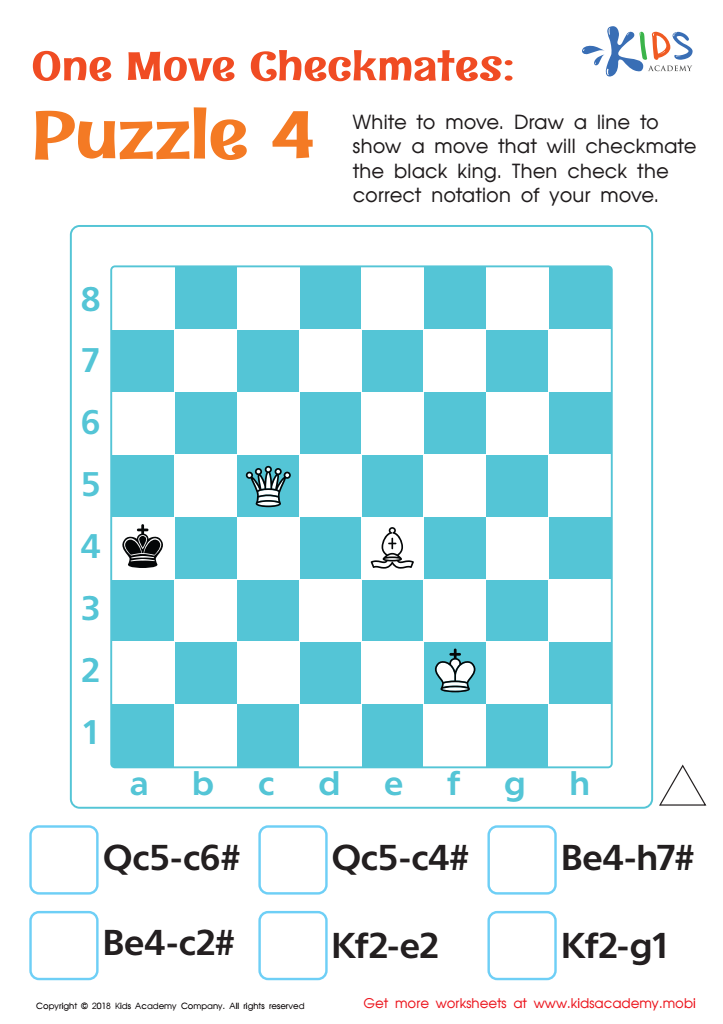
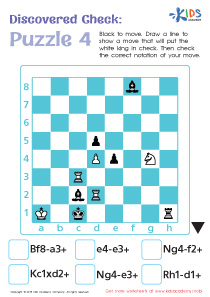
One Move Checkmates: Puzzle 4 Worksheet






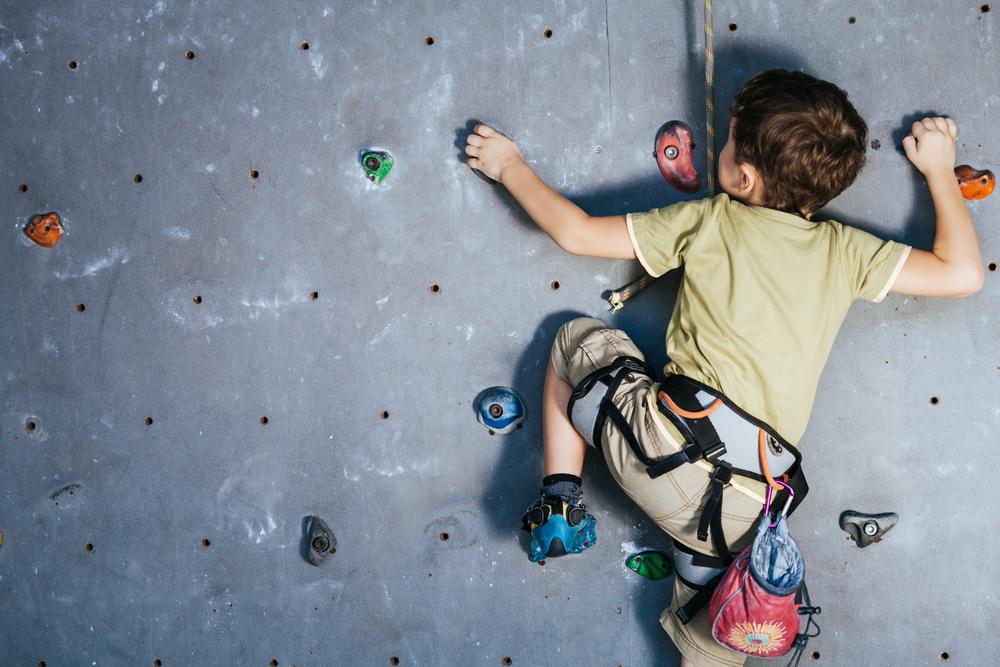

Parents and teachers should prioritize problem-solving skill development through chess for children aged 3-6 because it cultivates critical thinking, cognitive flexibility, and emotional intelligence. Chess is a structured activity that encourages children to assess situations, plan their moves, and anticipate outcomes, enhancing their decision-making abilities. Starting at an early age establishes a strong foundation for logical reasoning and strategic thinking.
Engaging in chess also aids in developing patience and discipline, as children learn to evaluate their choices and consider multiple perspectives. This reflective practice contributes to better emotional regulation, helping young learners cope with both victory and defeat. The game promotes social skills as children interact with peers, learning to collaborate and communicate while engaging in friendly competition.
Moreover, the skills acquired from chess—such as improved concentration and memory—translate into better performance across various subjects, including math and language arts. Introducing chess in this formative age fosters a love for learning and creates an engaging, enriching environment that prepares children for future challenges. Overall, the benefits of chess extend far beyond the board, equipping young minds with invaluable tools for academic and personal success as they grow.