Animal knowledge Worksheets for Ages 3-6
5 filtered results
-
From - To
Unlock your child's curiosity with our engaging Animal Knowledge Worksheets for Ages 3-6! Designed to captivate young minds, these printable activities enhance early learning skills through fun animal-themed exercises. From identifying animal names and sounds to understanding their habitats, our worksheets provide a playful yet educational way for kids to explore the animal kingdom. Perfect for preschoolers and kindergarteners, these worksheets support cognitive development, vocabulary building, and fine motor skills. Download now from Kids Academy and watch your little one discover the wonders of animals while laying a strong foundation for future learning!
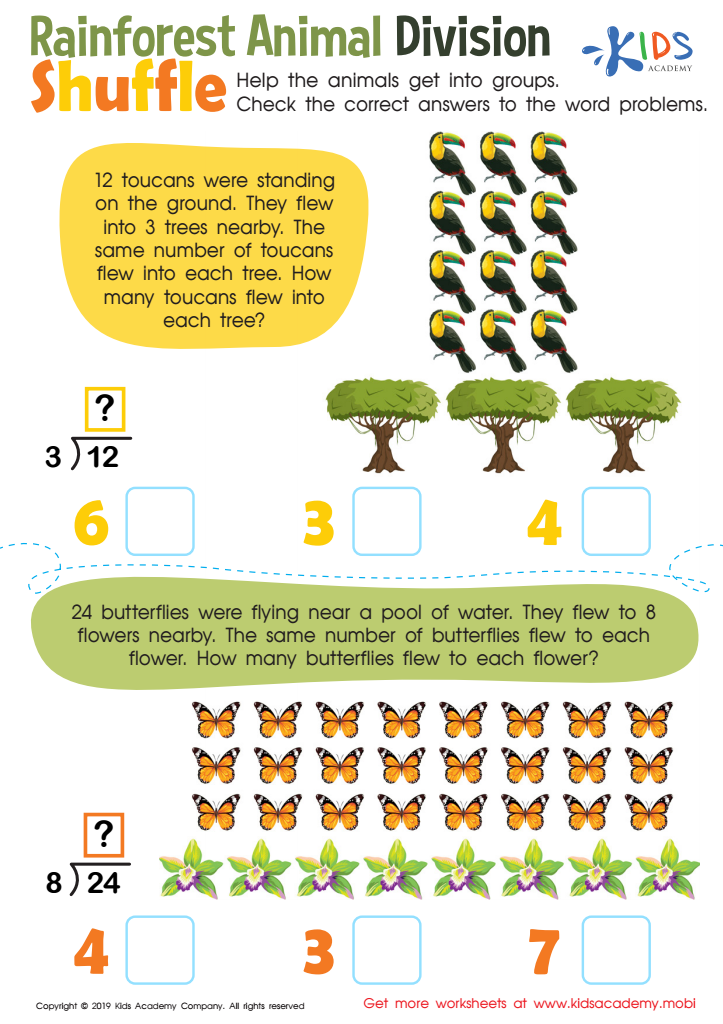
Rainforest Animal Division Worksheet
 Assign to My Students
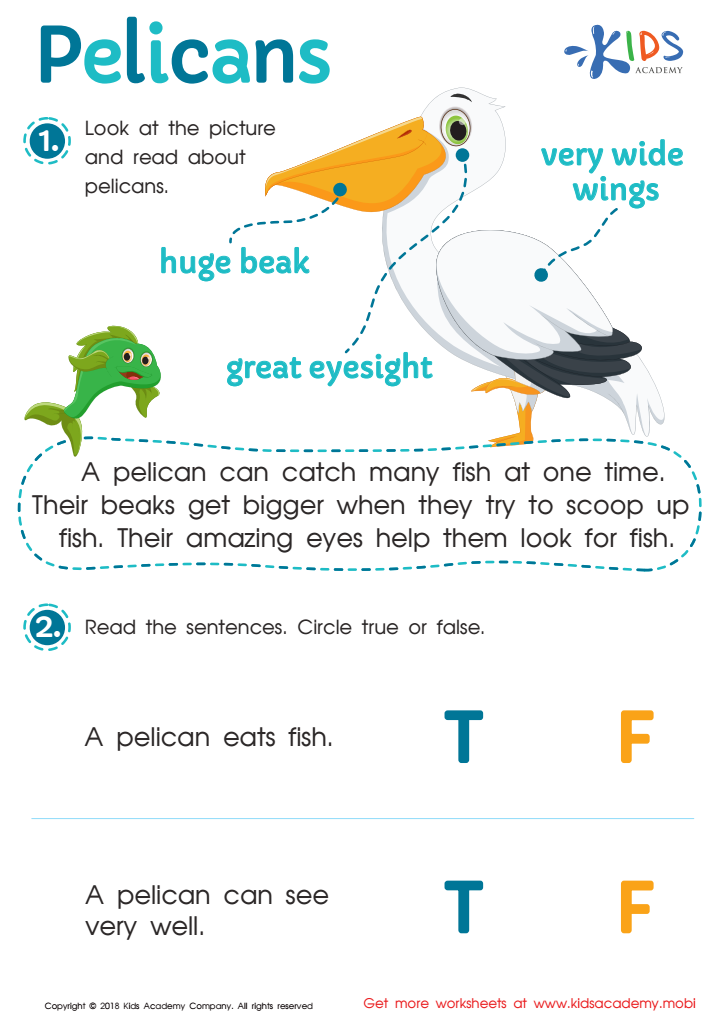
Pelicans Worksheet
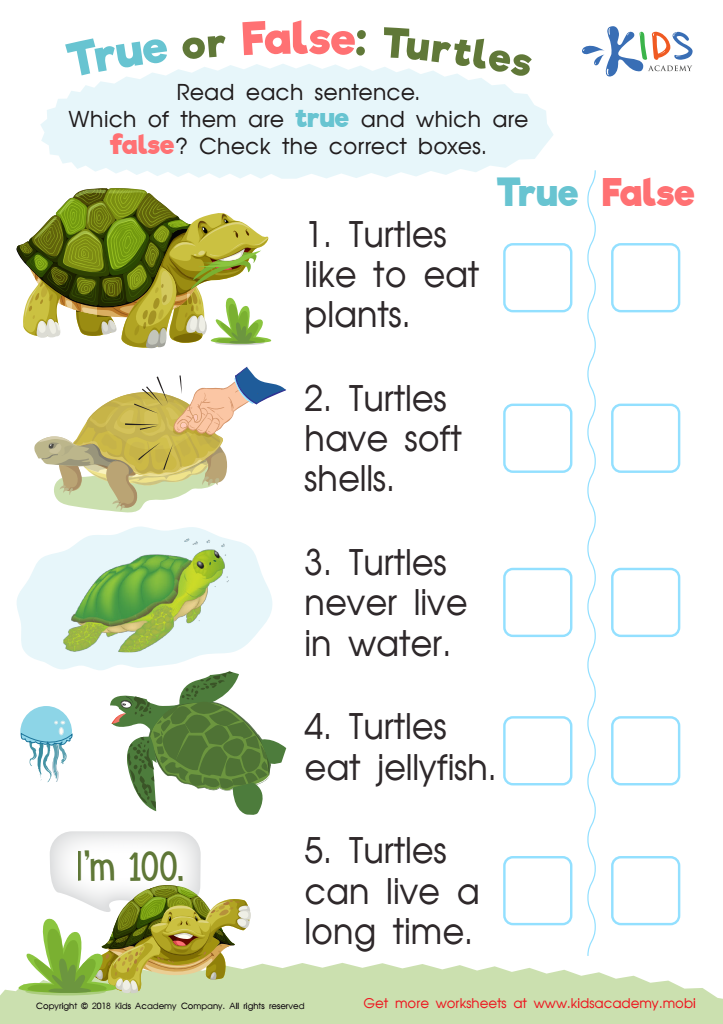
True or False: Turtles Worksheet
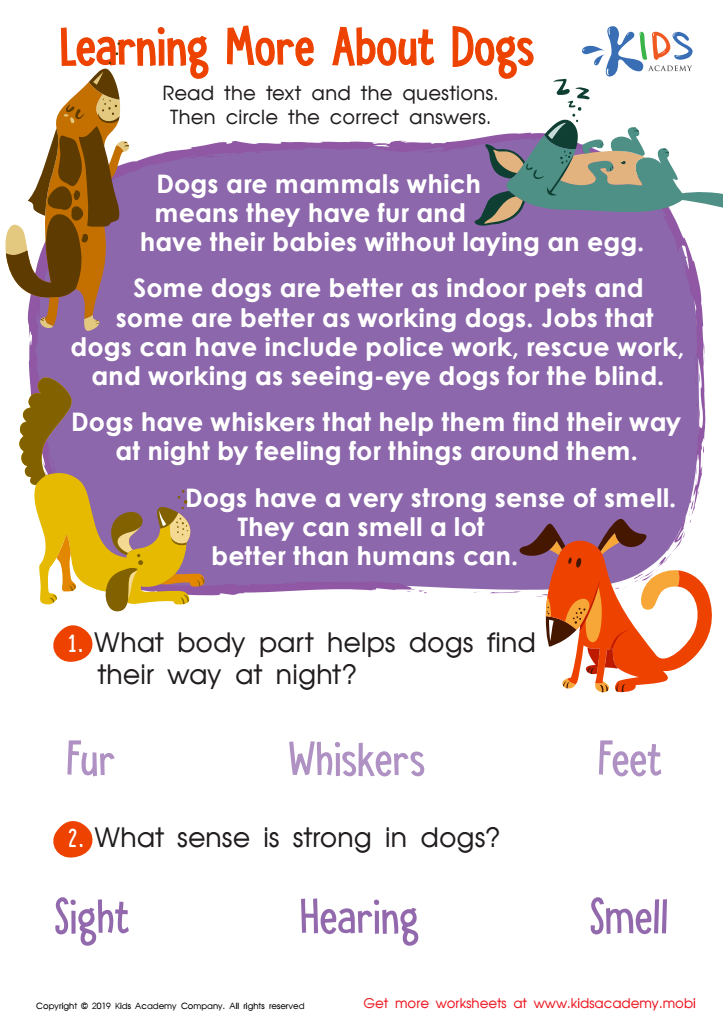
Learning More About Dogs Worksheet
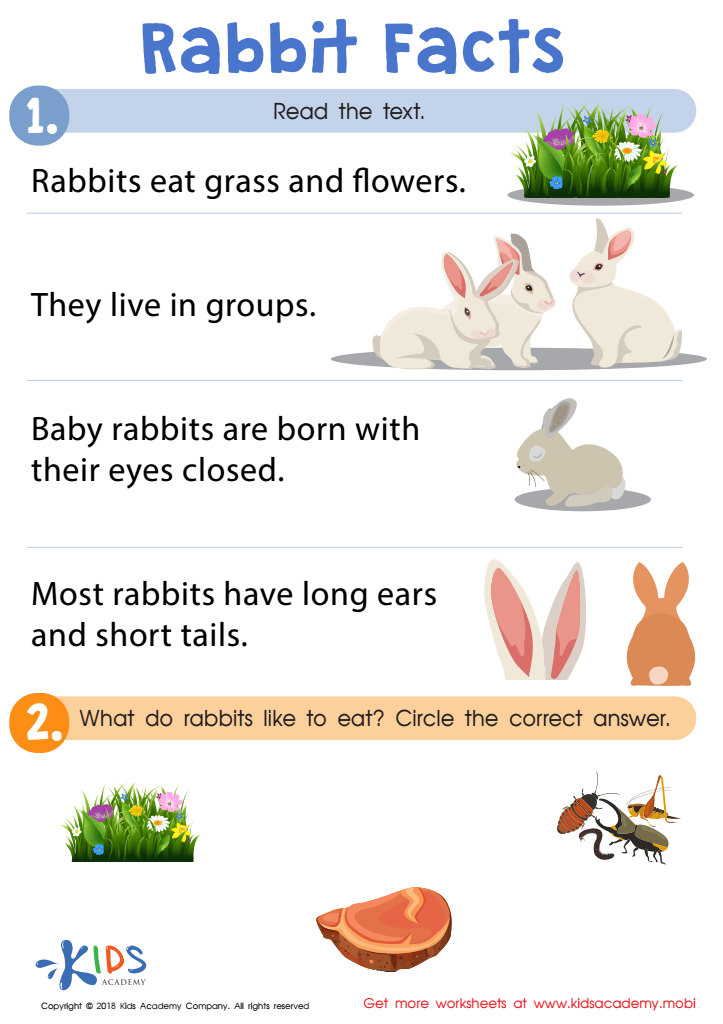
Rabbit Facts Worksheet







Parents and teachers should care about imparting animal knowledge to children aged 3-6 for a variety of reasons. At this formative stage, young children are developing curiosity, empathy, and cognitive skills. Teaching them about animals sparks their natural curiosity and fosters a love for learning. It broadens their understanding of the world, helps them develop observational skills, and enhances vocabulary as they learn animal names, habitats, and characteristics.
Moreover, early exposure to animals encourages compassion and empathy. Understanding that animals have needs and emotions can teach kindness and responsibility. This is particularly beneficial for social development, as children learn to care for and respect other living things.
Cognitively, learning about animals helps to build a child's sense of classification and differentiation, skills essential for early math and science education. Distinguishing between different species reinforces the ability to notice subtle differences and commonalities, laying a foundation for critical thinking.
Finally, animal-themed activities and stories are engaging and enjoyable, making the learning process more effective. Interactive experiences like visiting zoos or handling pets can create memorable learning moments, converting theoretical knowledge into practical understanding. In essence, caring about animal knowledge at this stage nurtures well-rounded, empathetic, and intellectually curious individuals.








