Answering questions Worksheets for Ages 3-6
3 filtered results
-
From - To
Explore our engaging "Answering Questions Worksheets for Ages 3-6" designed to boost your child's comprehension and communication skills! These interactive worksheets offer a variety of fun exercises that encourage young learners to respond to simple questions about pictures, stories, and everyday scenarios. Tailored for early childhood development, our resources foster critical thinking, enhance vocabulary, and promote confident self-expression. Perfect for parents and educators alike, these worksheets help little ones gain essential skills while enjoying the learning process. Download now and watch your child's inquisitiveness grow through playful learning experiences that lay a strong foundation for future academic success!
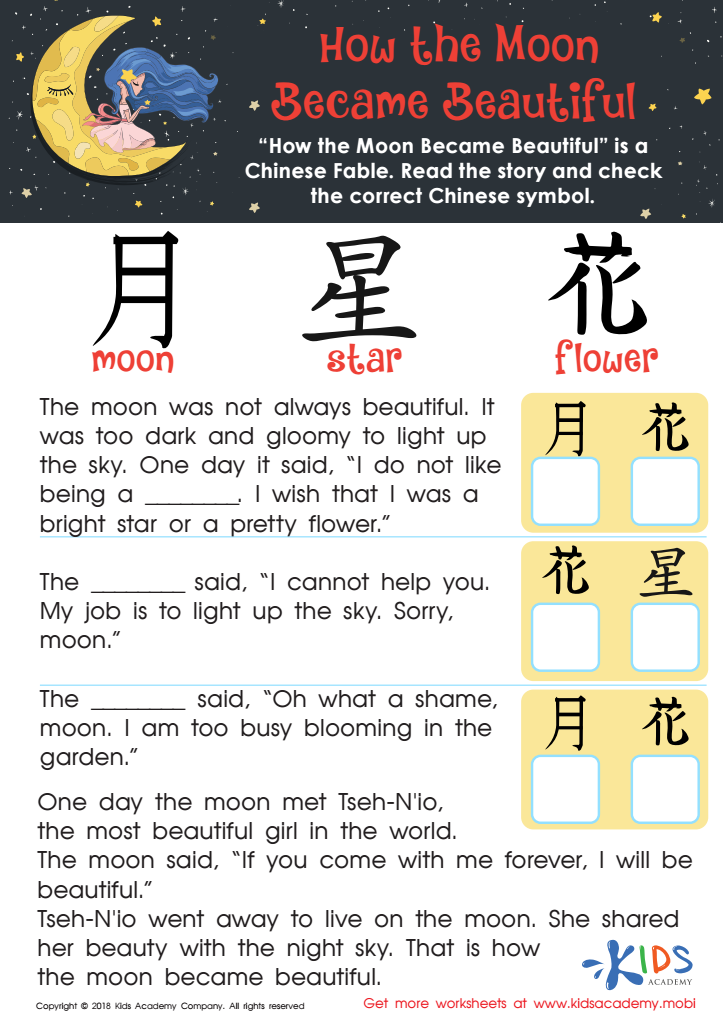
How the Moon Became Beautiful Worksheet
 Assign to My Students
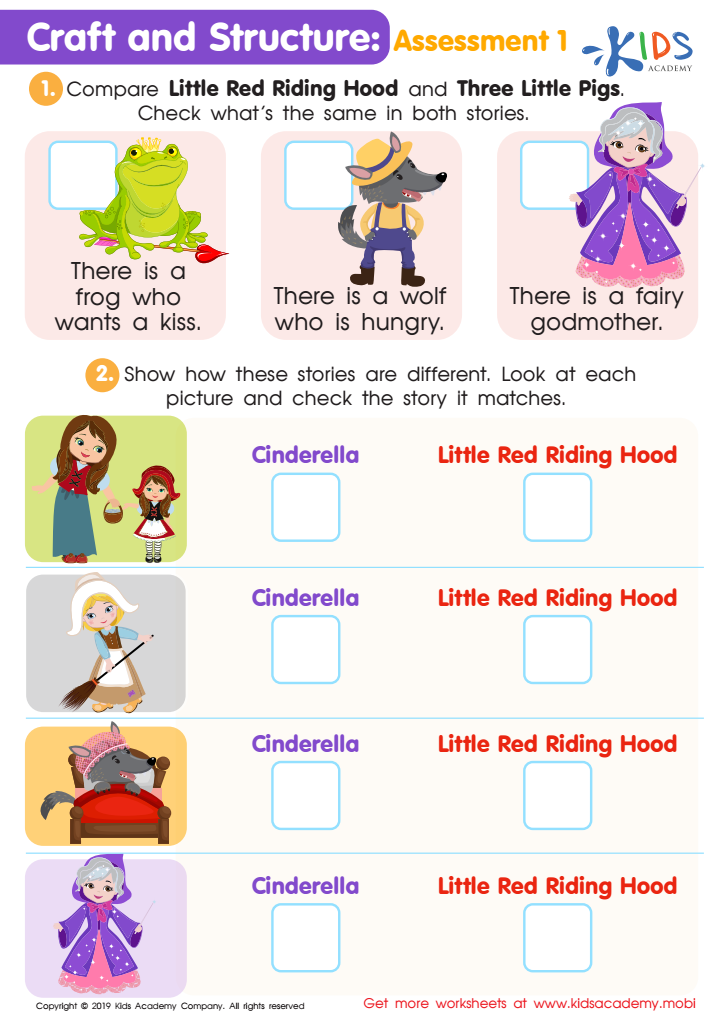
Craft and Structure: Assessment 1 Worksheet
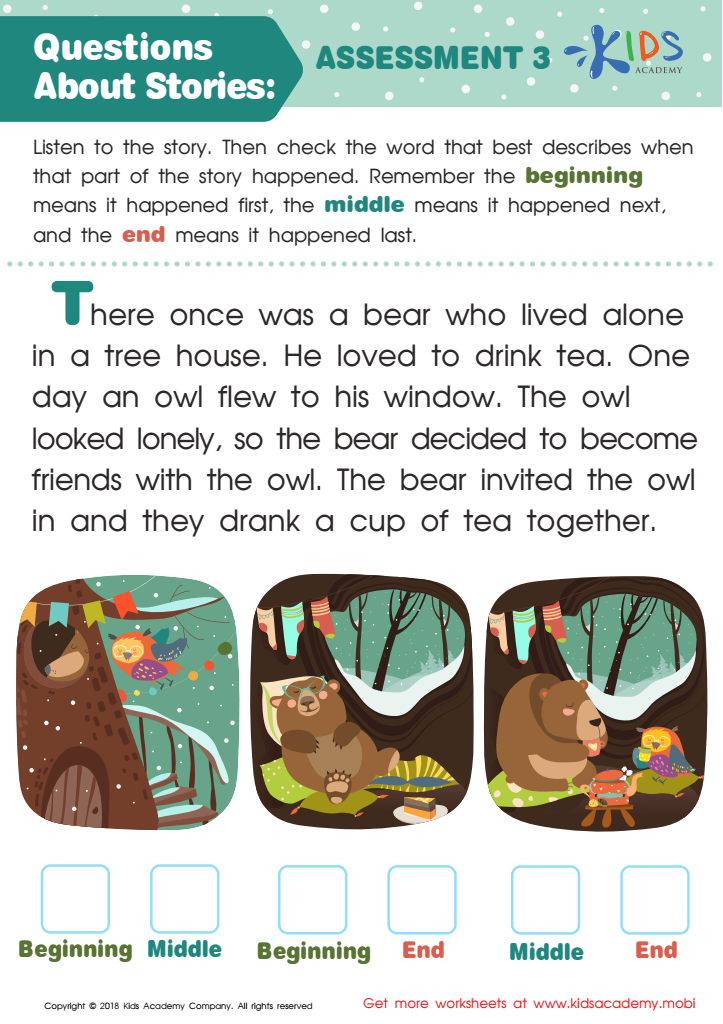
Questions About Stories: Assessment 3 Worksheet








Parents and teachers should prioritize answering questions from children aged 3-6 for several important reasons. Firstly, this developmental stage is critical for cognitive growth and language acquisition. When adults engage with children’s inquiries, it nurtures their curiosity, encourages critical thinking, and enriches their vocabulary. Every question is an opportunity for exploration and learning, helping children make sense of the world around them.
Moreover, responding thoughtfully fosters a trusting relationship between adults and children. This trust creates a safe environment where children feel valued and understood, promoting social-emotional development. When children see that their questions are taken seriously, they are more likely to continue seeking information and engaging in meaningful conversations.
Additionally, addressing questions can help identify a child's interests and struggles, allowing for tailored educational support. It empowers children to express themselves and enhances their confidence and comfort in communicating.
In essence, engaging with young children's questions benefits both their educational journey and emotional wellbeing, laying a robust foundation for lifelong learning. By prioritizing these moments, parents and teachers not only enrich children's experiences but also cultivate a culture of inquiry, which is vital for innovative thinkers and problem solvers of the future.








