Basic Addition Worksheets for Ages 3-6 - Page 3
53 filtered results
-
From - To
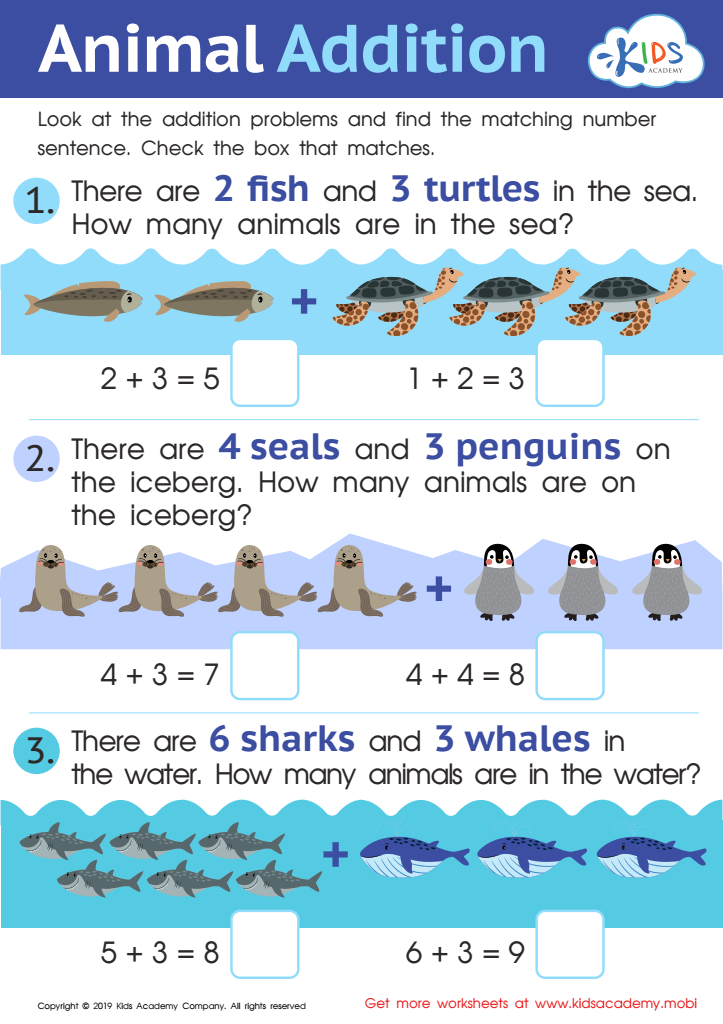
Animal Addition Worksheet
 Assign to My Students
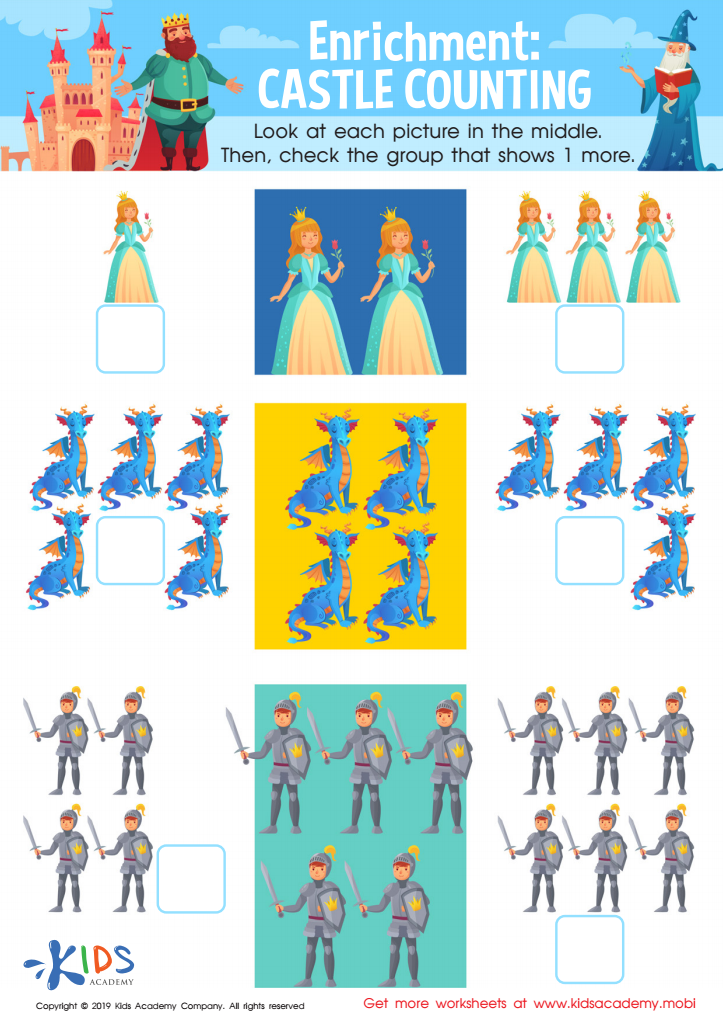
Enrichment: Castle Counting Worksheet
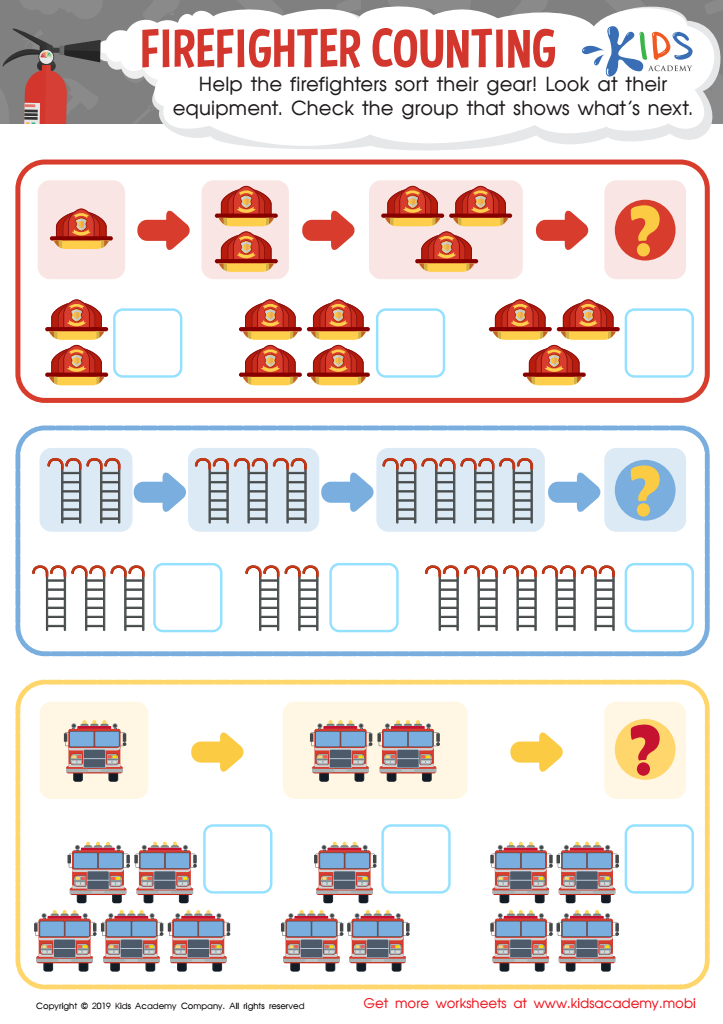
Firefighter Counting Worksheet
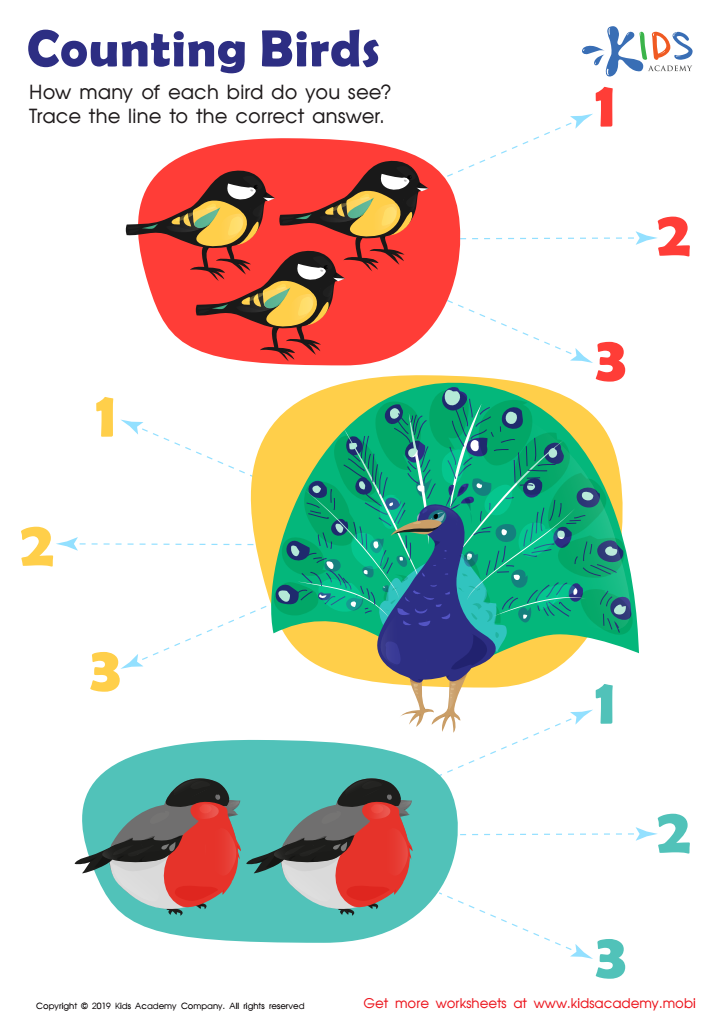
Counting Birds Worksheet




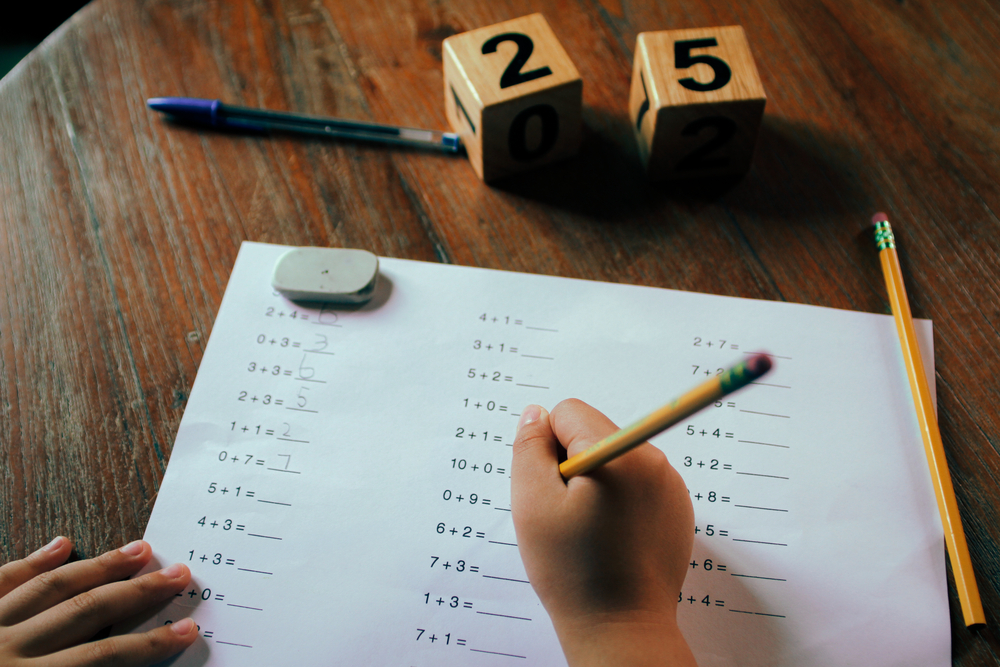


Basic addition skills in children aged 3-6 serve as foundational building blocks for their future mathematical understanding and overall cognitive development. At this formative stage, young brains are highly receptive to new information and experiences, making it an ideal time to introduce basic arithmetic concepts. Learning to add not only enhances mental arithmetic ability but also promotes logical reasoning and problem-solving skills that are essential for everyday life.
Parents and teachers should invest time and care in developing these skills because they foster a sense of confidence and competence in young learners. Mastery of basic addition helps children make sense of the world around them, enabling them to grasp larger, more abstract concepts later in their education. Practical applications of addition, such as counting toys, sharing snacks, or playing with group games, make math relatable and enjoyable.
Moreover, acquiring these skills early on prepares children for more complex mathematical operations, ensuring they are not left behind academically. This early intervention not only aids in the development of numeracy but also supports overall academic achievement, contributing to a child’s long-term educational success. Instilling a positive attitude towards math at an early stage fosters a love of learning and encourages lifelong critical thinking and analytical skills.








