Basic geometry Worksheets for Ages 3-6
3 filtered results
-
From - To
Introduce your child to the exciting world of shapes and patterns with our Basic Geometry Worksheets designed for ages 3-6! These engaging, fun-filled worksheets help young learners grasp foundational geometry concepts such as recognizing shapes, understanding spatial relationships, and identifying patterns. Crafted to stimulate curiosity and enhance problem-solving skills, our geometry activities support early childhood cognitive development. Ideal for preschool and kindergarten children, these printable resources offer endless learning adventures in just a few easy steps. Download today and watch your child confidently explore and master the basics of geometry!
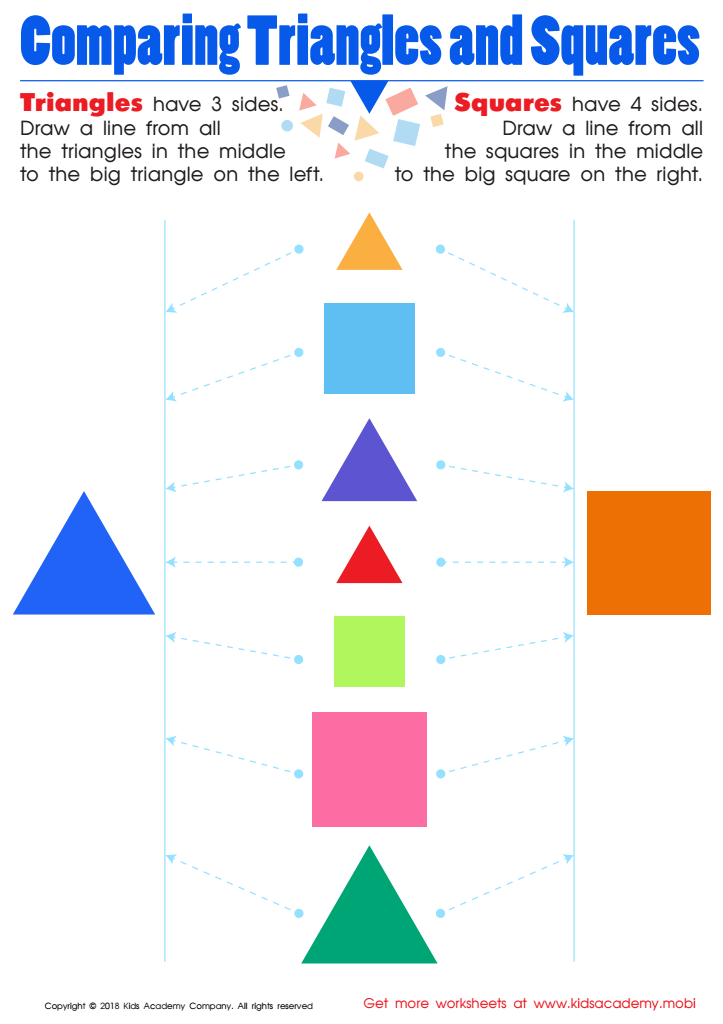
Comparing Triangles Squares Worksheet
 Assign to My Students
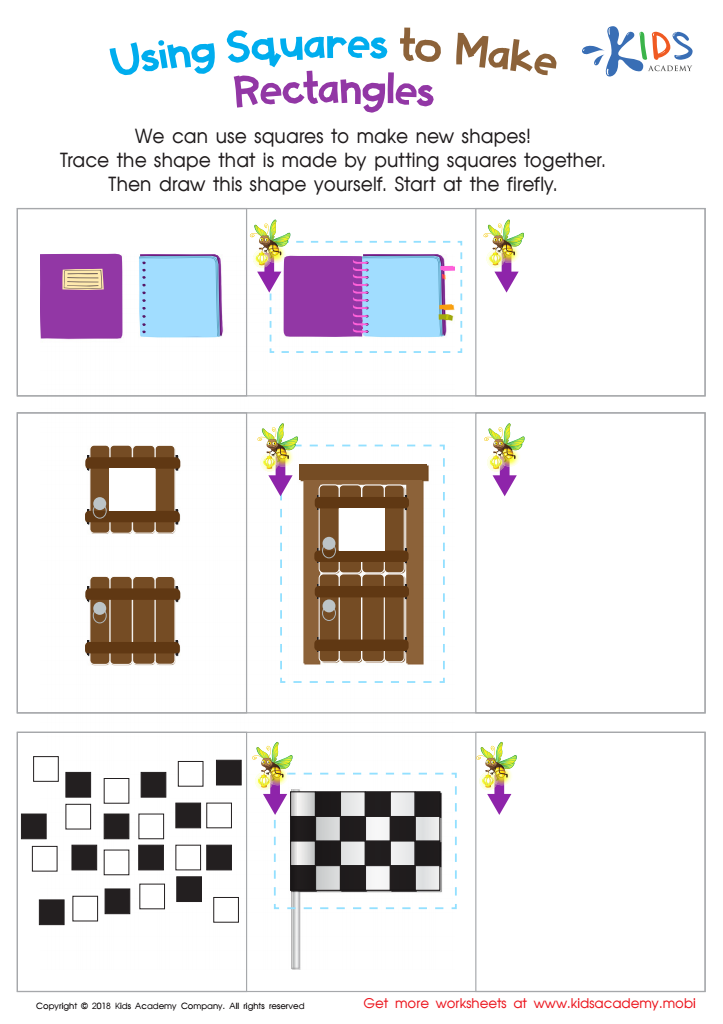
Using Squares to Make Rectangles Worksheet
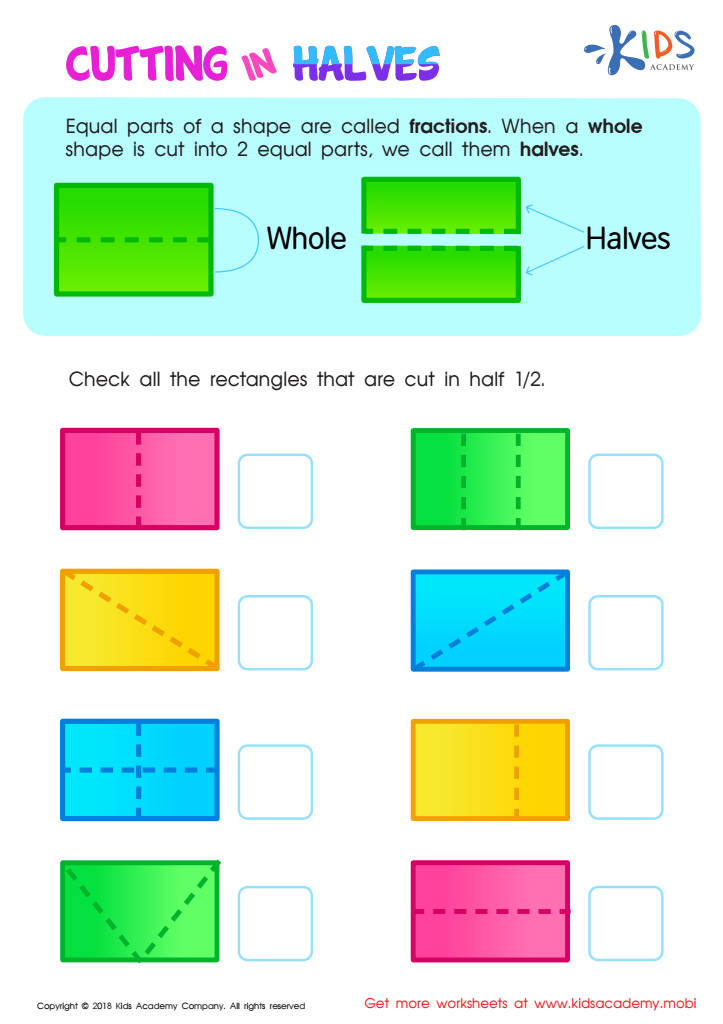
Cutting in Halves Worksheet








Basic geometry for children ages 3-6 is a pivotal part of early math education, serving as a foundational element for later academic success and cognitive development. At this stage, children's minds are incredibly receptive to new concepts, allowing them to grasp shapes, spatial relations, and sizes with practice.
Introducing basic geometry nurtures skills in critical thinking and problem-solving. Recognizing and comparing shapes such as circles, squares, and triangles helps young minds develop an understanding of the world around them. This cognitive awareness fosters visual-spatial intelligence, which is crucial not just for math, but also for everyday tasks like reading, writing, and even sports.
Moreover, early exposure to geometry supports the development of fine motor skills as children often engage in activities that involve drawing shapes, building with blocks, or cutting out figures. These hands-on experiences make learning engaging and enjoyable, fostering a positive attitude towards mathematics from an early age.
For teachers and parents, it's not just about teaching shapes; it's about equipping children with tools to explore and understand their surroundings better. A solid grasp of basic geometry paves the way for more complex mathematical concepts, promoting a seamless transition into formal education and encouraging lifelong learning.








