
Basic physics concepts Worksheets for Ages 3-6
3 filtered results
Difficulty Level
Grade
Age
-
From - To
Subject
Activity
Standards
Dive into the exciting world of physics with our engaging, age-appropriate worksheets designed for children ages 3-6. These thoughtfully crafted printable activities help young learners grasp basic physics concepts through fun, hands-on experiments and vibrant visuals. Rooted in foundational scientific principles, children will explore ideas like motion, force, and energy, paving the way for a lifelong love of science. Our user-friendly worksheets promote curiosity, critical thinking, and problem-solving skills within a safe, educational environment. Perfect for parents and teachers alike, these resources inspire little ones to discover the wonders of physics at an early age.
Favorites
With answer key
Interactive
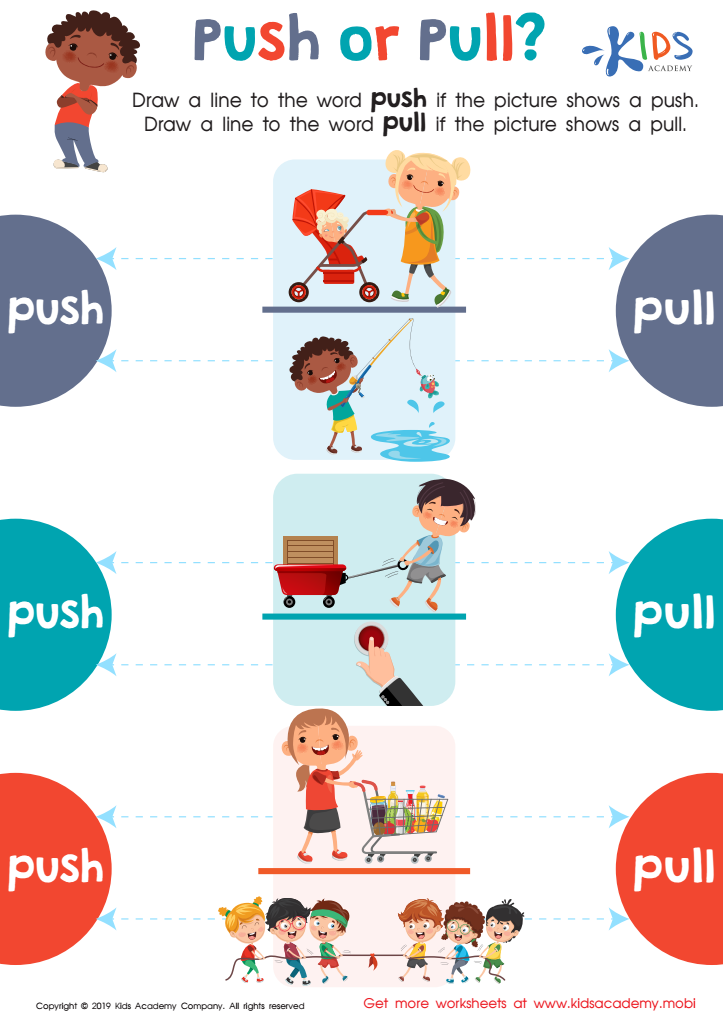
Push or Pull? Worksheet
Young kids may struggle to differentiate push and pull. When they start writing, they may use them interchangeably and wrongly. This worksheet clarifies the concepts: pushing means moving something away, pulling means bringing something closer. It provides pictures and traceable lines for kids to connect each image to the correct word. This helps them understand and remember the difference for future writing and reading.
 Assign to My Students
Push or Pull? Worksheet
Worksheet
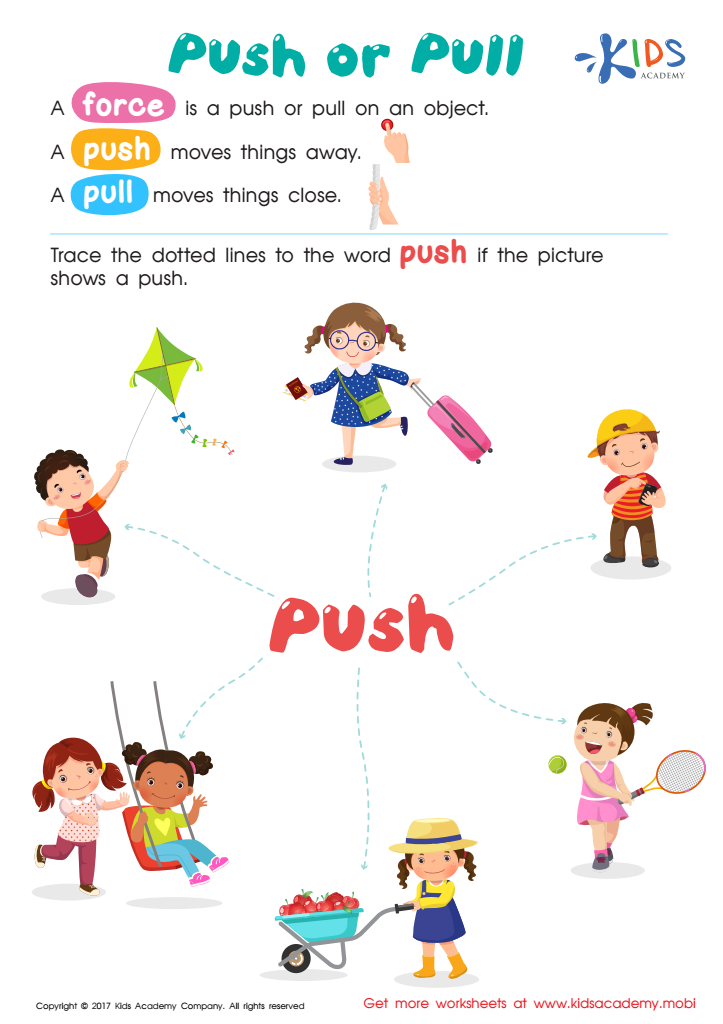
Push or Pull Worksheet
and which involve pulling! With this fun worksheet, your child will learn about force and its simple application in everyday activities. Get them started with Push or Pull! (80 words)
Push or Pull Worksheet
Worksheet
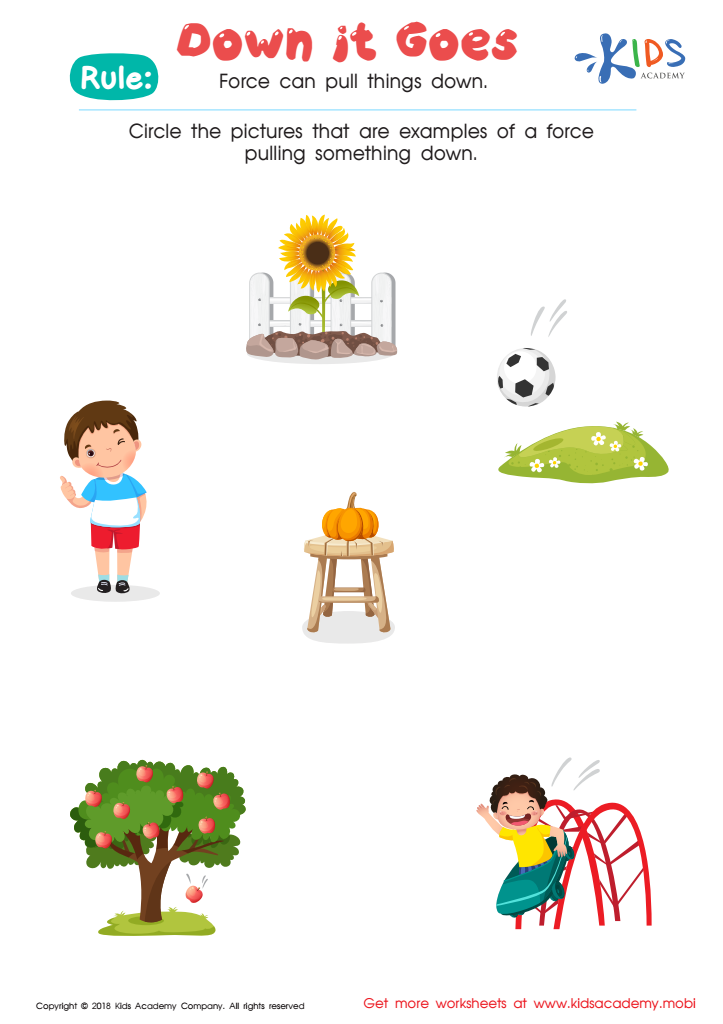
Down it Goes Worksheet
Explain gravity to your child using this fun worksheet. Ask them to give examples of things pulled down with force, then instruct them to circle the pictures that show this. It's a great way to help them understand the concept of gravity.
Down it Goes Worksheet
Worksheet
Join Kids Academy for Free
Who is primarily going to use this learning content?







While it might seem premature to introduce physics concepts to 3- to 6-year-olds, early exposure to basic scientific principles can significantly benefit their cognitive development. At this age, children's brains are exceptionally receptive and learning foundational physics concepts lays the groundwork for critical thinking, problem-solving, and curiosity about the world.
For instance, simple concepts like gravity, motion, and energy can be introduced through playful, hands-on activities. Dropping different objects to illustrate gravity or using ramps to show how incline affects speed can captivate young minds. These activities do not just entertain but also educate, fostering a natural interest in science.
Incorporating basic physics into everyday activities helps children develop a sense of cause and effect. Observing that balls roll down ramps but not up helps them understand kinetic and potential energy in a rudimentary form. Manipulating objects to discover balance and stability introduces concepts related to center of mass and equilibrium.
In sum, engaging young children in basic physics aids their cognitive development by building observation, prediction, and analytical skills. By nurturing this intellectual curiosity early, we're planting the seeds for lifelong learning and a keen sense for scientific inquiry. Parents and teachers investing time in these activities are essentially broadening children's horizons, establishing a solid foundation for future academic pursuits.








