
Comparison Skills Worksheets for Ages 3-6
7 filtered results
Difficulty Level
Grade
Age
-
From - To
Subject
Activity
Standards
Enhance your child's cognitive development with our engaging Comparison Skills Worksheets designed for ages 3-6. These worksheets encourage young learners to identify similarities and differences between various objects, fostering critical thinking and observational skills. Featuring colorful images and interactive activities, children will enjoy sorting, matching, and comparing items in a fun and educational way. Perfect for home or classroom use, our worksheets support early literacy, mathematical concepts, and visual discrimination. Download now to empower your child’s learning journey, making comparisons easy and exciting. Build foundational skills that support future success in learning with our thoughtfully crafted resources!
Favorites
With answer key
Interactive
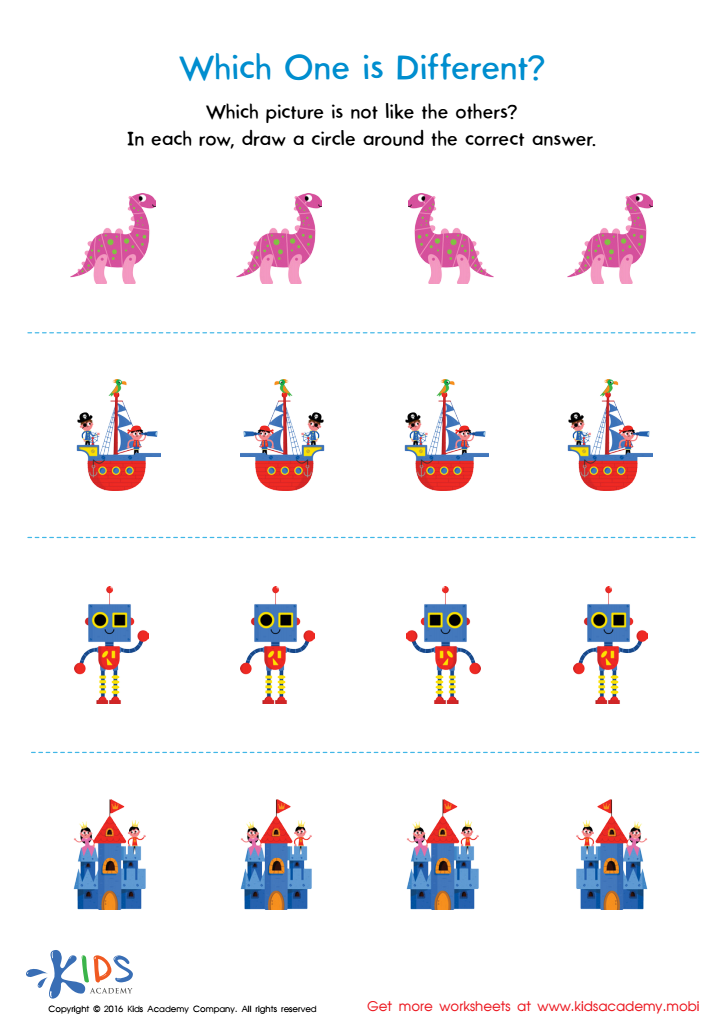
Which One Is Different Worksheet
Preschoolers can hone logical reasoning and critical analysis skills with this "Which one is Different?" worksheet. Kids must look closely and pick out unique attributes of objects and images. It's a skill that can serve them throughout their lifetime.
 Assign to My Students
Which One Is Different Worksheet
Worksheet
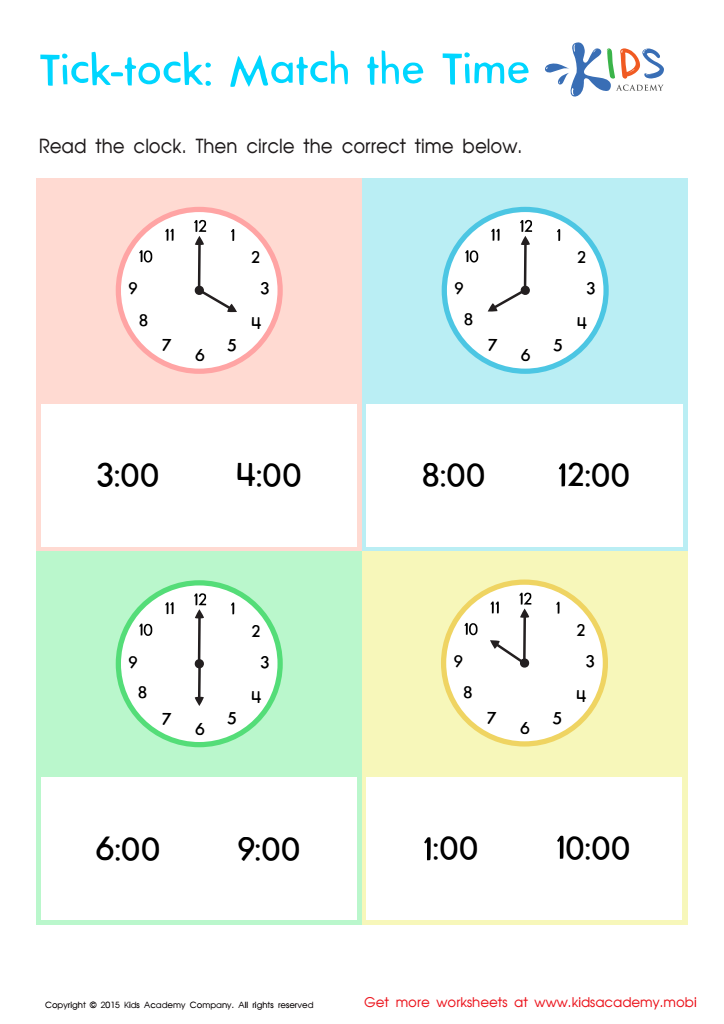
Telling The Time Worksheet: Part 4
Test your skills in telling the time! Circle the right time on 4 analog clock faces.
Telling The Time Worksheet: Part 4
Worksheet
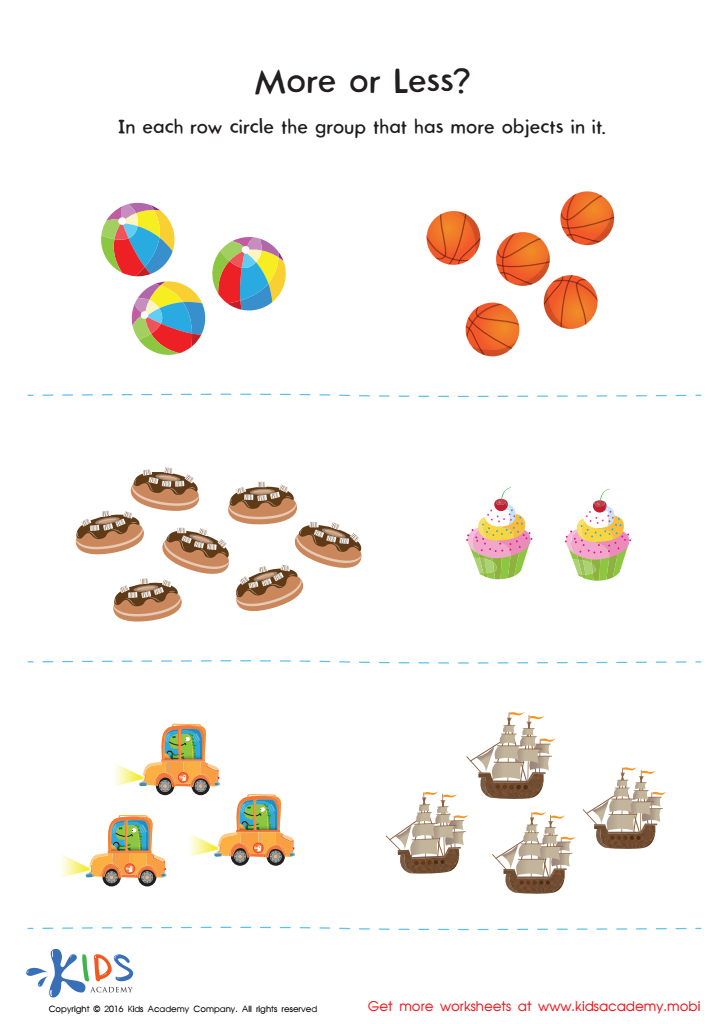
More or Less Size Worksheet
Worksheet
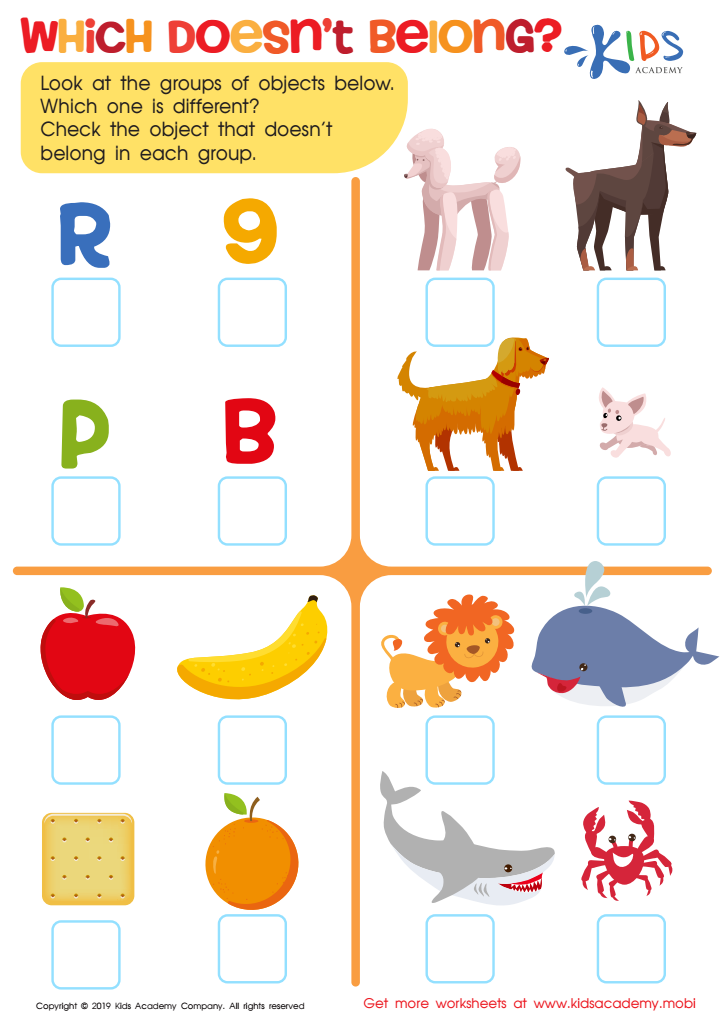
Which Doesn't Belong? Worksheet
This engaging worksheet helps preschoolers recognize similar and different attributes of common words, using brightly-colored pictures. They analyze the items in each category and check off what is different. For extra practice, have them explain their reasoning verbally! Sorting and classifying are important skills to learn.
Which Doesn't Belong? Worksheet
Worksheet
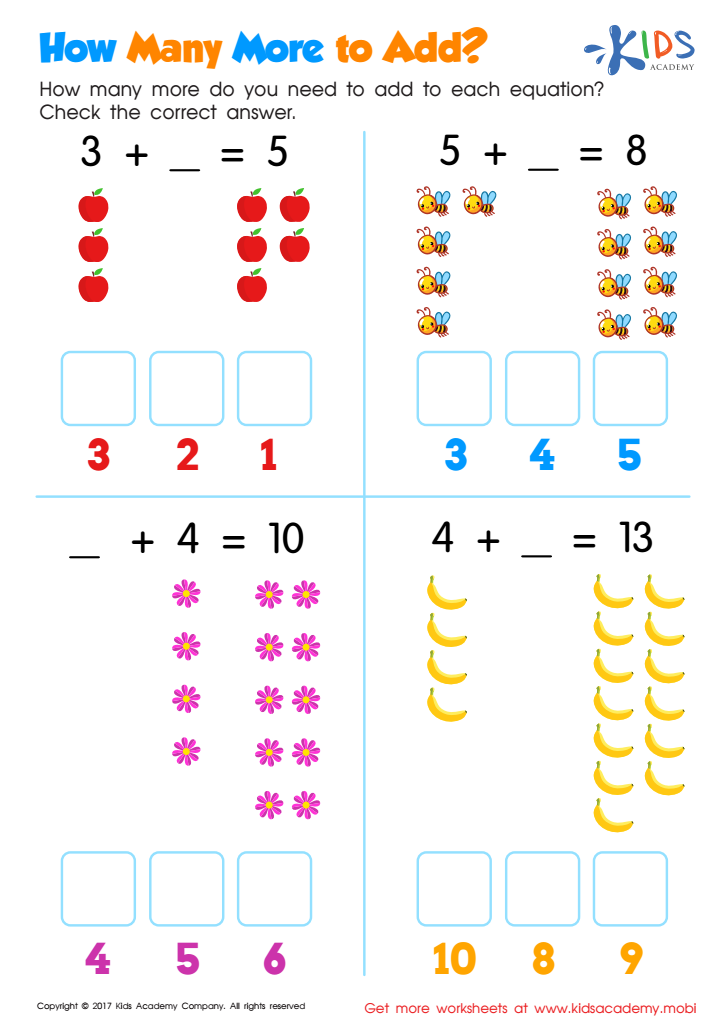
How Many More to Add Worksheet
Sharpen your child's math skills with this pdf worksheet. Help them figure out how many apples, bees, flowers and bananas are needed to reach the answer given. The possible answers are provided at the bottom of the boxes. Have some fun doing some addition and subtraction magic together and get those math skills sharpened!
How Many More to Add Worksheet
Worksheet
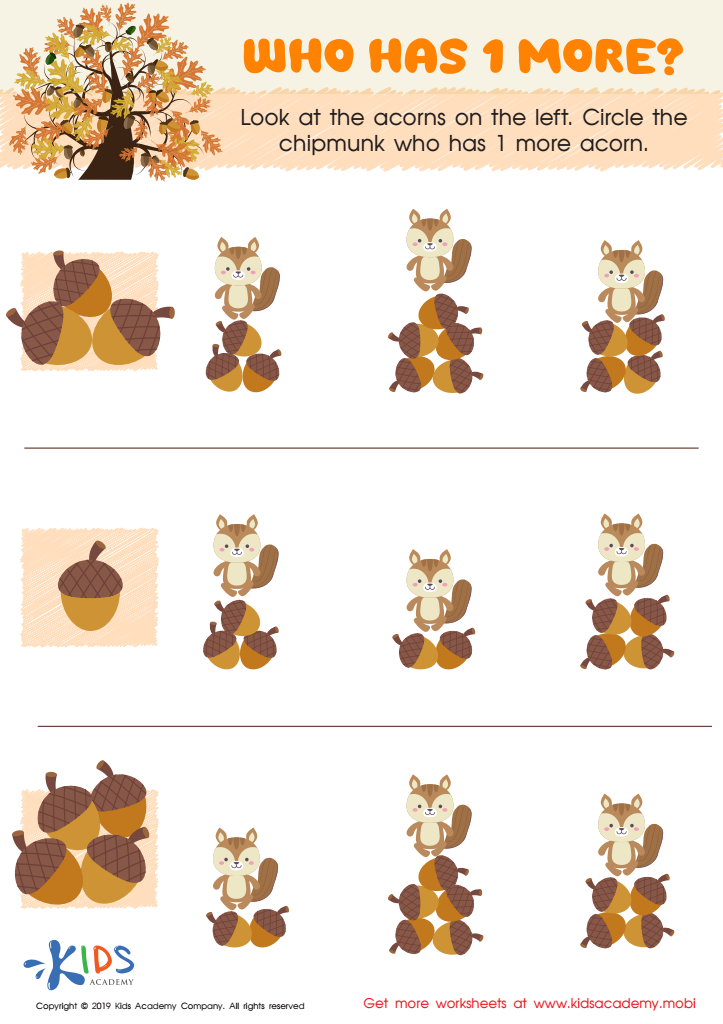
Who Has 1 More? Worksheet
Do your kids know what chipmunks are? They eat acorns, store them for bad weather, and live in trees or on the ground. Count and circle the chipmunk with one more acorn than the others on the printout.
Who Has 1 More? Worksheet
Worksheet
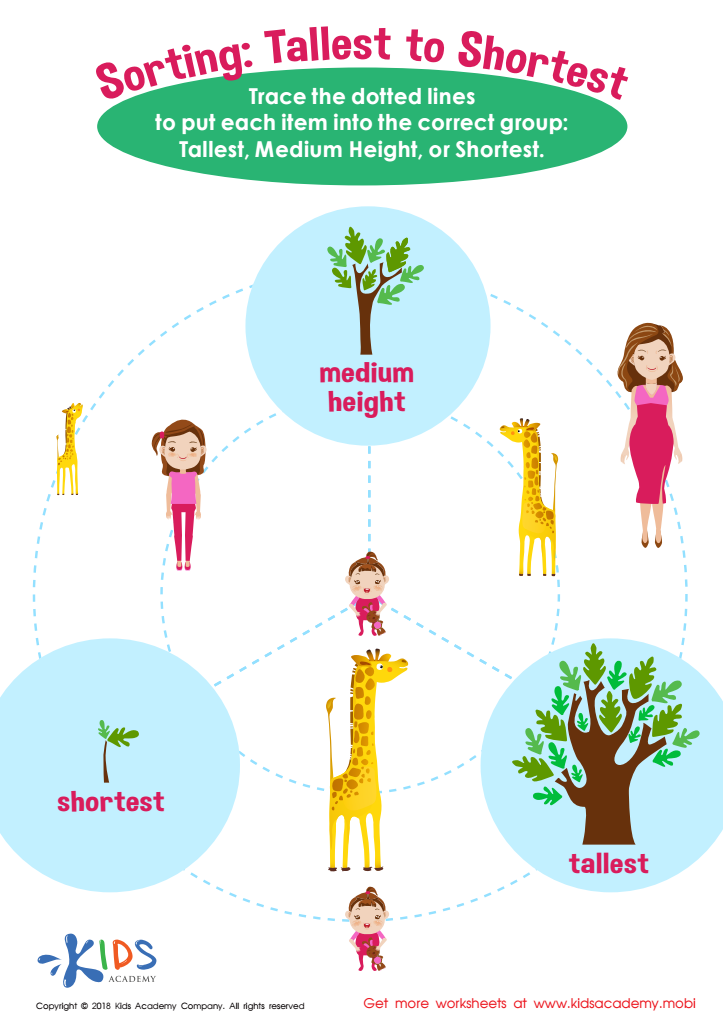
Sorting: Tallest to Shortest Worksheet
This worksheet is great for preschoolers to practice foundational measurement skills. Traceable lines help them sort pictures into Tallest, Shortest and Medium categories, giving them concrete examples to compare. Fine motor skills and understanding of relationships between sizes are also developed - perfect for preparing them for larger measurement concepts.
Sorting: Tallest to Shortest Worksheet
Worksheet
Join Kids Academy for Free
Who is primarily going to use this learning content?





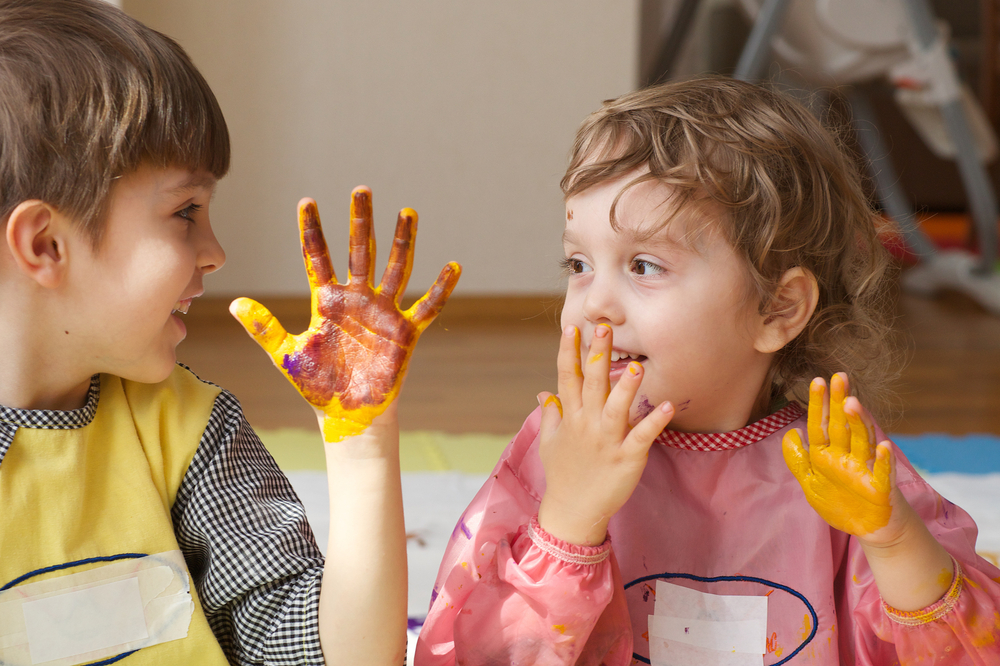


Comparison skills are crucial for children ages 3-6 as they serve as foundational building blocks for critical thinking and problem-solving. During these formative years, children naturally explore and understand the world around them, often comparing objects, concepts, and experiences. Fostering these skills empowers kids to identify similarities and differences, enhancing their cognitive development.
Parents and teachers should prioritize comparison skills since they are critical in various learning areas, including mathematics, literacy, and social-emotional development. For instance, when children compare sizes, quantities, or shapes, they build their understanding of mathematical concepts. In literacy, comparing story elements helps in developing comprehension and narrative skills. Furthermore, comparison skills in social contexts teach children to recognize and respect diverse perspectives, enhancing their empathy and interpersonal relationships.
By actively engaging children in comparison activities—such as sorting objects, contrasting characters in stories, or discussing various experiences—adults can create a rich environment for inquiry and exploration. Supporting these skills not only cultivates a child's ability to think analytically but also lays a strong foundation for academic success and lifelong learning. Thus, prioritizing comparison skills is essential for nurturing well-rounded, critical, and aware individuals.








