Filters

320 filtered results

Clear all filters
Favorites
With answer key
Interactive

320 filtered results

Difficulty Level

Grade


Check out this FREE "Counting practice" Trial Lesson for age 3-6!

Making 10's

Favorites
With answer key
Interactive
  • 3-6
  • Counting practice
Find 10 Worksheet
Find 10 Worksheet

Find 10 Worksheet

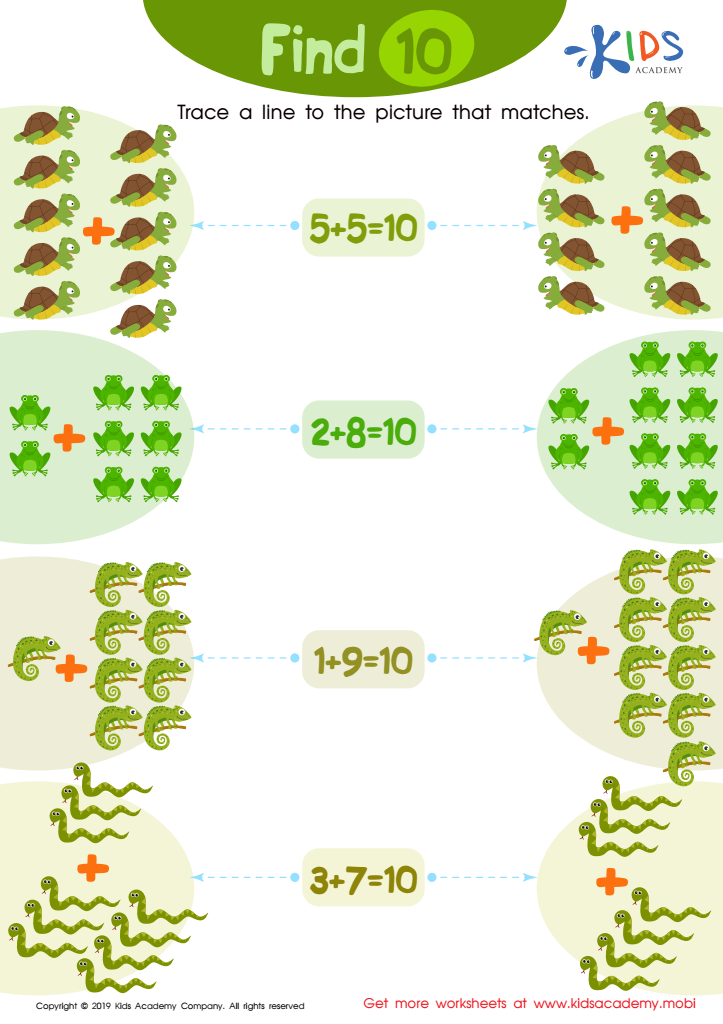
Counting can be tricky, but your kids can master it with regular practice. Here's a fun activity to help: count the animals, then trace a line to the pictures that matches. With these tips, math will be an easy walk in the park.
Find 10 Worksheet
Worksheet
Adding Up to 5 in the Sea: Page 29
Worksheet
Counting Coins Worksheet

Counting Coins Worksheet

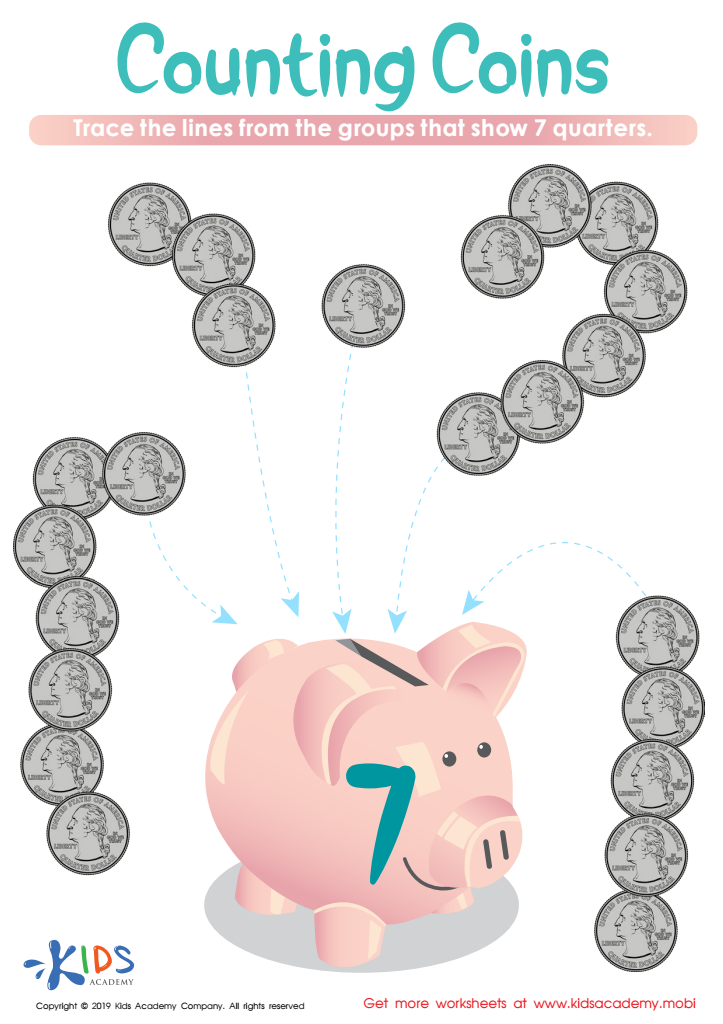
Help your students overcome their fear or aversion of counting and learning numbers with this fun worksheet! It features colorful pictures with four groups of coins. Ask the students to count each group, then trace the lines to the piggy bank. Show them it's easy to count and learn numbers!
Counting Coins Worksheet
Worksheet
Counting numbers worksheet for kindergarten

Counting Numbers Worksheet For Kindergarten
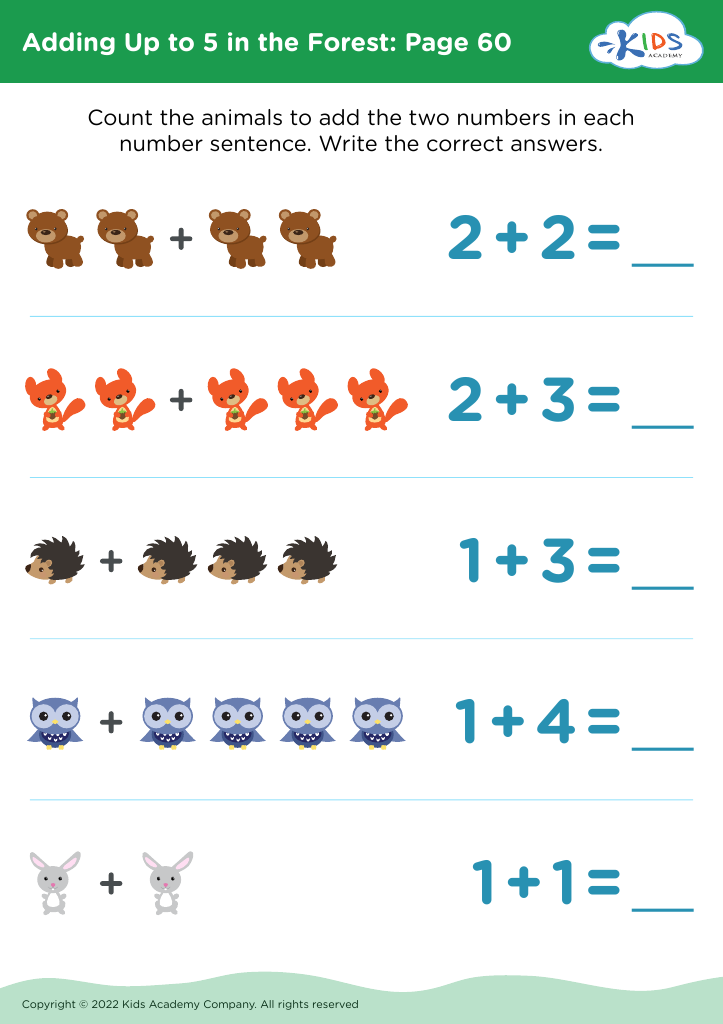
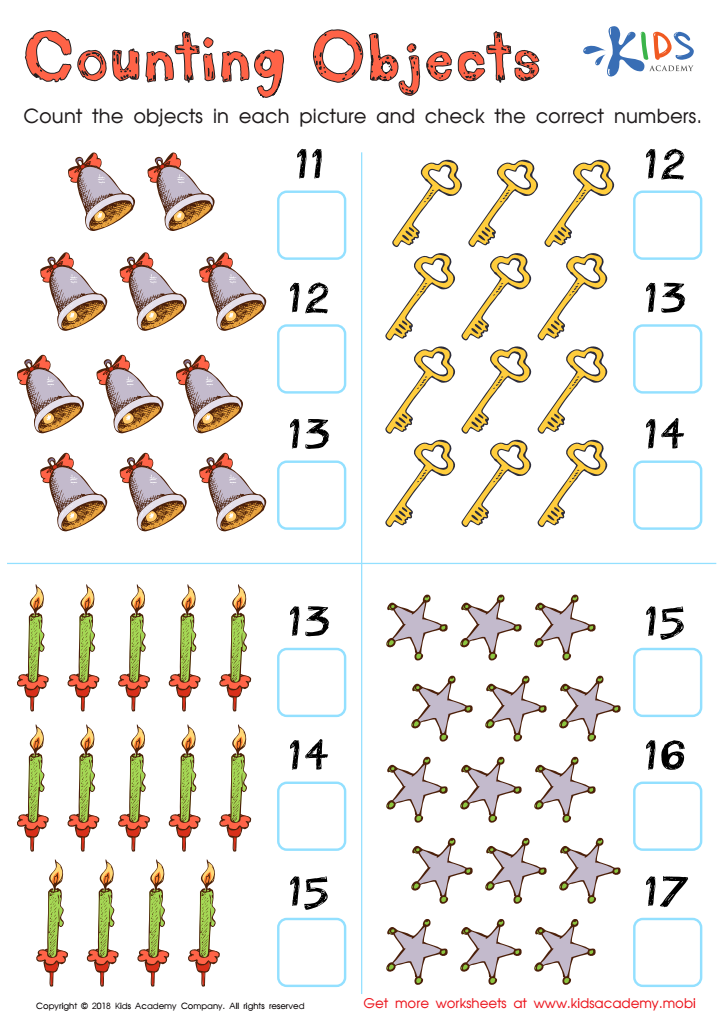
This worksheet is a great way to get your child practicing foundational math skills. With bright pictures to count, counting numbers just got a lot more fun! Get them ready for future math success and help them hone their early math skills.
Counting Numbers Worksheet For Kindergarten
Worksheet
Adding Up to 5 in the Forest: Page 60
Worksheet
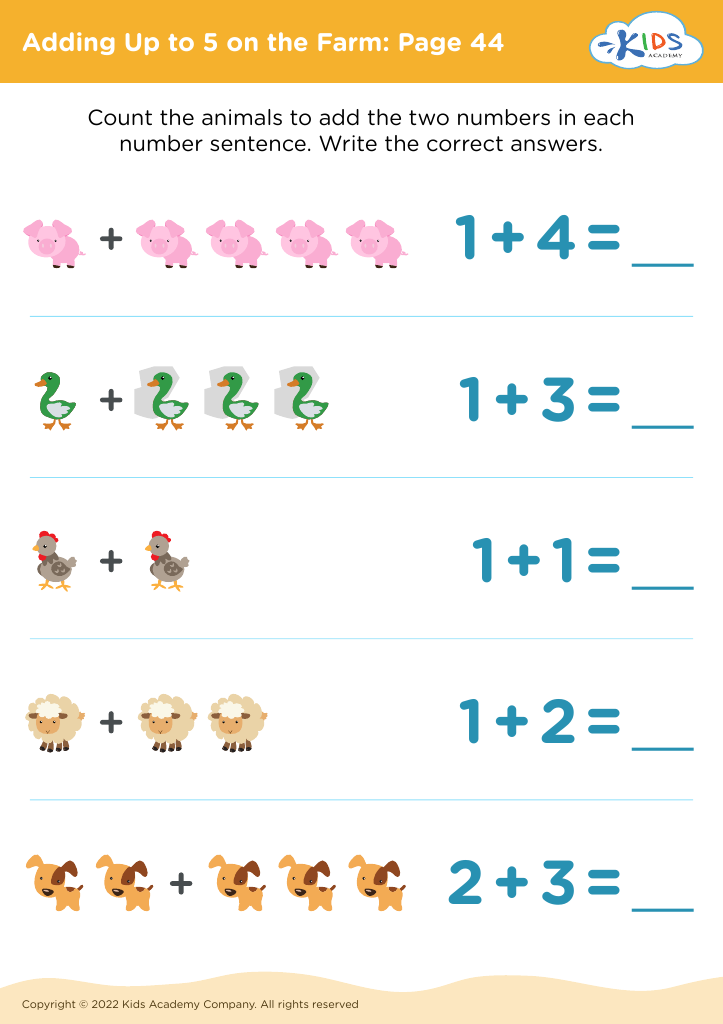
Adding Up to 5 on the Farm: Page 44
Worksheet
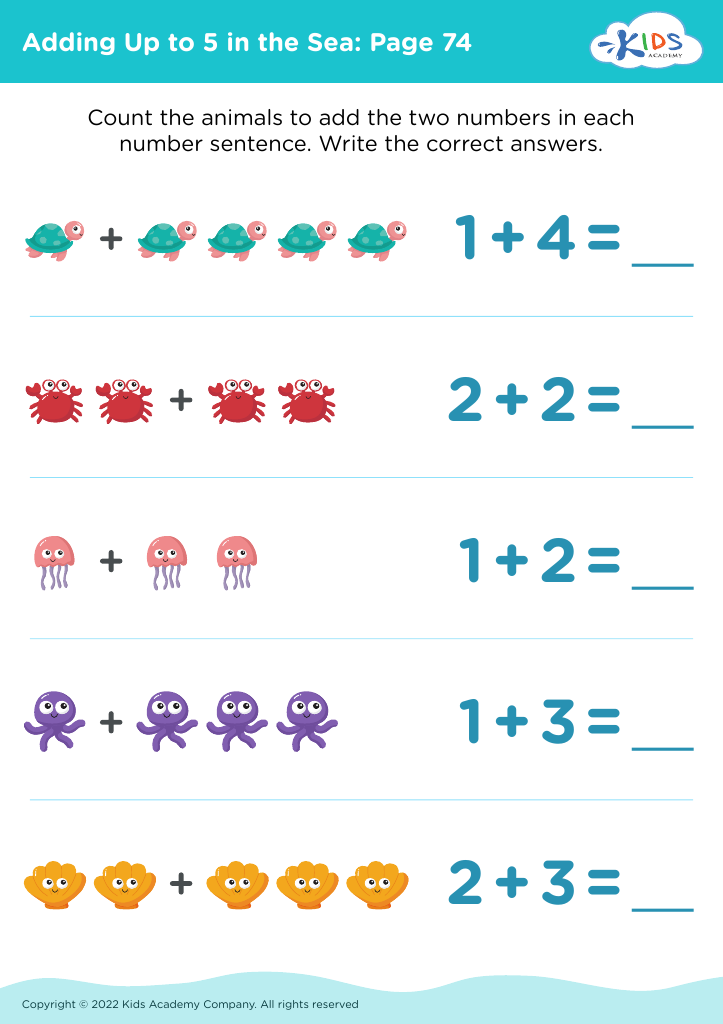
Adding Up to 5 in the Sea: Page 74
Worksheet
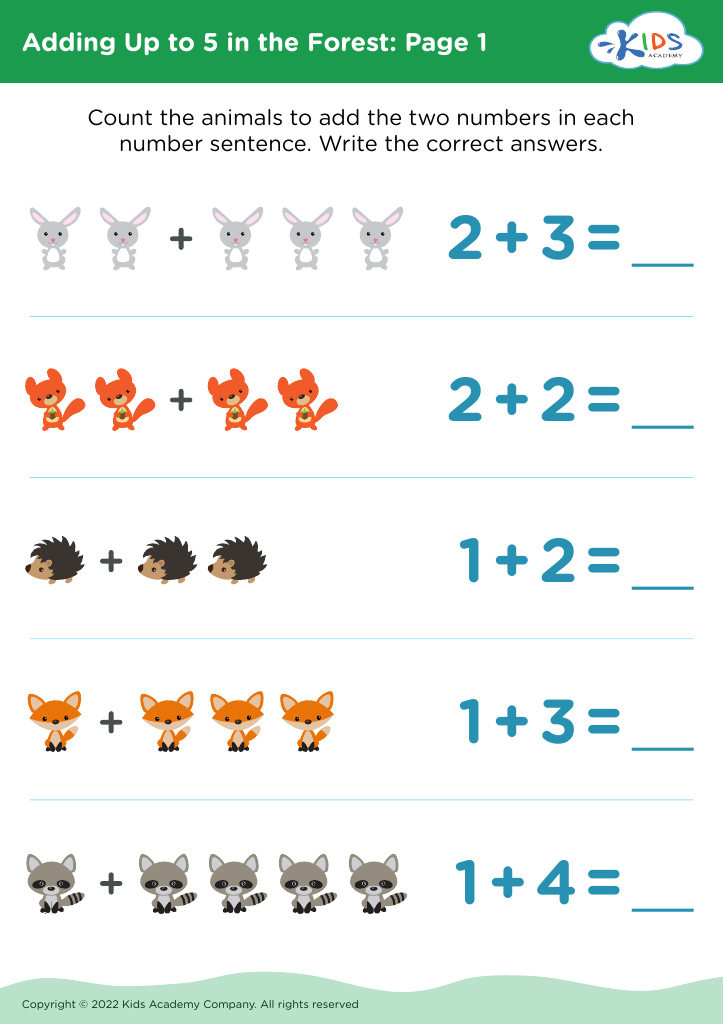
Adding Up to 5 in the Forest: Page 1
Worksheet
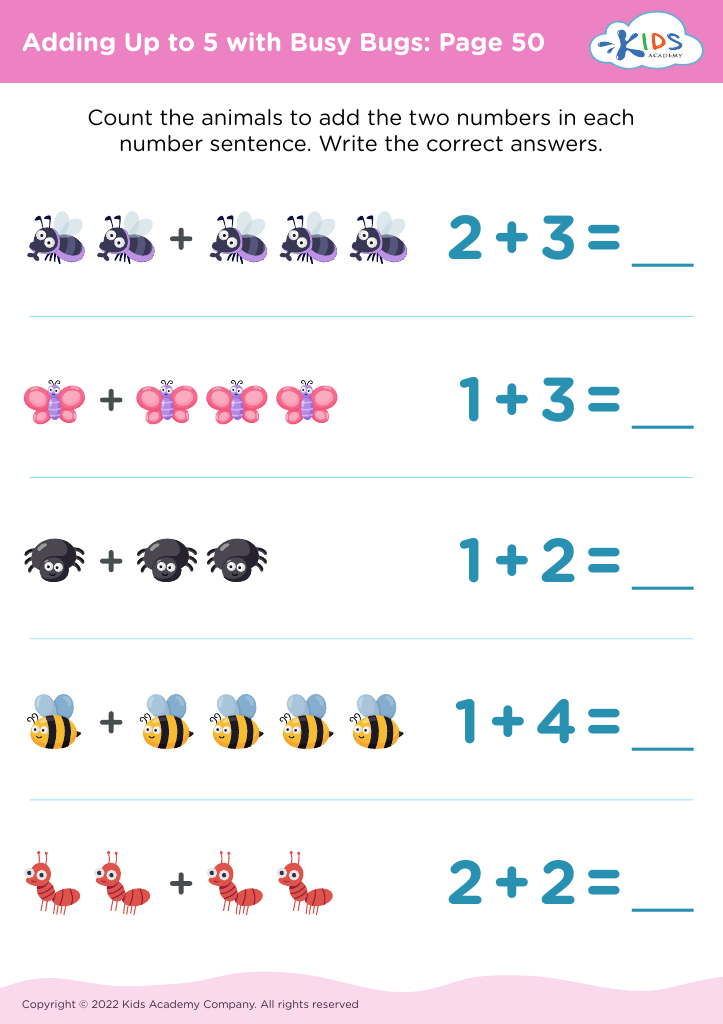
Adding Up to 5 with Busy Bugs: Page 50
Worksheet
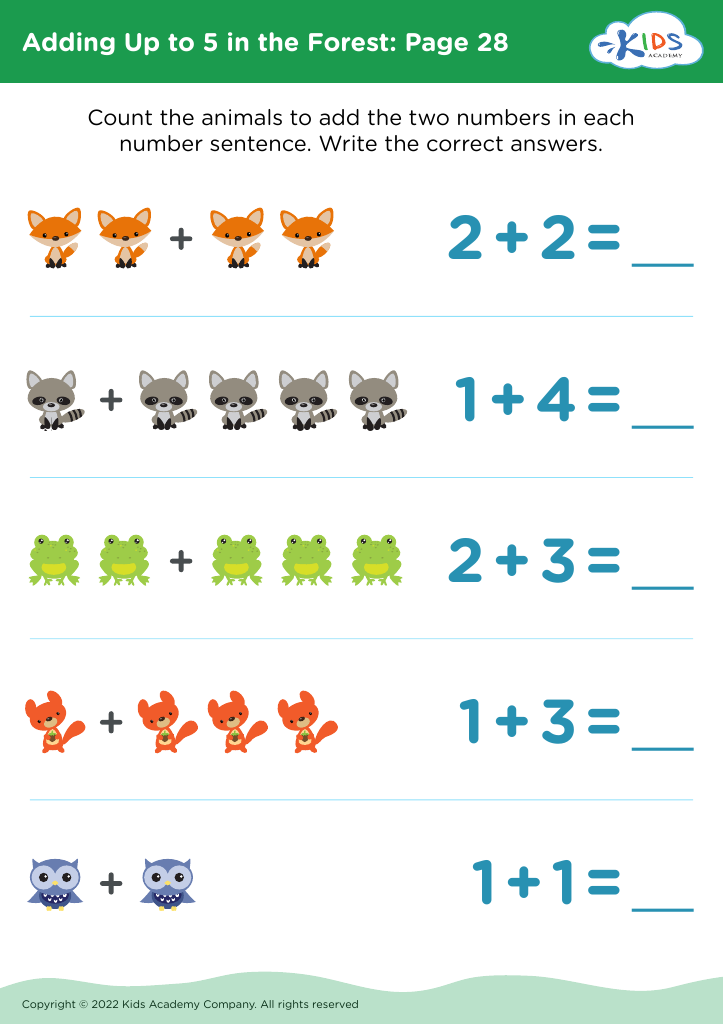
Adding Up to 5 in the Forest: Page 28
Worksheet
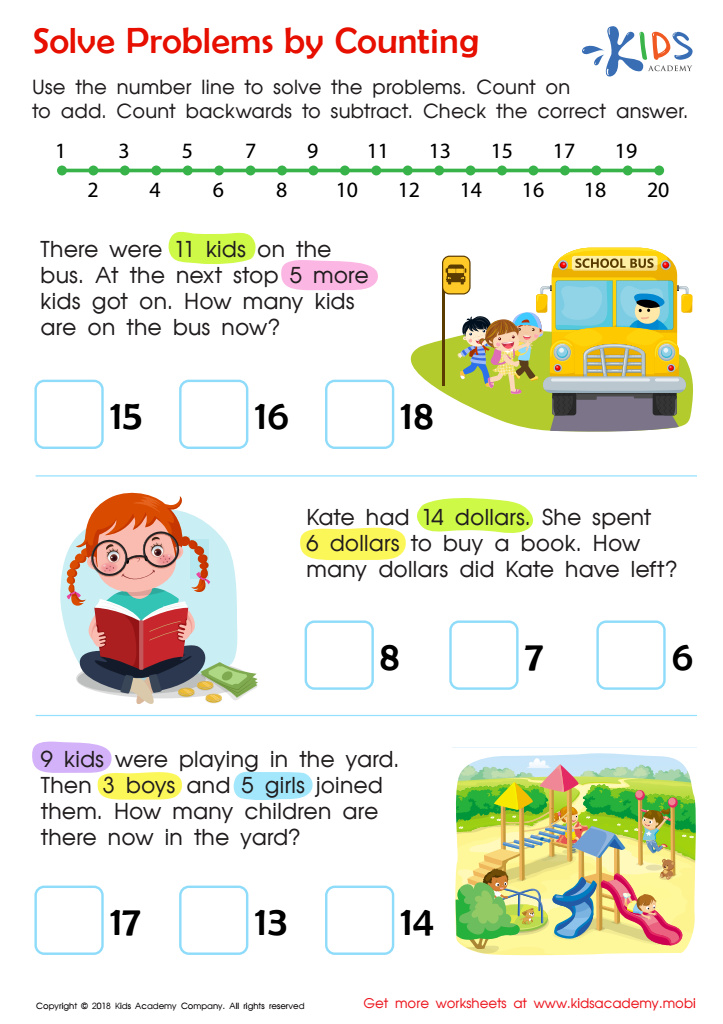
Solve Problems by Counting Worksheet
Solve Problems by Counting Worksheet

Download this free colorful worksheet and give your young math student practice with a number line. Counting on or back, they will learn to solve basic addition and subtraction word problems with ease. Ultimately, it will help them develop automaticity for later efficiency with addition and subtraction.
Solve Problems by Counting Worksheet
Worksheet
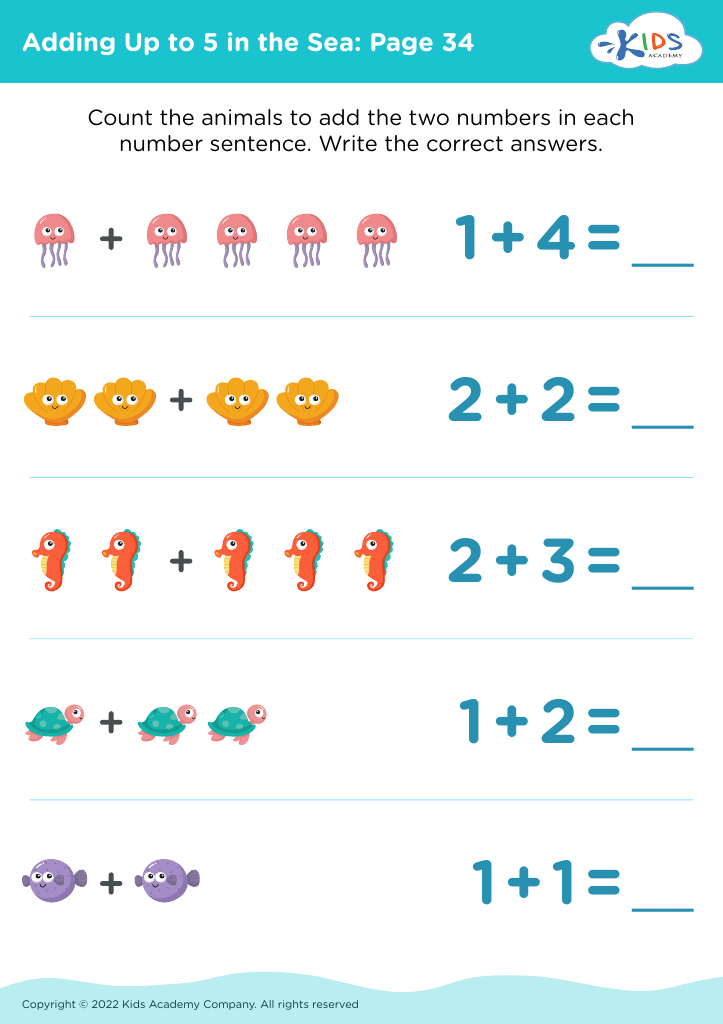
Adding Up to 5 in the Sea: Page 34
Worksheet
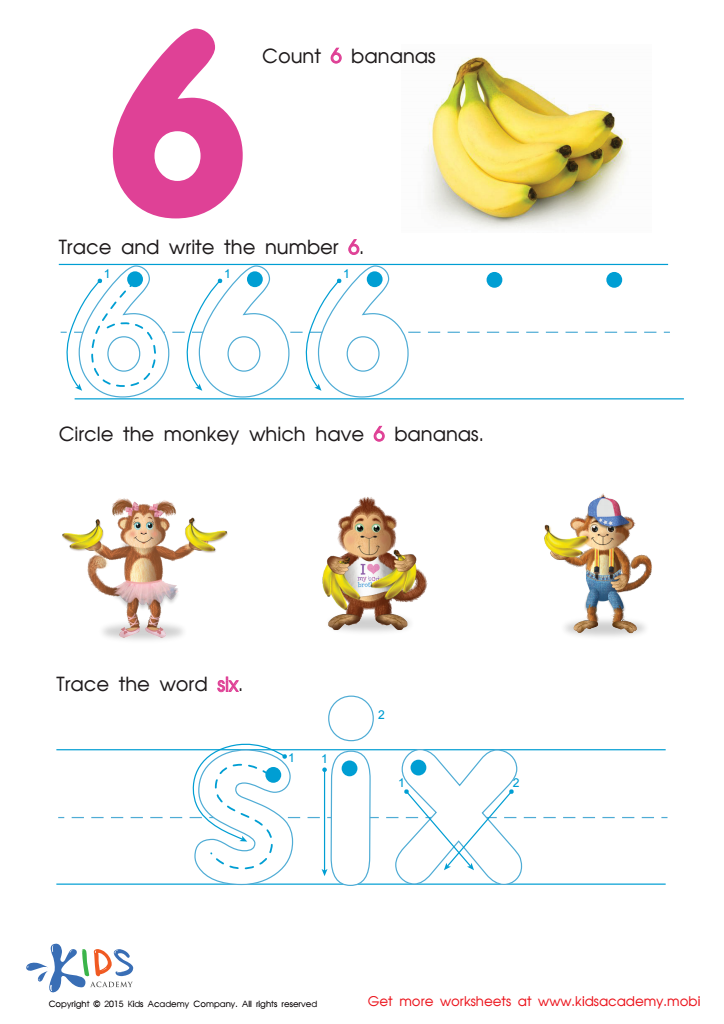
Learning Numbers Worksheets: Tracing And Writing Number 6 PDF

Tracing And Writing Number 6 Worksheet
Learn numbers in a fun way with our preschool number worksheets. Count six bananas, trace and write the number, find the monkey with six bananas, and trace the word "six." Explore more activities at Kids Academy.
Tracing And Writing Number 6 Worksheet
Worksheet
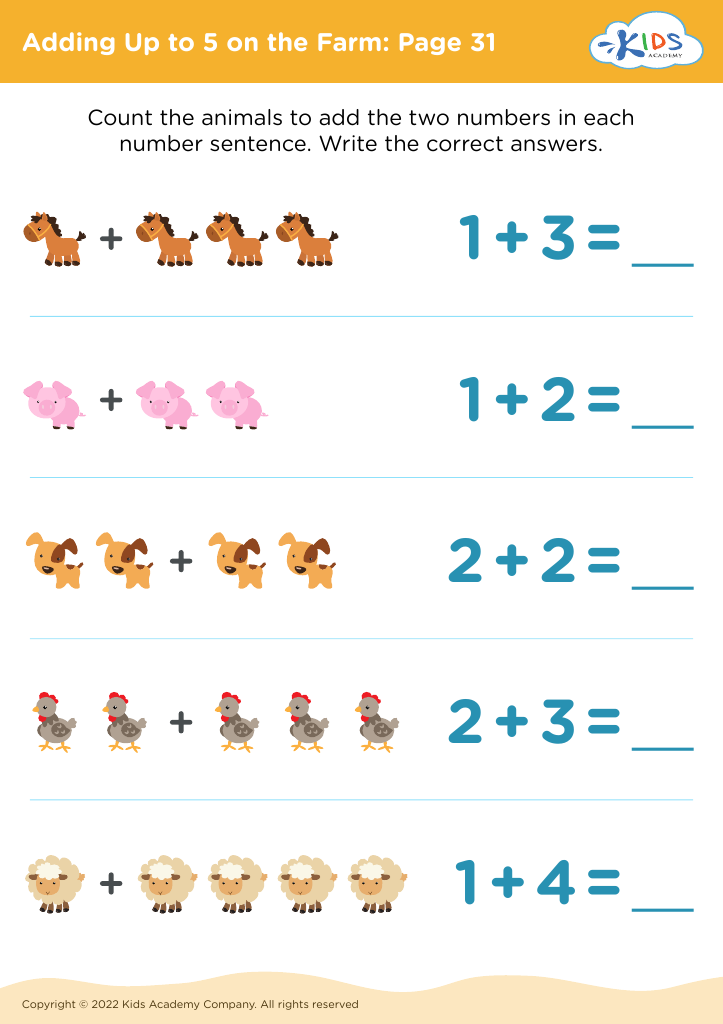
Adding Up to 5 on the Farm: Page 31
Worksheet
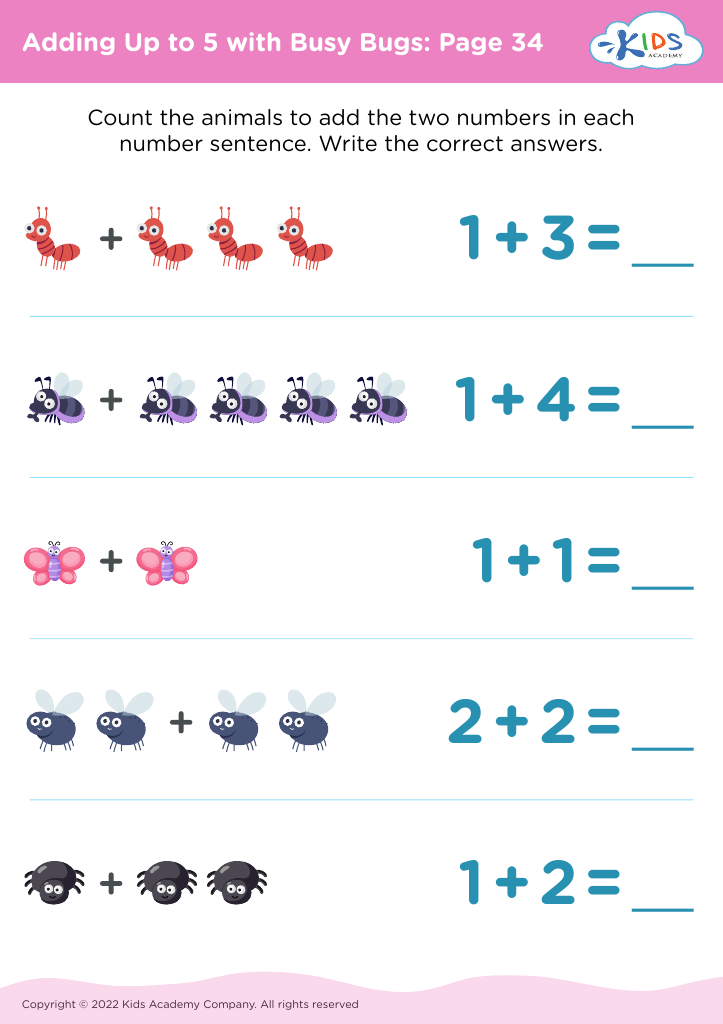
Adding Up to 5 with Busy Bugs: Page 34
Worksheet
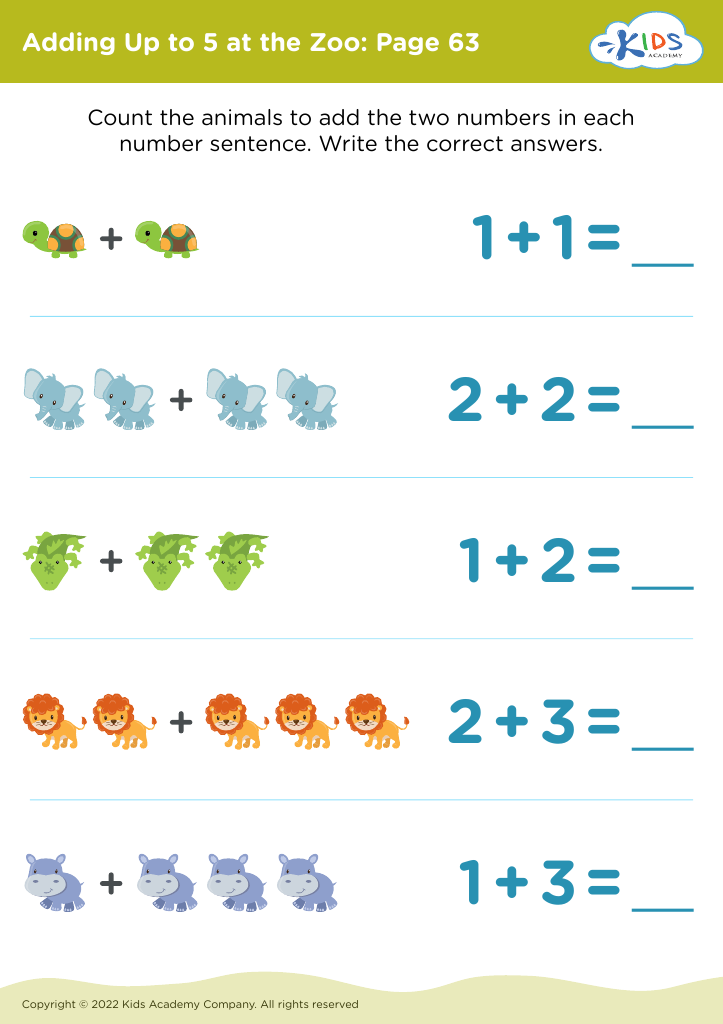
Adding Up to 5 at the Zoo: Page 63
Worksheet
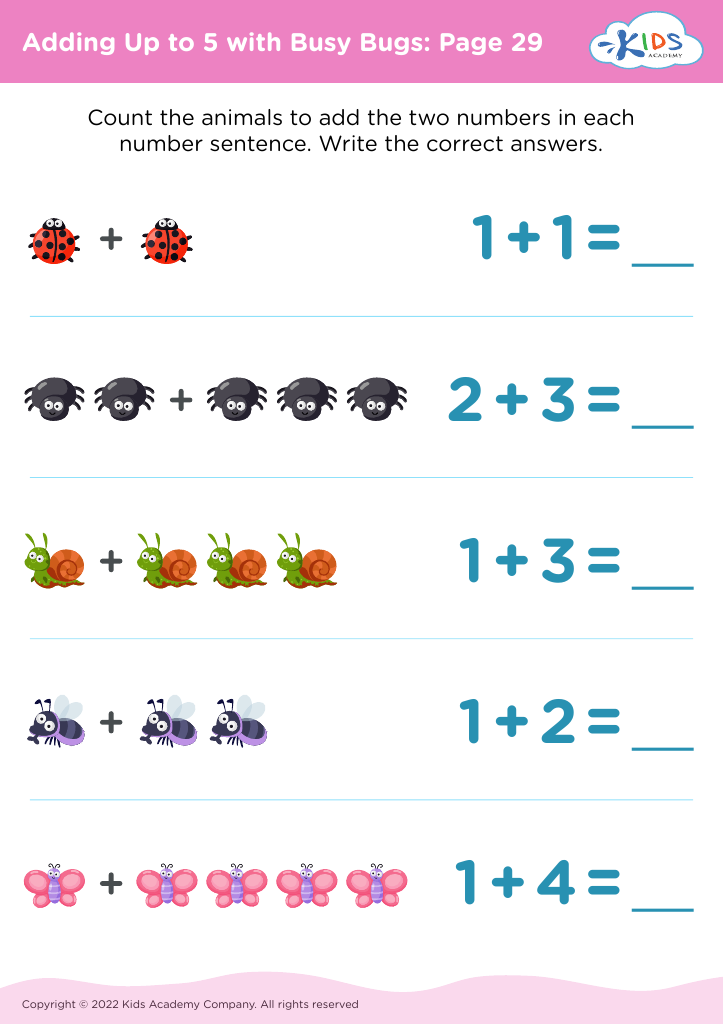
Adding Up to 5 with Busy Bugs: Page 29
Worksheet
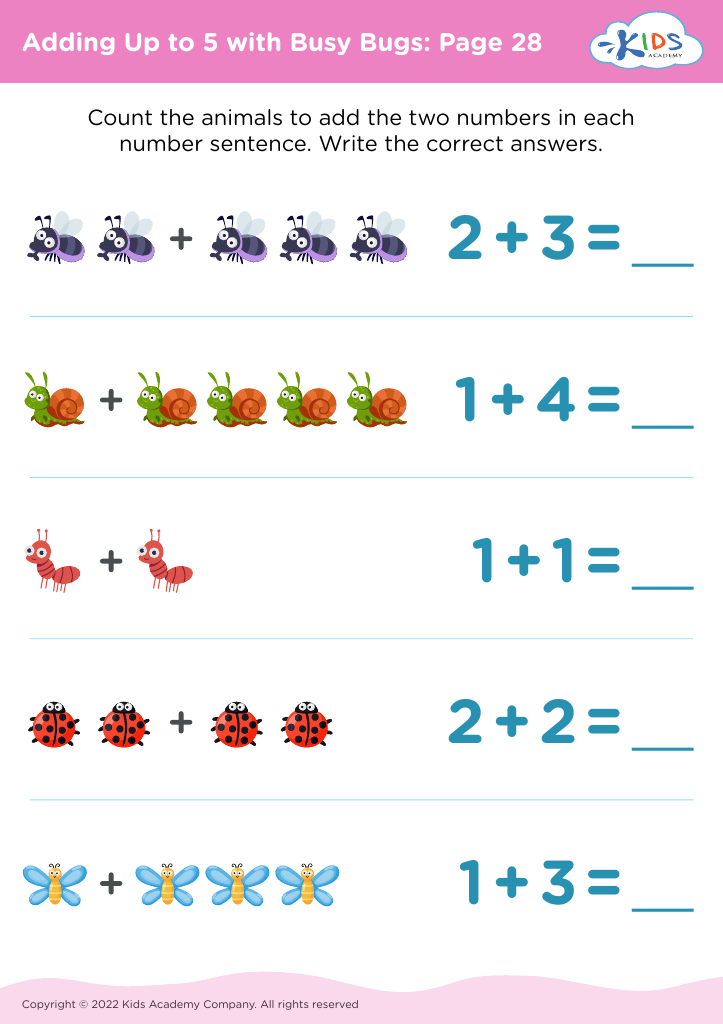
Adding Up to 5 with Busy Bugs: Page 28
Worksheet
18 Candles Worksheet
18 Candles Worksheet
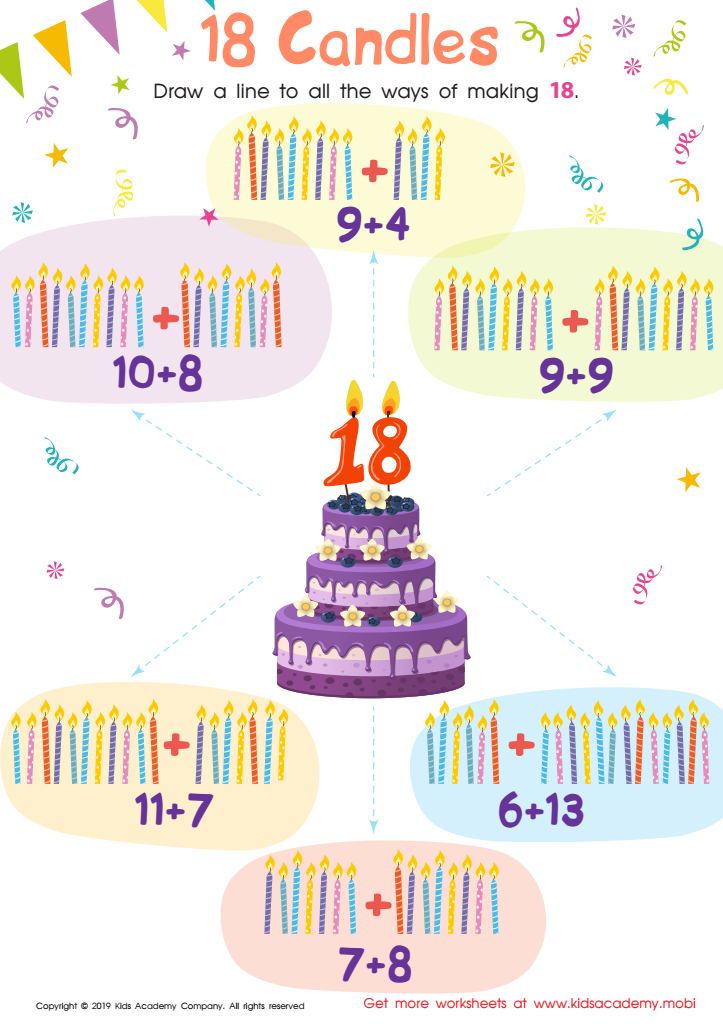
This worksheet is great for introducing your students to addition and subtraction. Help your kids solve the simple equations on it and draw a line from the birthday cake with 18 on it to all the solutions. Practice like this will prepare them to tackle more complex math problems.
18 Candles Worksheet
Worksheet
Adding Up to 5 in the Sea: Page 39
Worksheet
Adding Up to 5 on the Farm: Page 67
Worksheet
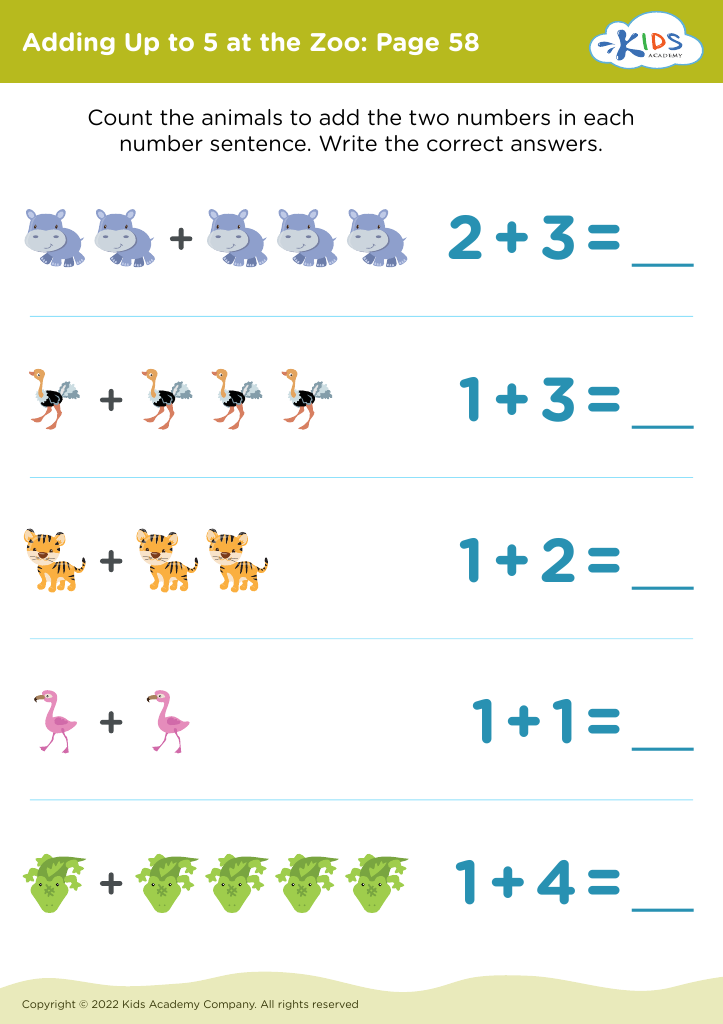
Adding Up to 5 at the Zoo: Page 58
Worksheet
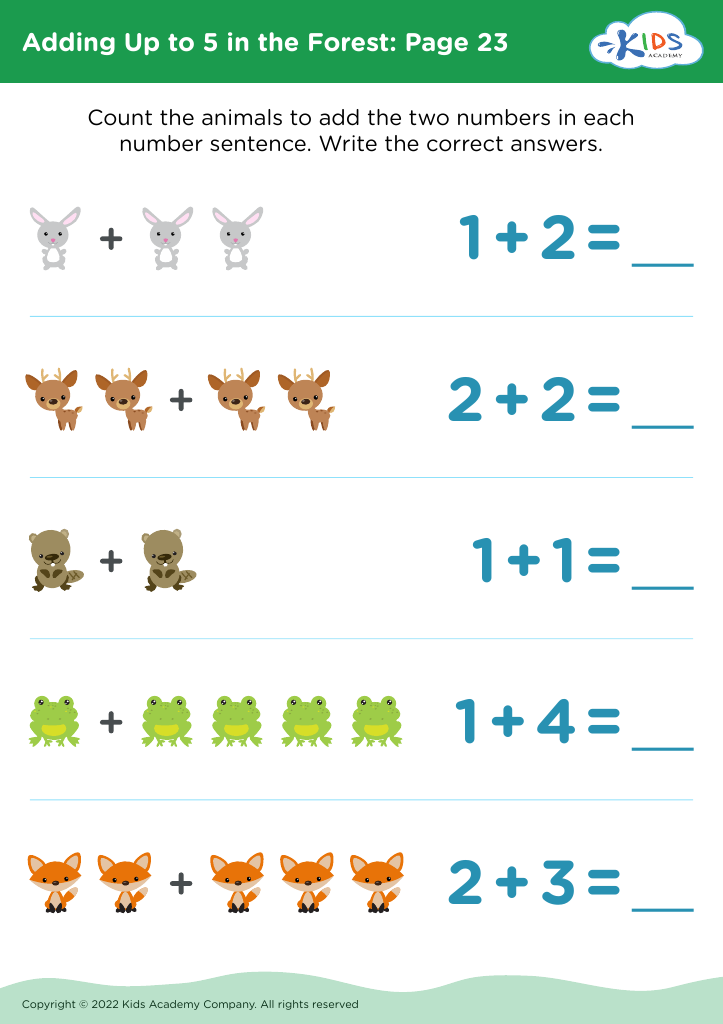
Adding Up to 5 in the Forest: Page 23
Worksheet
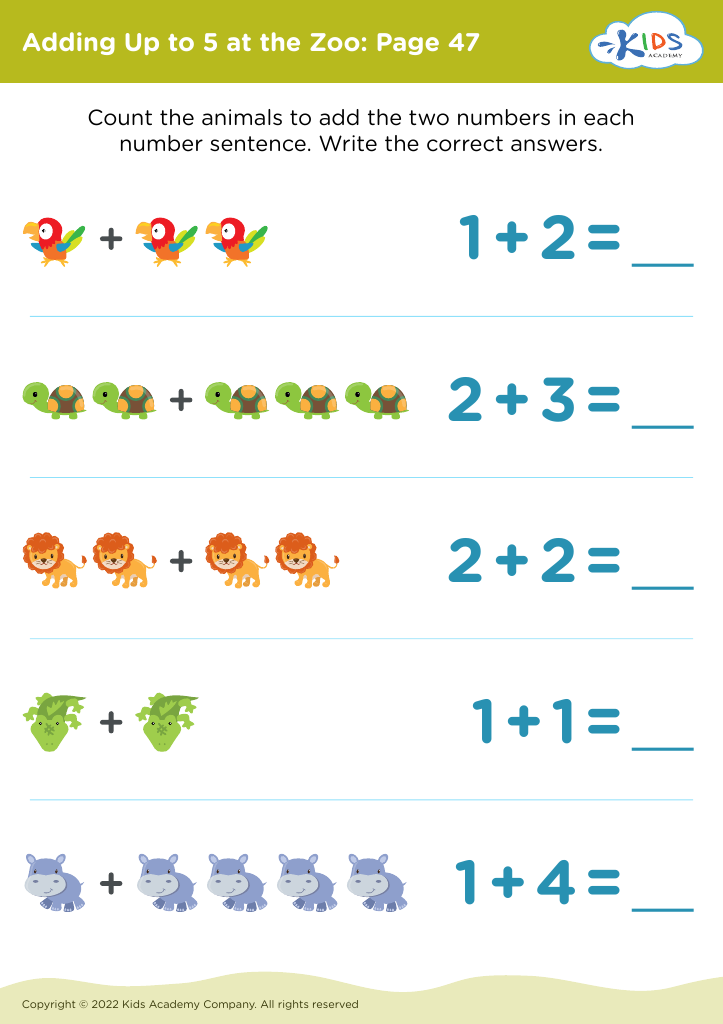
Adding Up to 5 at the Zoo: Page 47
Worksheet


Counting practice is crucial for children aged 3-6 as it lays the foundation for essential mathematical skills and cognitive development. During these formative years, children actively engage with their environments; counting enhances their understanding of numbers as they relate to the world around them. By practicing counting, children improve their numerical fluency, a skill that is vital for everyday life and academic success.

Additionally, counting helps develop critical thinking and cognitive skills. It enhances children's ability to classify, compare, and recognize patterns in their surroundings. When parents and teachers provide counting exercises, they enable kids to make connections between numbers and quantities, fostering a sense of order and logic.

Moreover, counting can be both fun and interactive. Activities such as counting objects, singing number songs, or playing games can make learning enjoyable, promoting a positive attitude towards mathematics from an early age. Engaging in counting practice also supports language development, as children learn to articulate numbers and understand concepts like "more" and "less."

Ultimately, emphasizing counting at this stage contributes to a child’s academic readiness and confidence, setting the groundwork for more complex mathematical concepts in the future. By nurturing these skills, parents and teachers play a pivotal role in fostering lifelong learning.