Enhancing logical thinking Worksheets for Ages 3-6
6 filtered results
-
From - To
Explore our "Enhancing Logical Thinking Worksheets" designed specifically for children aged 3-6. These engaging and interactive worksheets foster essential cognitive skills through fun activities that develop reasoning, problem-solving, and analytical abilities. Each worksheet is tailored to encourage creativity and curiosity while promoting independent thinking. Children will enjoy various exercises, including pattern recognition, sequencing games, and puzzle-solving, making learning an enjoyable adventure. Perfect for home or classroom use, these worksheets help build a strong foundation for future learning. Download our resources today and watch young minds thrive as they enhance their logical thinking skills in a vibrant, playful environment!
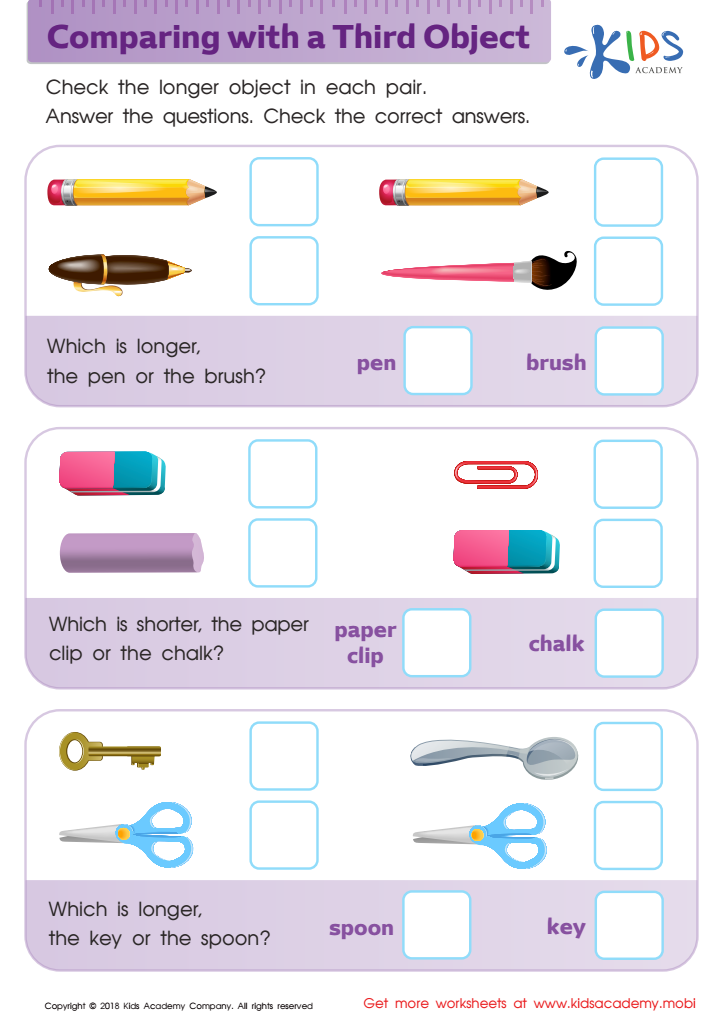
Comparing with a Third Object Worksheet
 Assign to My Students
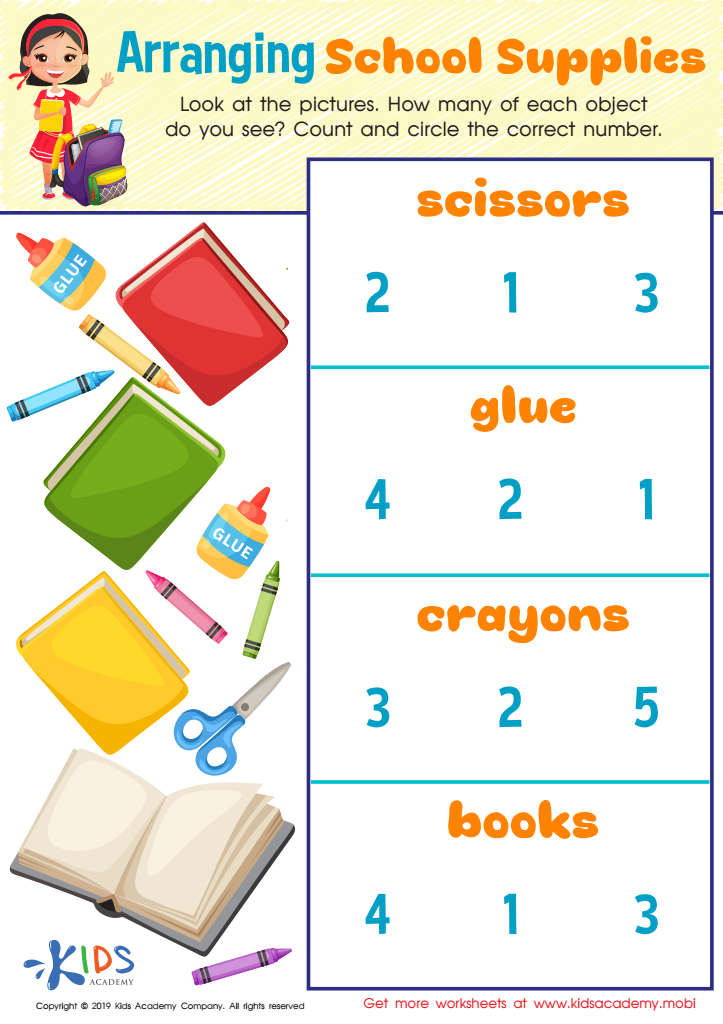
Arranging School Supplies Worksheet
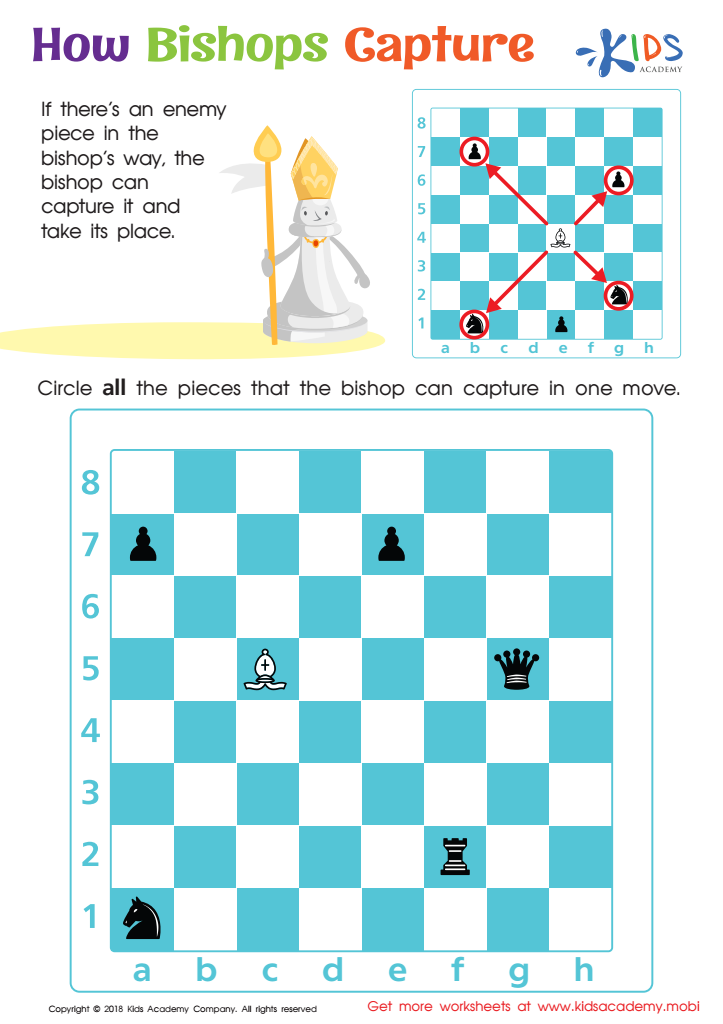
How Bishops Capture Worksheet
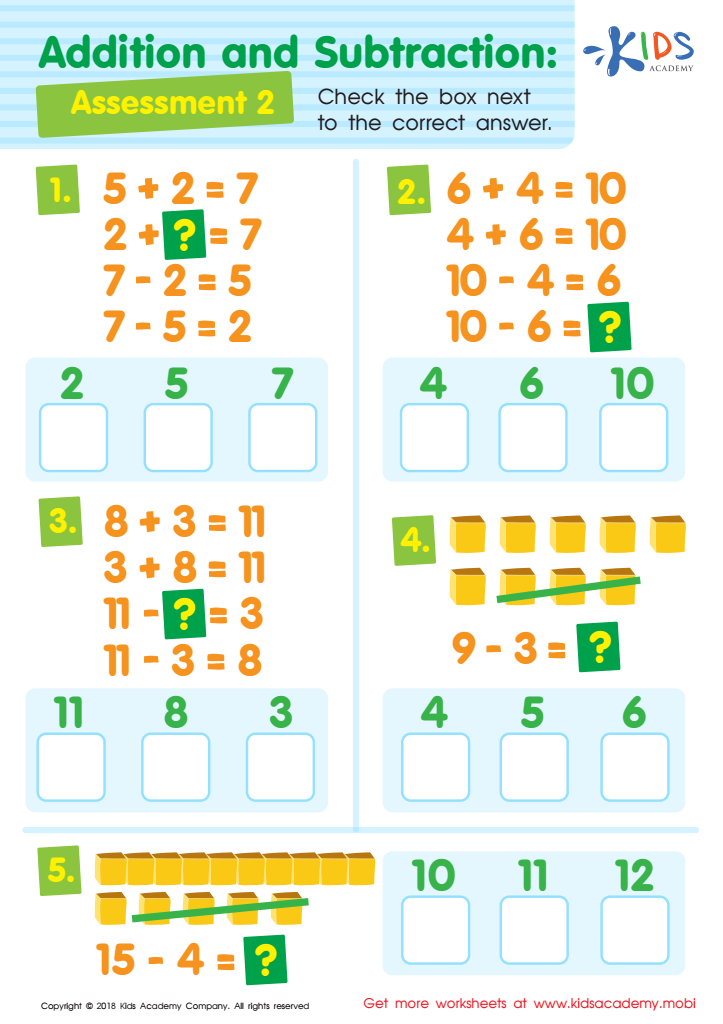
Addition and Subtraction Assessment 2 Worksheet
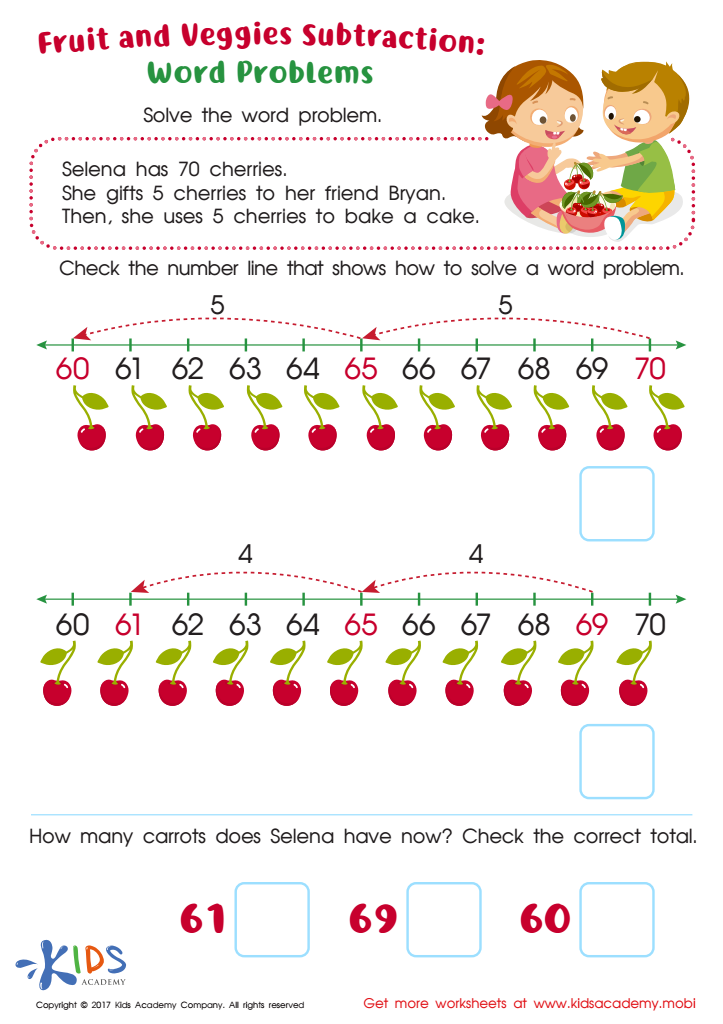
Subtraction Word Problems Free Printable
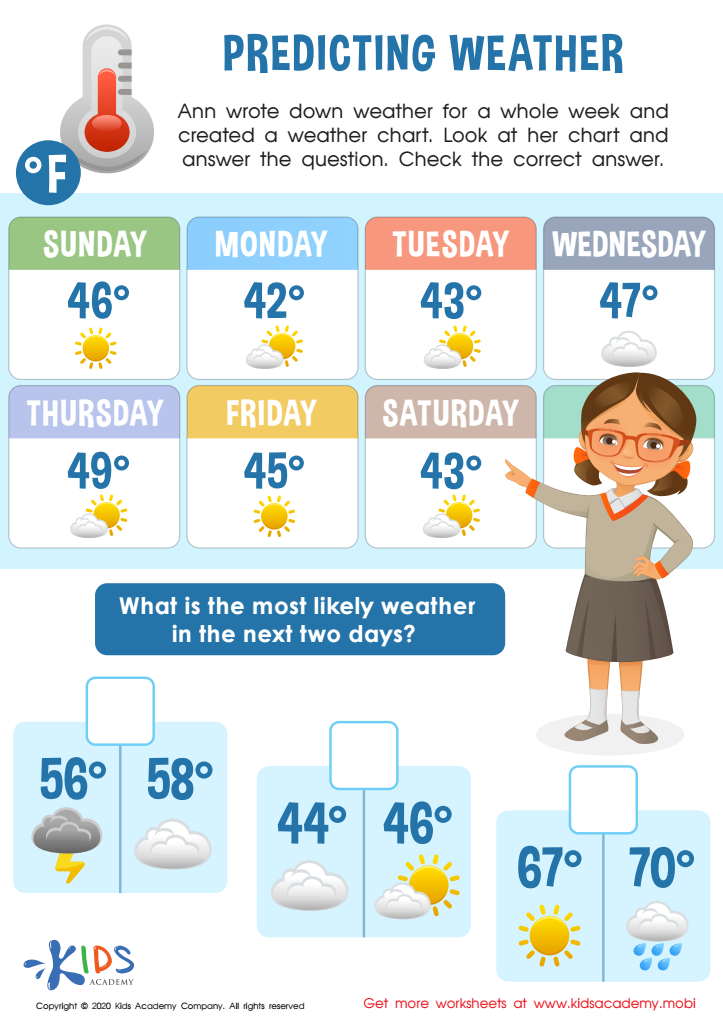
Predicting Weather Worksheet








Enhancing logical thinking in children ages 3-6 is crucial for several reasons. During these formative years, children's brains develop rapidly, establishing the foundation for critical thinking and problem-solving skills that will benefit them throughout their lives. By supporting the development of logical thinking, parents and teachers can help children learn to analyze situations, make decisions, and understand cause-and-effect relationships.
Engaging children in activities that promote logical thinking, such as puzzles, sorting games, or simple math concepts, fosters cognitive skills that are essential for future academic success. These skills encourage children to think creatively, work collaboratively, and develop resilience as they face challenges and explore solutions.
Furthermore, logical thinking plays a vital role in emotional and social development. Children learn to navigate relationships, understand different perspectives, and resolve conflicts more effectively. Encouraging logical reasoning helps them to articulate thoughts clearly and make informed choices, which build healthy relationships.
In summary, enhancing logical thinking in young children is not only essential for their academic development but also for their social, emotional, and overall growth, giving them the tools they need for success in school and life. Parents and teachers play a significant role in guiding this critical area of development.








