Identifying story elements Worksheets for Ages 3-6
3 filtered results
-
From - To
Unlock your child's literary potential with our "Identifying Story Elements Worksheets" designed for ages 3-6! These engaging, interactive worksheets introduce young readers to essential story components such as characters, setting, plot, and theme. Perfect for early development, each activity encourages critical thinking, comprehension, and creativity through fun illustrations and relatable examples. Tailored for preschoolers and kindergartners, our worksheets promote important skills while making learning enjoyable. Whether at home or in the classroom, these resources help cultivate a lifelong love for reading and storytelling. Dive into the world of narratives and watch your child's imagination flourish!
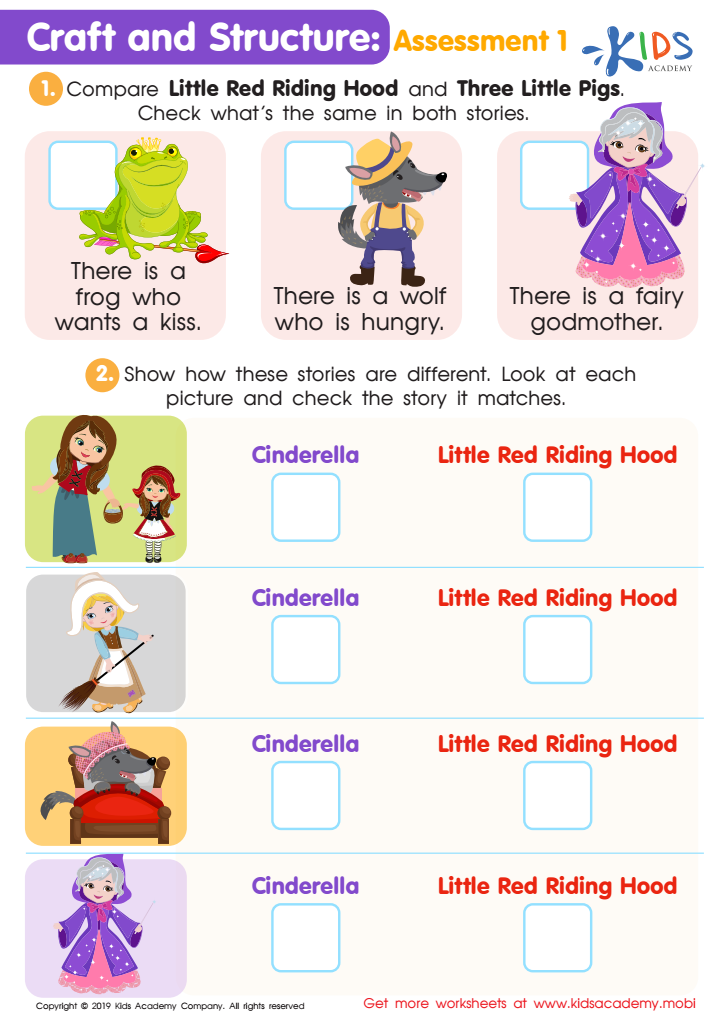
Craft and Structure: Assessment 1 Worksheet
 Assign to My Students
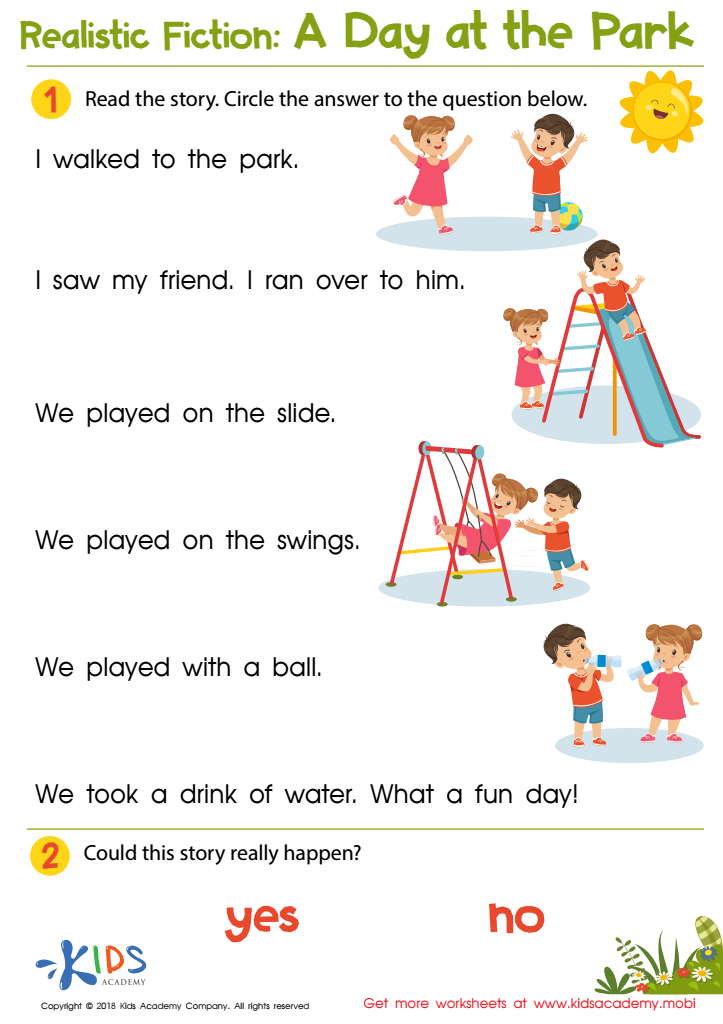
A Day at the Park Worksheet
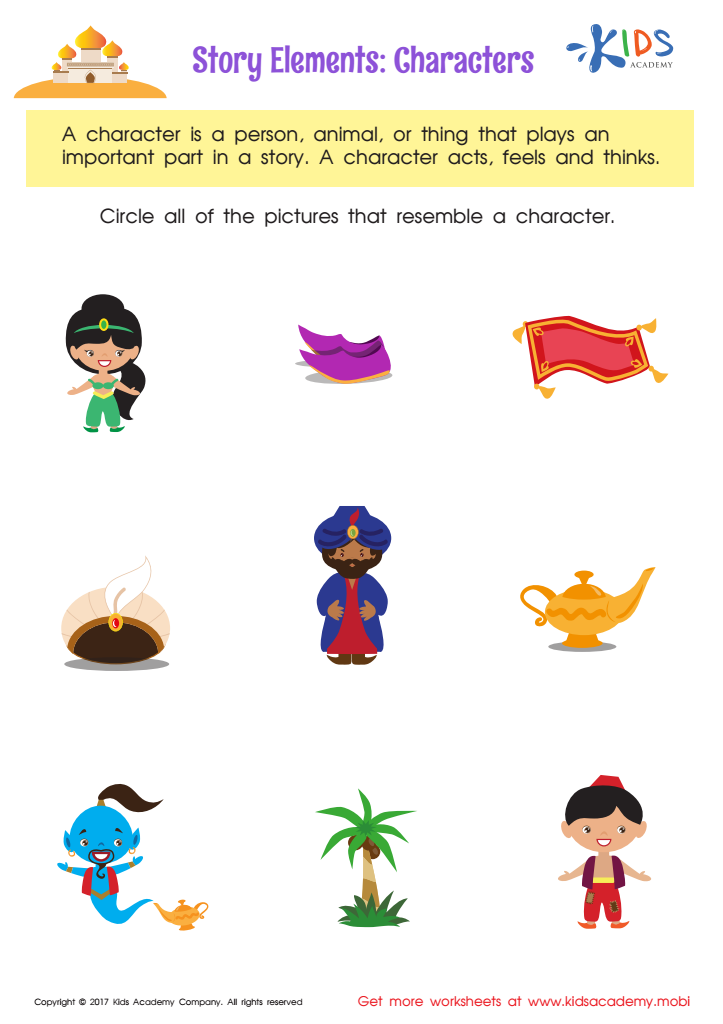
Story Elements Printable






Identifying story elements is crucial for young children aged 3-6 as it forms the foundation for their cognitive and literacy development. Engaging with story elements—such as characters, setting, plot, conflict, and resolution—helps children make sense of narratives and enhances their comprehension skills.
For parents and teachers, guiding children in recognizing these components fosters critical thinking and encourages them to analyze and discuss stories. This interaction promotes vocabulary development, as children learn new words and phrases related to different elements of storytelling. Additionally, understanding story elements inherently improves a child’s ability to retell stories, an important skill for literacy and communication.
Moreover, exploring these foundational concepts nurtures creativity and imagination. Children learn to craft their own stories, strengthening their narrative skills and promoting self-expression. By focusing on story elements, adults can create engaging, interactive reading experiences that capture children's interest and instill a love for literature.
Finally, teaching story elements fosters emotional intelligence, as children relate to characters, understand conflicts, and explore various themes. Thus, recognizing the importance of story elements equips children with essential skills, making it a priority for parents and educators alike.








