
Improving reading comprehension Worksheets for Ages 3-6
5 filtered results
Difficulty Level
Grade
Age
-
From - To
Subject
Activity
Standards
Enhance your child's reading skills with our engaging "Improving Reading Comprehension Worksheets" designed specifically for ages 3-6. These printable worksheets offer a fun and interactive approach to develop early literacy skills, fostering understanding and retention of stories. Carefully crafted to suit young learners, these exercises focus on key concepts such as character recognition, story sequencing, and vocabulary expansion. Parents and educators will find a wealth of resources that promote critical thinking and encourage a love for reading. Start your child's journey to becoming a confident reader with our comprehensive and accessible worksheets that make learning enjoyable!
Favorites
With answer key
Interactive
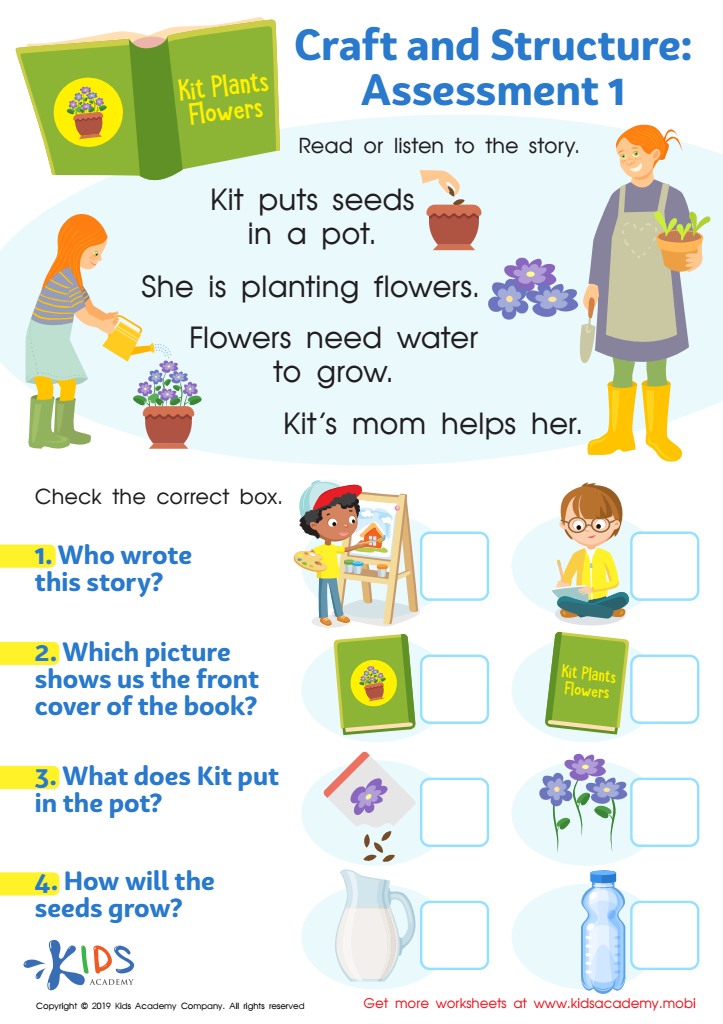
Craft and Structure: Assessment 1 Worksheet
A good reader needs more than word recognition: children must be able to identify story elements like author and main points. Test your child's craft and structure knowledge with this free PDF worksheet. They will read or listen to a story, then check off the correct answers according to what they heard or read.
 Assign to My Students
Craft and Structure: Assessment 1 Worksheet
Worksheet
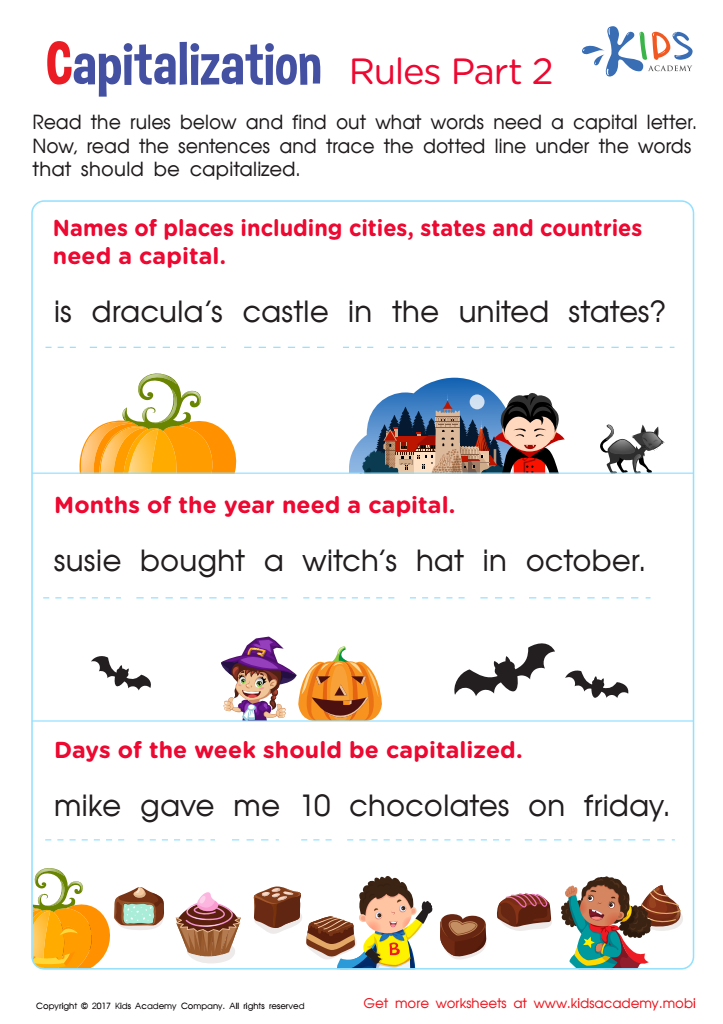
Capitalization Rules: Part 2 Worksheet
Split up grammar rules into shorter, achievable worksheets with this Halloween-themed worksheet, helping kids to practice capitalization for 1st grade.
Capitalization Rules: Part 2 Worksheet
Worksheet
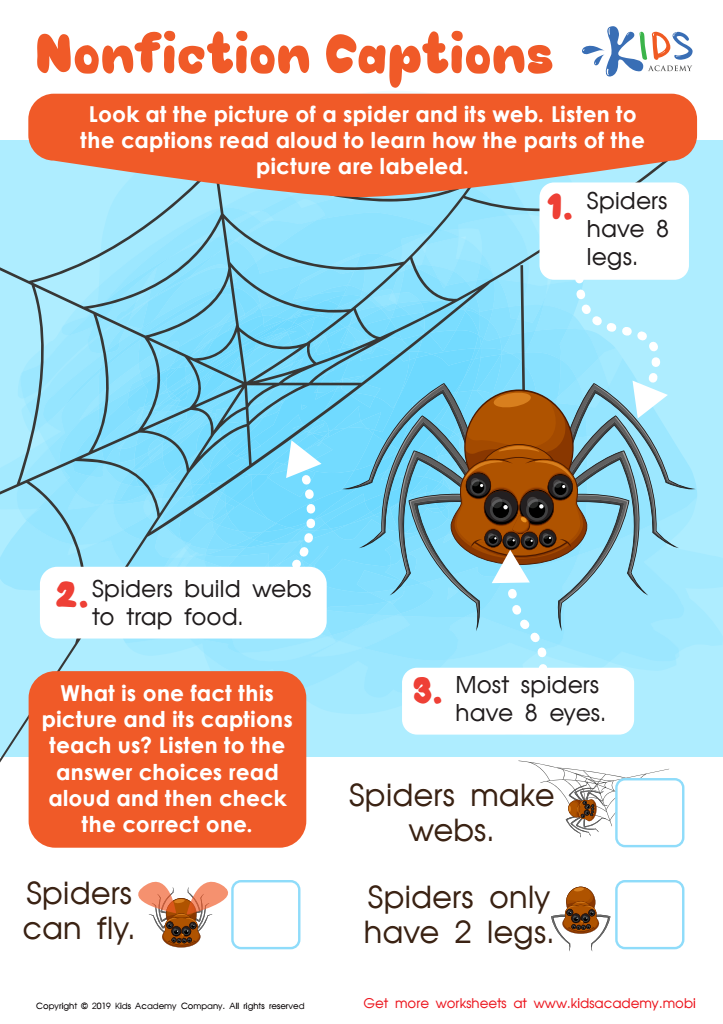
Nonfiction Captions Worksheet
Help your students learn to read better with books that have captions. Read the captions and labels aloud to help children understand the picture. Ask them to answer questions at the bottom of the page. Captions are an effective tool for teaching literacy skills.
Nonfiction Captions Worksheet
Worksheet
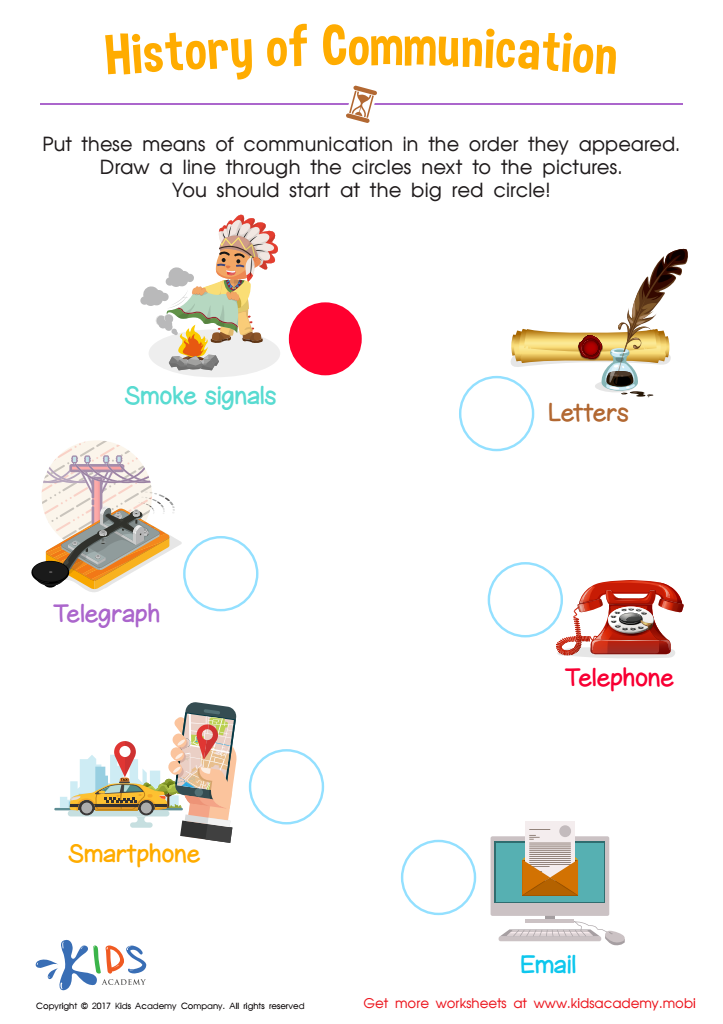
History of Communication Worksheet
Help your child understand history's communication evolution! With this worksheet, your child will learn about the various ways people communicated over time, and how that compares to today. It'll also foster an interest in history and bring the past to life!
History of Communication Worksheet
Worksheet
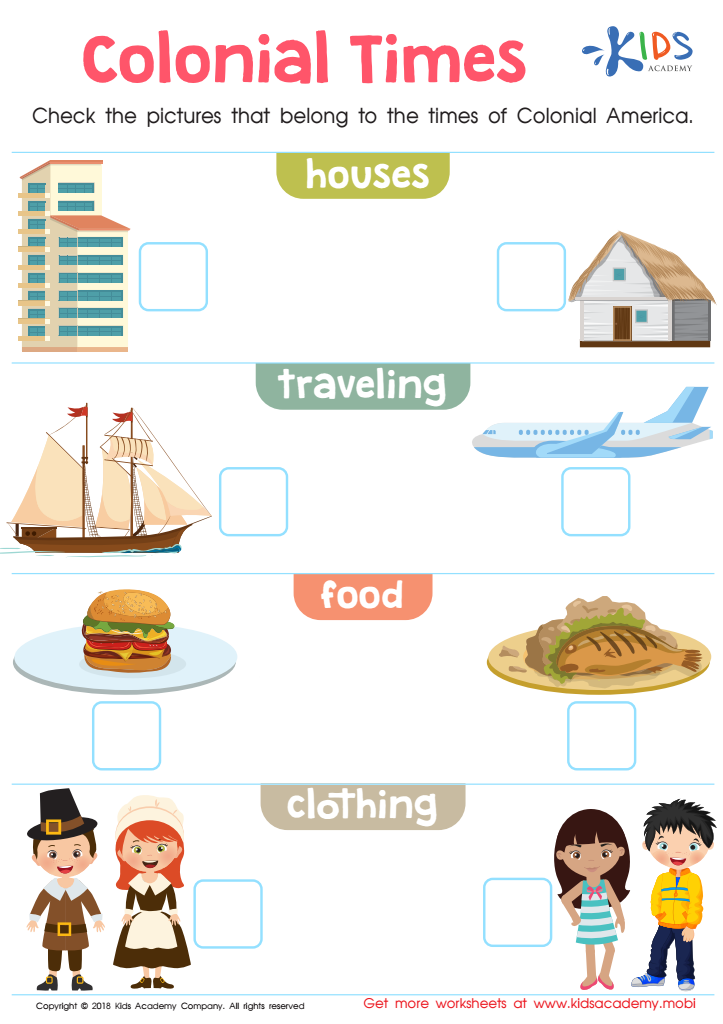
Colonial Times Worksheet
Test your students' knowledge of colonial times with this easy social studies worksheet. Look at the pictures to see how people lived back then. See if your little ones understand what structures they had, what food they ate, and what type of clothing they wore. You might be surprised by how much or how little they know!
Colonial Times Worksheet
Worksheet
Join Kids Academy for Free
Who is primarily going to use this learning content?








Improving reading comprehension for children aged 3-6 is crucial for their overall development and future academic success. During these formative years, children's brains are highly receptive to language acquisition, and early reading skills foster essential cognitive, social, and emotional growth.
Firstly, strong reading comprehension skills lay the foundation for literacy. When children understand what they read, they develop a love for books, creating a more enriching learning experience. This enjoyment can lead to greater academic achievement as they progress through school, as comprehension is integral to learning across all subjects.
Additionally, enhancing reading comprehension at this age builds critical thinking skills. Children learn to make connections between texts and real-life experiences, analyzing stories and characters empathetically. This can improve their social skills and emotional intelligence, as they become more adept at recognizing and discussing feelings both in themselves and in others.
Finally, targeted reading comprehension strategies promote parent-teacher collaboration. Engaging families in the reading process reinforces critical skills at home, creating a supportive learning environment. In conclusion, prioritizing reading comprehension from a young age is vital in fostering well-rounded, confident learners prepared for future challenges.








