
Memory improvement Worksheets for Ages 3-6
7 filtered results
Difficulty Level
Grade
Age
-
From - To
Subject
Activity
Standards
Enhance your child's memory skills with our engaging Memory Improvement Worksheets designed specifically for ages 3-6! These worksheets feature fun and interactive activities that promote cognitive development while keeping learners entertained. Each activity is crafted to boost attention, concentration, and retention, essential for early learning. From matching games to memory recall exercises, our resources facilitate essential brain development in young learners. Perfect for use at home or in the classroom, these worksheets are easily accessible and printable. Start your child's journey towards improved memory with our creative and educational resources that make learning a joyful experience!
Favorites
With answer key
Interactive
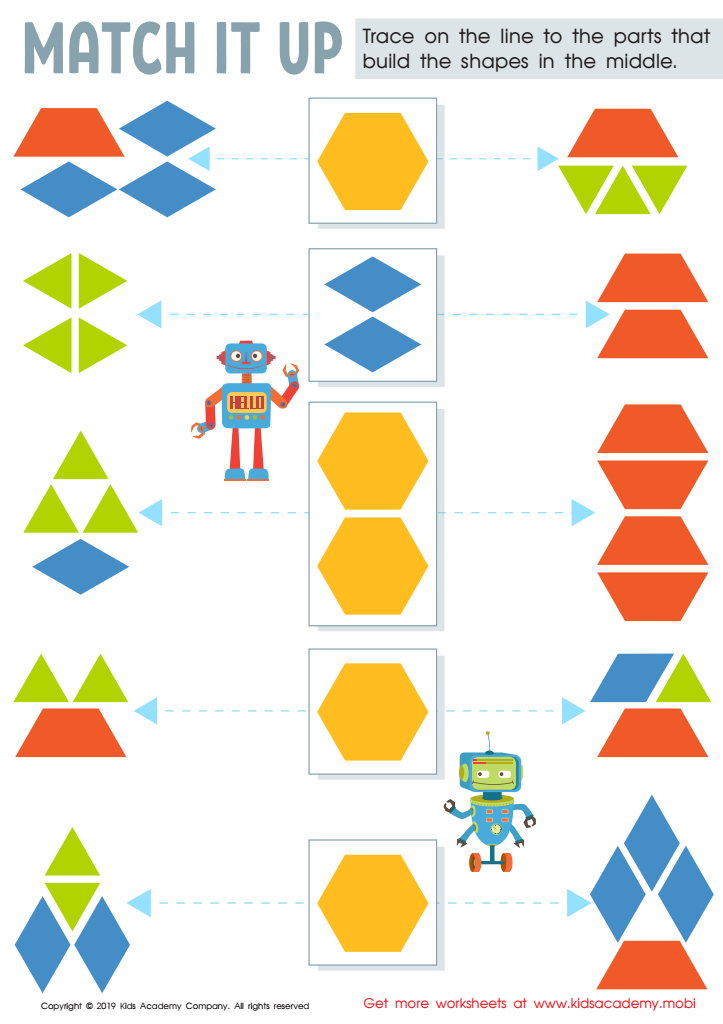
Match It up Worksheet
If your kids are into robots, they'll be thrilled to work on this worksheet. Ask them to name shapes they know, and help them draw and identify these shapes. Look at the shapes in the middle, and the sides. Finally, help your kids trace the lines to build the shapes in the middle.
 Assign to My Students
Match It up Worksheet
Worksheet
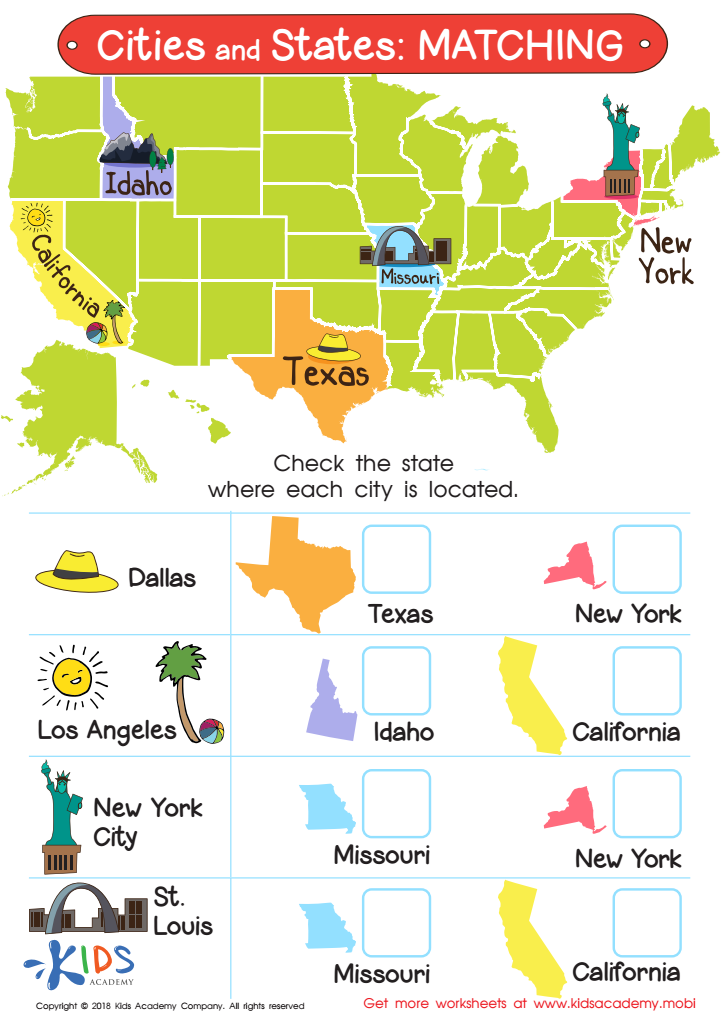
Cities and States: Matching Worksheet
Ask your child if they can name some of the states in your country. If they can, great! If not, use this worksheet to have them learn some states. Show them the map and ask them to observe the shape and color of each state. Then, have them answer the questions by checking the state where each city is located.
Cities and States: Matching Worksheet
Worksheet
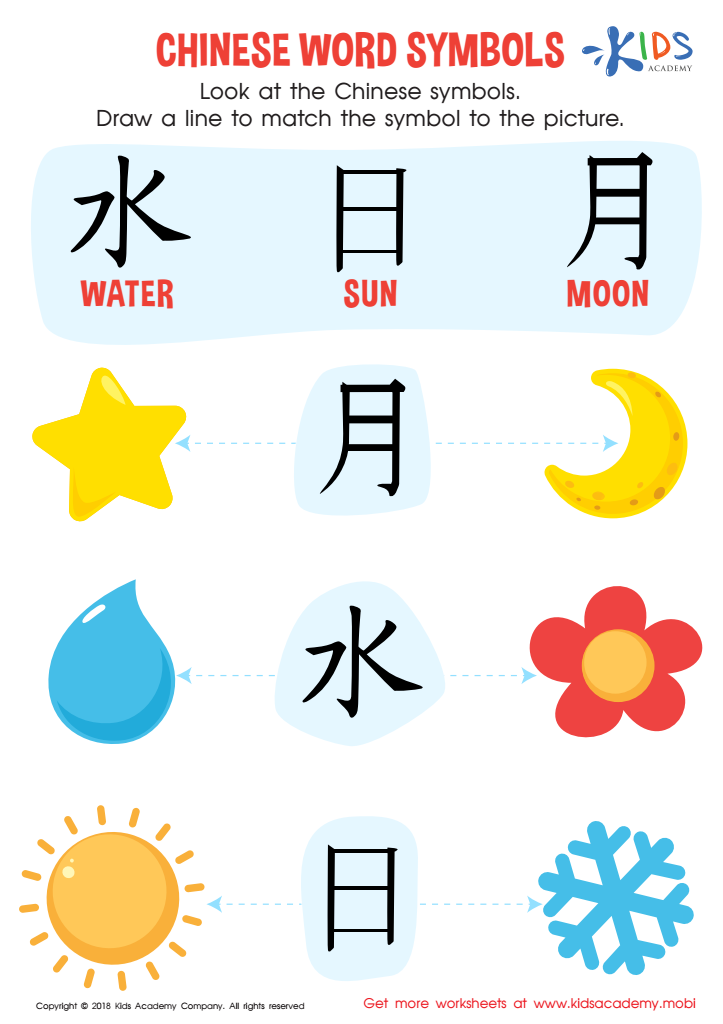
Chinese Word Symbols Worksheet
This fun worksheet helps kids learn Chinese symbols for words like water, sun, and moon. Paired with colorful pictures, tracing lines encourages fine motor skills and builds success. Kids will learn without realizing it, having fun in the process.
Chinese Word Symbols Worksheet
Worksheet
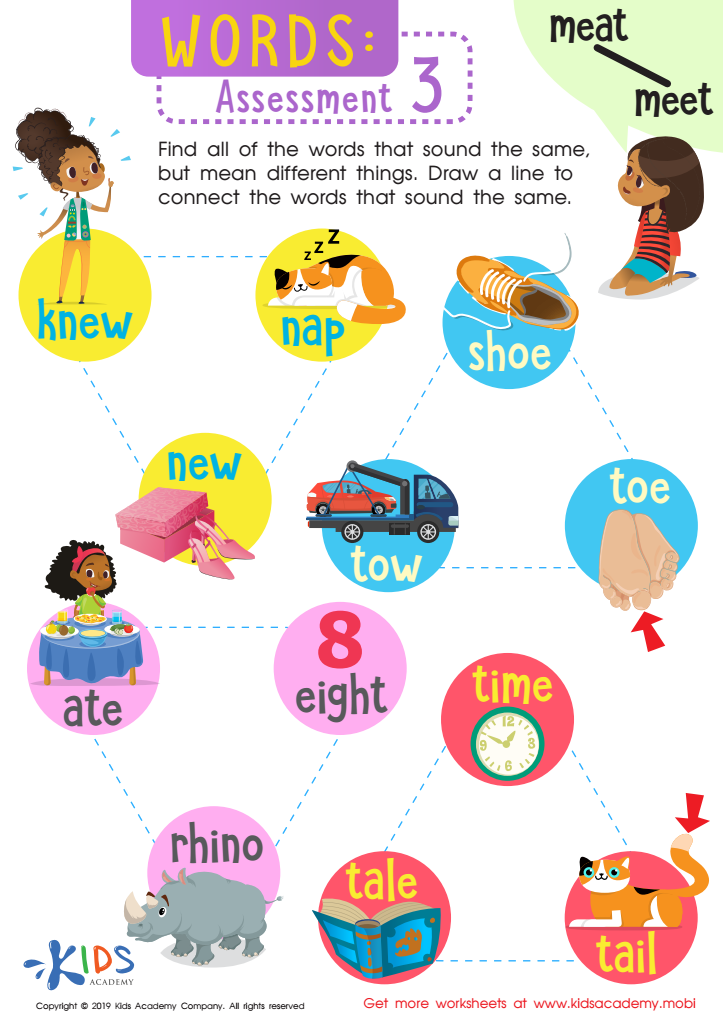
Words: Asessment 3 Worksheet
Assess your child's knowledge of homonyms with words like "toe" and "tow". This fun worksheet helps find words that sound the same but have different meanings and spellings. Use it to introduce homographs--words spelled the same with different meanings!
Words: Asessment 3 Worksheet
Worksheet
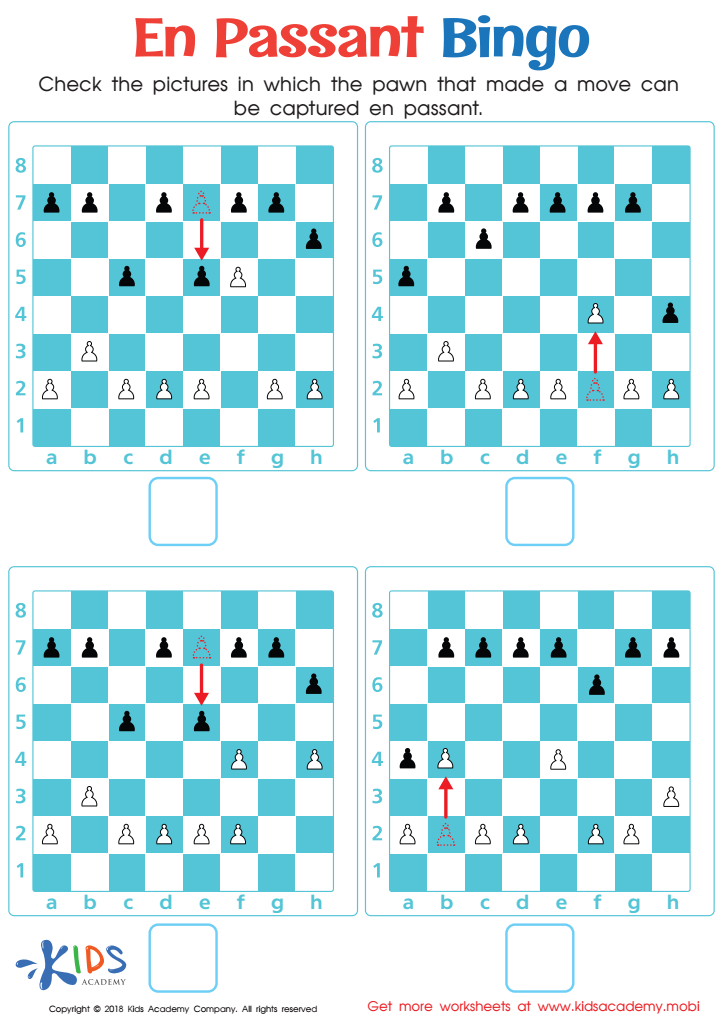
En Passant Bingo Worksheet
To teach kids to perfect the en passant move in chess, use this worksheet. It has pictures which depict when a pawn is in danger of being captured. By looking through the pictures, kids can easily understand and perfect the move.
En Passant Bingo Worksheet
Worksheet
Identifying Uppercase Letters Worksheet
It's essential for kindergarteners to know the distinction between uppercase and lowercase letters. This skill will aid them when starting to write. They can practice by selecting the uppercase letters among a mix of lowercase, uppercase letters and numbers. Whatever their level of learning, give your child confidence with this PDF!
Identifying Uppercase Letters Worksheet
Worksheet
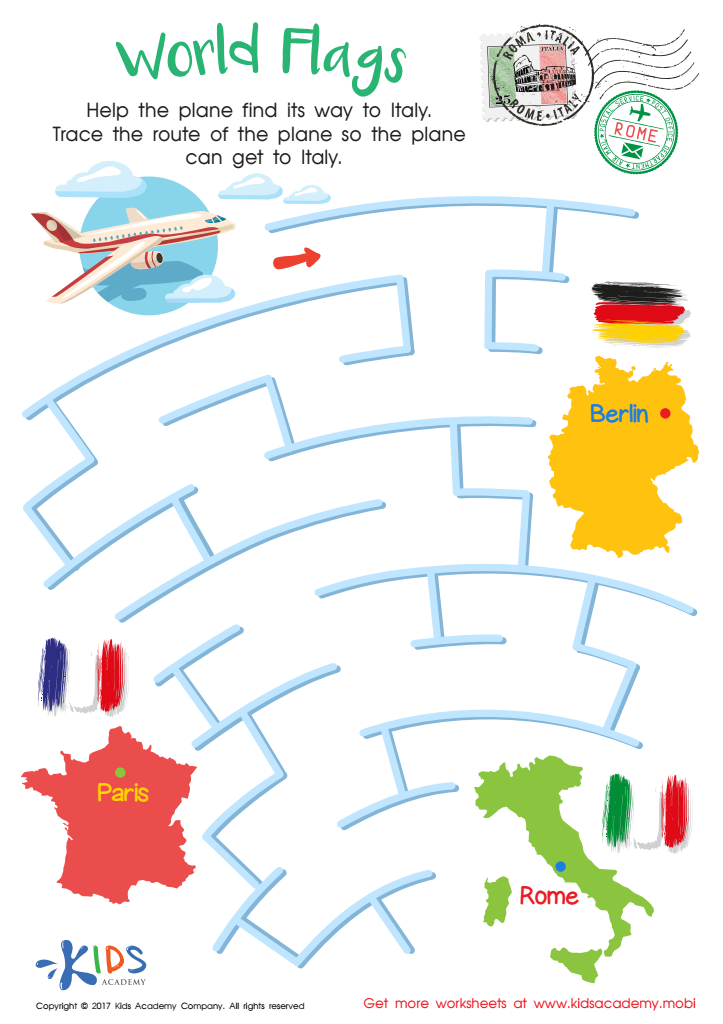
World Flags Maze Worksheet
Help them find their way to Italy with this fun world flags worksheet! Great for kids of all ages, it's an entertaining way to expand their knowledge.
World Flags Maze Worksheet
Worksheet
Join Kids Academy for Free
Who is primarily going to use this learning content?








Memory improvement in children aged 3-6 is crucial for numerous reasons that significantly affect their early development. During these formative years, children's brains undergo rapid growth, forming the foundation for future cognitive abilities. Effective memory enhances their learning capacity, making it easier for them to absorb new information, remember essential concepts, and develop skills like problem-solving and critical thinking.
Parents and teachers should care about memory improvement because it plays a pivotal role in language development. As children enhance their memory, they can better recall words and phrases, which fosters communication skills and literacy. Moreover, improved memory helps children in social interactions, allowing for stronger relationships with peers and adults as they engage in cooperative play and conversations.
Furthermore, a child's ability to remember routines, rules, and boundaries contributes to emotional and behavioral regulation. When children understand expectations, they are more likely to feel secure and confident in their environment.
By investing in memory-boosting activities, such as games, storytelling, and interactive play, parents and teachers can support emotional, cognitive, and social growth, ultimately laying a solid foundation for lifelong learning and development. Encouraging memory improvement cultivates a love for learning and nurtures resilient, curious, and engaged young learners.








