
Money identification Worksheets for Ages 3-6
3 filtered results
Difficulty Level
Grade
Age
-
From - To
Subject
Activity
Standards
Discover our engaging Money Identification Worksheets designed specifically for children ages 3-6! These printable resources introduce young learners to the world of money through fun, interactive activities tailored to their developmental stage. With colorful images of coins and bills, kids will practice recognizing and categorizing different denominations while enhancing their number skills. Perfect for home or classroom use, our worksheets are an excellent way to make learning about money enjoyable and effective. Help your child build a solid foundation in financial literacy while fostering essential cognitive skills. Explore our collection today and watch your little ones become money-savvy in no time!
Favorites
With answer key
Interactive
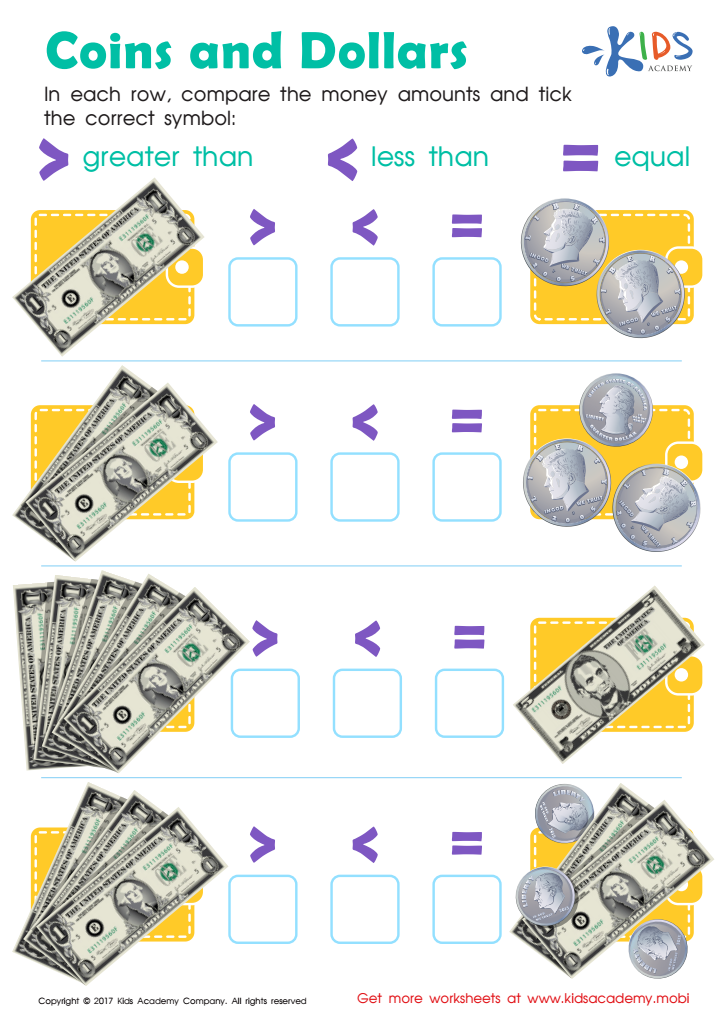
Money: Coins Dollars Printable
Motivate your kid to learn and practise essential math skills, like 'greater than' and 'less than', by introducing the importance of money! The money worksheet "Coins and Dollars" will give them a hands-on experience of counting coins and dollars, making math symbols more memorable.
 Assign to My Students
Money: Coins Dollars Printable
Worksheet
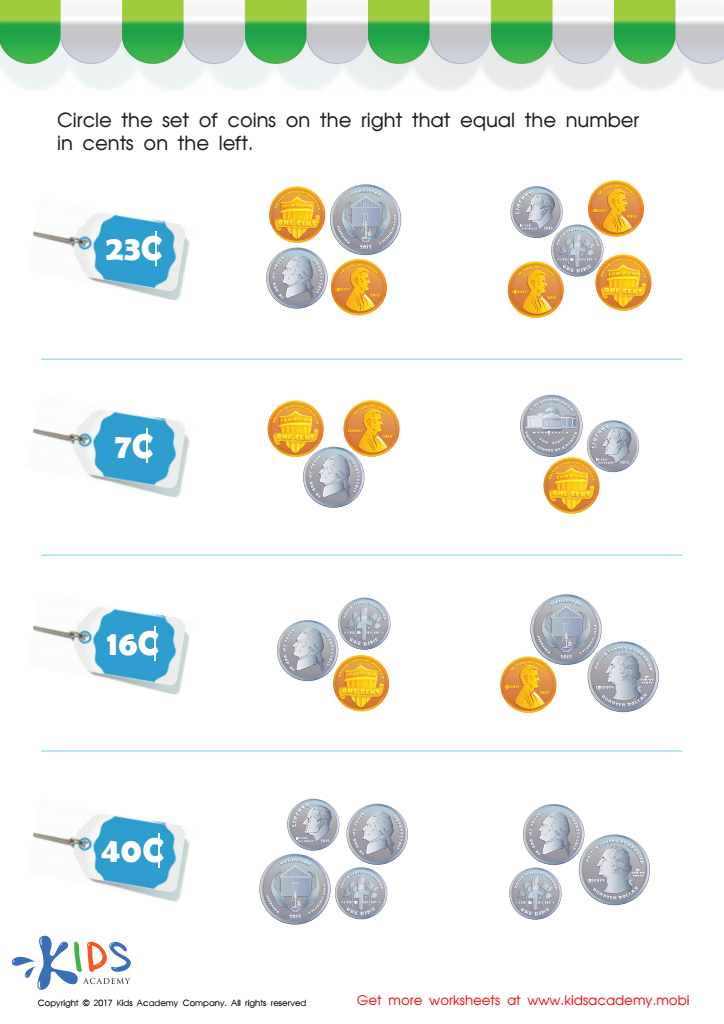
Picking the Coins You Need Money Worksheet
Let's learn to count money with Parents and Kids Academy! Investigate a real shop together: buy a globe, pencils, books, and a school bag using coins. Then, circle the coins you'll need. Visit our website for more free and fun money games for kids!
Picking the Coins You Need Money Worksheet
Worksheet
Join Kids Academy for Free
Who is primarily going to use this learning content?






.jpg)

Money identification is a critical skill for young children aged 3-6, laying the foundation for financial literacy that is vital in today's society. Understanding different denominations of money helps children develop numeracy skills, fostering their ability to count, recognize, and compare values. This early exposure promotes cognitive development and supports mathematical concepts that will be built upon in later education.
Furthermore, learning about money nurtures confidence and independence in young children. As they begin to navigate everyday scenarios, such as shopping or participating in activities where money is exchanged, they will feel more empowered and capable. This boosts their self-esteem and enhances decision-making skills regarding spending and saving.
Parents and teachers play an essential role in this learning process. By integrating money identification into everyday activities—like sorting coins during playtime or using play money in role-play scenarios—they create engaging, practical experiences that make learning enjoyable. Additionally, fostering conversations about the value and purpose of money instills responsible habits early on.
Ultimately, equipping children with money identification skills not only prepares them academically but also cultivates a balanced approach to financial management as they grow, making these practices crucial for parents and educators alike.








