
Predicting outcomes Worksheets for Ages 3-6
3 filtered results
Difficulty Level
Grade
Age
-
From - To
Subject
Activity
Standards
Introduce your little learners to the exciting world of predicting outcomes with our tailored worksheets for ages 3-6. These fun, interactive printables from Kids Academy are designed to enhance critical thinking and problem-solving skills in young children. With engaging activities and colorful illustrations, kids practice inferring what happens next in a sequence of events. Perfect for home or classroom settings, these worksheets nurture a love for learning while developing essential cognitive abilities that form the foundation for future academic success. Explore our diverse and captivating collection to make learning a playful, daily adventure!
Favorites
With answer key
Interactive
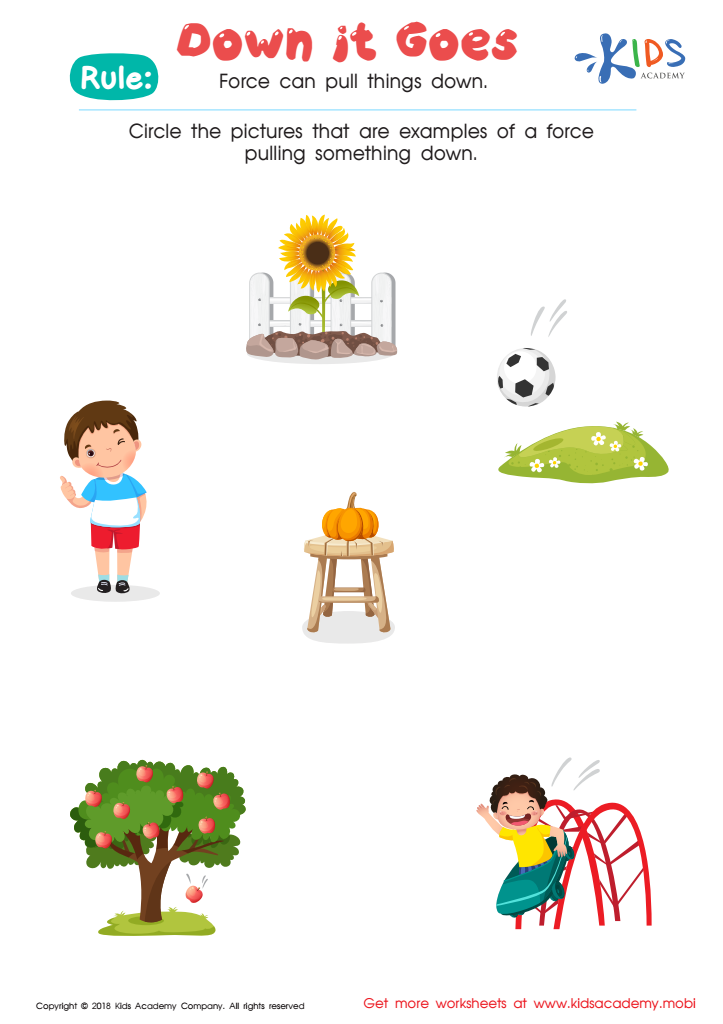
Down it Goes Worksheet
Explain gravity to your child using this fun worksheet. Ask them to give examples of things pulled down with force, then instruct them to circle the pictures that show this. It's a great way to help them understand the concept of gravity.
 Assign to My Students
Down it Goes Worksheet
Worksheet
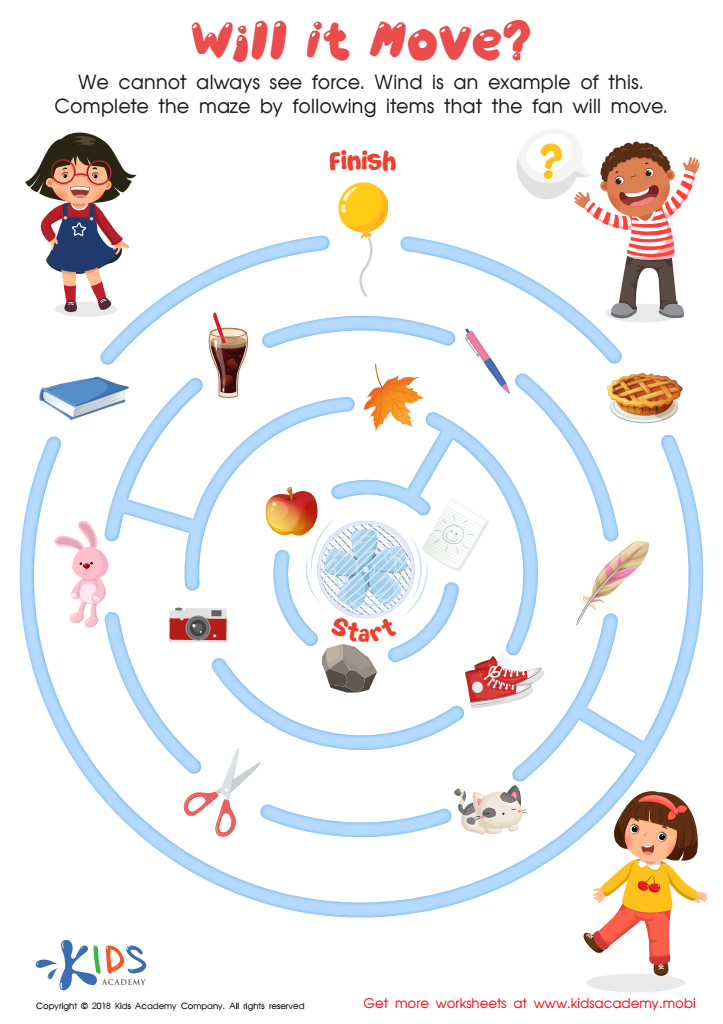
Will it Move? Worksheet
Does your child know about force? If yes/no, this worksheet can help. Force is invisible - like wind - but it moves objects. Ask your child to complete the maze, following the path of items moved by the wind. 80 words.
Will it Move? Worksheet
Worksheet
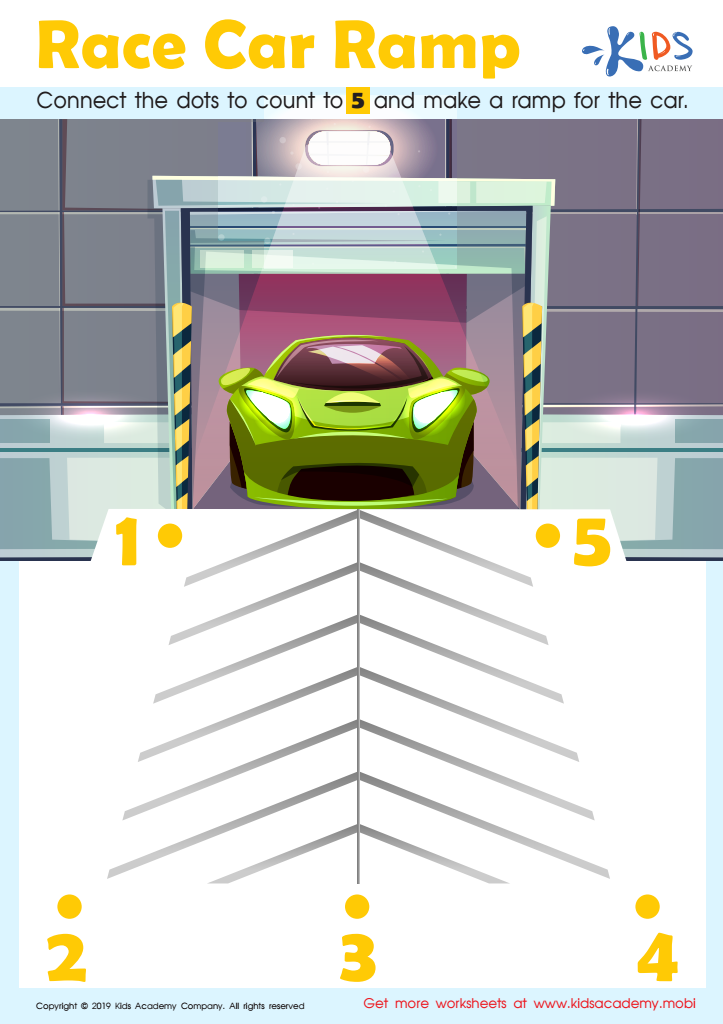
Race Car Ramp Worksheet
Kids can learn numbers quickly and have fun with this worksheet! It teaches preschoolers counting to 5 and allows them to draw a car ramp. It's a creative way to learn numbers, making them fun and easy to remember.
Race Car Ramp Worksheet
Worksheet
Join Kids Academy for Free
Who is primarily going to use this learning content?








Predicting outcomes for children aged 3-6 is crucial as it sets the foundation for their future learning and development. During these formative years, children develop cognitive, emotional, and social skills that influence their lifelong trajectories. When parents and teachers understand how to predict outcomes, they can create more individualized and effective teaching strategies, ensuring each child's unique needs are met.
First, early prediction helps identify potential learning difficulties or developmental delays. Catching these concerns early allows for timely interventions, which can significantly improve a child’s long-term prospects. For instance, if a child shows early signs of difficulties with speech or motor skills, targeted support can be provided to address these issues promptly.
Second, understanding predicted outcomes can guide curriculum design and activity selection that foster growth in key areas like language, numeracy, and social interaction. Tailored activities that align with a child's predicted developmental stage can enhance engagement and maximize learning.
Lastly, predicting outcomes encourages a proactive rather than reactive approach. Parents and teachers can set realistic, developmentally appropriate goals, making adjustments to teaching methods in a timely manner for better educational outcomes. This empowers children to gain confidence and develop a love for learning at a critical stage in their lives.
In essence, caring about predicting outcomes for young children ensures that they receive the necessary support and opportunities to thrive, laying a strong groundwork for future success.








