Reading analog clocks Worksheets for Ages 3-6
4 filtered results
-
From - To
Welcome to our engaging Reading Analog Clocks Worksheets designed specifically for children aged 3-6! These worksheets are perfect for building foundational time-telling skills in young learners. Featuring colorful visuals and fun activities, children will explore the concept of telling time through hands-on practice and enjoyable exercises. Our thoughtfully designed worksheets help kids recognize clock numbers, understand the position of the hour and minute hands, and develop their ability to read analog clocks confidently. Ideal for homeschooling or as classroom resources, these worksheets make learning about time fun and interactive. Encourage your child's time-telling abilities today!
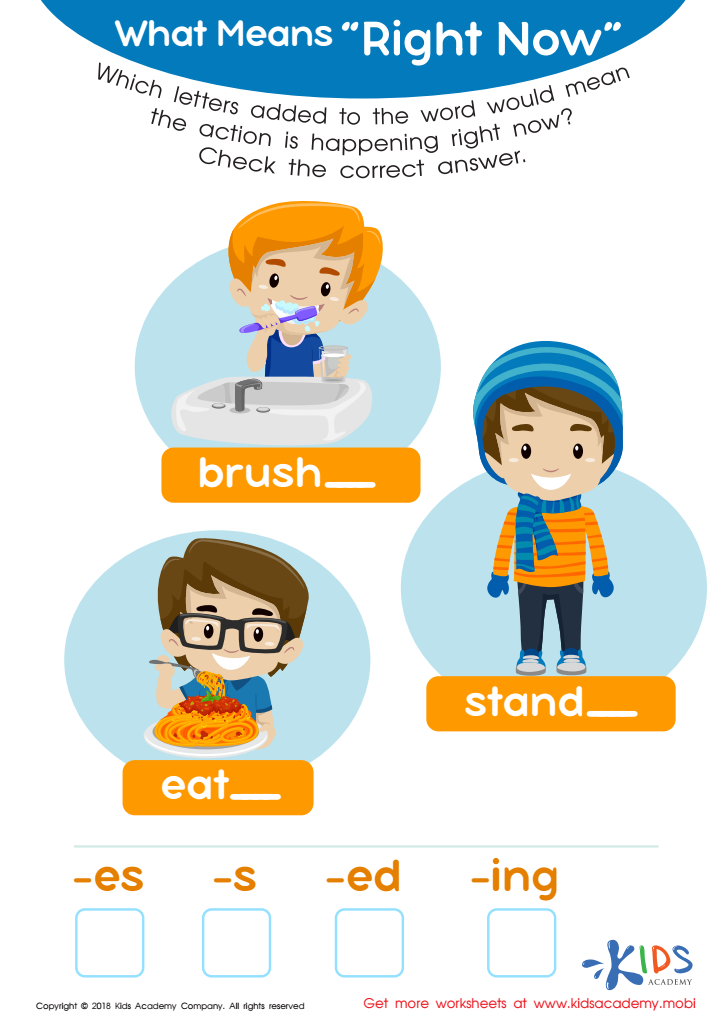
What Means "Right Now" Worksheet
 Assign to My Students
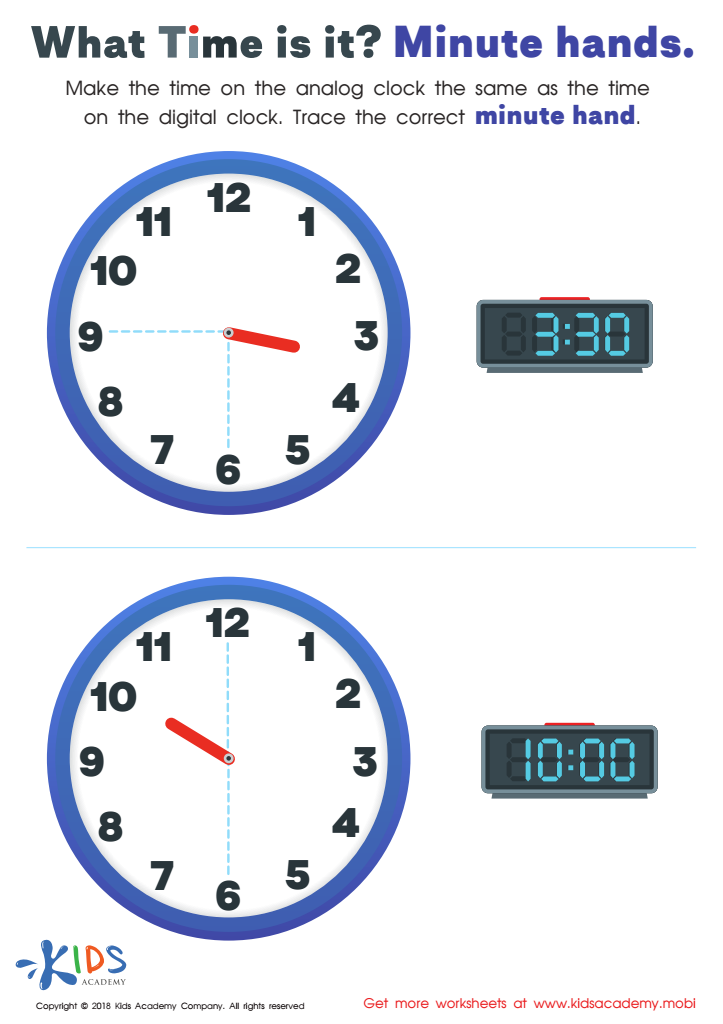
What Time Is it? Minute Hands Worksheet
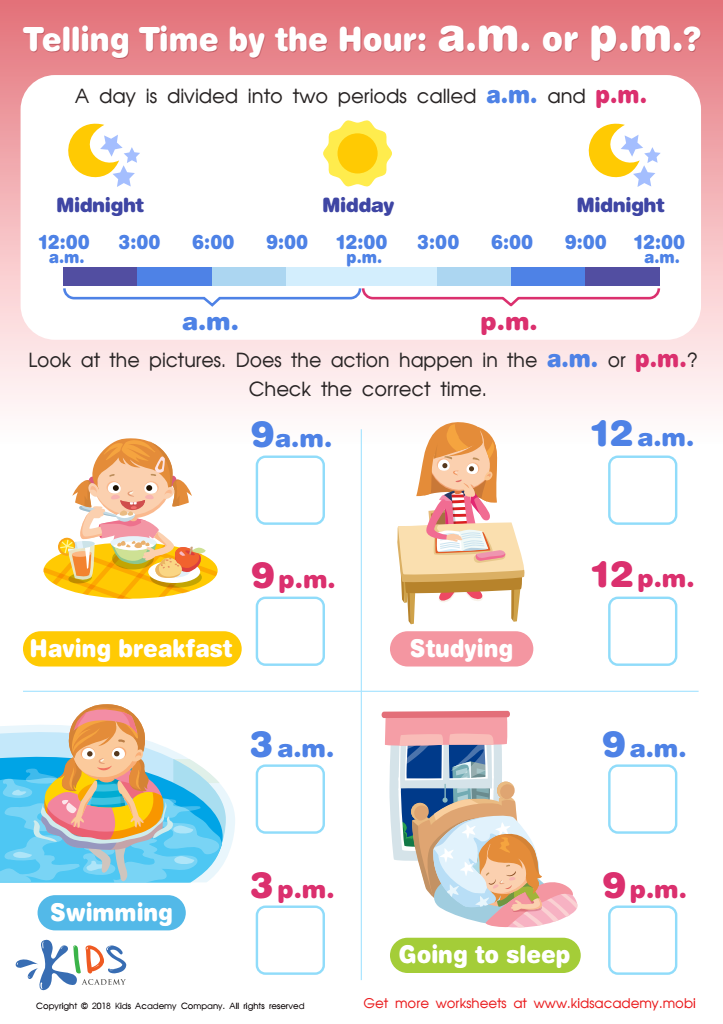
Tilling Time by the Hour: a.m. or p.m.? Worksheet
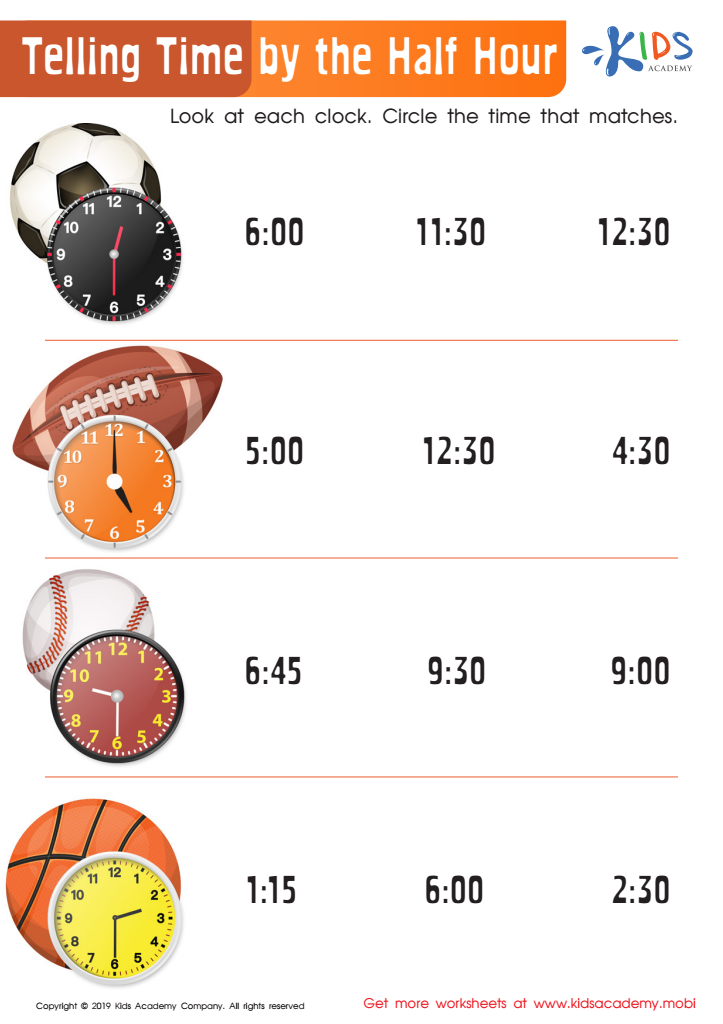
Telling Time by the Half Hour Worksheet








Caring about teaching young children, ages 3-6, how to read analog clocks is important for several reasons. First, it promotes foundational math skills. Learning to tell time introduces children to concepts of numbers, counting, and intervals—promoting both numerical fluency and problem-solving abilities. These skills set the stage for future success in more complex arithmetic and reasoning.
Second, teaching children to read analog clocks helps develop critical cognitive skills. Understanding the movement of the clock's hands encourages spatial awareness and the ability to interpret visual information, which are essential for many everyday tasks.
Moreover, analog clocks often represent time in a way that emphasizes routine and structure, helping children grasp the concept of time management. For example, associating daily activities with specific times establishes predictability and helps develop responsibility.
Finally, teaching children to interpret analog clocks connects them to a tradition that can promote familial bonding. Whether at home or in school, discussing the importance of understanding time can serve as a bridge across generations, fostering communication around daily schedules and activities.
Overall, developing these skills in early childhood sets the groundwork for later academic achievement and essential life skills.








