Sequencing numbers Worksheets for Ages 3-6
3 filtered results
-
From - To
Our "Sequencing Numbers Worksheets for Ages 3-6" are designed to make learning fun and engaging for young learners. These expertly crafted worksheets help children develop essential math skills by practicing the sequencing of numbers. Featuring colorful illustrations and age-appropriate activities, they guide preschoolers and kindergartners through counting, number recognition, and ordering sequences confidently. With a variety of exercises, including cut-and-paste, tracing, and matching, these worksheets cater to different learning styles, keeping kids motivated and excited about learning. Perfect for teachers and parents, our resources are an excellent foundation for early math success. Download today and watch your child thrive!
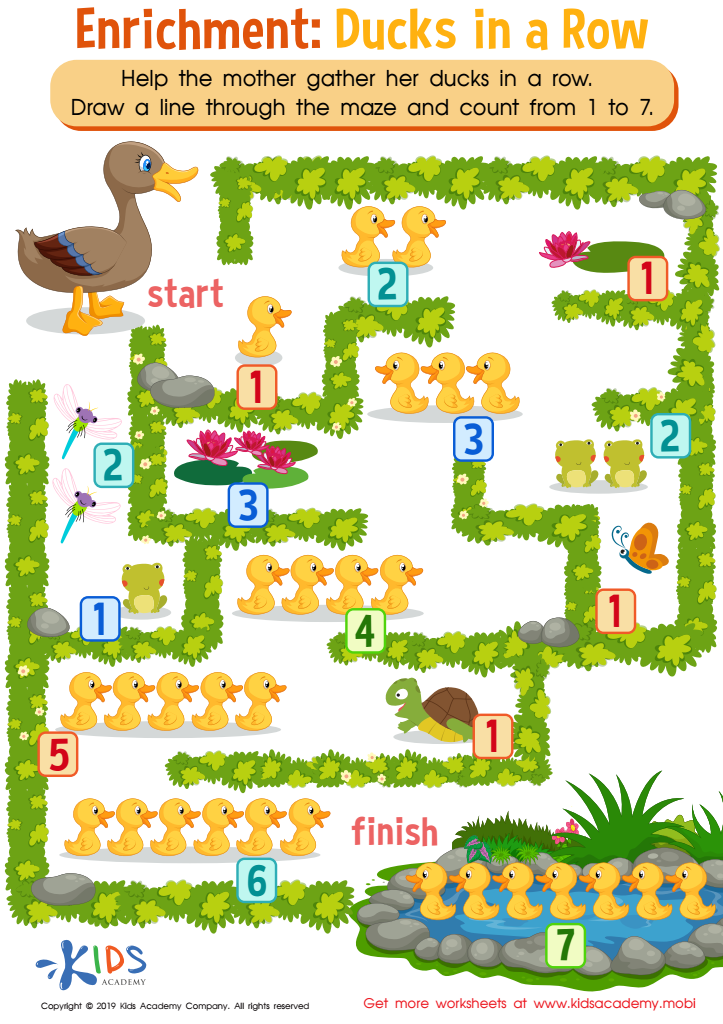
Ducks in a Row Worksheet
 Assign to My Students
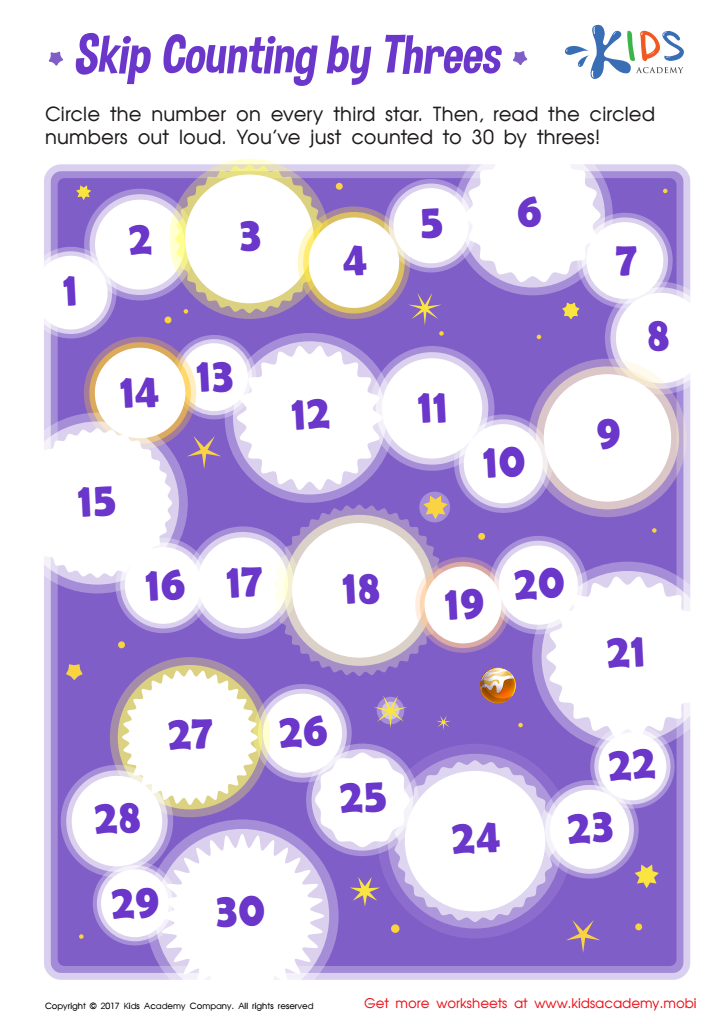
Skip Counting By Three Printable
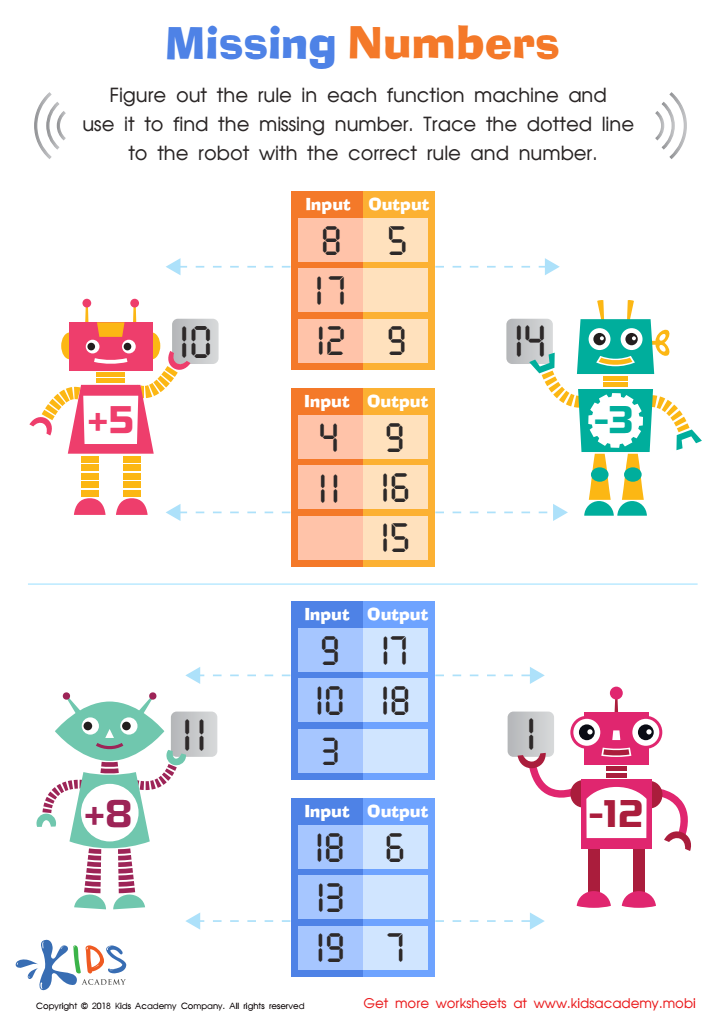
Missing Numbers Worksheet







.jpg)
Sequencing numbers is a fundamental skill that forms the basis of early childhood mathematical understanding, making it vital for parents and teachers to emphasize this learning, especially between the ages of 3 and 6. At this developmental stage, children are naturally curious and their cognitive abilities are rapidly expanding. Mastery of number sequences helps build a strong foundation for future mathematical concepts such as addition, subtraction, and even problem-solving skills.
When young children practice sequencing numbers, they learn to recognize patterns, which aids in developing their logical thinking and cognitive abilities. This skill not only supports their mathematical growth but also enhances their abilities in other areas such as reading, as pattern recognition is crucial in phonics and understanding story sequences.
Additionally, being comfortable with number sequences helps children build confidence in their abilities, fostering a positive attitude toward learning. Sequential learning aids them in understanding time concepts, organizational skills, and even simple tasks like following directions. It forms part of their everyday life, from counting steps to arranging toys.
Hence, focusing on sequencing numbers in the early years doesn’t just prepare children for school but equips them with essential life skills that contribute to overall academic and personal development. Why this seemingly simple activity holds profound importance in a child's growth indeed incentivizes parents and teachers to care deeply about it.








