Spelling accuracy Worksheets for Ages 3-6
3 filtered results
-
From - To
Enhance your child’s early literacy skills with our fun and engaging Spelling Accuracy Worksheets for ages 3-6! Designed to boost spelling abilities, these worksheets provide a variety of colorful and interactive activities tailored for young learners. Kids will enjoy tracing letters, identifying word patterns, and matching pictures with words, all while developing essential phonetic skills. Our age-appropriate challenges foster creativity and confidence, making learning both effective and enjoyable. Whether at home or in the classroom, these resources are perfect for enhancing spelling accuracy and encouraging a love for learning. Start your child’s spelling journey today and watch their skills soar!
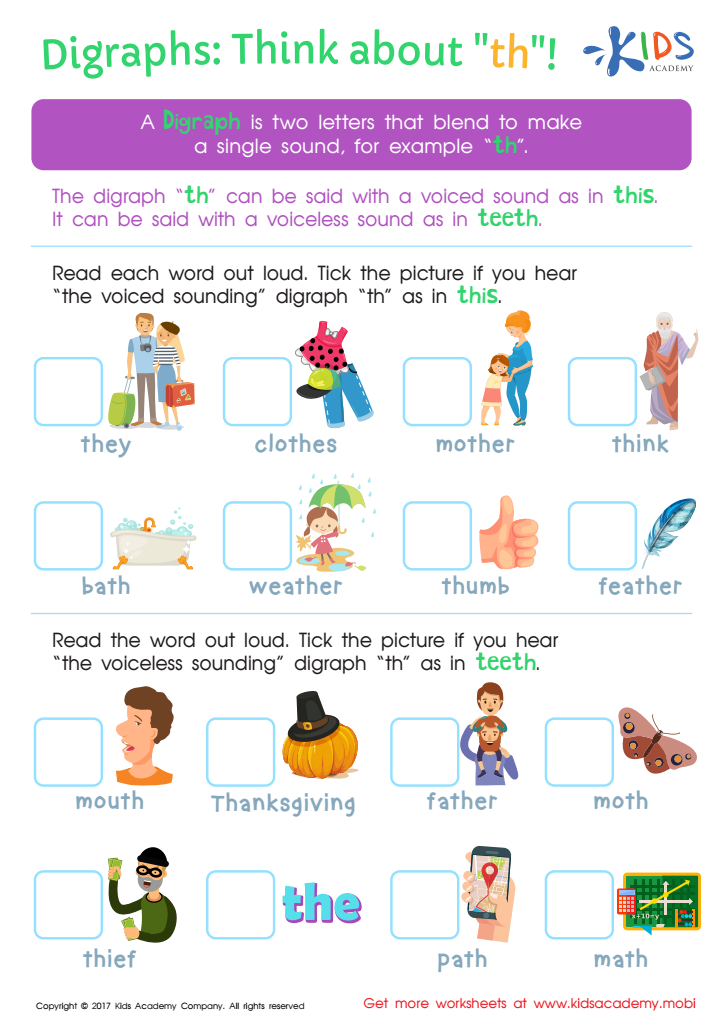
Digraphs: Think About "th" Worksheet
 Assign to My Students
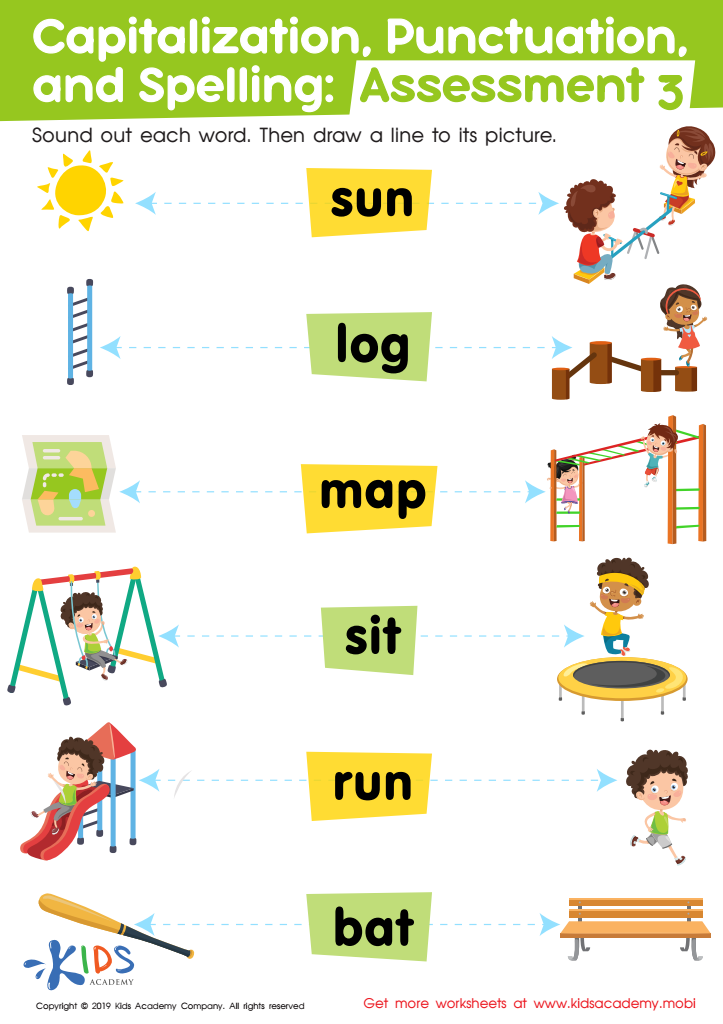
Capitalization. Punctuation. Spelling. Assessment 3 Worksheet
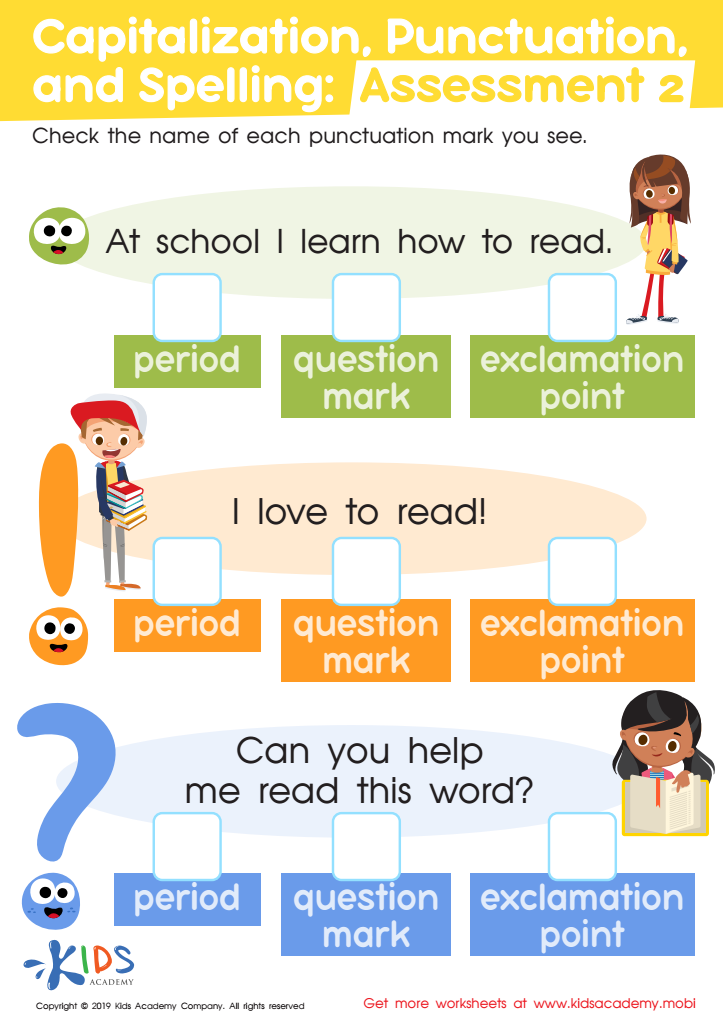
Capitalization. Punctuation. Spelling: Assessment 2 Worksheet







Spelling accuracy is a vital skill for children ages 3-6, and it holds significance for both parents and teachers. At this developmental stage, children are laying the foundation for their literacy skills. Correct spelling enhances their ability to communicate effectively, helping them express thoughts, ideas, and feelings clearly.
As children learn to spell, they also improve their phonetic awareness, as they connect sounds with the appropriate letters. This prepares them for reading, which is crucial for academic success. Moreover, strong spelling skills foster confidence; when children feel competent in their writing abilities, they are more likely to participate in class discussions and share their writing.
For young learners, spelling is intertwined with vocabulary development. The practice of spelling helps enlarge their word bank, enabling them to articulate thoughts and explore narrative structures adeptly. Early emphasis on spelling also aids in building attention to detail—an essential skill across various subjects.
Both parents and teachers play a key role in this development. Engaging children in fun spelling activities can create a positive attitude towards learning. Overall, prioritizing spelling accuracy during these formative years ensures children are well-equipped for future literacy challenges, enhancing their overall educational journey.








