
Understanding fact families Worksheets for Ages 3-6
4 filtered results
Difficulty Level
Grade
Age
-
From - To
Subject
Activity
Standards
Unlock the world of math for your little ones with our "Understanding Fact Families Worksheets" designed for ages 3-6! These engaging worksheets introduce young learners to the concept of fact families, the foundational building blocks of addition and subtraction. By exploring the relationships between numbers, kids enhance their critical thinking and problem-solving skills in a fun and interactive way. Our worksheets include colorful visuals and relatable examples that make learning enjoyable. Perfect for home or classroom use, these resources will support your child's mathematics journey, fostering confidence and competence early on. Discover the joy of learning with Kids Academy today!
Favorites
With answer key
Interactive
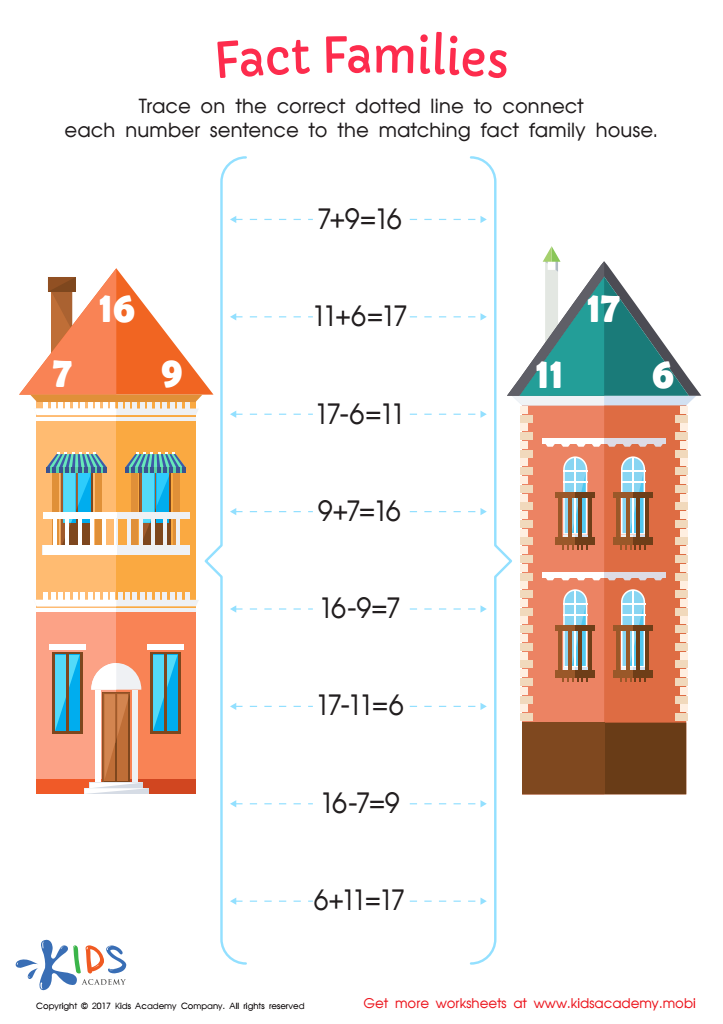
Fact Families — Add and Subtract Worksheet
Kids will love seeing how families of numbers "live" in their own houses!
 Assign to My Students
Fact Families — Add and Subtract Worksheet
Worksheet
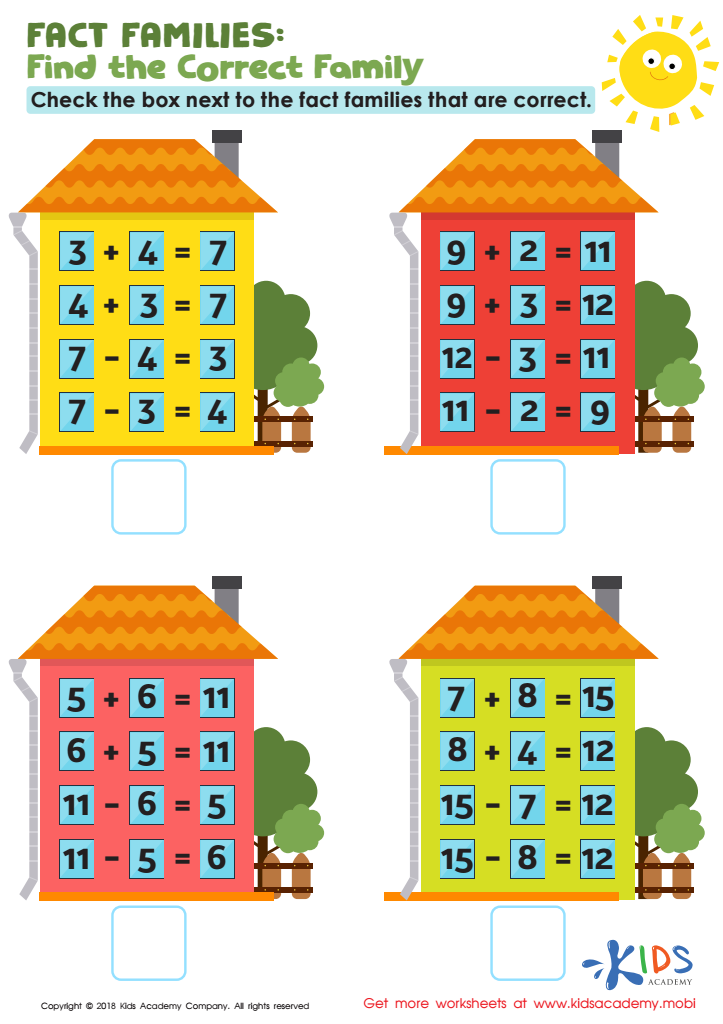
Fact Families: Find Correct Family Worksheet
Test your students' math and reasoning skills with this worksheet. It features 4 houses, each with a group of fact families on it. Some are correct, some are wrong - help students identify which are correct and circle the box next to them. This will help them progress in school.
Fact Families: Find Correct Family Worksheet
Worksheet
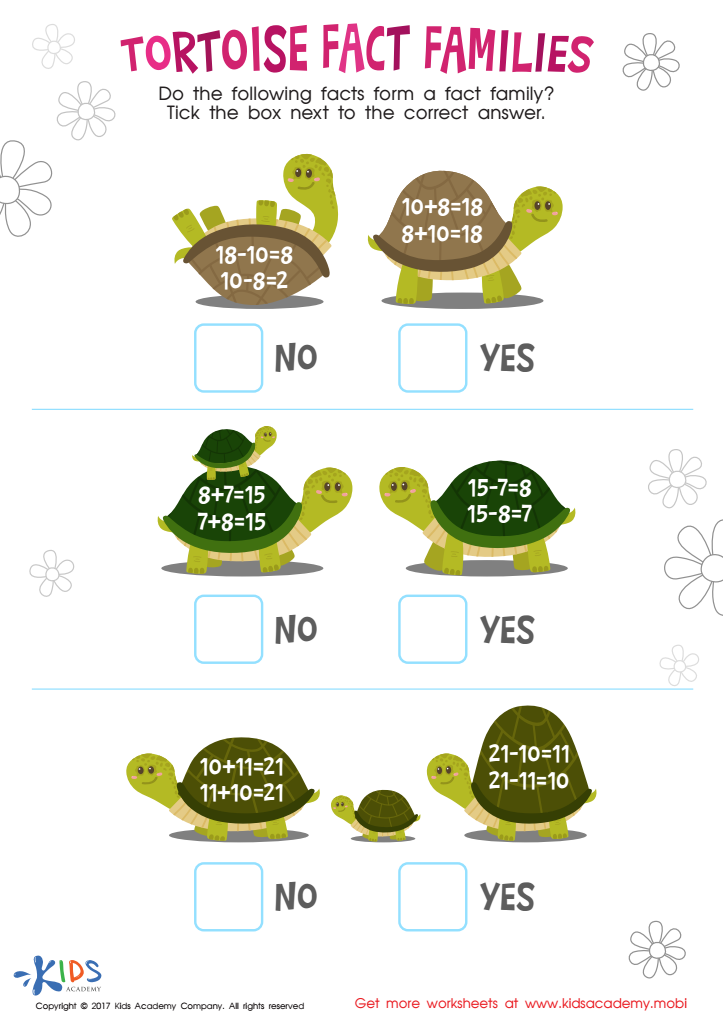
Tortoise Fact Families Printable
With 1st grade add & subtract tortoises, kids can improve their math understanding and skills. Enjoy fun, hands-on practice with fact families and strengthen logical reasoning and critical thinking!
Tortoise Fact Families Printable
Worksheet
Join Kids Academy for Free
Who is primarily going to use this learning content?







Understanding fact families is crucial for young children aged 3-6, as it lays the foundation for their future success in mathematics. A fact family relates to a group of related addition and subtraction facts derived from the same numbers, helping children grasp the concept of operational relationships. For parents and teachers, fostering this understanding is essential for several reasons.
Firstly, recognizing fact families builds number sense, allowing children to understand how numbers work together. This foundational skill enhances their ability to solve more complex problems later on. Secondly, it promotes mental math skills, as children learn to see relationships among numbers rather than relying solely on memorization.
Engaging with fact families also encourages critical thinking. Children begin to understand that changing the order of numbers in addition and subtraction produces different results yet retains a coherent relationship. This conceptual understanding supports their overall mathematical development, paving the way for a smoother transition into addition, subtraction, and eventually more advanced math concepts.
Furthermore, incorporating fact families into daily activities encourages parental and teacher involvement in children's learning processes, creating a strong support system that fosters both confidence and enjoyment during early math experiences.








