Understanding natural resources Worksheets for Ages 3-6
3 filtered results
-
From - To
Welcome to our "Understanding Natural Resources Worksheets" designed specifically for young learners aged 3-6! These engaging and interactive worksheets help preschoolers explore the world around them, teaching them about different natural resources, such as water, trees, and minerals. Through fun activities like spotting, coloring, and simple matching games, children will develop their recognition skills and grasp the importance of conserving our environment. These resources promote cognitive development while fostering an early interest in nature and sustainability. Perfect for home or classroom use, these worksheets offer valuable learning opportunities that blend education with creativity. Start your child’s journey into understanding natural resources today!
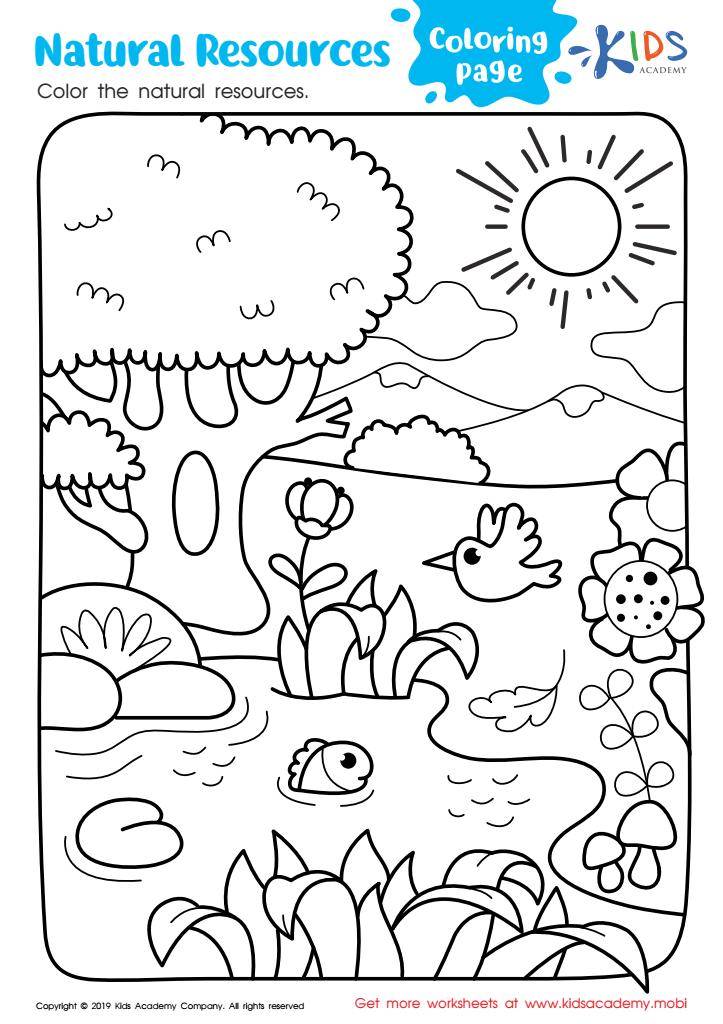
Natural Resources Coloring Page Worksheet
 Assign to My Students
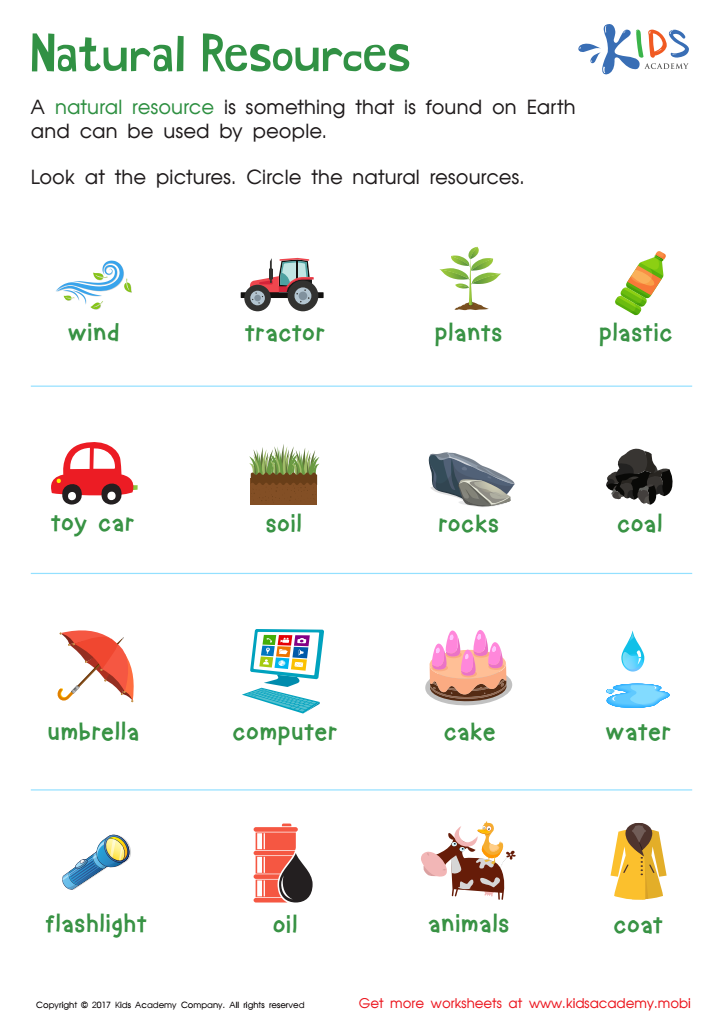
Natural Resources Worksheet
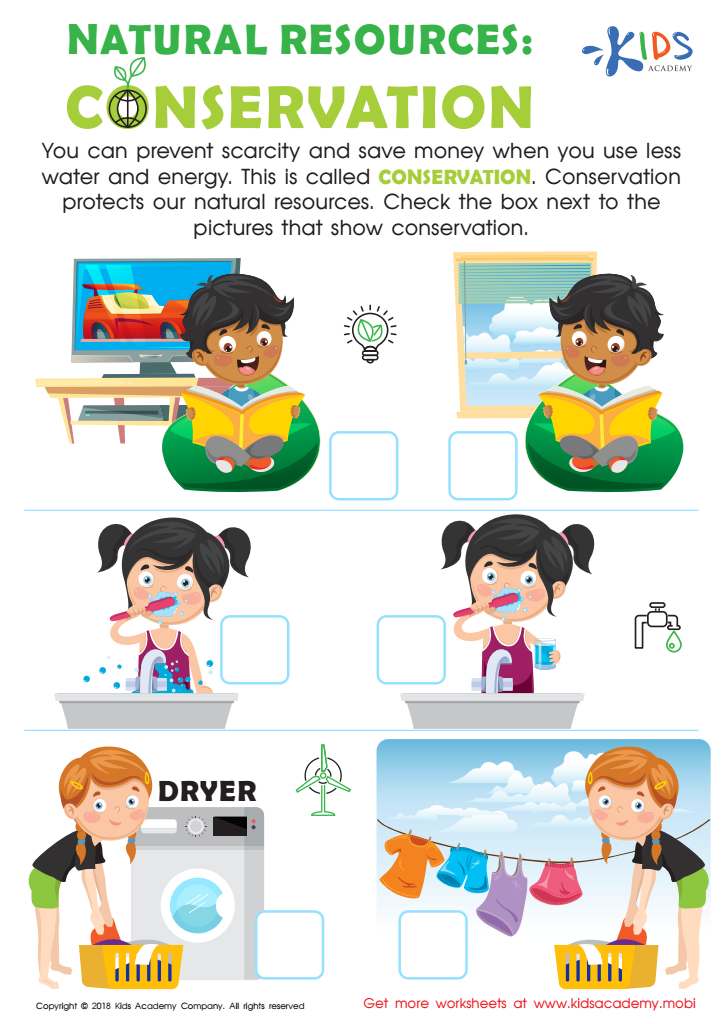
Natural Resources: Conservation Worksheet






.jpg)
Understanding natural resources is crucial for children aged 3-6 as it lays the foundation for their relationship with the environment. At this tender age, children are naturally curious about the world around them, making it an ideal time to introduce concepts related to nature and sustainability. Teaching young learners about natural resources, such as water, soil, plants, and minerals, fosters an appreciation for the Earth and its ecosystems.
By learning about natural resources, children develop a sense of responsibility towards the environment. This early education encourages them to engage in mindful practices, such as recycling and conserving water, leading to lifelong habits. Furthermore, understanding natural resources supports cognitive development as children classify, compare, and analyze the characteristics and uses of various resources.
Parents and teachers play a vital role in this process; their engagement reinforces the importance of environmental stewardship. Using age-appropriate activities, like nature walks and interactive games, can help instill a sense of wonder and respect for the planet. Ultimately, nurturing this awareness promotes critical thinking, creativity, and an environmentally conscious mindset that young learners will carry with them into adulthood, contributing to a sustainable future.








