
Understanding opposites Worksheets for Ages 3-6
7 filtered results
Difficulty Level
Grade
Age
-
From - To
Subject
Activity
Standards
Discover the joy of learning with our "Understanding Opposites Worksheets for Ages 3-6." These engaging and beautifully designed printables are tailored to help young minds grasp fundamental concepts of opposites in a fun and interactive way. Each worksheet focuses on pairs of contrasting words like hot and cold, happy and sad, big and small, making learning both effective and entertaining. Perfect for both classroom and home use, these resources enhance vocabulary, critical thinking, and cognitive development. Empower your child’s learning journey today with our expertly crafted educational tools designed to inspire and educate.
Favorites
With answer key
Interactive
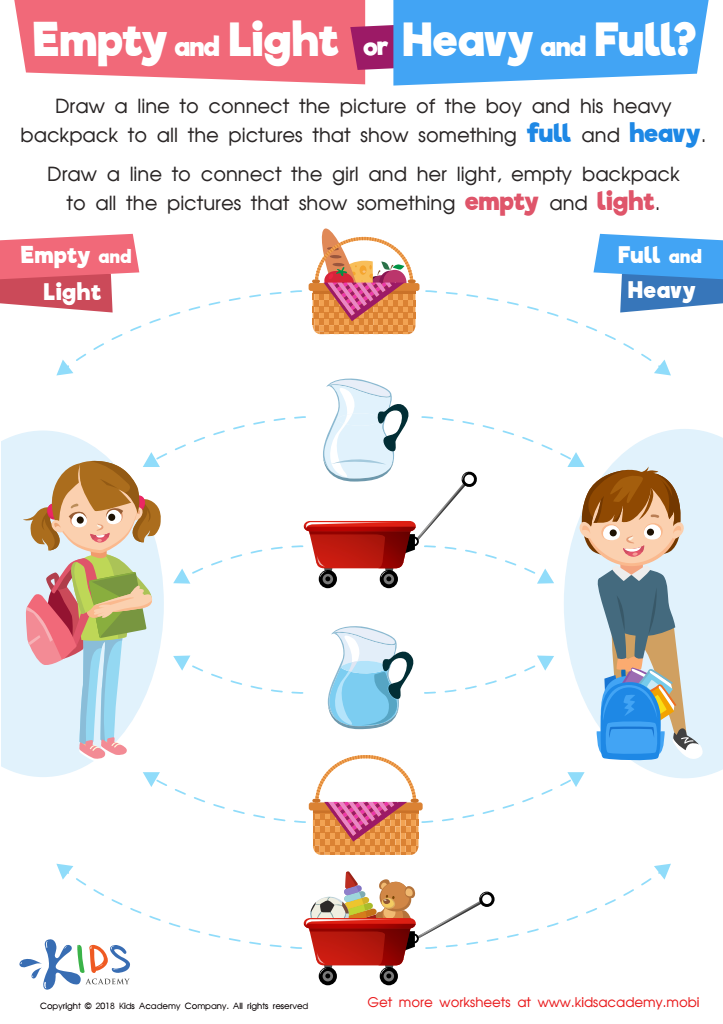
Empty and Light or Heavy and Full? Worksheet
Kids can have trouble understanding measurement, like the differences between heavy and light. This worksheet helps them associate full with heavy and empty with light, using familiar images. Plus, it's a fun way to practice fine motor skills, tracing the lines to connect the pictures.
 Assign to My Students
Empty and Light or Heavy and Full? Worksheet
Worksheet
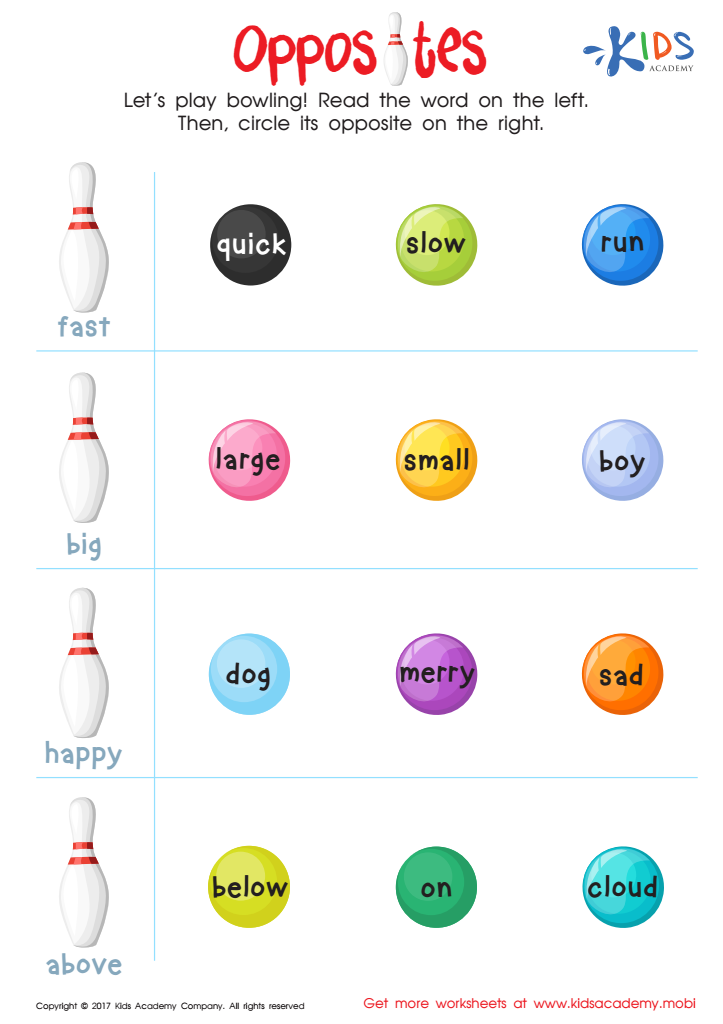
Opposites Worksheet
Have your students identify and circle the opposites of the words on the left. As a fun bowling-themed exercise, read the words and ask your kids if they know the opposites. Look through the options on the right and see if the answer is there; then, circle the correct answers.
Opposites Worksheet
Worksheet
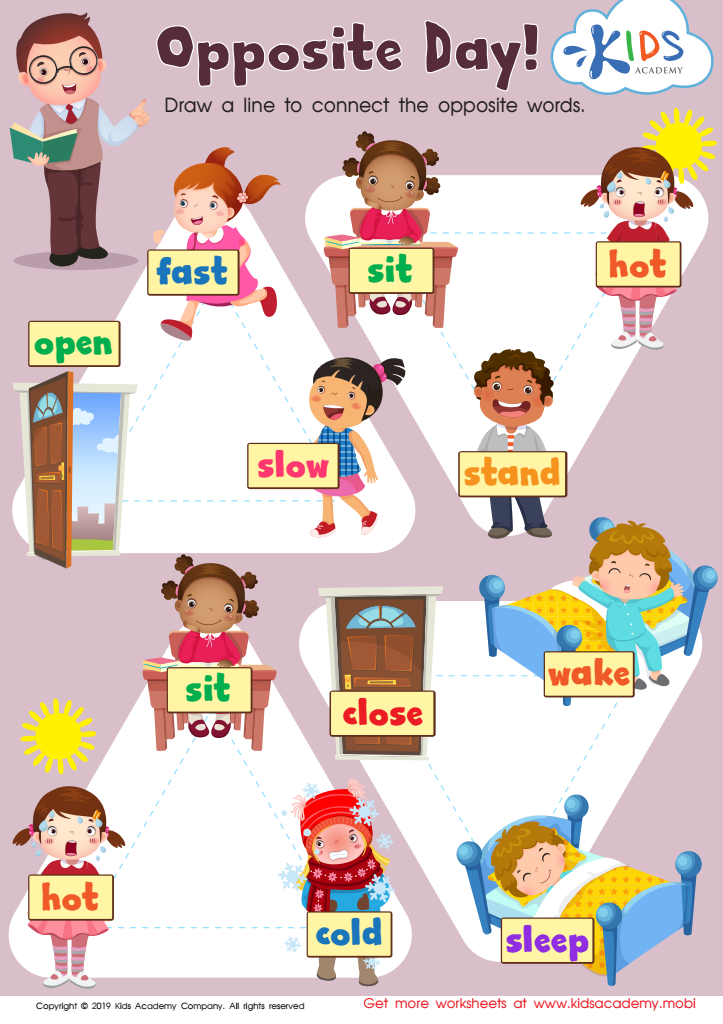
Opposite Day Worksheet
Early learners need to know about opposites to improve their higher-order thinking and critical thinking. This fun worksheet helps them understand the concept, practice opposite words, read high-frequency words and work on fine motor skills. Download the traceable PDF to get started.
Opposite Day Worksheet
Worksheet
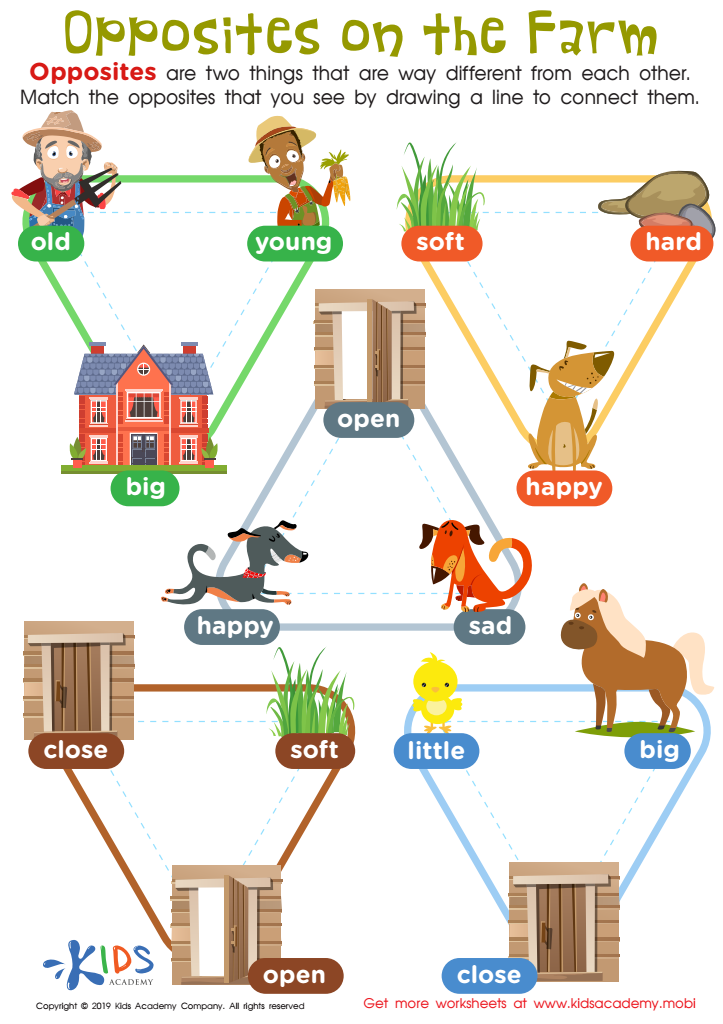
Opposites on the Farm Worksheet
Teaching children the concept of opposites is important for their development. This worksheet offers a fun way to practice. Kids can use traceable lines to match farm imagery with pairs of opposites. It's a great way to help them compare and contrast, a key skill for reading, math, writing and more.
Opposites on the Farm Worksheet
Worksheet
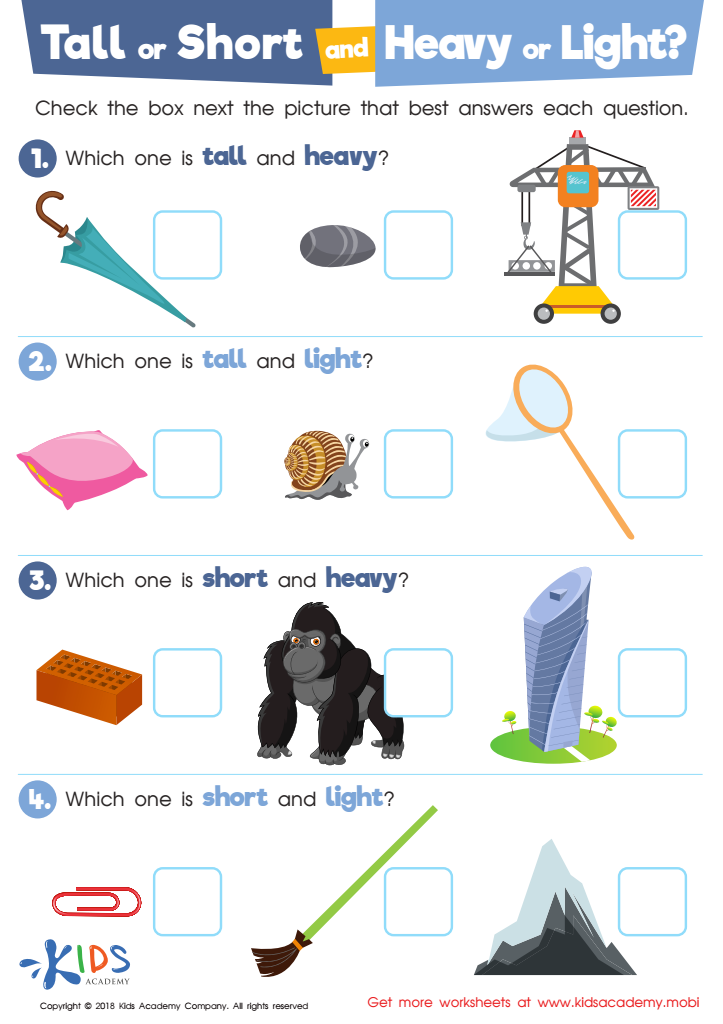
Tall or Short and Heavy or Light? Worksheet
Young children can find basic measurement concepts tricky. This PDF introduces them to the appropriate vocabulary for describing heavy, light, tall and short items, by using familiar pictures. It helps them accurately select which items fit each category.
Tall or Short and Heavy or Light? Worksheet
Worksheet
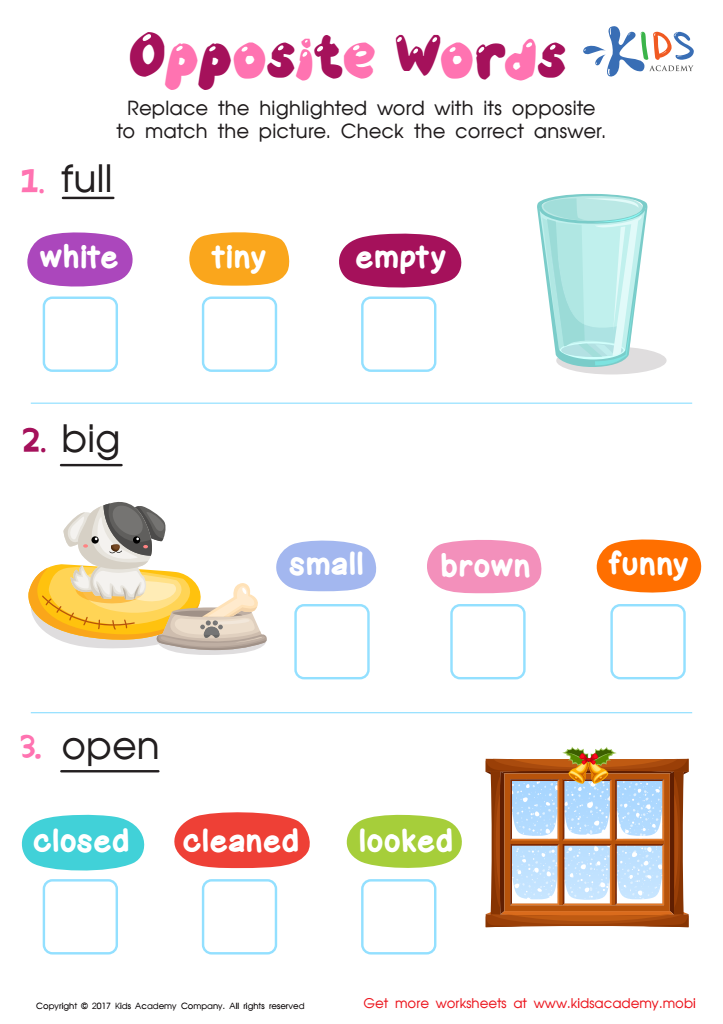
Opposite Words Worksheet
Help your child learn words and opposites. Look through a worksheet with them. Ask if they can read the underlined words. Then, ask which highlighted word is the opposite of the underlined word. The answer should match the picture.
Opposite Words Worksheet
Worksheet
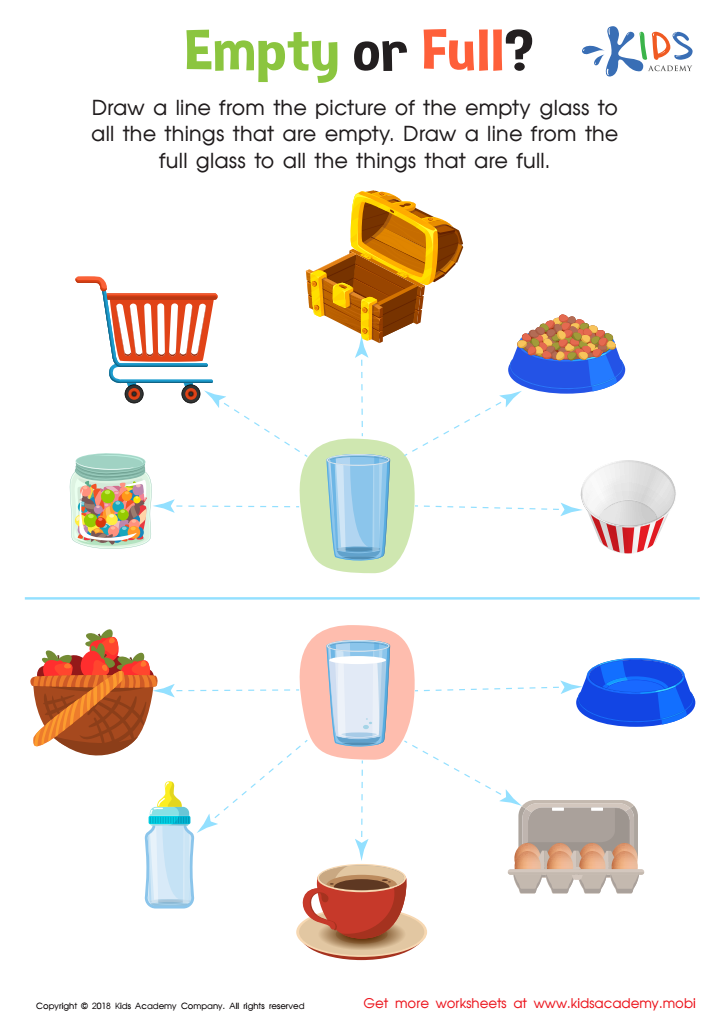
Empty or Full? Worksheet
Let students get to grips with the concepts of empty and full with this PDF worksheet. It uses fun, bright pictures to help them comprehend the difference and also helps develop fine-motor skills with tracing lines. Kids will be proud of themselves as they get answers right!
Empty or Full? Worksheet
Worksheet
Join Kids Academy for Free
Who is primarily going to use this learning content?








Understanding opposites is a foundational cognitive skill important for children aged 3-6, and both parents and teachers should keenly support its development. At this age, children's brains are highly receptive to new information, and learning about opposites helps to enhance their critical thinking and language skills. Grasping concepts such as hot and cold, big and small, or happy and sad helps kids make sense of the world in a more organized way.
Language development, a core part of early education, greatly benefits from lessons on opposites. Knowing opposites enriches a child's vocabulary and aids in clearer, more effective communication. When children understand opposites, they can describe their feelings and surroundings more precisely, which eases frustration and enhances interpersonal interactions.
Moreover, cognitive development is spurred on by lessons about opposites. Identifying and categorizing contrasting features requires analytical thinking, promoting problem-solving abilities that are essential for more advanced educational undertakings. Understanding opposites also prepares young minds for subsequent concepts in mathematics and science, where contrasts like full/empty or heavy/light are frequently encountered.
In brief, fostering an understanding of opposites during early childhood lays critical groundwork for both intellectual and emotional development, ensuring children are well-equipped for future learning and everyday interactions.








