Understanding prepositions Worksheets for Ages 3-6
10 filtered results
-
From - To
Explore our engaging "Understanding Prepositions Worksheets" designed for children ages 3-6! These educational resources are perfect for young learners to grasp the concept of prepositions through fun and interactive activities. Bright illustrations and simple exercises help facilitate comprehension of spatial relationships. Each worksheet encourages kids to identify, match, and use prepositions in various contexts, fostering language development and critical thinking. Our thoughtfully crafted materials not only make learning enjoyable but also support foundational skills in early literacy. Help your child build confidence with language as they discover the world of prepositions in a playful and stimulating environment!
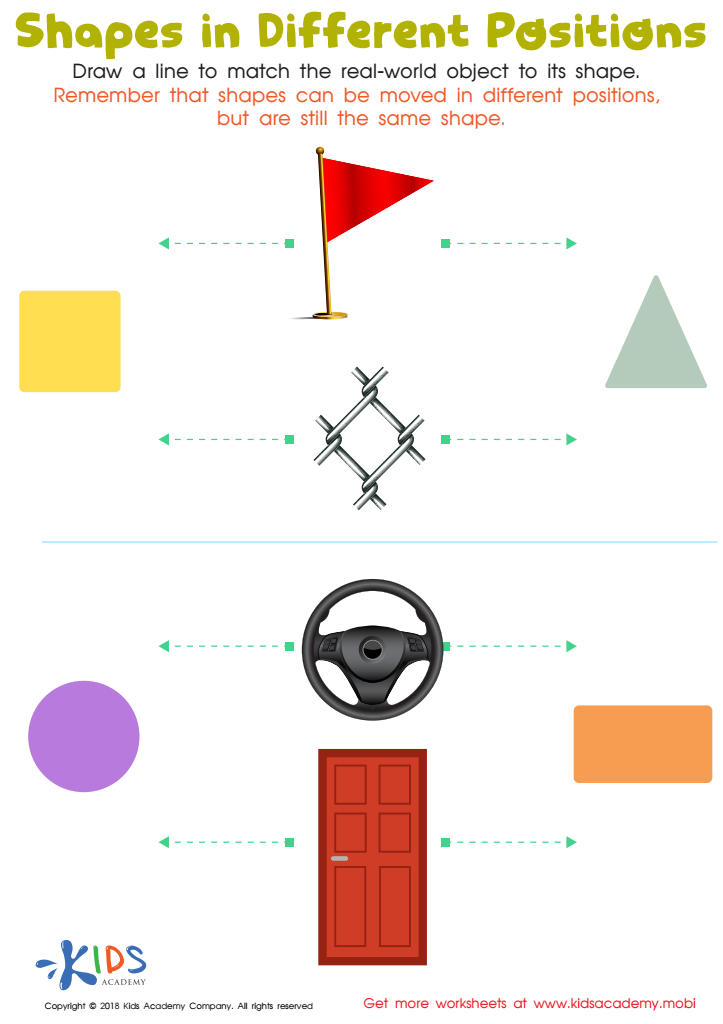
Shapes in Different Positions Worksheet
 Assign to My Students
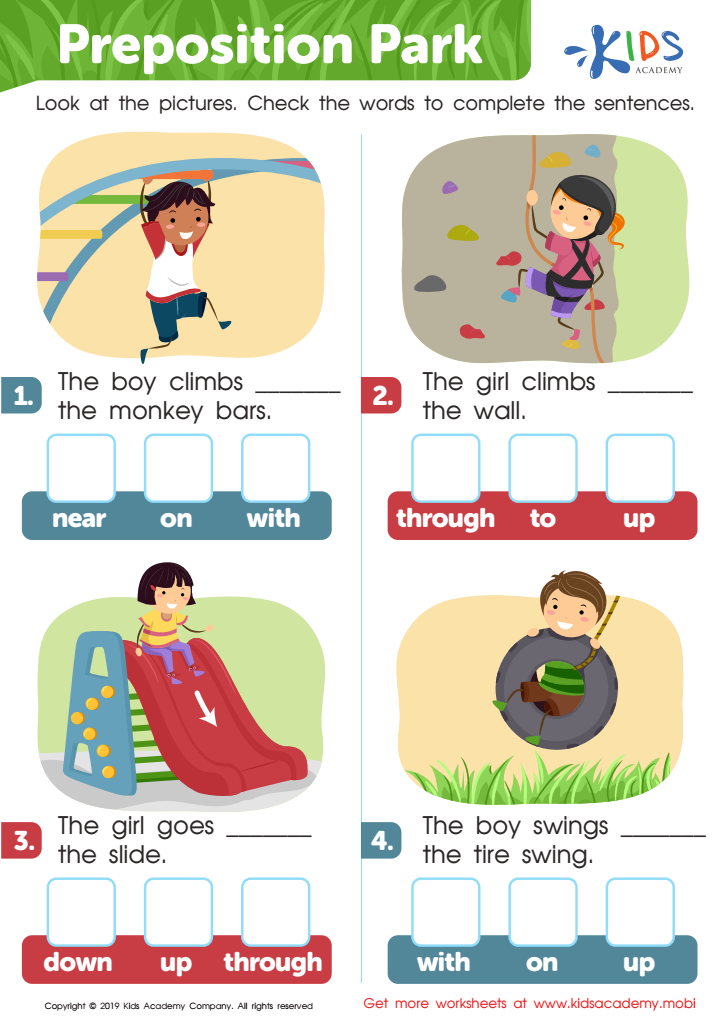
Preposition Park Worksheet
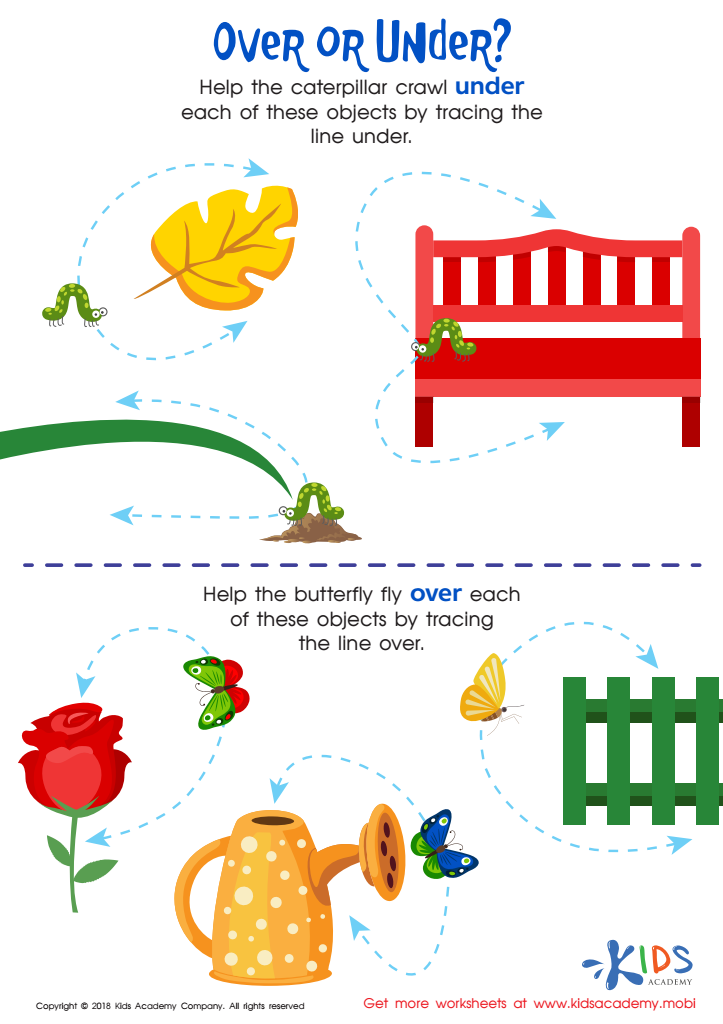
Over or Under? Worksheet
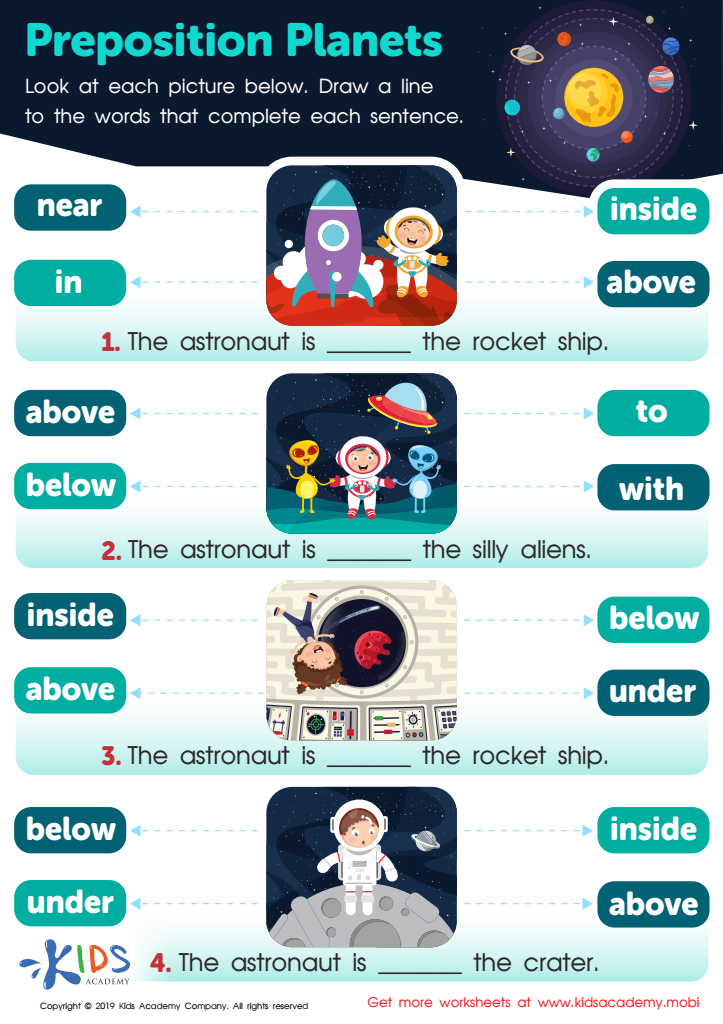
Preposition Planets Worksheet
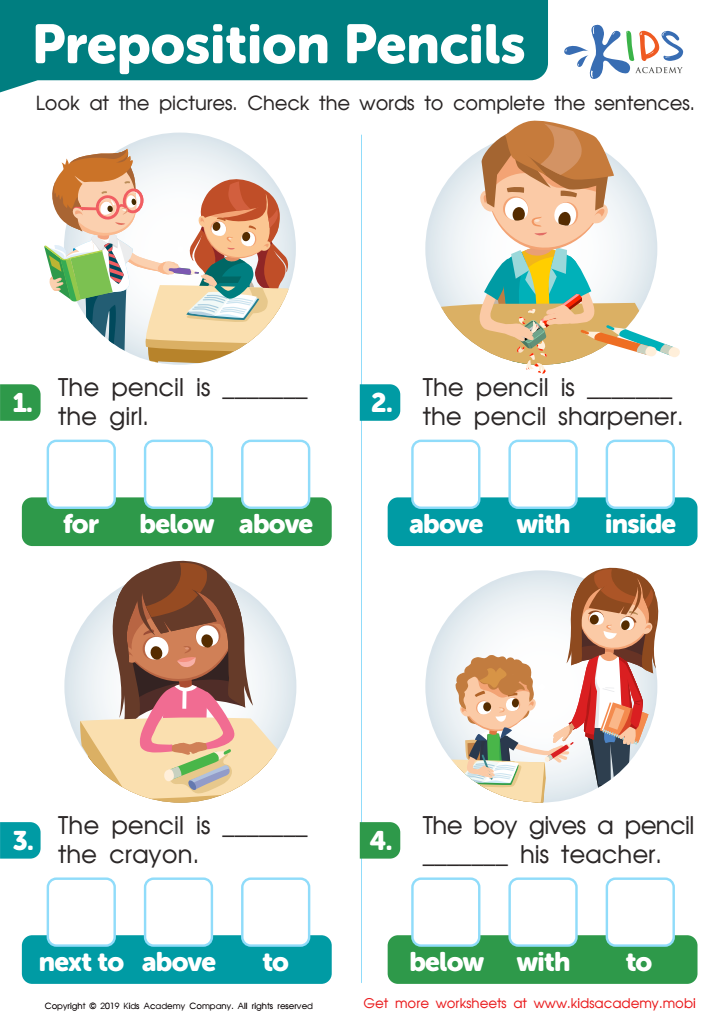
Preposition Pencils Worksheet
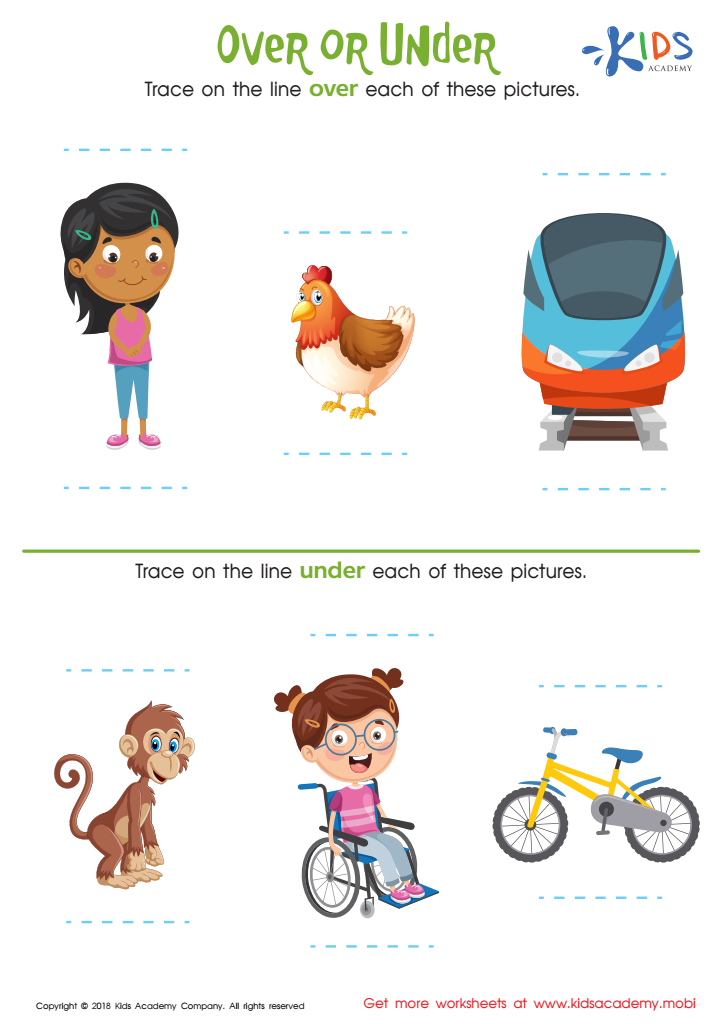
Over or Under Worksheet
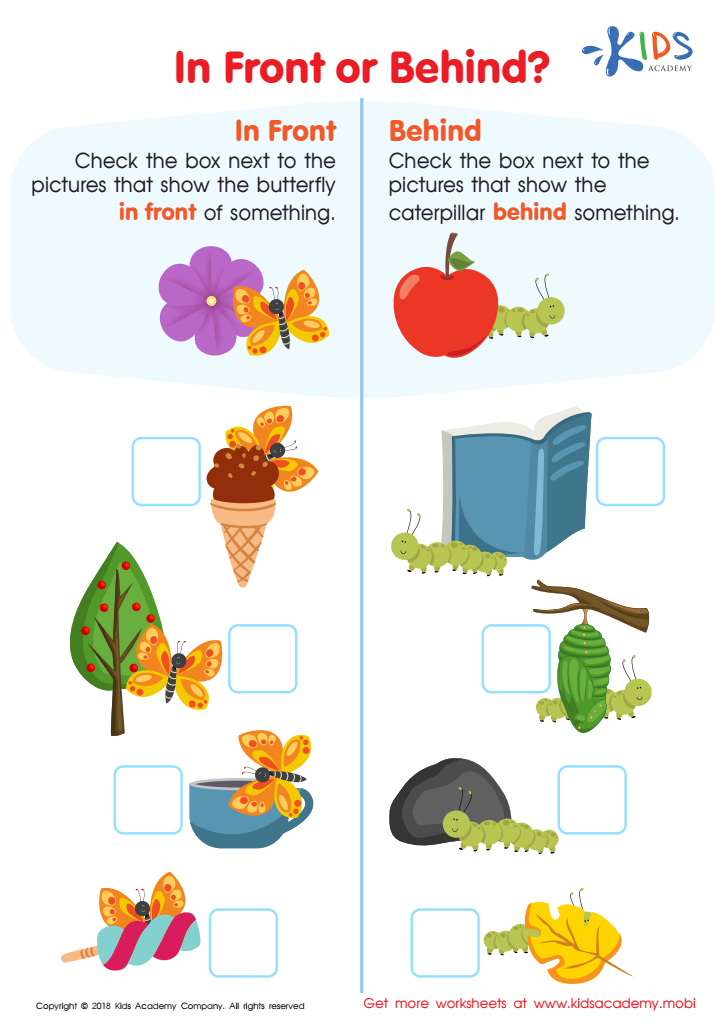
In Front or Behind Worksheet
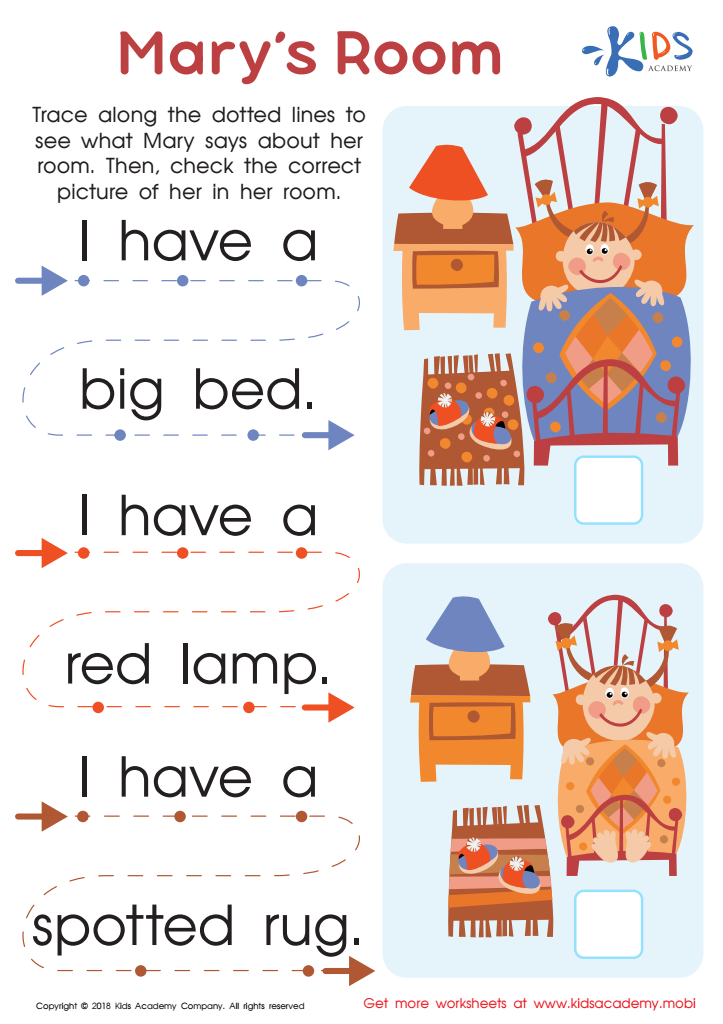
Mary's Room Worksheet






Understanding prepositions is crucial for children ages 3-6 as it lays the foundation for effective communication and cognitive development. At this age, children are rapidly expanding their language skills, and prepositions are key elements in describing relationships between objects and positions, which enhance their ability to express thoughts clearly.
When parents and teachers prioritize preposition knowledge, they cultivate skills that help with comprehension in both verbal and written language. For instance, recognizing phrases such as "under the table" or "between the chairs" enables children to better understand and follow directions, promoting independent problem-solving capabilities.
Moreover, mastering prepositions contributes to cognitive development. As children learn to categorize and relate various objects, they also engage in critical thinking, which paves the way for more complex concepts like spatial awareness and math skills later on.
Additionally, fostering early preposition use in everyday activities—such as storytime or play—strengthens parent-child and teacher-student interactions. By integrating preposition learning in engaging ways, adults can make learning fun while reinforcing essential communication skills that children will use throughout their lives. This foundational learning equips young minds for future academic success and social interactions.








