
Understanding weather conditions Worksheets for Ages 3-6
3 filtered results
Difficulty Level
Grade
Age
-
From - To
Subject
Activity
Standards
Explore our engaging "Understanding Weather Conditions Worksheets" designed specifically for children ages 3-6! These worksheets introduce young learners to the fascinating world of weather, helping them identify different weather types such as sunny, rainy, snowy, and windy. Fun activities encourage children to match weather symbols, color scenes, and explore basic concepts related to seasonal changes. Perfect for enhancing vocabulary and observational skills, these worksheets incorporate playful illustrations that captivate young imaginations. Ideal for classroom or home use, our resources make learning about weather exciting and interactive, laying the foundation for a lifelong curiosity about the natural world!
Favorites
With answer key
Interactive
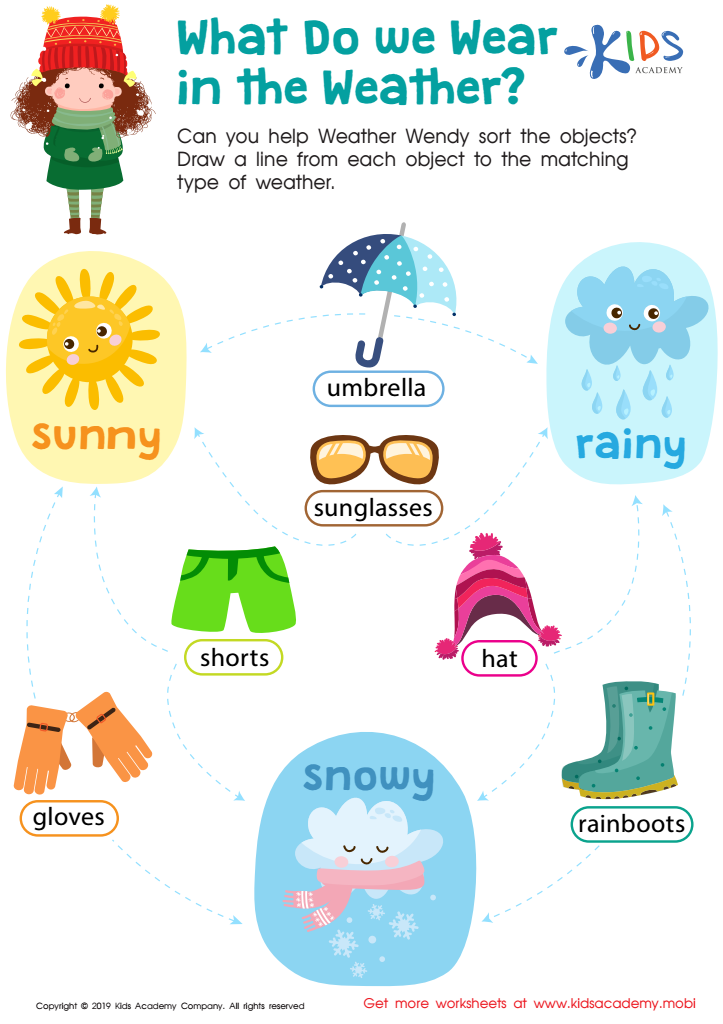
What Do We Wear in the Weather? Worksheet
This worksheet boosts young learners' everyday vocab with fun high-frequency weather words. They'll see and match familiar pictures to the words they read. Plus, it helps them develop fine motor skills. Perfect for preschoolers.
 Assign to My Students
What Do We Wear in the Weather? Worksheet
Worksheet
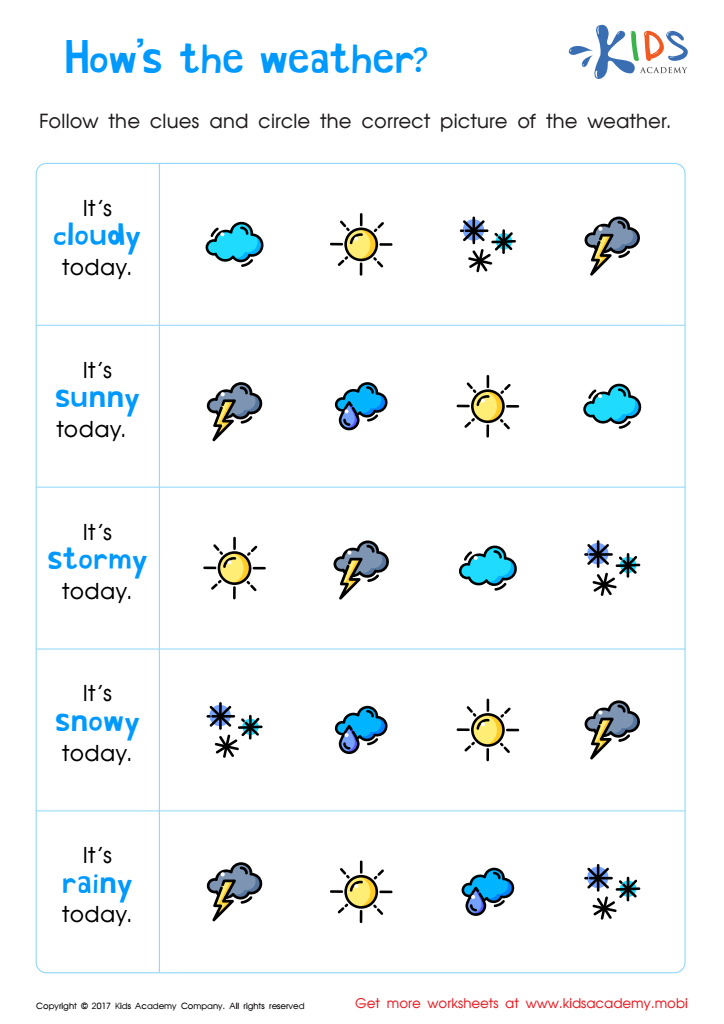
Hows the Weather Worksheet
Teaching kids about weather is a fun way to start science learning. This worksheet helps recognize symbols, literacy skills and make real world connections. Your child will love it!
Hows the Weather Worksheet
Worksheet
Join Kids Academy for Free
Who is primarily going to use this learning content?








Understanding weather conditions is crucial for children aged 3-6 as it lays the foundation for essential life skills, safety awareness, and cognitive development. At this age, children are naturally curious, and learning about the weather promotes exploration and critical thinking. Parents and teachers can incorporate this interest into daily activities, helping children connect with the environment around them.
Teaching children about weather conditions helps them develop a sense of time and changes in seasons, fostering an appreciation for nature. It also enables them to dress appropriately and plan for outdoor activities, thereby enhancing safety. For example, understanding the difference between sunny days and storms can empower children to make informed choices, such as staying indoors during severe weather.
Furthermore, discussions about weather can encourage language development as children learn new vocabulary and concepts. Engaging in activities like weather-themed arts and crafts or nature walks cultivates teamwork and enhances social skills. Ultimately, nurturing an understanding of weather enriches children's education and encourages a healthy curiosity about the world, equipping them with knowledge and skills that will serve them for a lifetime. Parents and teachers play a vital role in guiding this exploration, making it an essential area of focus for early childhood learning.








