Visual comprehension Worksheets for Ages 3-6
10 filtered results
-
From - To
Enhance your child's learning with our fun and engaging Visual Comprehension Worksheets for ages 3-6! At Kids Academy, we understand the importance of building strong visual processing skills early on. Our curated collection of worksheets is designed to boost recognition, memory, and attention to detail through playful activities that captivate young minds. Whether identifying shapes, matching patterns, or solving simple puzzles, these worksheets provide the perfect foundation for lifelong learning. Tailored to preschoolers and kindergarteners, our visual comprehension exercises will keep your child entertained while fostering essential cognitive development. Download now to make learning an enjoyable adventure!
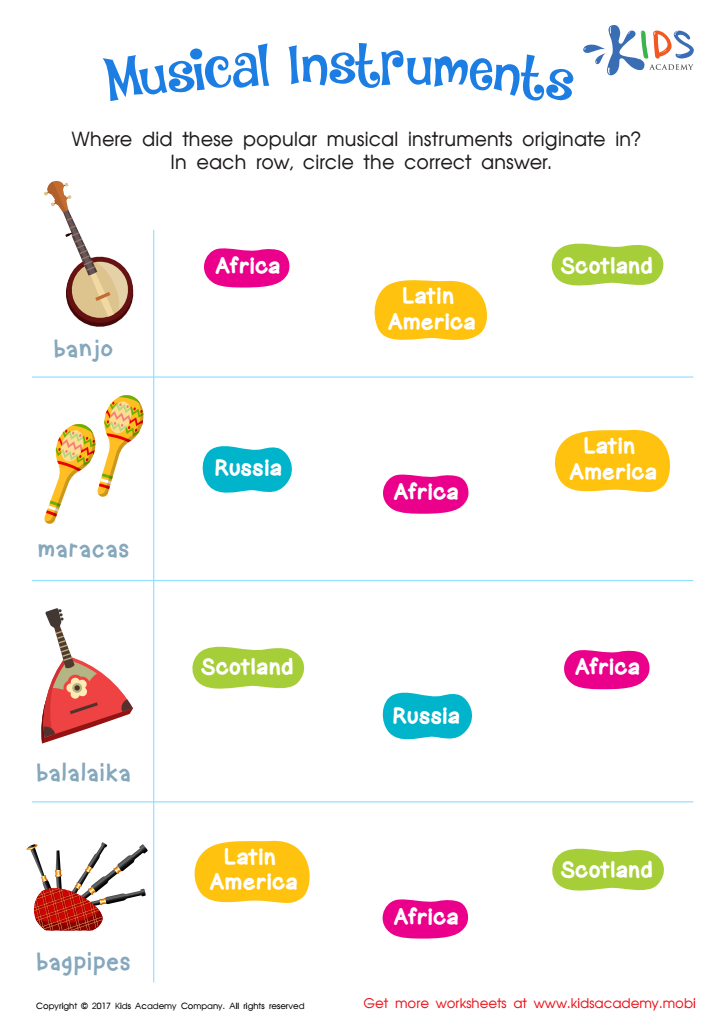
Musical Instruments Printable
 Assign to My Students
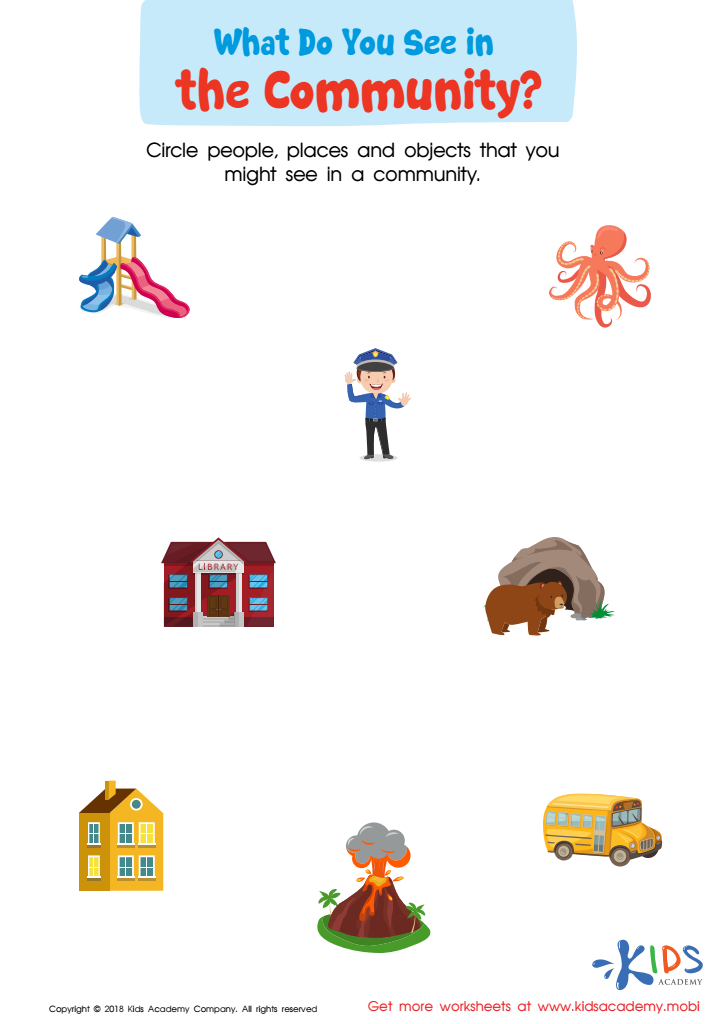
What Do You See in the Community Worksheet
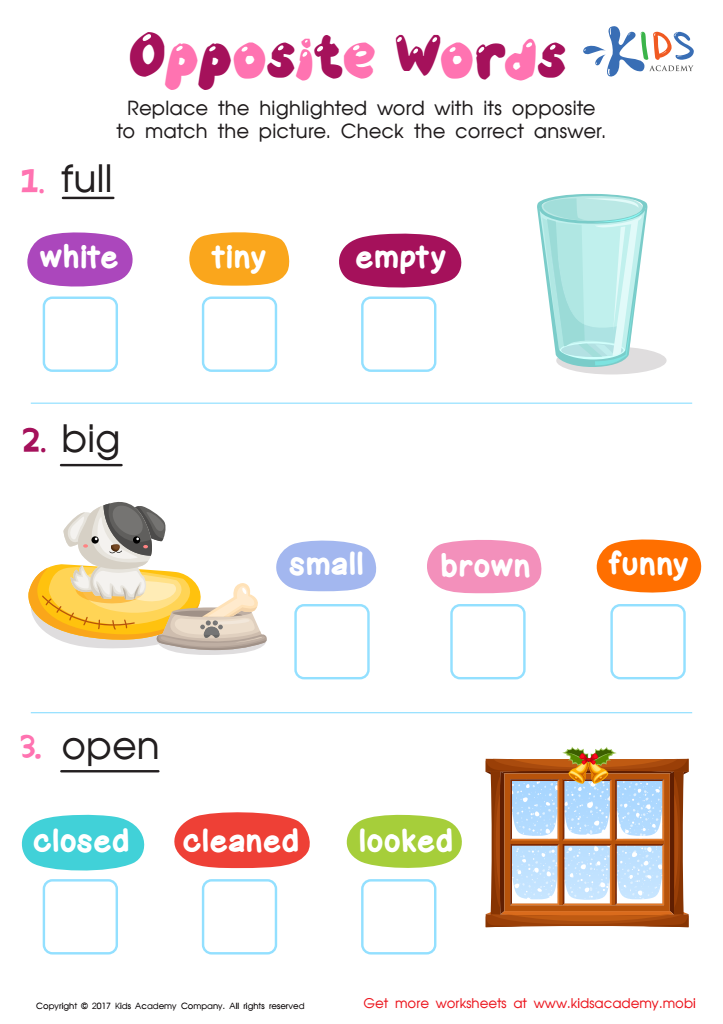
Opposite Words Worksheet







Visual comprehension for children ages 3-6 is a cornerstone of early learning that parents and teachers should prioritize. At this developmental stage, children are naturally curious and their brains are rapidly developing. Visual comprehension, or the ability to understand and interpret visual information, is integral for this cognitive growth.
Firstly, visual comprehension aids in reading readiness. Children learn to recognize shapes, patterns, and symbols, which form the basis of letter and word recognition. It sets the groundwork for fluent reading and literacy skills.
Secondly, it fosters creativity and imagination. When kids interpret pictures, they explore narratives and build their storytelling abilities. This not only enhances language skills but also emotional intelligence as they learn to express and understand sentiments.
Additionally, visual comprehension supports effective communication. Children who can interpret visual cues are better at non-verbal communication, an essential life skill. They learn to understand context, environment, and the intricacies of social interactions.
Lastly, early development of visual comprehension correlates with enhanced academic achievement. It boosts problem-solving skills, critical thinking, and spatial awareness—attributes essential for subjects like math and science.
By valuing and encouraging visual comprehension skills, parents and teachers provide children a robust framework for academic success and holistic development.








