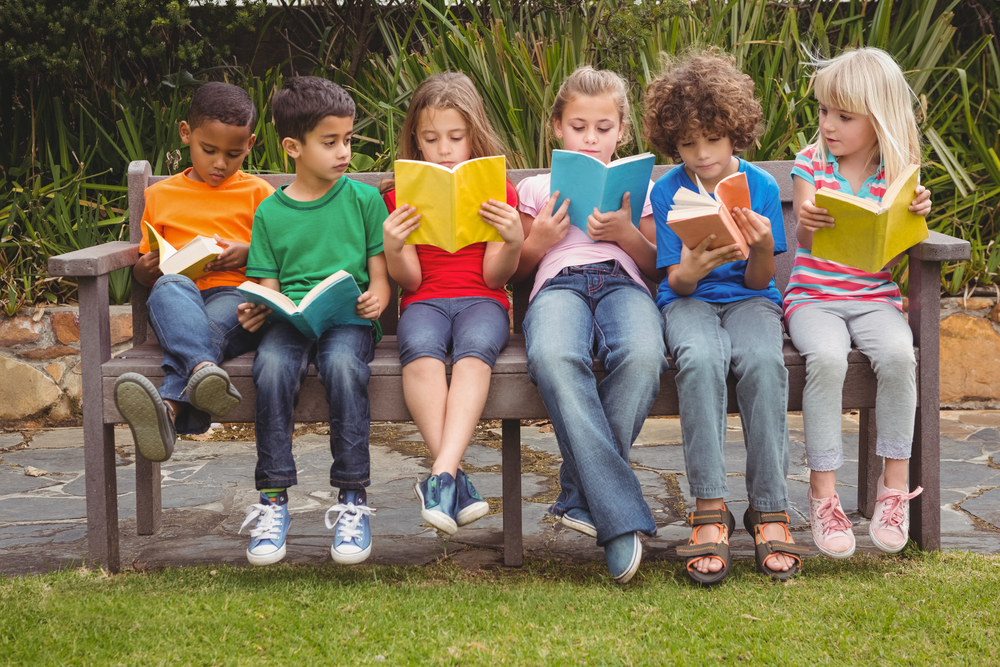
Discover engaging Visual Interpretation Worksheets for ages 3-6 designed to enhance young learners' critical thinking and observation skills. These printable activities cultivate children's ability to analyze images, identify details, and interpret visual information through fun and interactive exercises. Our worksheets cater to various learning styles, promoting creativity and boosting confidence in early learners. Whether it's matching, sorting, or completing patterns, each worksheet aims to provide meaningful learning experiences. Ideal for both home and classroom settings, these resources will aid in developing essential cognitive skills while keeping children entertained. Start exploring the world of visual interpretation and watch young minds flourish!

Check out this FREE "Visual interpretation" Trial Lesson for age 3-6!

Relationship Between Illustrations and the Story

Favorites
With answer key
Interactive
  • 3-6
  • Visual interpretation
Bugs Tally Worksheet

Bugs Tally Worksheet

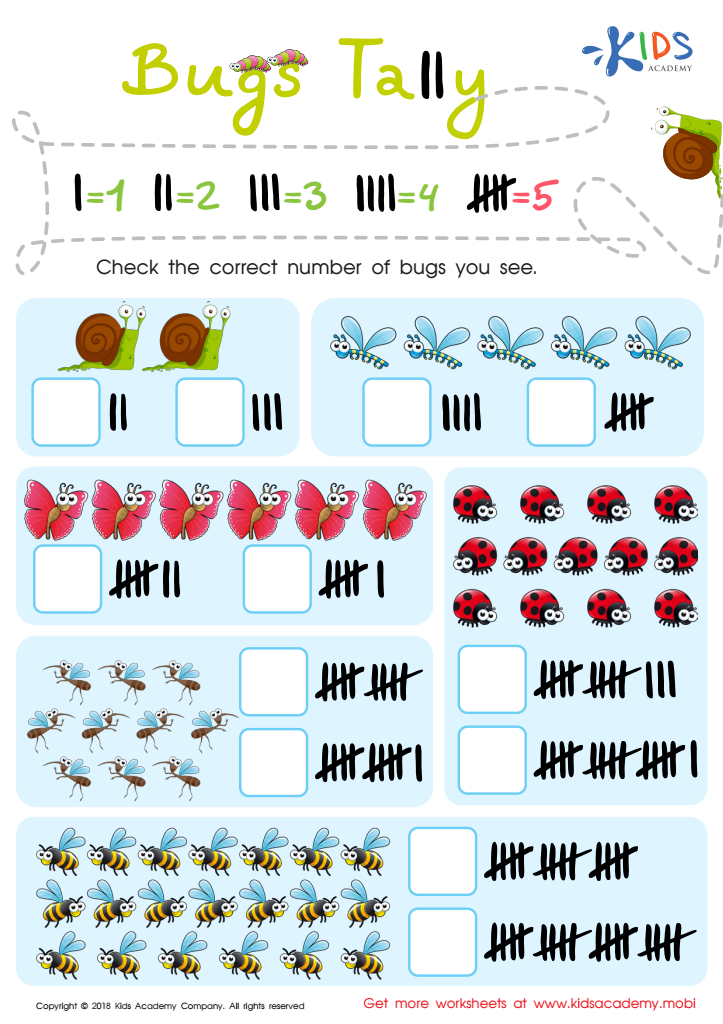
This fun worksheet uses friendly bugs to help young mathematicians learn numbers and tally marks. They'll gain real-world skills to help with adding, subtracting and counting. Representations will solidify number reasoning, aiding with game playing and more.
Bugs Tally Worksheet
Worksheet
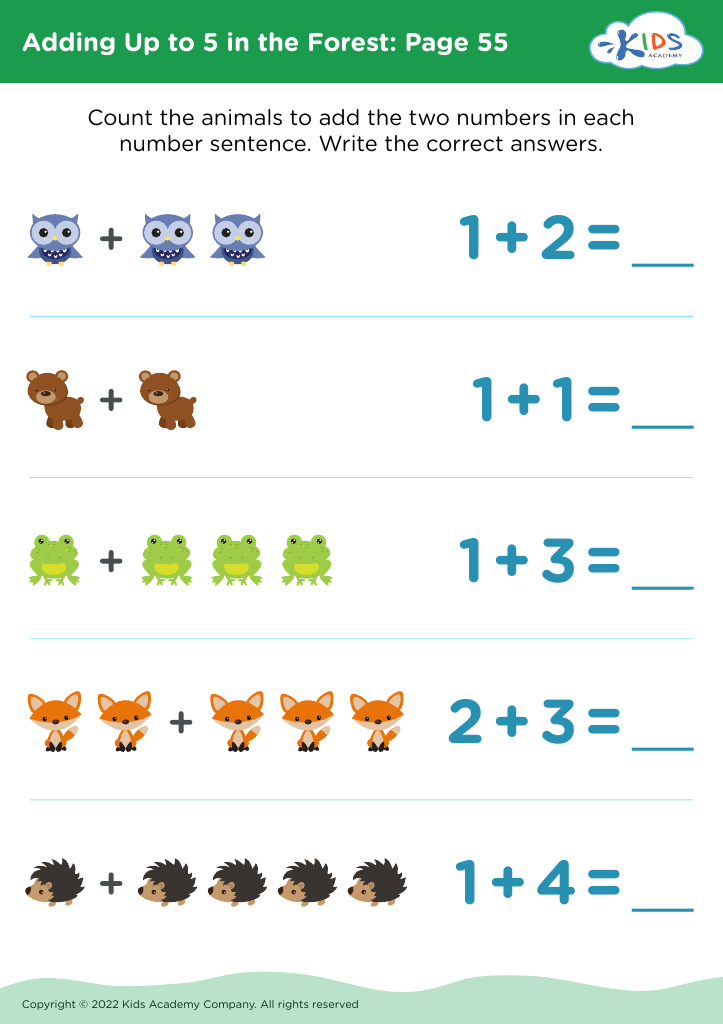
Adding Up to 5 in the Forest: Page 55
Worksheet
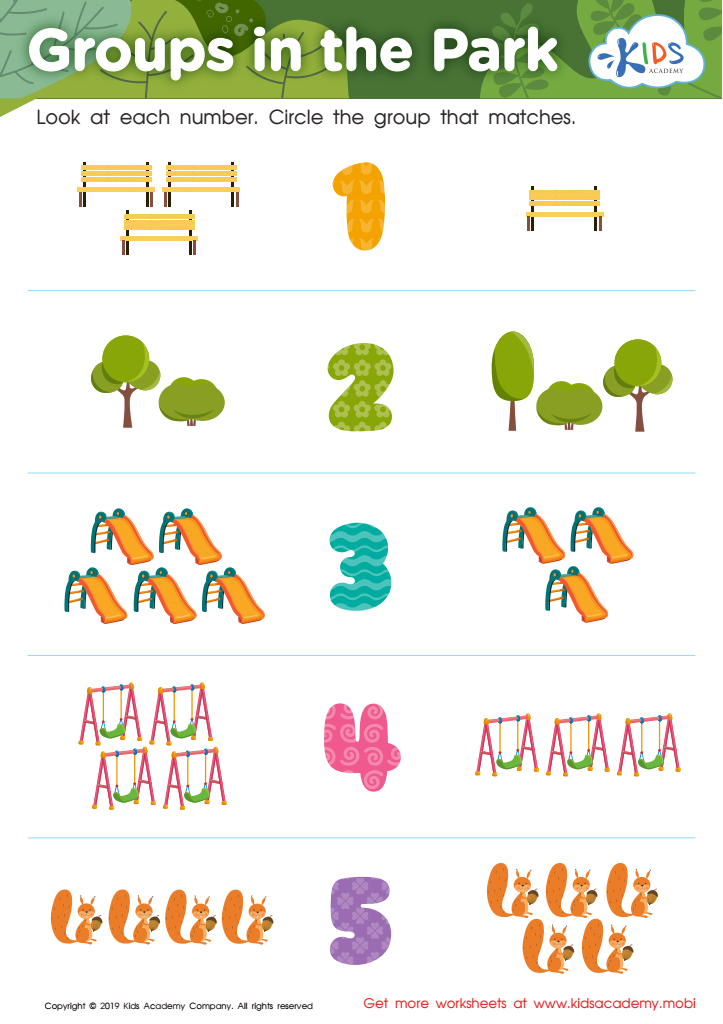
Groups in the Park Worksheet

Groups in the Park Worksheet

Take your kids to the park and let them enjoy the freedom to play! Ask them what they love doing most and study a picture together - name items and count objects in the sets, then circle the correct one. It's a fun way for your kids to learn.
Groups in the Park Worksheet
Worksheet
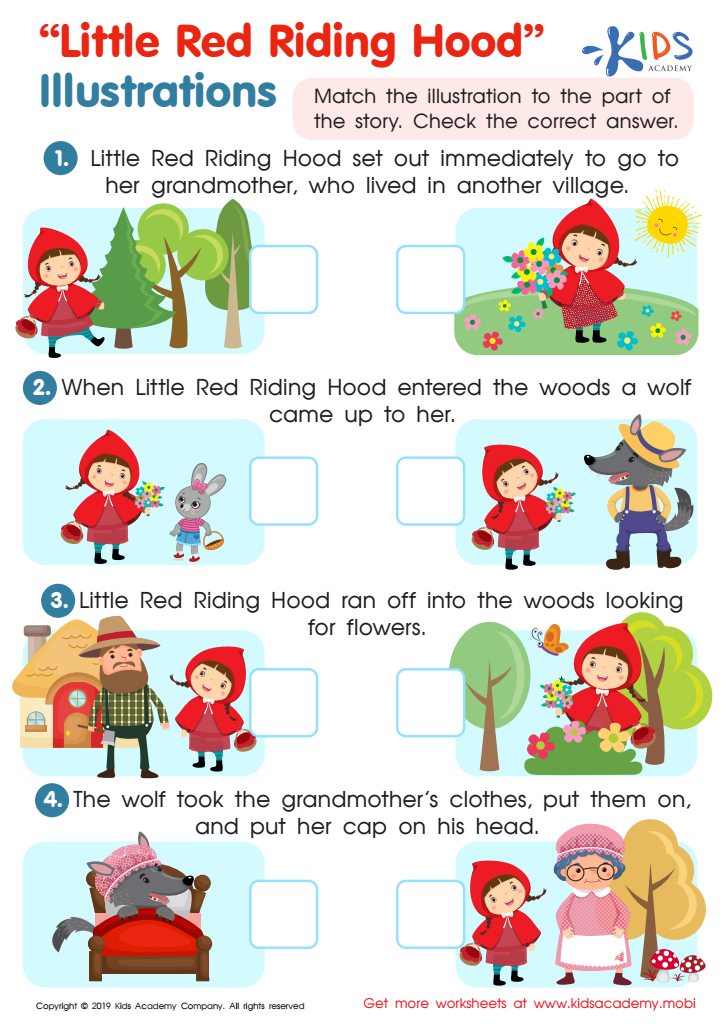
Little Red Riding Hood: Illustrations Worksheet

Little Red Riding Hood: Illustrations Worksheet

Comprehension is improved by having young readers recall and retell stories. This worksheet uses colorful illustrations of the fairytale Little Red Riding Hood. Children use their comprehension skills and strategy to match illustrations to the story parts, check off the appropriate boxes and use the pictures as clues.
Little Red Riding Hood: Illustrations Worksheet
Worksheet
Wash Your Hands Worksheet

Wash Your Hands Worksheet

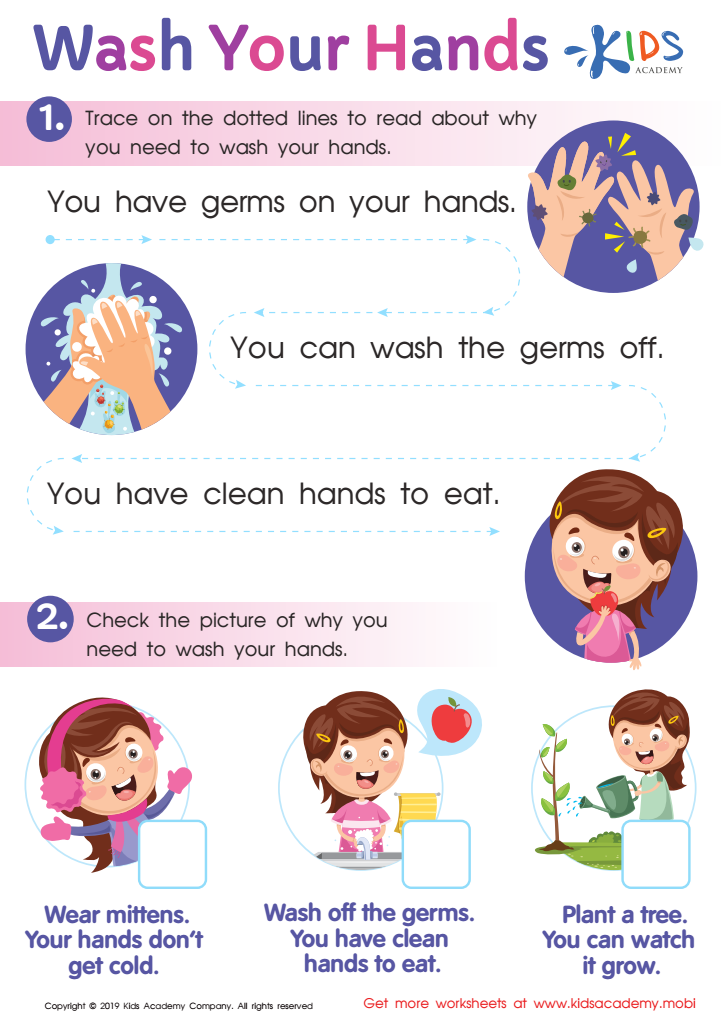
Kids learn best when they understand why they need to do something. This free worksheet uses traceable lines and pictures to teach them about germs and why washing hands is important. The child follows a left-to-right sequence and must check the correct picture to show they understand.
Wash Your Hands Worksheet
Worksheet
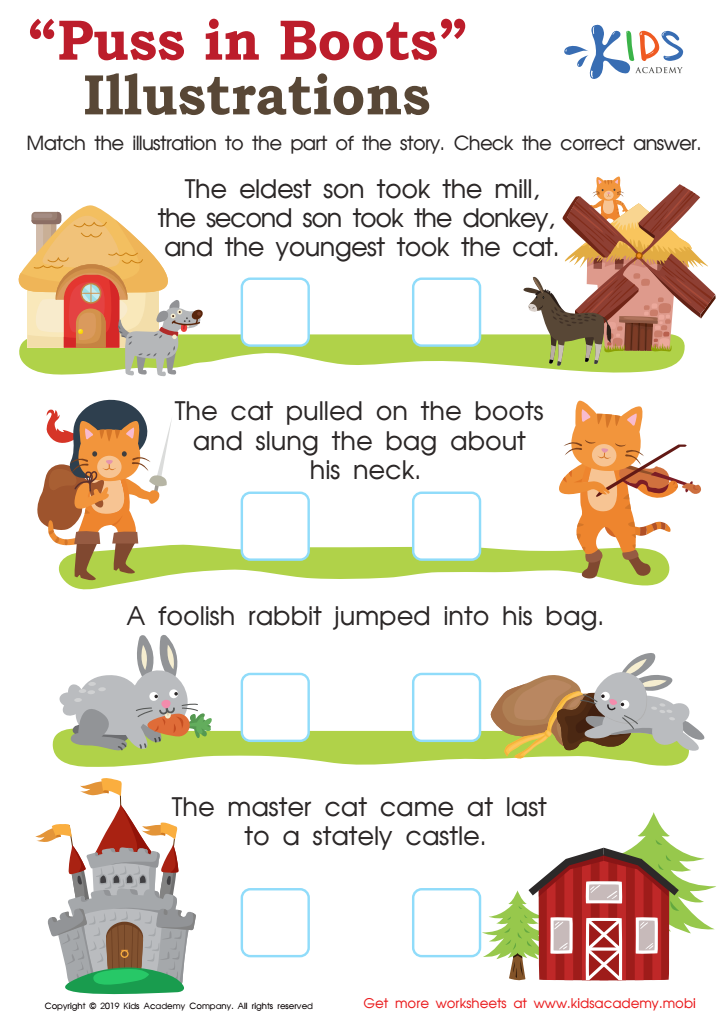
Puss in Boots Illustrations Worksheet

Puss in Boots Illustrations Worksheet

This Puss In Boots Illustrations worksheet is a great way to help kids learn about retelling stories. They'll match images to different parts of the story and check off the correct answer. As they recall events and put them in sequence they'll enjoy this fun and creative activity.
Puss in Boots Illustrations Worksheet
Worksheet
The Three Little Pigs and The Big Bad Wolf

The Three Little Pigs and The Big Bad Wolf Printable
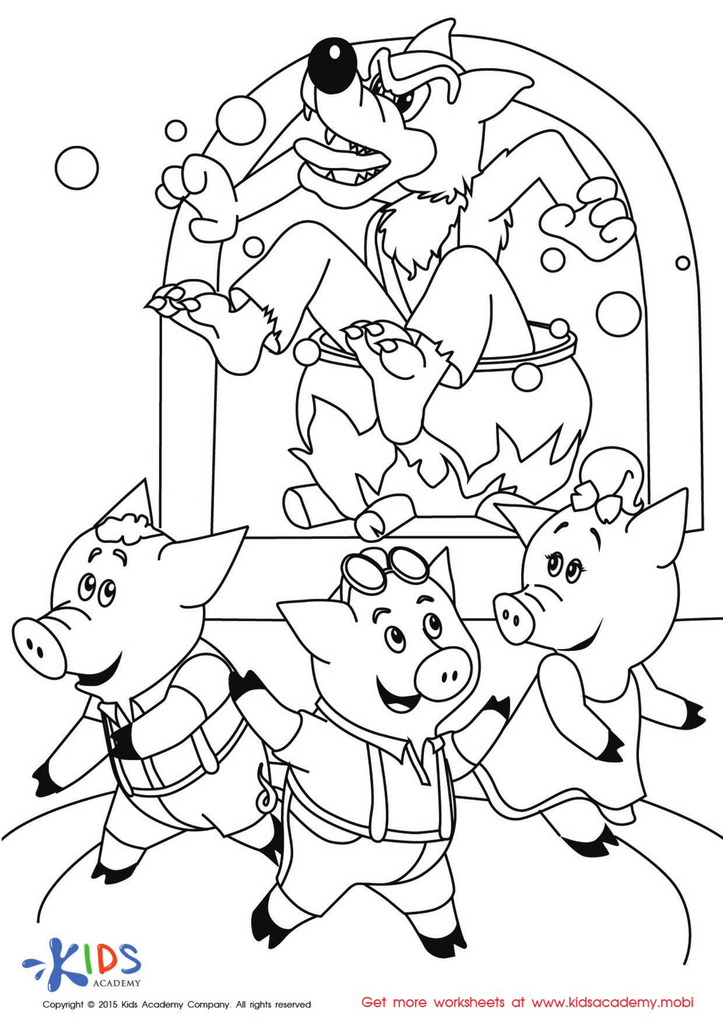
The Big Bad Wolf has learned his lesson: never bully little pigs! This free printable worksheet shows him falling into boiling water, while the three little pigs are safe and happy. Let your kids bring this scene to life by coloring it in whatever way they like. When they're done, ask them if they think the Big Bad Wolf will ever return.
The Three Little Pigs and The Big Bad Wolf Printable

Worksheet
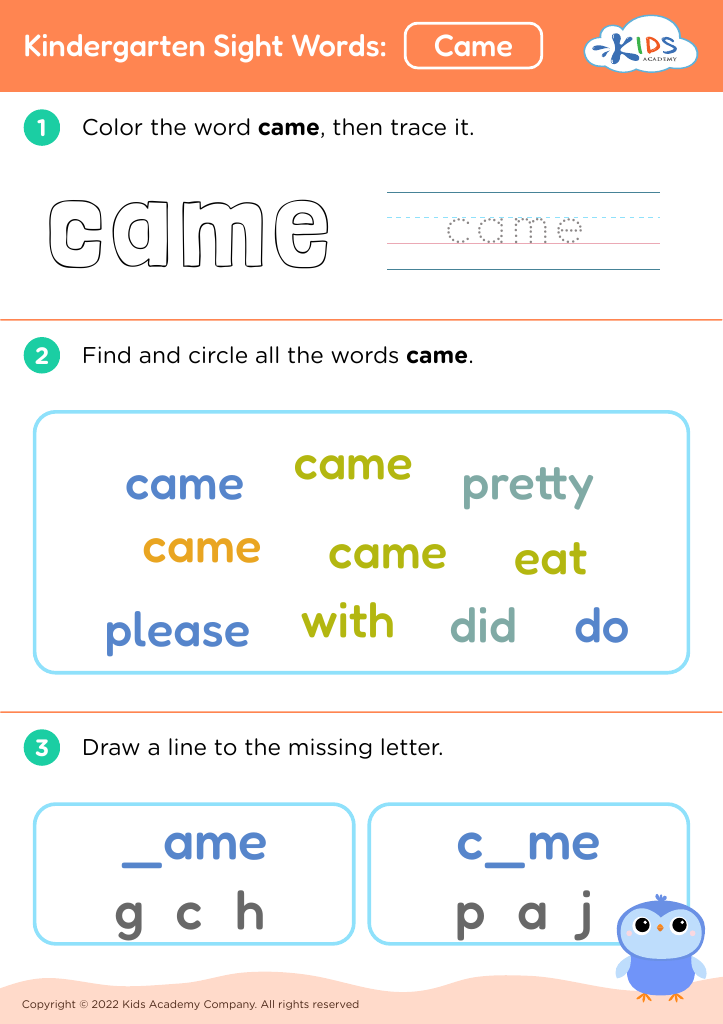
Kindergarten Sight Words: Came

Kindergarten Sight Words: Came

Kindergarten Sight Words: Came
Worksheet


Visual interpretation is a critical skill for children aged 3-6, as it forms the foundation for their cognitive, emotional, and social development. At this early age, children are naturally drawn to visual elements, which play a significant role in how they understand the world around them. Parents and teachers should prioritize promoting visual interpretation because it enhances creativity, critical thinking, and problem-solving skills.

By engaging with visual materials—such as pictures, charts, and artwork—young children learn to decode visual information and express their thoughts and feelings. This ability aids in language development, as children begin to connect images with words, enriching their vocabulary and comprehension. Furthermore, visual interpretation supports emotional intelligence, helping children recognize emotions in themselves and others through facial expressions or visual cues.

Additionally, strong visual interpretation skills can boost children's confidence as they explore different artistic mediums and storytelling techniques. Encouraging this skill early on prepares them for academic success in later years, where visual literacy is increasingly important in subjects like reading, science, and mathematics. Overall, fostering visual interpretation in young children lays the groundwork for a well-rounded educational experience and contributes to their overall growth and development.