Visual learning reinforcement Worksheets for Ages 3-6
7 filtered results
-
From - To
Enhance your child's early learning with our Visual Learning Reinforcement Worksheets, designed specifically for ages 3-6. Our engaging and colorful worksheets support critical developmental skills such as shape recognition, fine motor skills, and counting. By utilizing visual aids, we help young learners grasp foundational concepts through fun and interactive activities. Perfect for preschool and kindergarten, the printable worksheets offer an enjoyable way for children to build confidence and academic readiness at an early stage. Visit Kids Academy and discover a variety of expert-crafted materials that turn learning into a captivating adventure for your young ones.
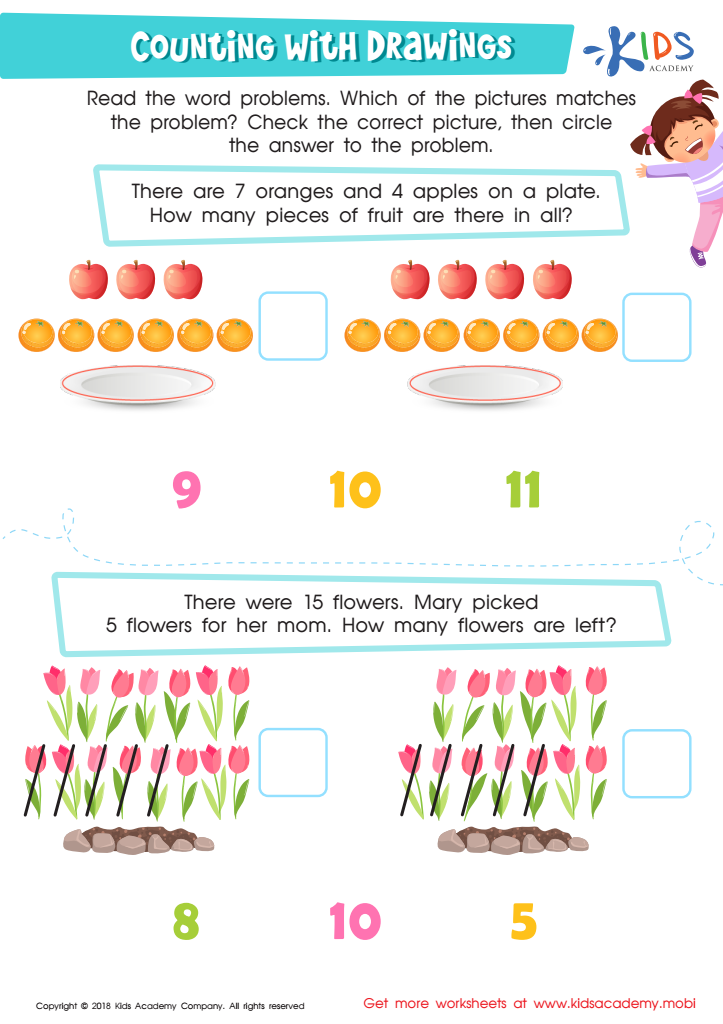
Counting with Drawings: Fruits & Chocolates Worksheet
 Assign to My Students
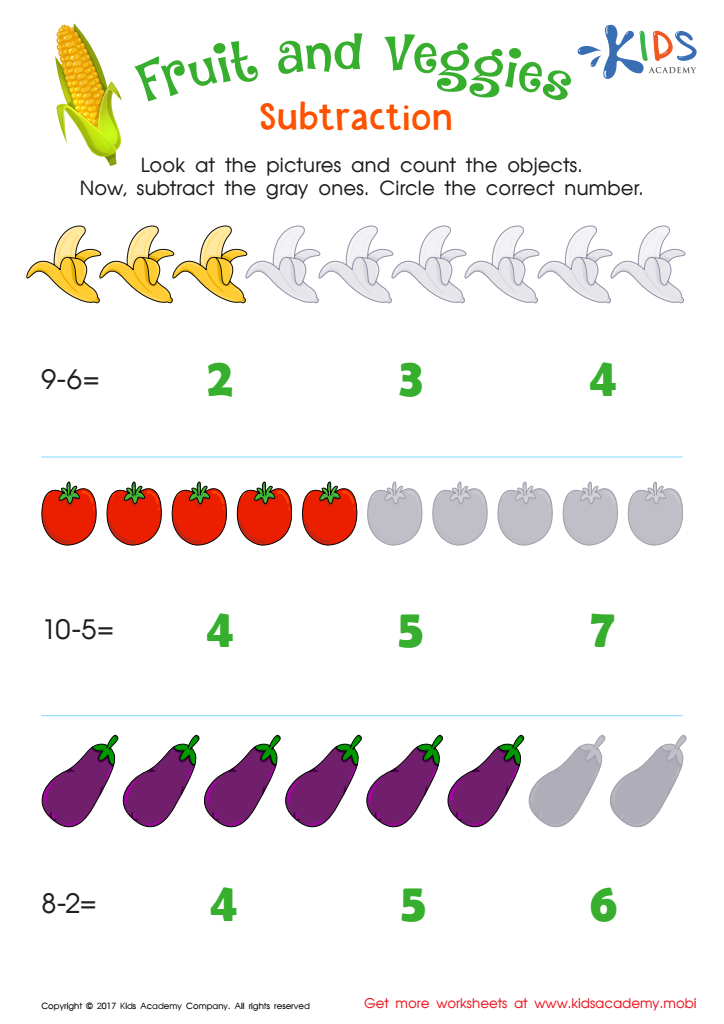
Fruit and Veggies Subtraction Worksheet




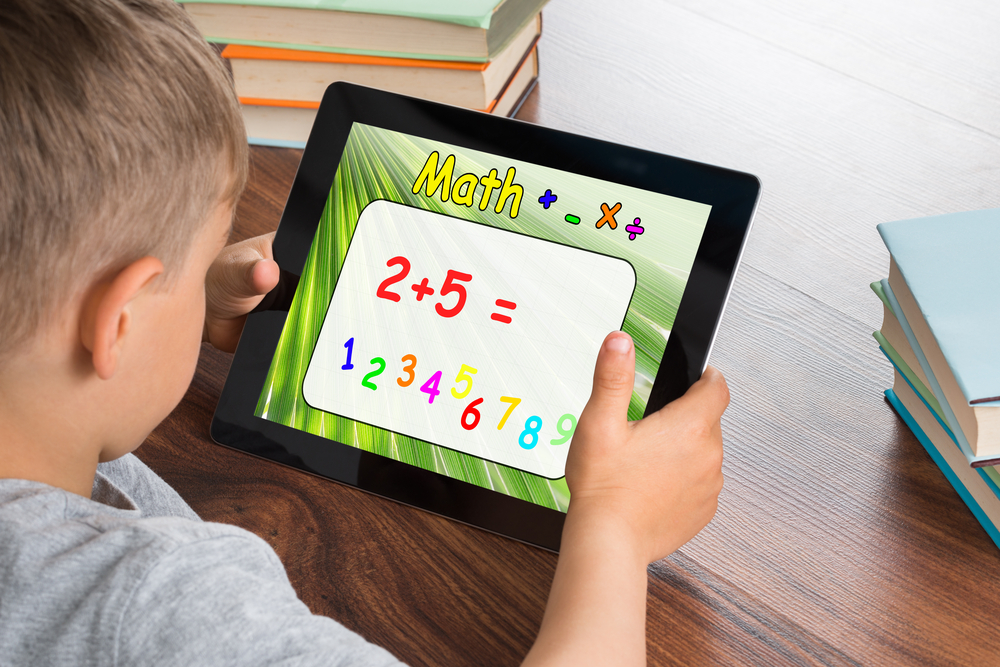

Parents and teachers should care about visual learning reinforcement for ages 3-6 because young children's brains are highly receptive to visual information during this critical developmental period. Visual learning engages multiple senses and helps to build neural connections more effectively. At this age, children are beginning to develop their cognitive, motor, and language skills, and visual reinforcement can play a pivotal role in supporting these areas of growth.
Using images, charts, and visual aids can make abstract concepts more concrete and easier to grasp. For example, colorful flashcards, picture books, and visual schedules can help children better understand letters, numbers, and daily routines. Beyond making learning more engaging, visual tools can also aid in memory retention and recall, fostering a stronger foundation for future learning.
Moreover, visual learning accommodates different learning styles and needs. Children with varying abilities, including those who are non-verbal or have learning differences, can benefit from visual aids which provide alternative means of grasping and processing information. This inclusivity ensures that all children have the opportunity to thrive in a learning environment tailored to their developmental needs.
In essence, integrating visual reinforcement in learning strategies for young children can enhance comprehension, boost engagement, and promote inclusive education, thereby contributing to a well-rounded and effective early childhood educational experience.








