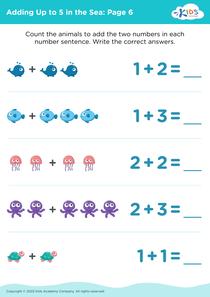
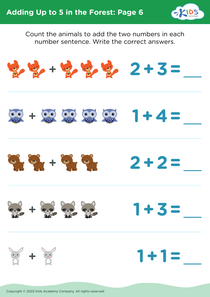
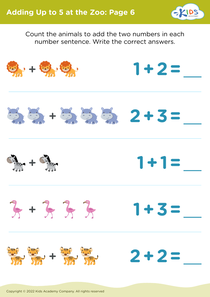
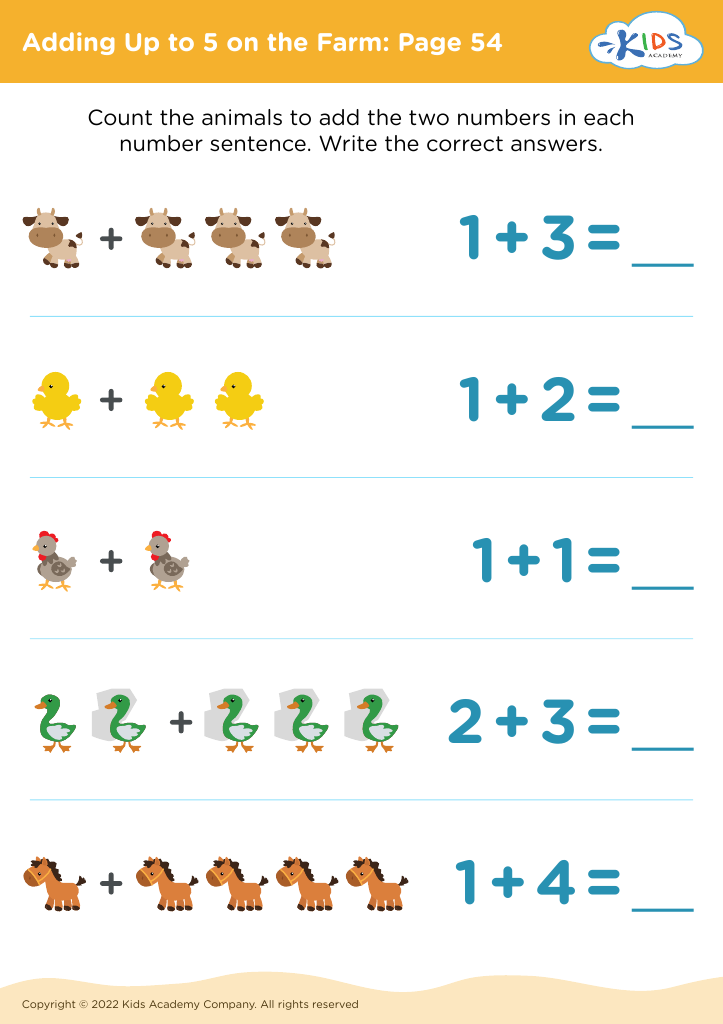
Animal identification Adding on the Farm Worksheets for Ages 3-6
15 filtered results
Difficulty Level
Grade
Age
-
From - To
Subject
Activity
Standards
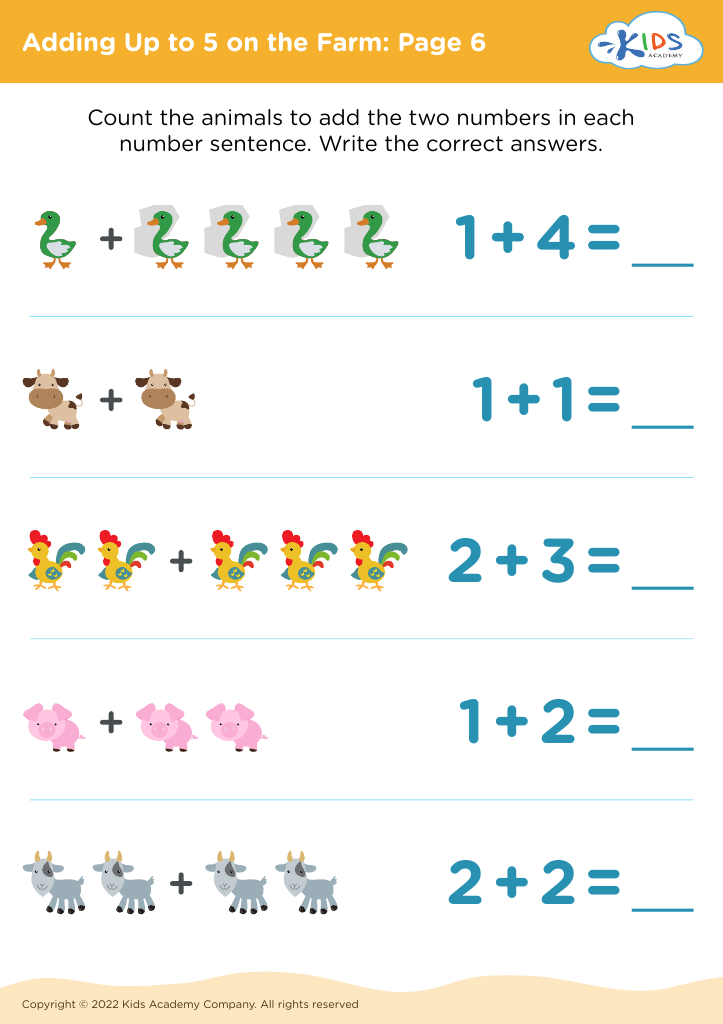
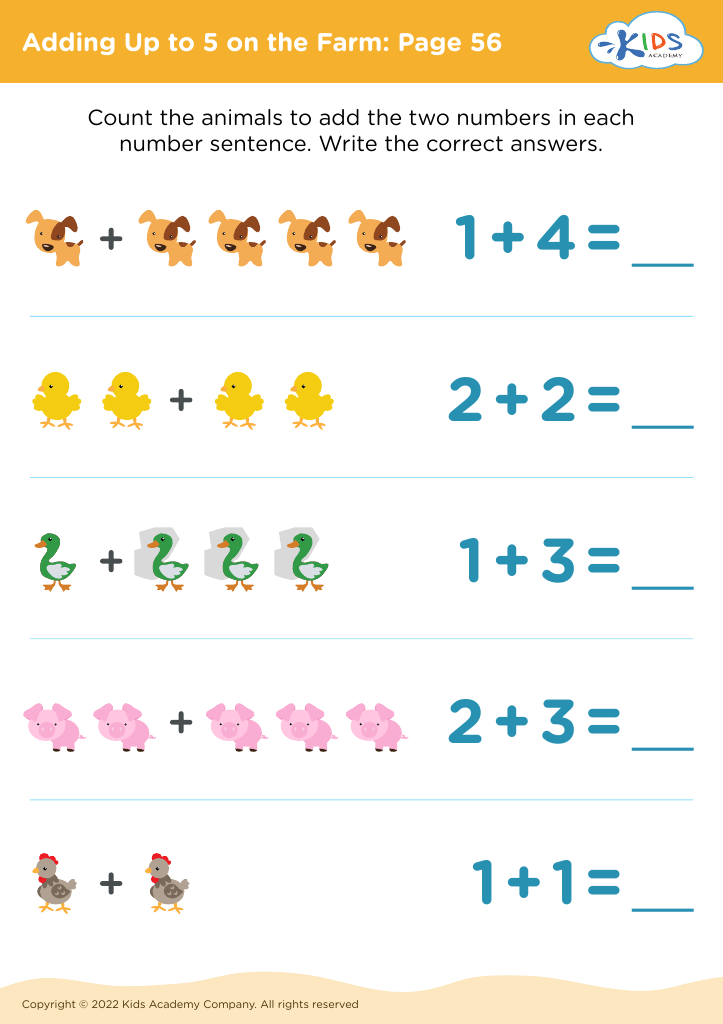
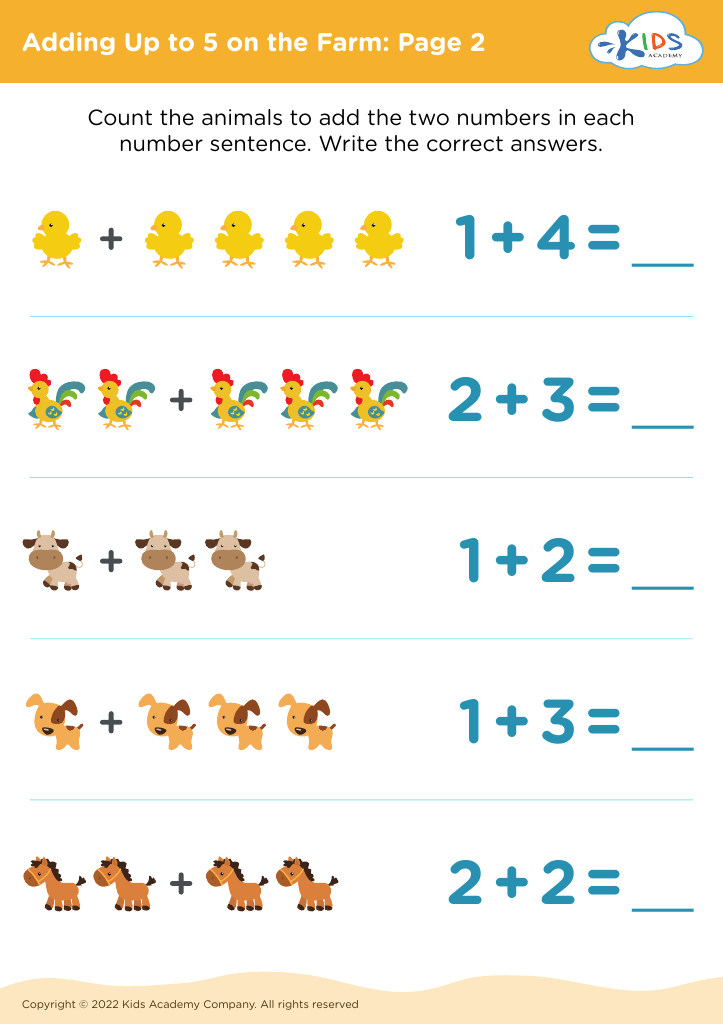
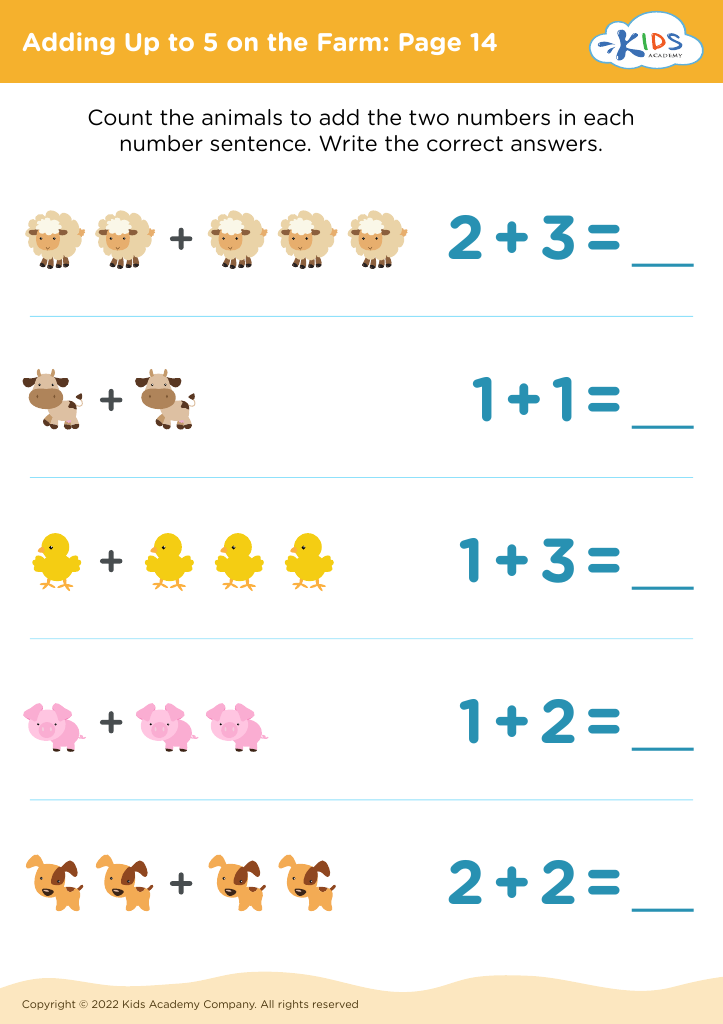
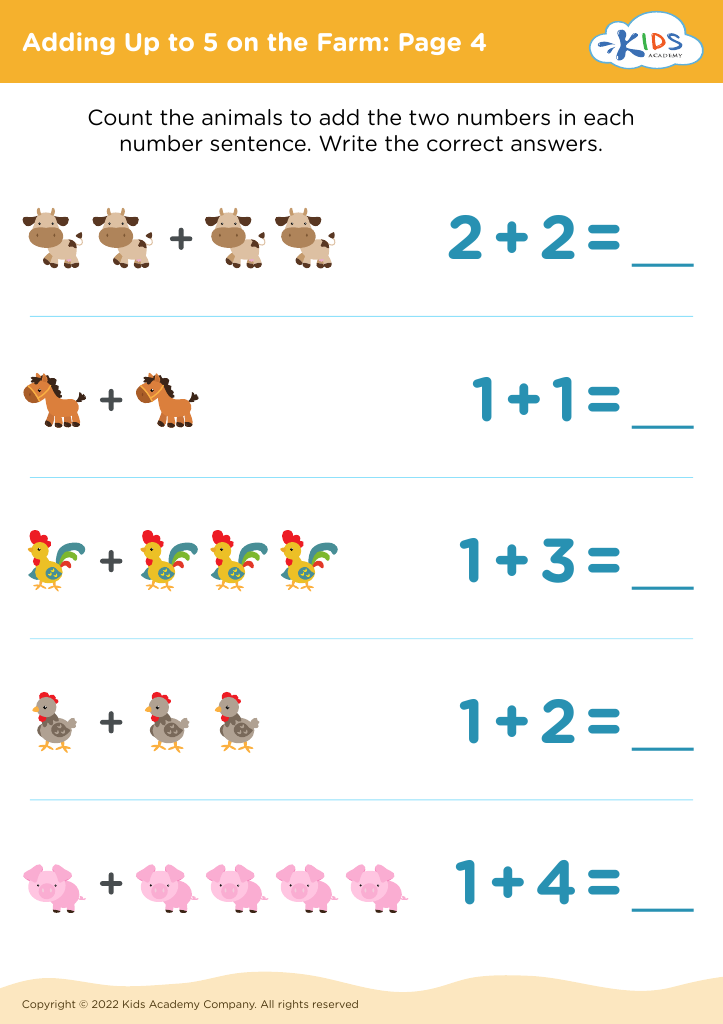
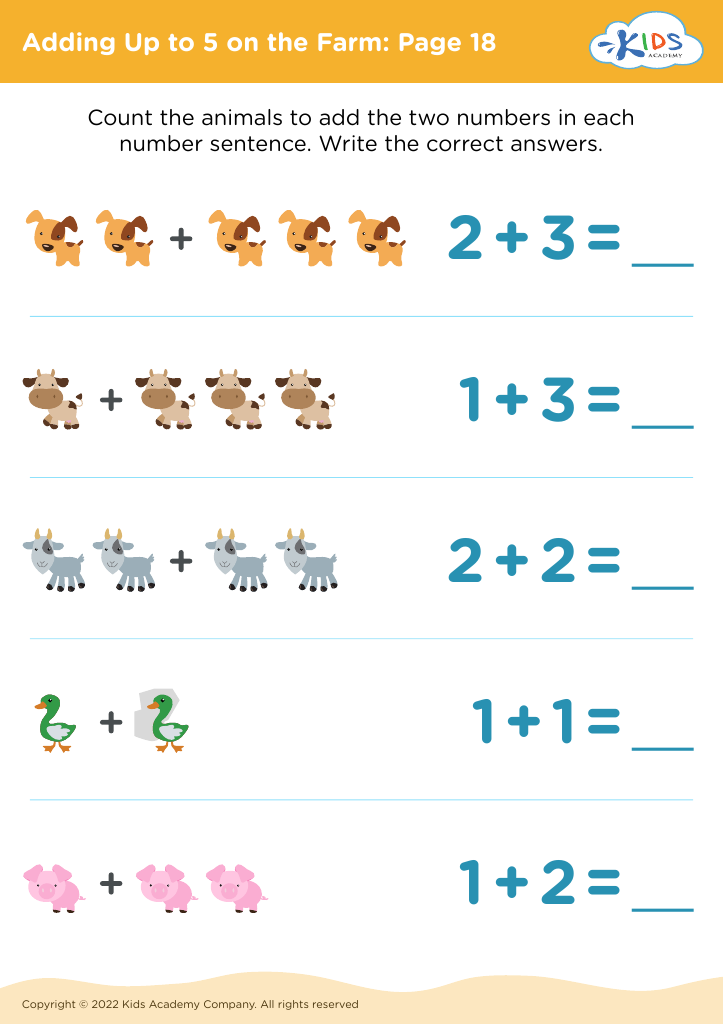
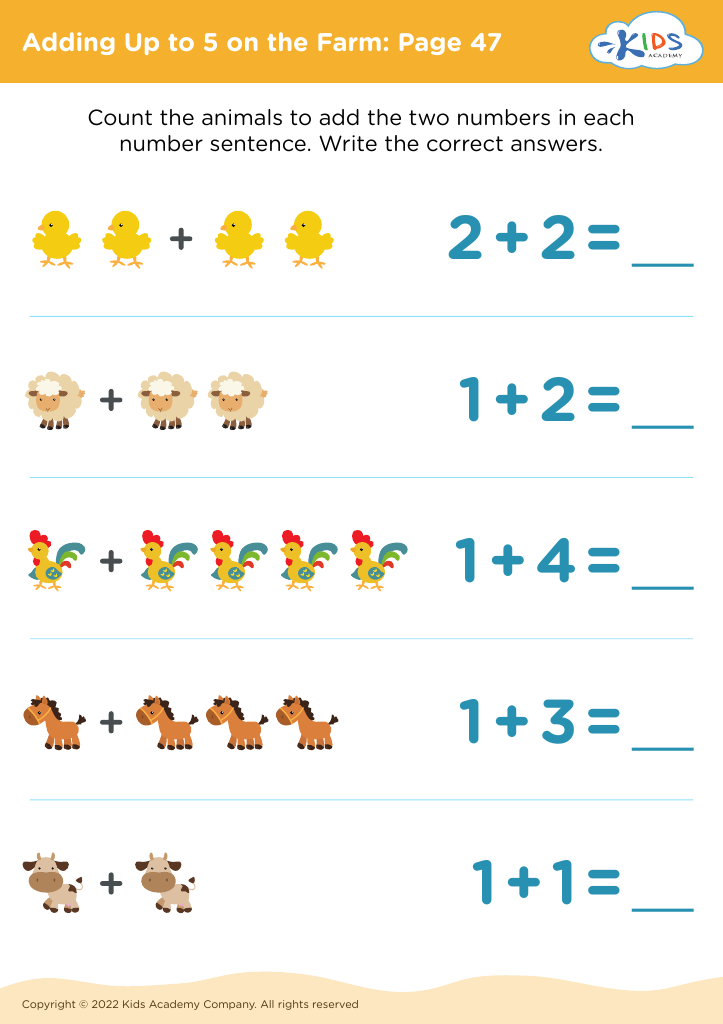
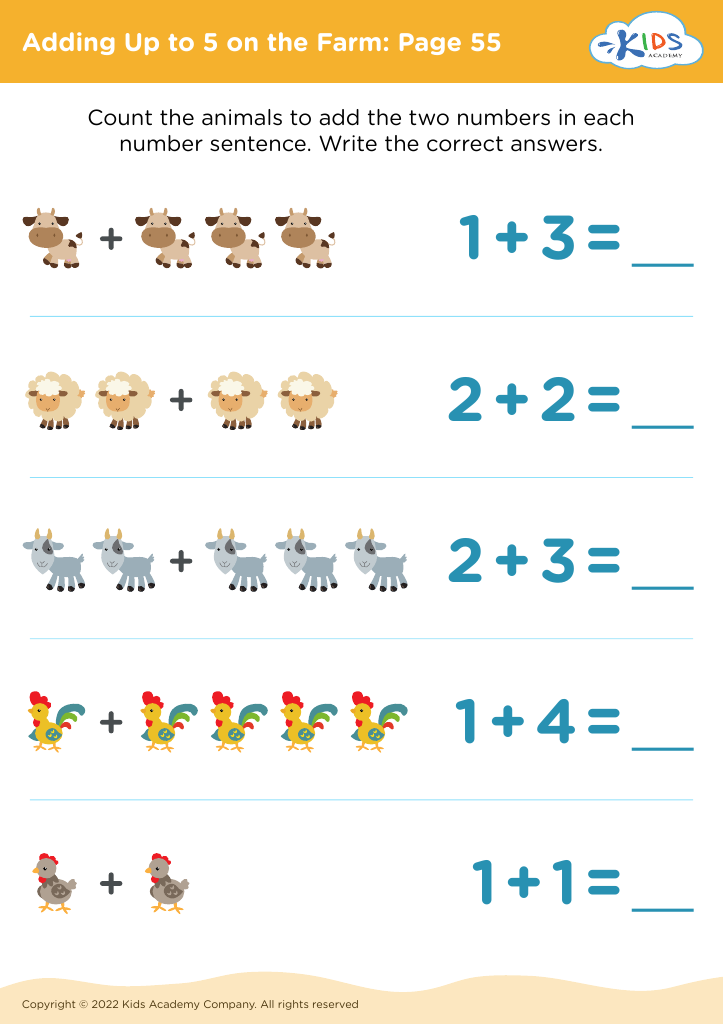
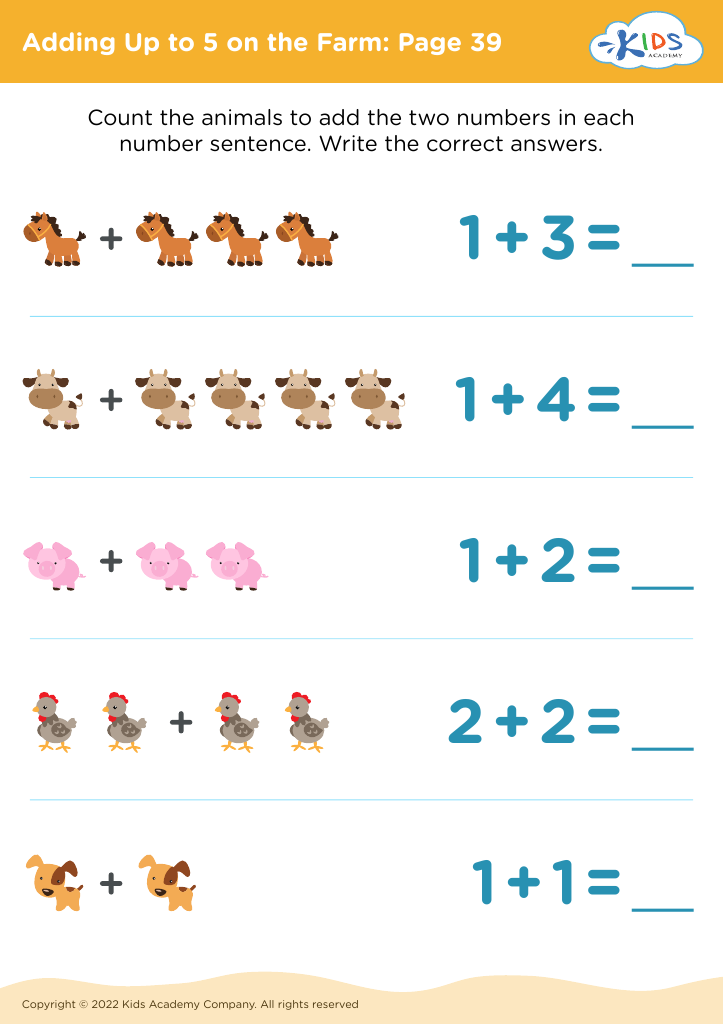
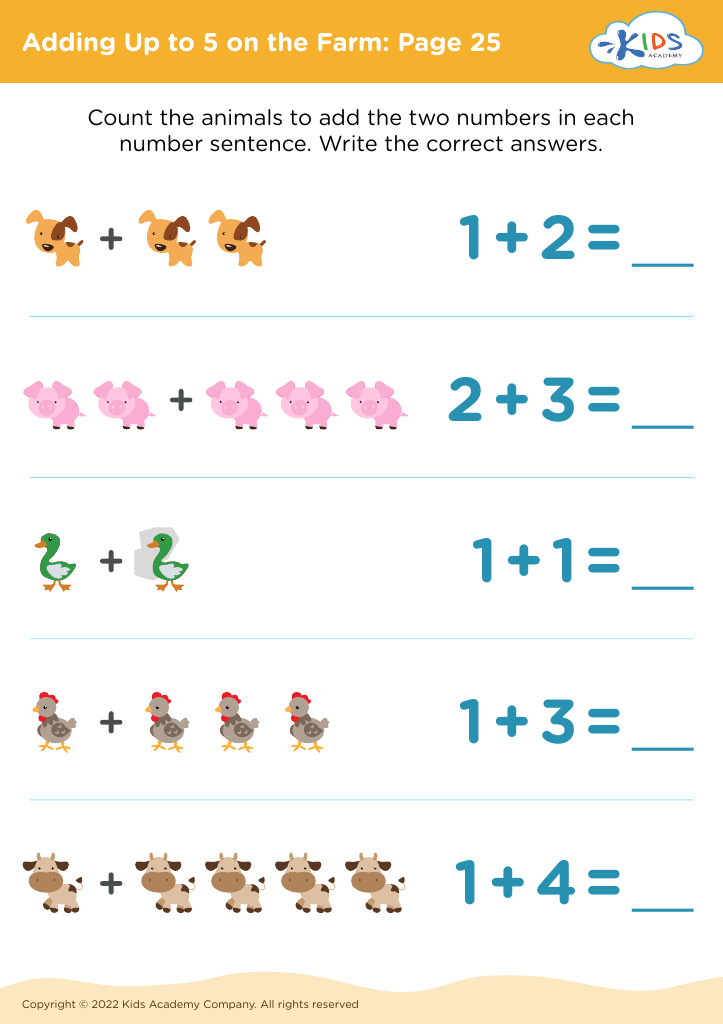
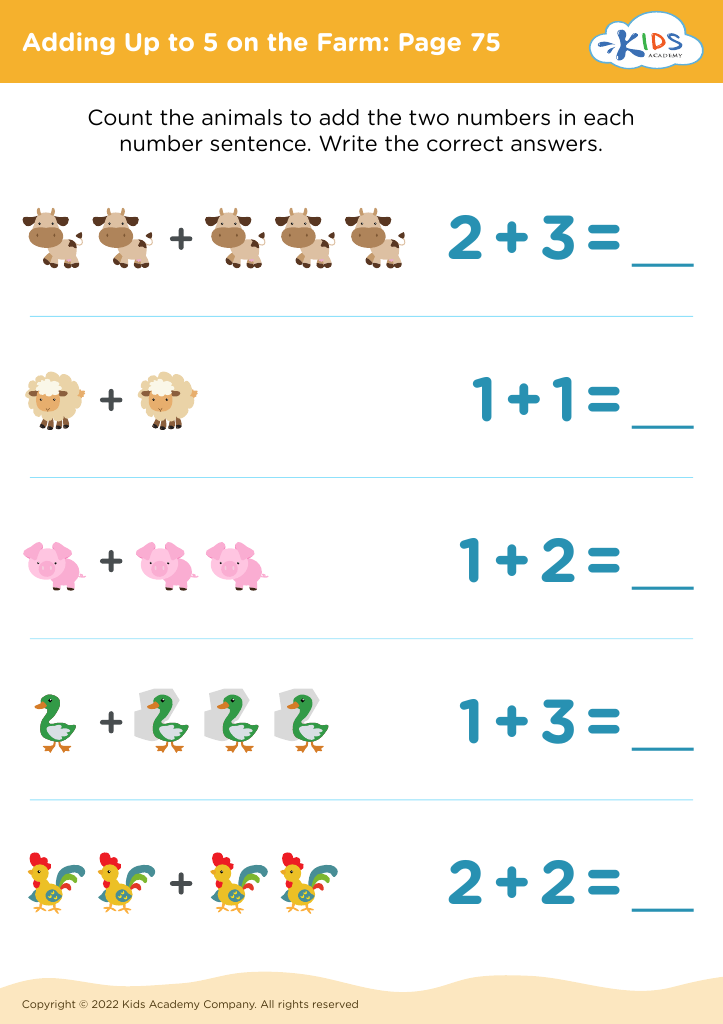
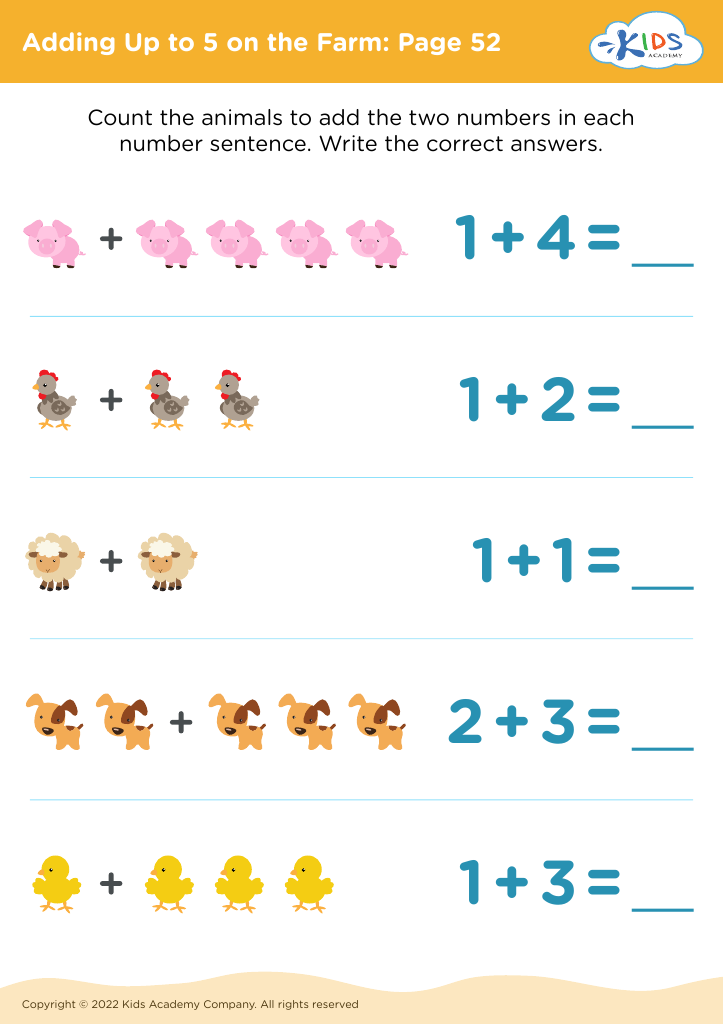
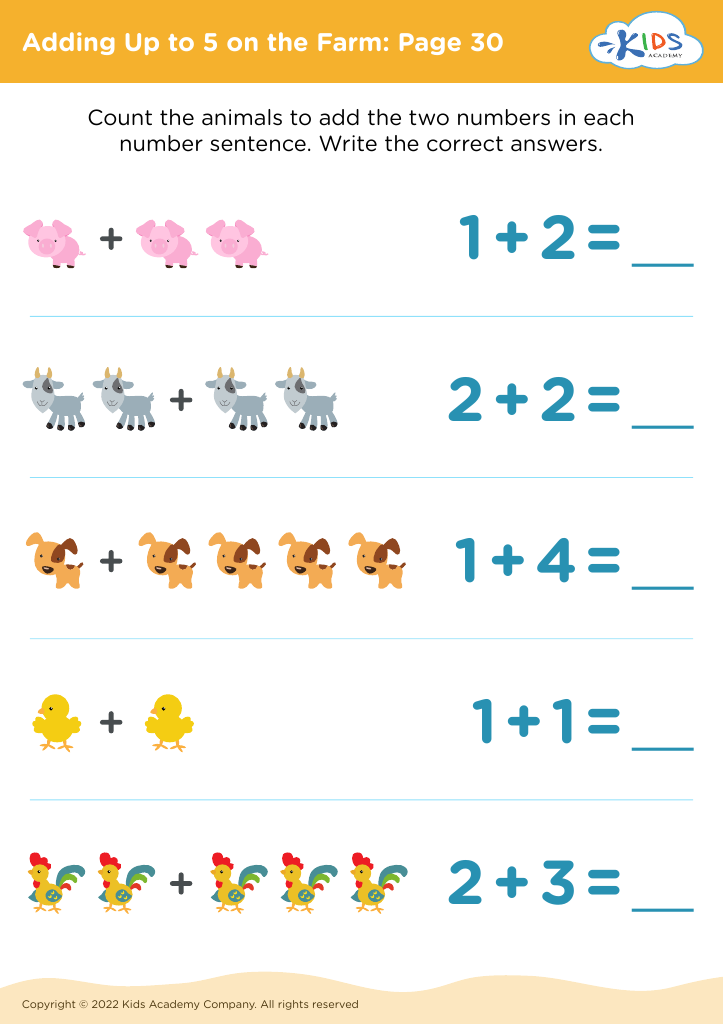
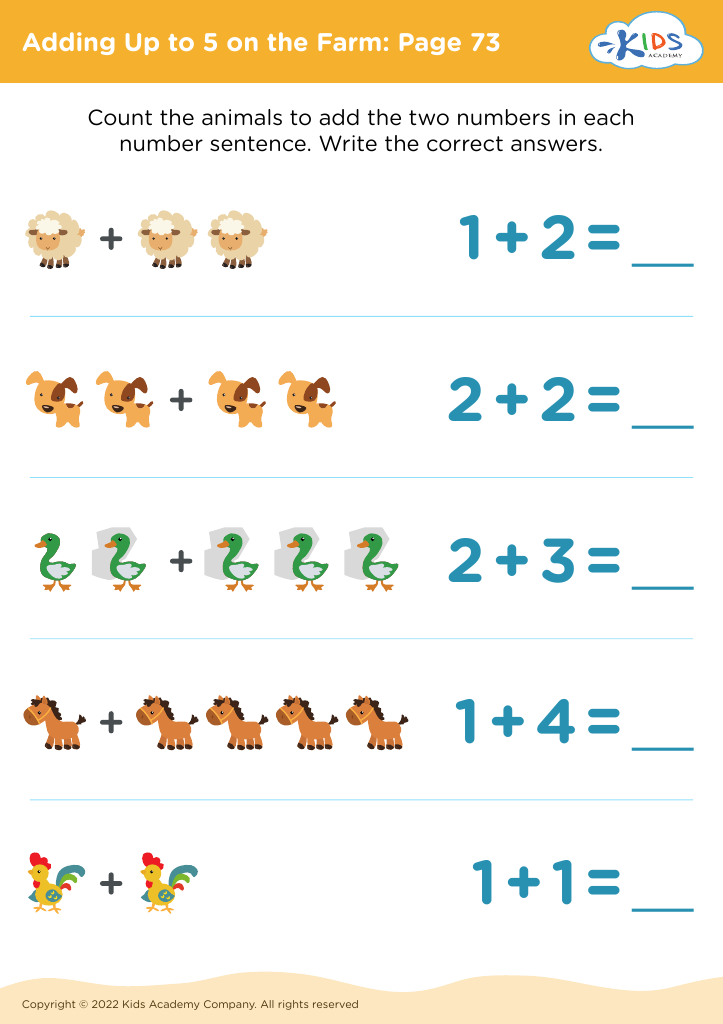
Introduce your little ones to the wonders of the farm with our Animal Identification Adding on the Farm Worksheets, designed for ages 3-6. These fun and educational printables help children recognize and name farm animals while developing essential math skills. Engaging visuals and simple addition problems make learning enjoyable and interactive. Perfect for preschool and kindergarten, these worksheets foster critical thinking and observational skills. Ideal for parents, teachers, and homeschoolers. Download today to spark curiosity and cultivate a love for learning in your child!
Favorites
With answer key
Interactive
Join Kids Academy for Free
Who is primarily going to use this learning content?



Animal identification activities on a farm offer substantial benefits for children aged 3-6, enriching their early developmental stages. Firstly, these activities foster cognitive development. Recognizing and naming different animals aids in vocabulary acquisition and language skills. Moreover, the multisensory engagement—seeing, hearing, and possibly even touching animals—reinforces memory and learning.
Introducing animal identification can also enhance fine motor skills. Activities such as pointing at animals or manipulating animal figurines provide hands-on practice that strengthens hand-eye coordination and dexterity.
From a social-emotional standpoint, interacting with animals can promote empathy and nurturing behavior. Understanding that animals have needs and characteristics similar to humans encourages kindness and responsibility.
Mathematical skills can also be subtly integrated. Children could count animals, sort them into categories, or identify patterns based on color, size, or type, laying groundwork for fundamental math concepts.
Furthermore, connecting with the natural world fosters environmental awareness. Understanding animals and their habitats instills a sense of respect and stewardship for nature from a young age.
In summary, parents and teachers should care about animal identification activities for their multifaceted benefits, promoting cognitive, motor, social, and emotional development while laying the foundation for future academic and environmental understanding.