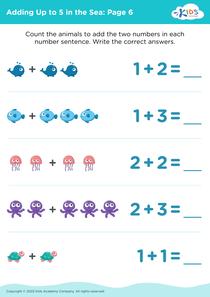
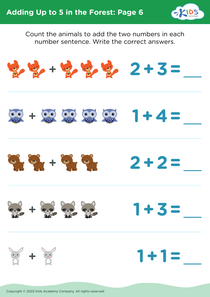
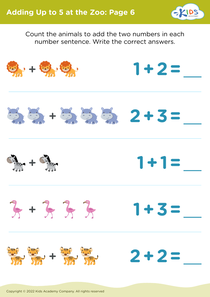
Basic Arithmetic Adding on the Farm Worksheets for Ages 3-6
4 filtered results
-
From - To
Discover our "Basic Arithmetic Adding on the Farm Worksheets," specially designed for children ages 3-6! These engaging worksheets introduce young learners to fundamental addition concepts in a fun farm-themed context. Children will enjoy counting playful animals and farm-related items, helping them visualize basic math operations. Each worksheet enhances number recognition and counting skills while sparking creativity and imaginative play. Perfect for homeschooling or classroom use, these printables make learning arithmetic a delightful and interactive experience. Join us on the farm to cultivate a love for numbers and build a solid mathematical foundation for your little ones!
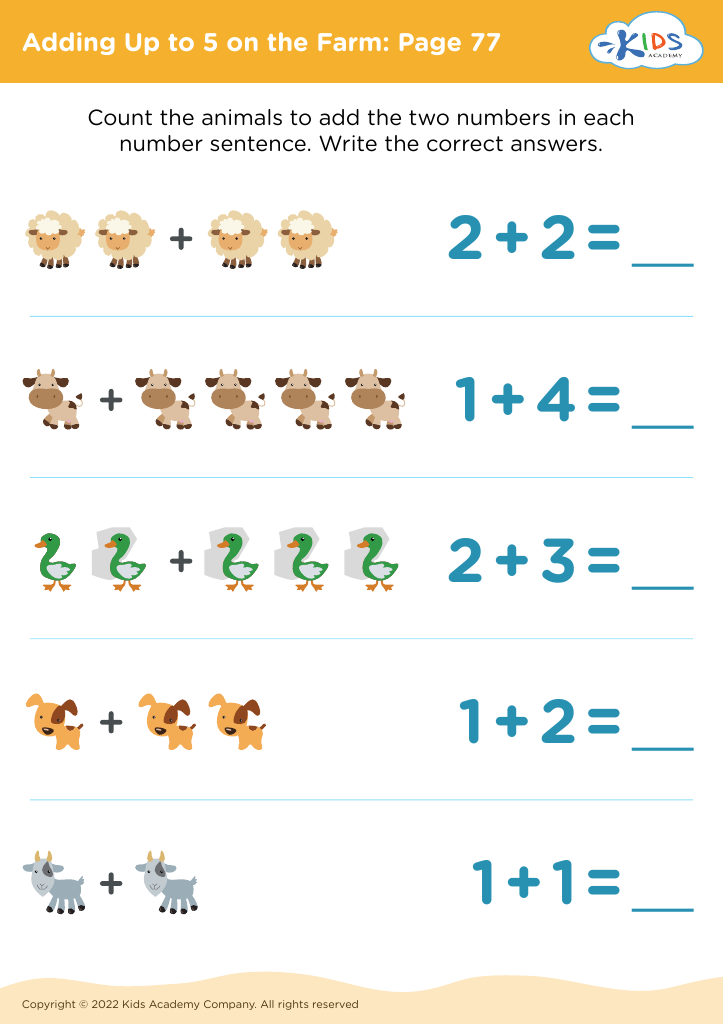
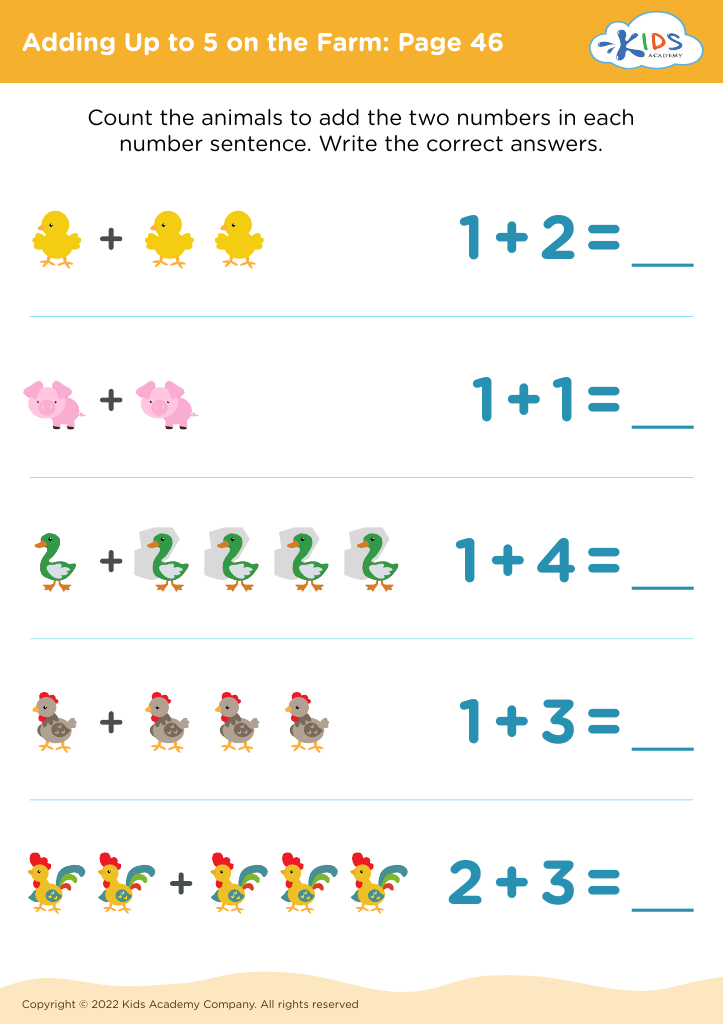
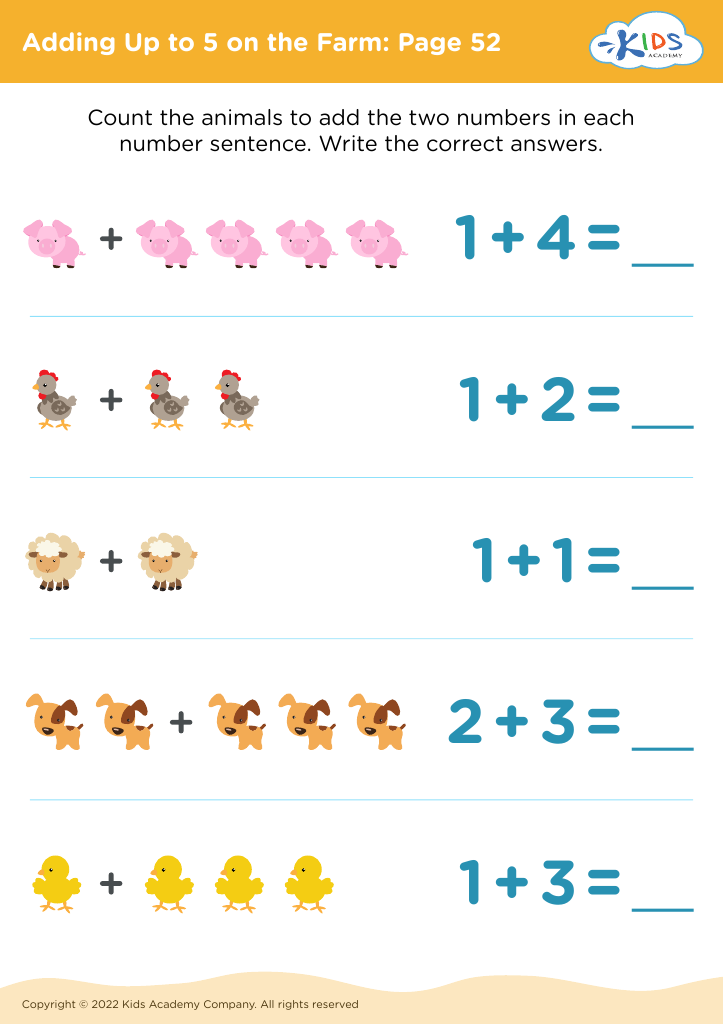
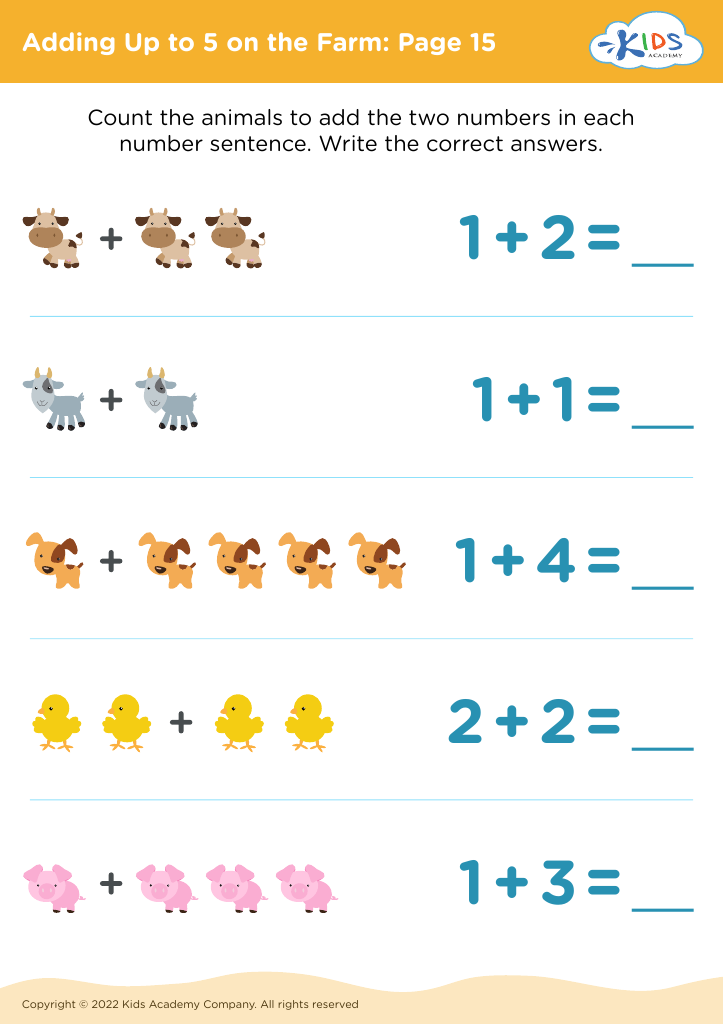



Basic arithmetic, particularly adding, is a foundational skill for young learners aged 3-6. Understanding how to add is not only crucial for mathematical development but also for cognitive growth. When integrating the concept of "Adding on the Farm," children can engage in playful, hands-on experiences that enhance their learning. This approach helps them connect abstract numbers to real-world contexts, making arithmetic more relatable and enjoyable.
For parents and teachers, introducing basic arithmetic through themes like farm life can spark curiosity and foster a love for learning. Using objects such as animals, vegetables, or tools from the farm reinforces counting, sorting, and addition through practical activities. This thematic learning captivates children's attention and encourages meaningful interaction in a familiar setting, promoting both social and emotional development.
Moreover, early exposure to arithmetic helps children build confidence as they navigate simple problems and develop critical thinking skills. These foundational skills lead to greater mathematical abilities later on. By supporting this playful and effective learning method, parents and teachers not only enhance numerical proficiency but also lay the groundwork for lifelong problem-solving and analytical skills. Overall, caring about basic adding in an engaging context prepares children for a successful educational journey.