Counting practice Adding on the Farm Worksheets for Ages 3-6 - Page 3
54 filtered results
-
From - To
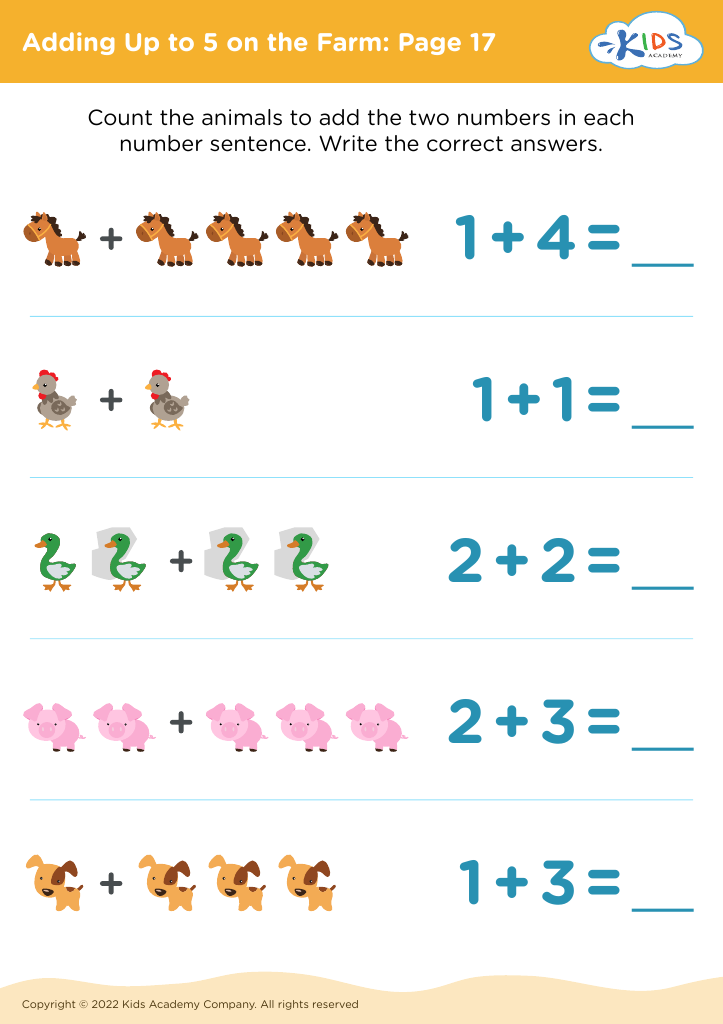
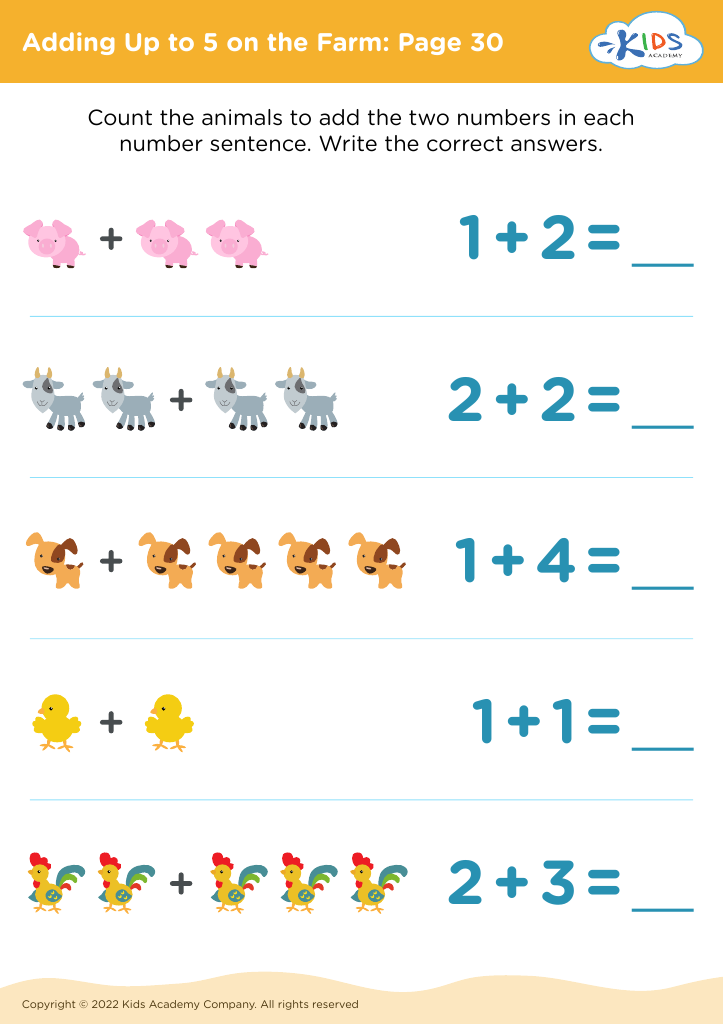
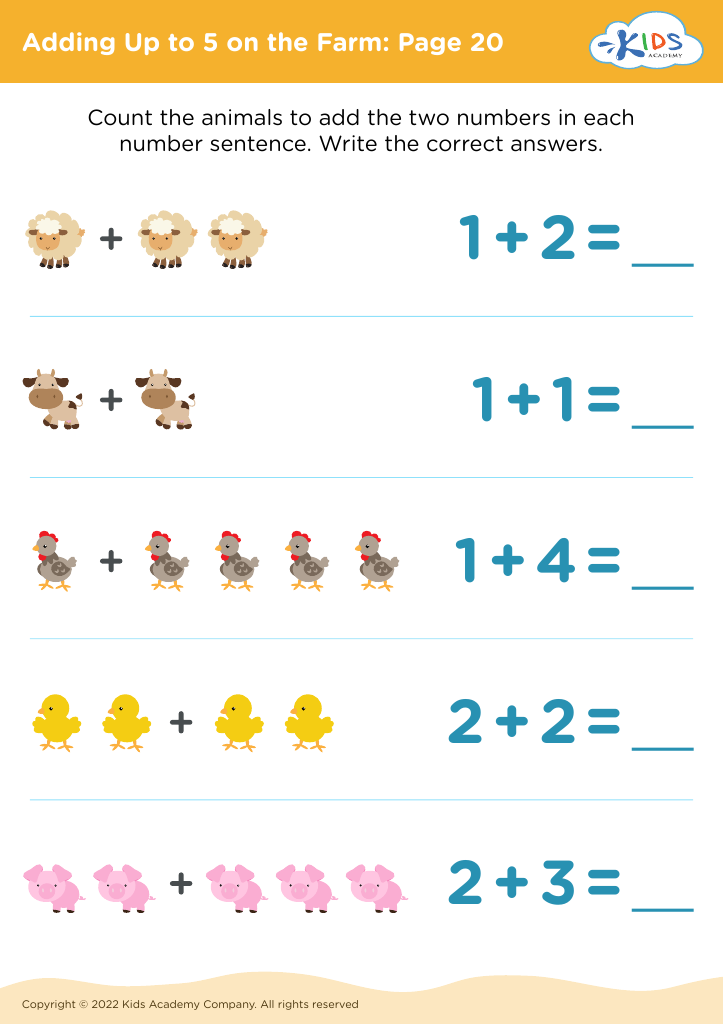
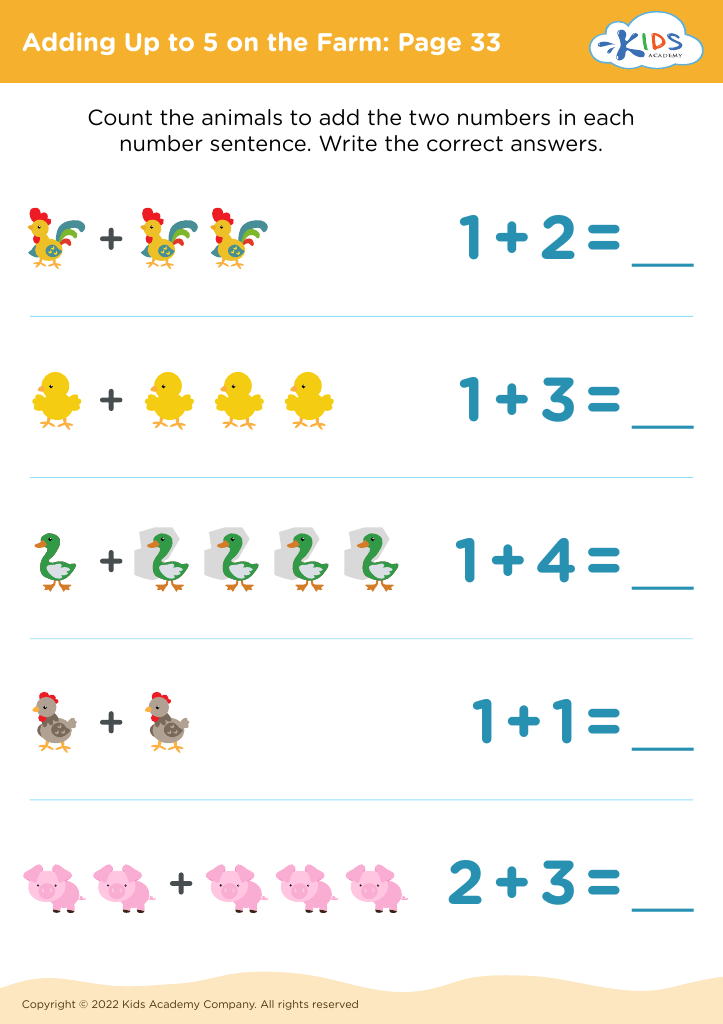
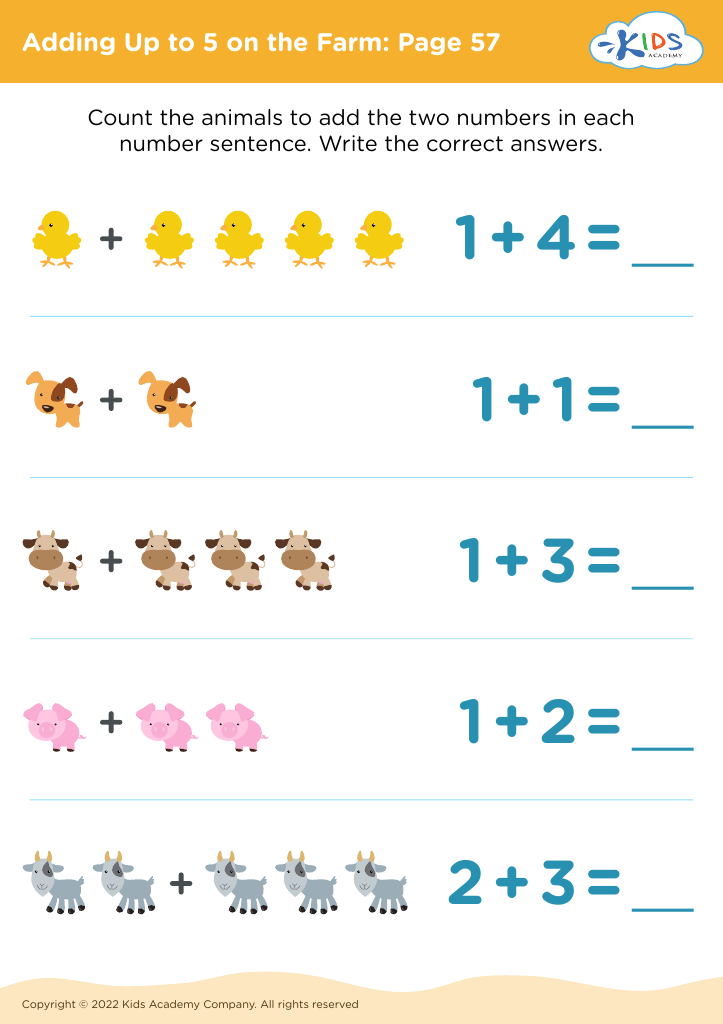
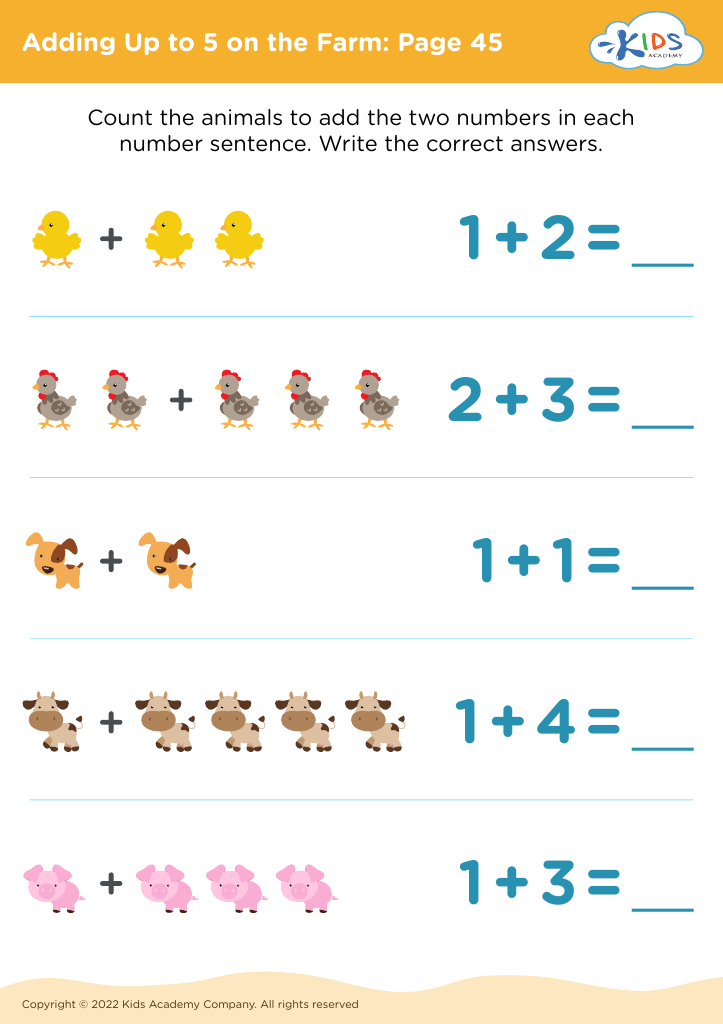



Counting practice, especially through engaging themes like "Adding on the Farm," is vital for children ages 3-6, as it lays the groundwork for numeracy skills which are crucial for their future academic success. This approach captures the children's interest and imagination, making learning enjoyable and relatable.
At this developmental stage, children are naturally curious and learn best through play and hands-on activities. Farm themes, filled with familiar animals and settings, offer an inviting context to explore numbers and basic addition. Activities can involve counting farm animals, adding up produce, or simple games that encourage participation, ensuring that learning occurs in an interactive and fun atmosphere.
Beyond numeracy, counting and addition activities promote critical skills such as problem-solving and cognitive reasoning. They help improve fine motor skills through manipulatives, fostering a tactile learning experience. Equally, collaborative activities teach social skills and the importance of teamwork, as children often work together during play-based learning.
Parents and teachers who prioritize such experiences not only support foundational math skills but also inspire a positive attitude towards learning. By embedding these fundamentals into playful contexts, children gain confidence in their abilities, setting the stage for lifelong learning and success.