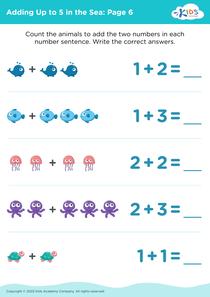
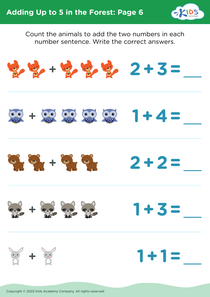
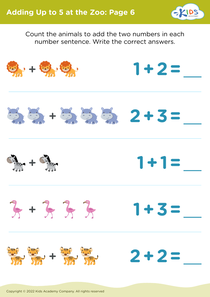
Understanding quantity Adding on the Farm Worksheets for Ages 3-6
8 filtered results
-
From - To
Introduce your little learners to the exciting world of math with our "Understanding Quantity Adding on the Farm Worksheets" designed specifically for ages 3-6! These engaging worksheets focus on basic addition concepts through interactive farm-themed activities that young children can easily connect with. Kids will explore counting, recognizing quantities, and developing their adding skills as they interact with colorful illustrations of animals, crops, and farm equipment. Whether at home or in the classroom, these worksheets provide fun, hands-on learning experiences that promote early numeracy skills, setting a solid foundation for future math success. Help your child thrive with engaging farm-based learning today!
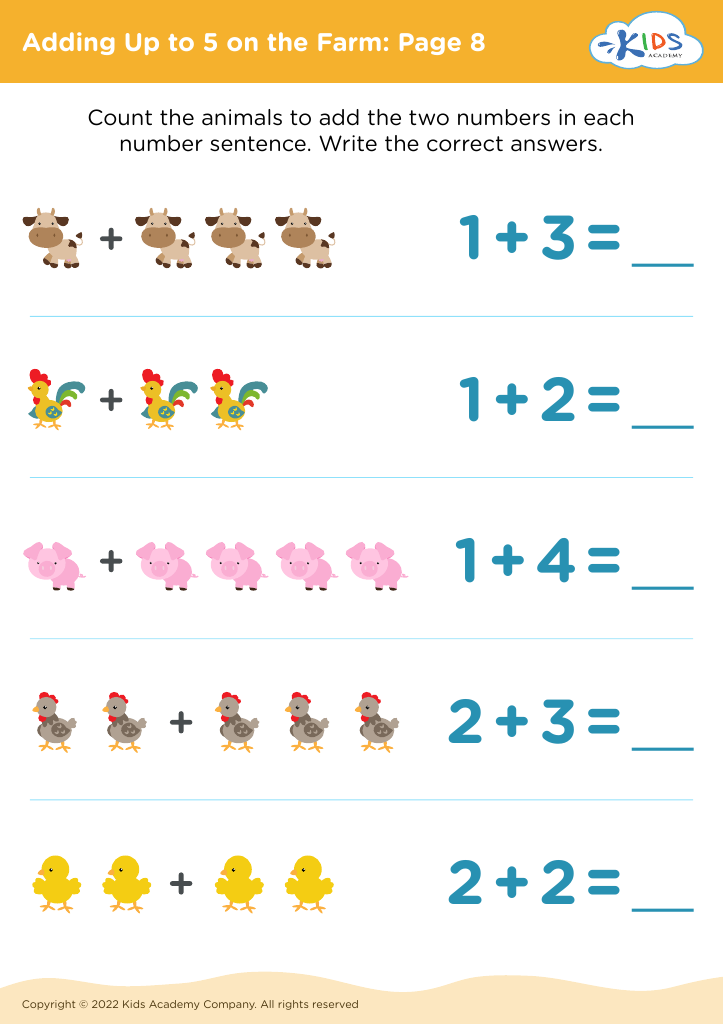
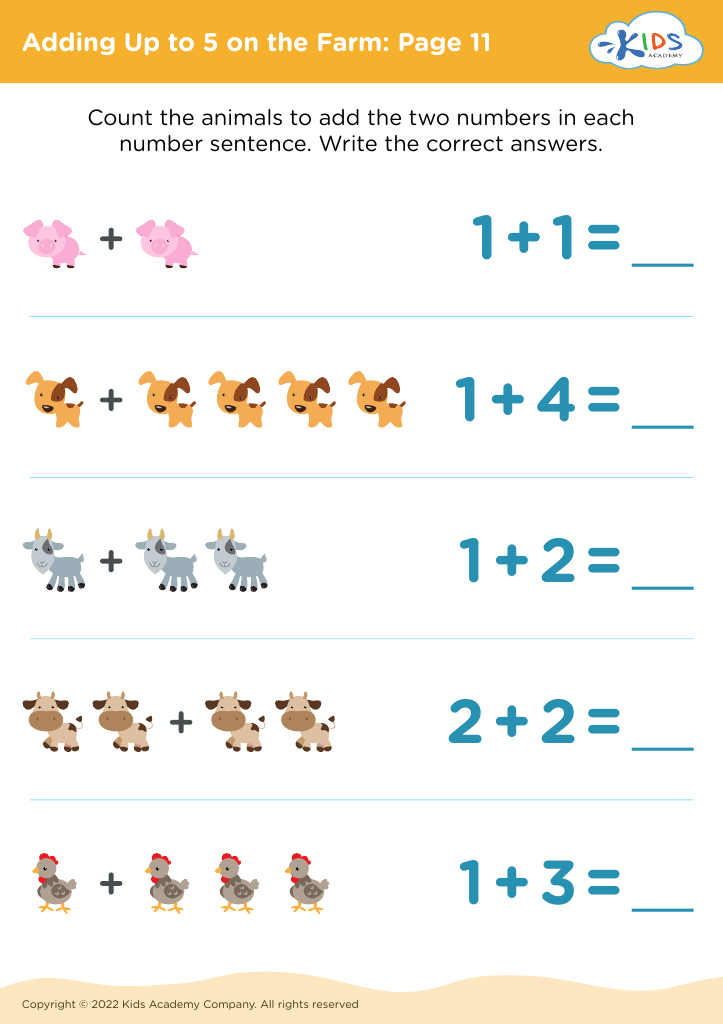
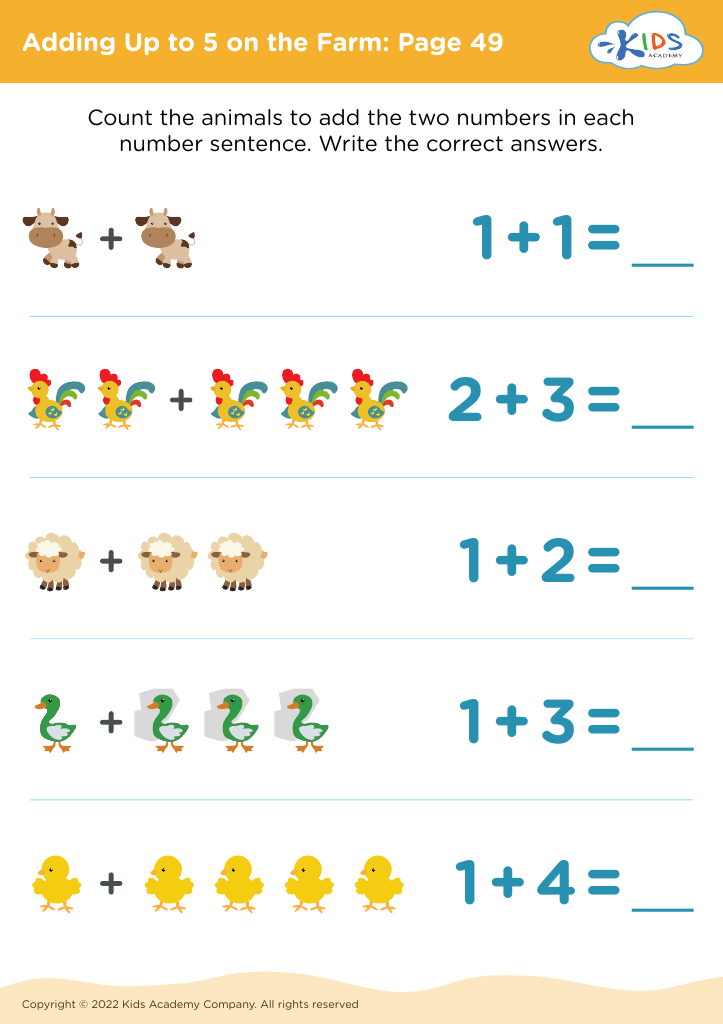
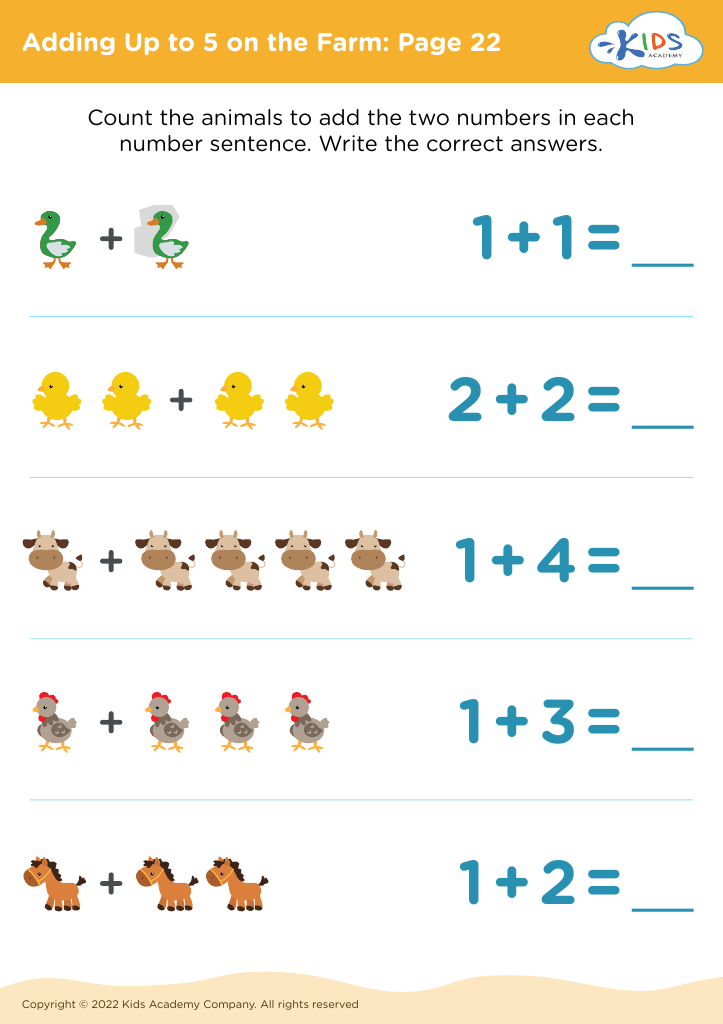
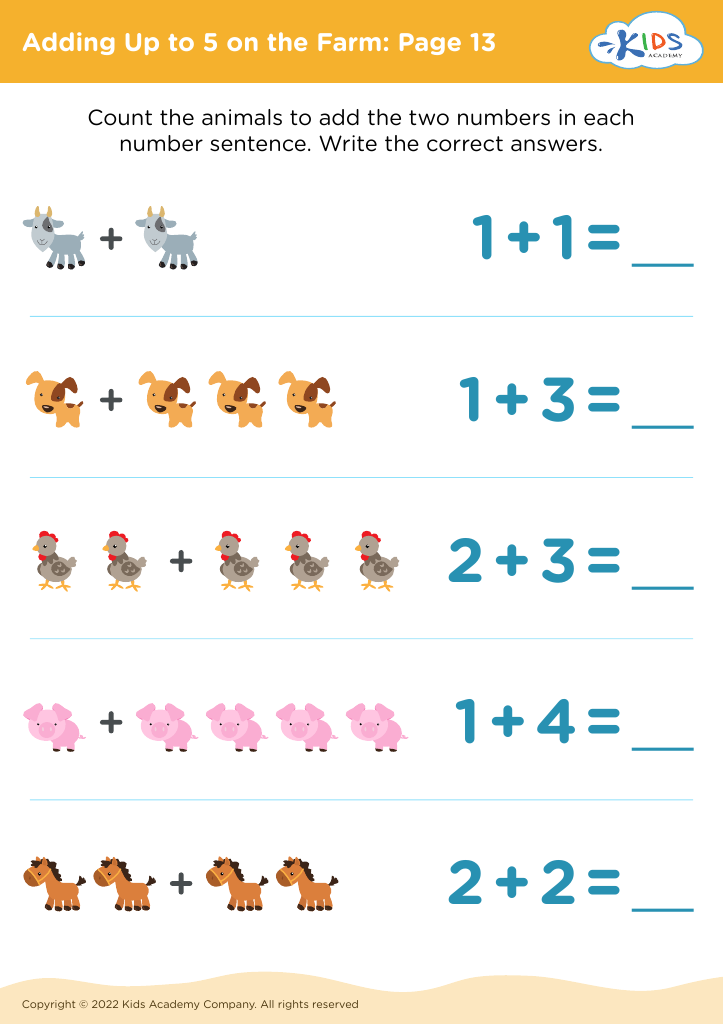
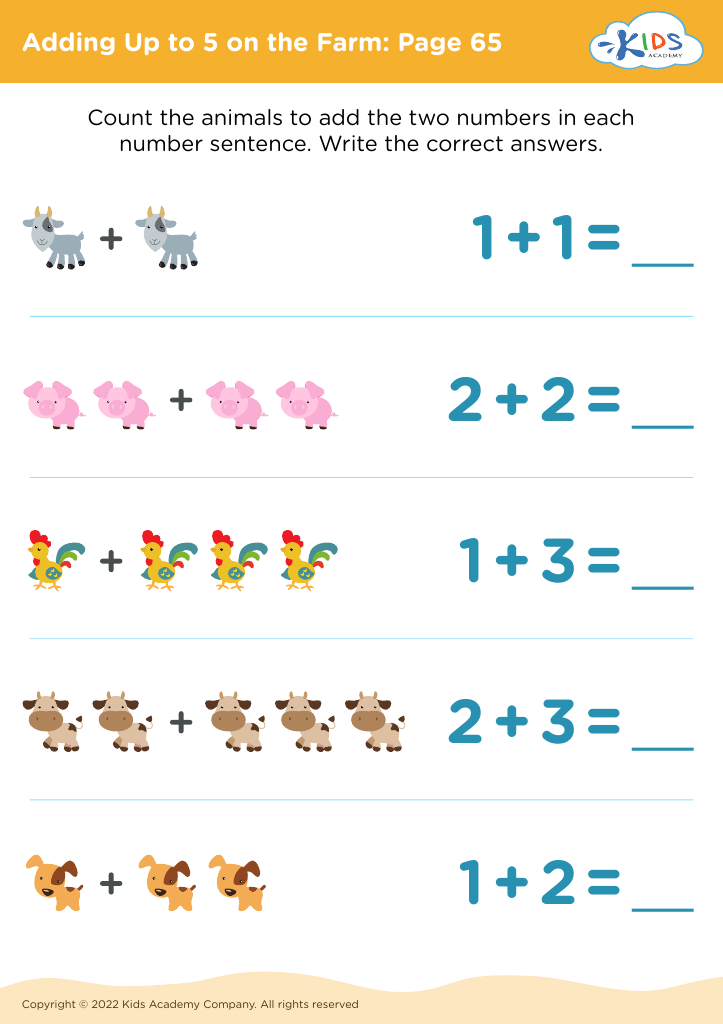
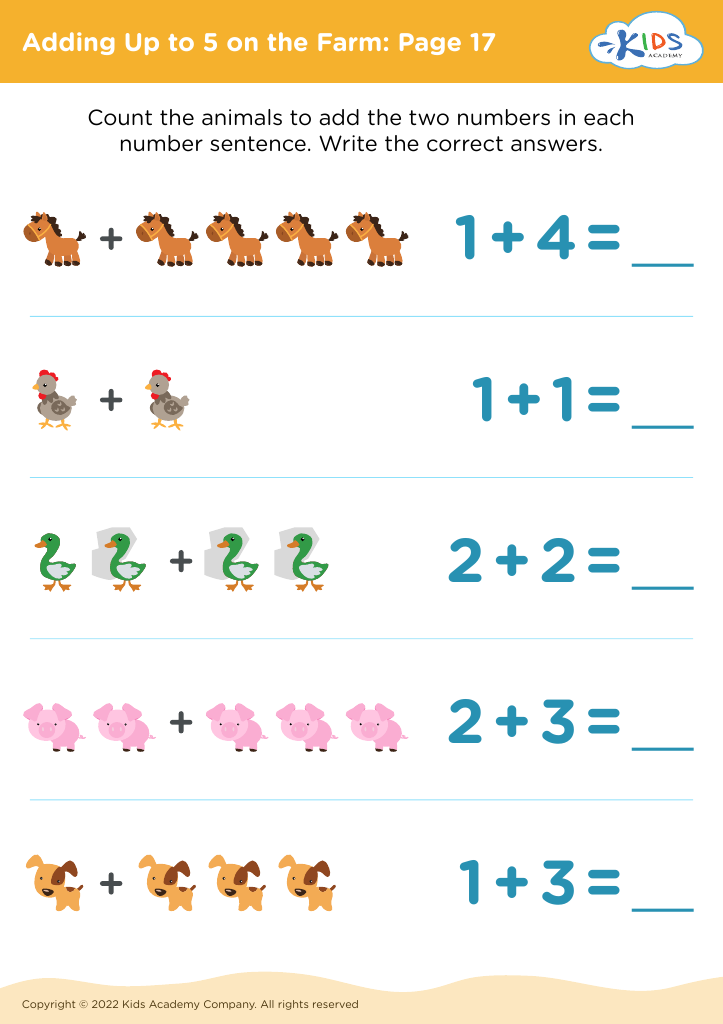
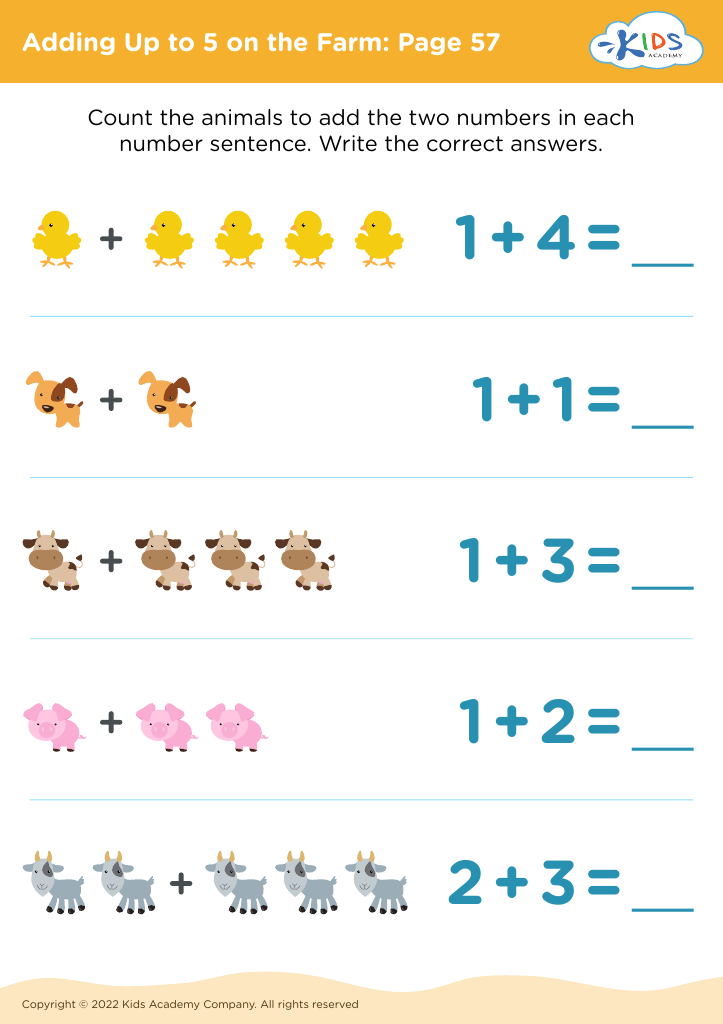



Understanding quantity is a foundational concept in early childhood education, particularly for young children aged 3-6. "Adding on the Farm" presents a unique and engaging way to introduce these mathematical concepts through hands-on learning in a familiar context.
Parents and teachers should care about this concept because it promotes critical thinking and problem-solving skills. By relating addition to familiar settings, like a farm, children can visualize and grasp abstract concepts more concretely. For instance, counting animals, crops, or farm equipment can make learning more relevant and enjoyable.
Moreover, understanding quantity lays the groundwork for future math skills. Research shows that early math proficiency correlates strongly with later academic success. Through activities like simple addition problems on a farm theme, children can develop number sense, leading to better comprehension of more complex math concepts later on.
Encouraging interactive play, such as counting and sorting farm animals or grouping vegetables, supports social development and cooperation among peers. In summary, integrating concepts of quantity and addition into everyday contexts like a farm is essential for laying a strong mathematical foundation, fostering a love for learning, and enriching the cognitive development of children aged 3-6.