Counting practice Adding Up to 5 Worksheets for Ages 3-6 - Page 9
232 filtered results
-
From - To
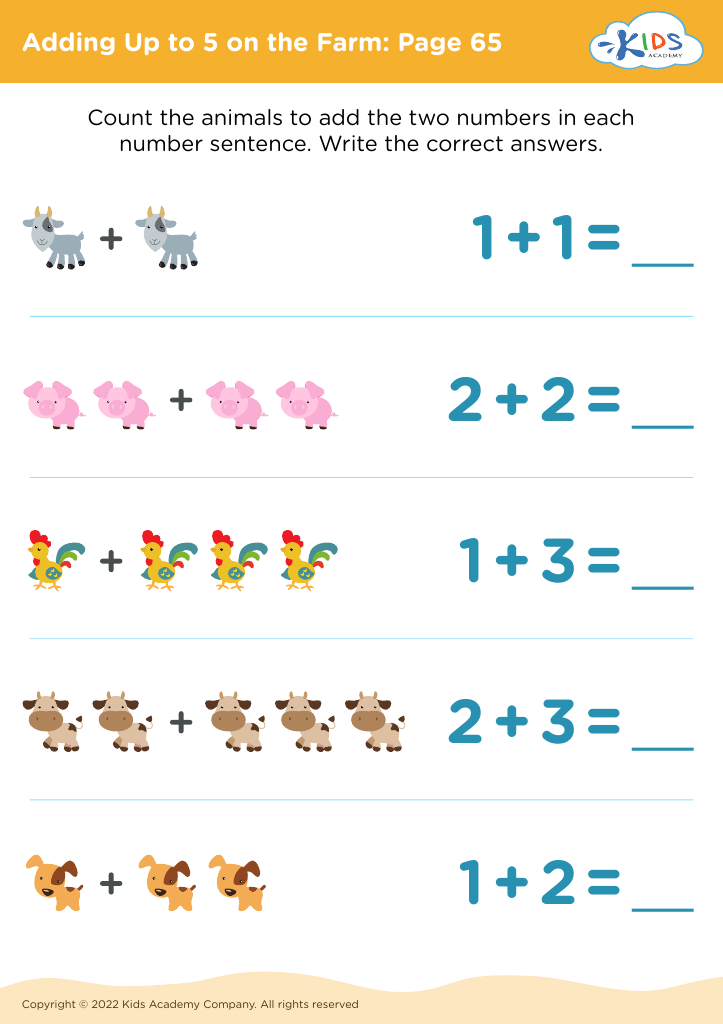
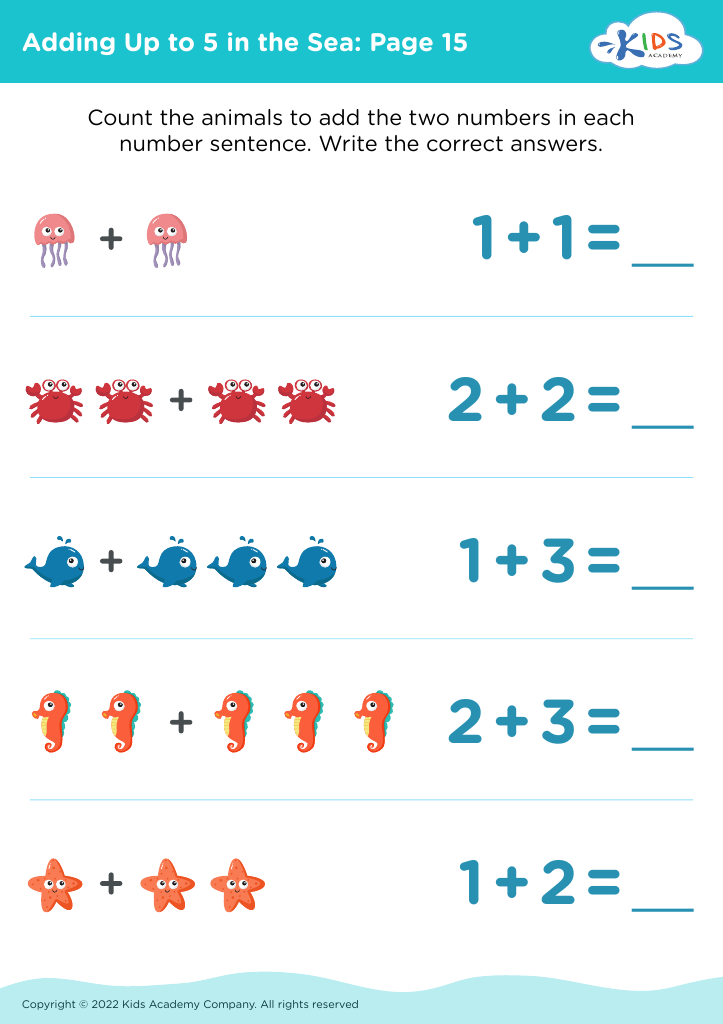
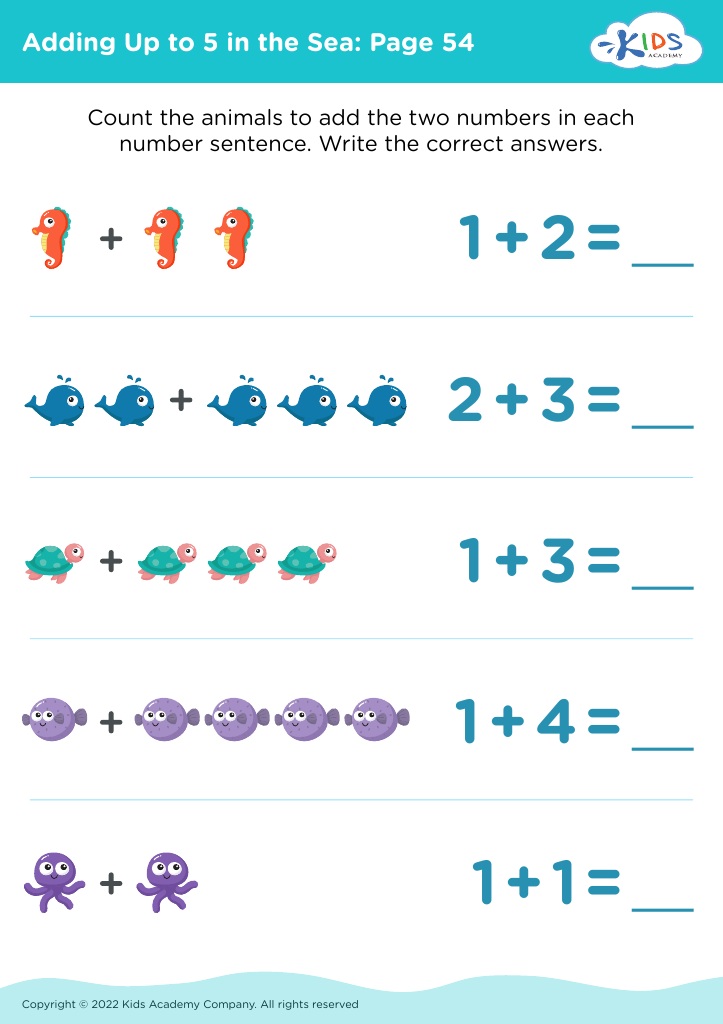
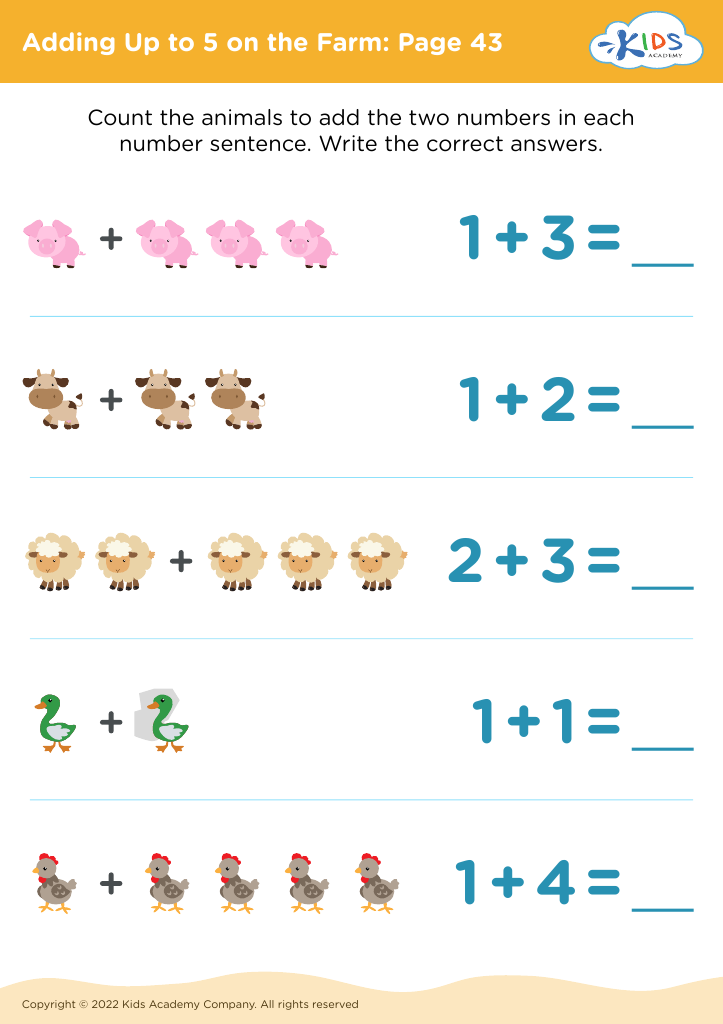
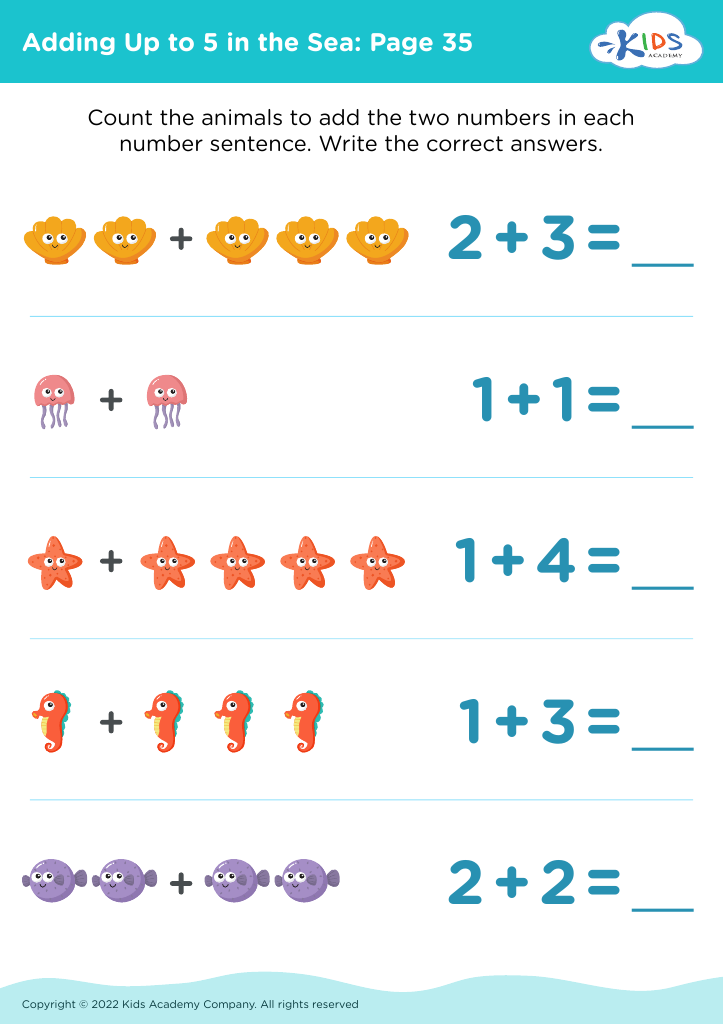
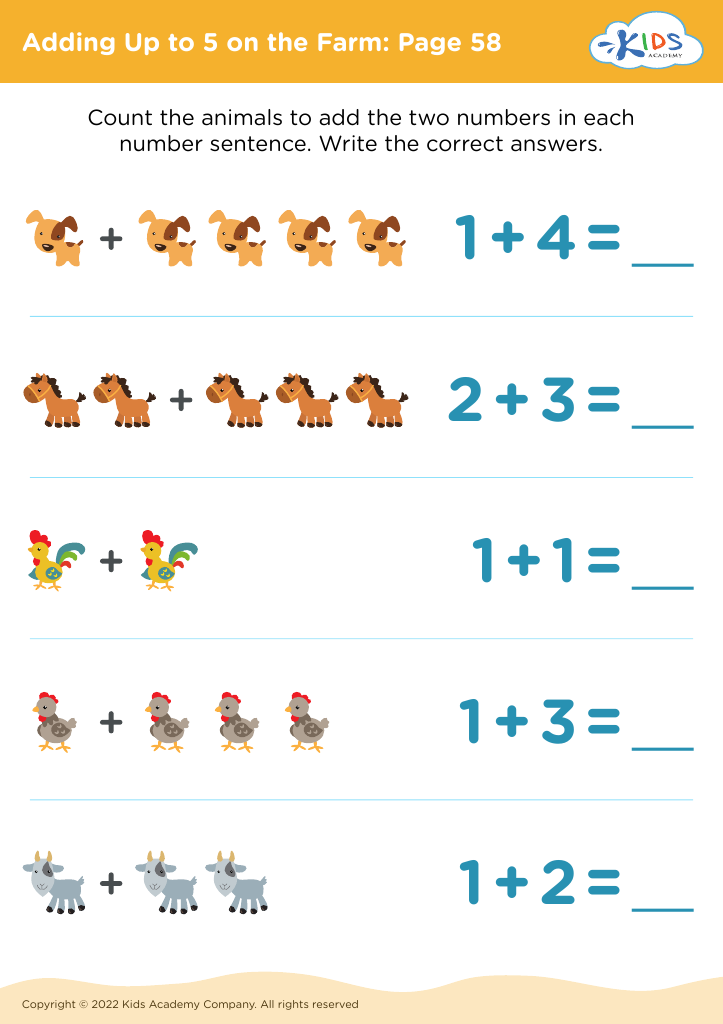
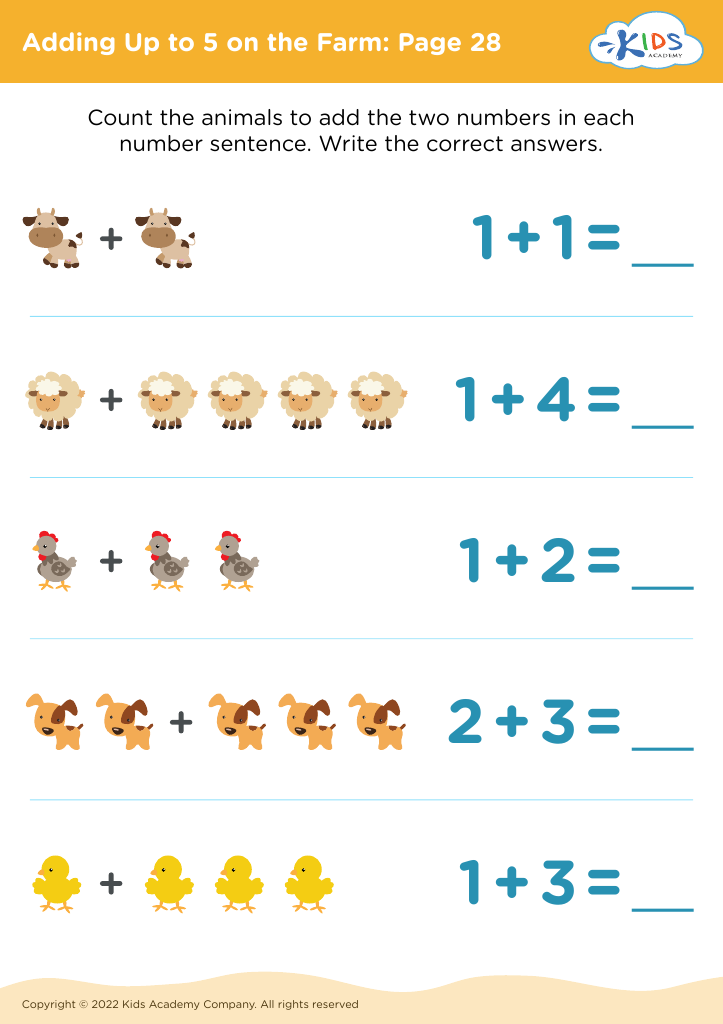
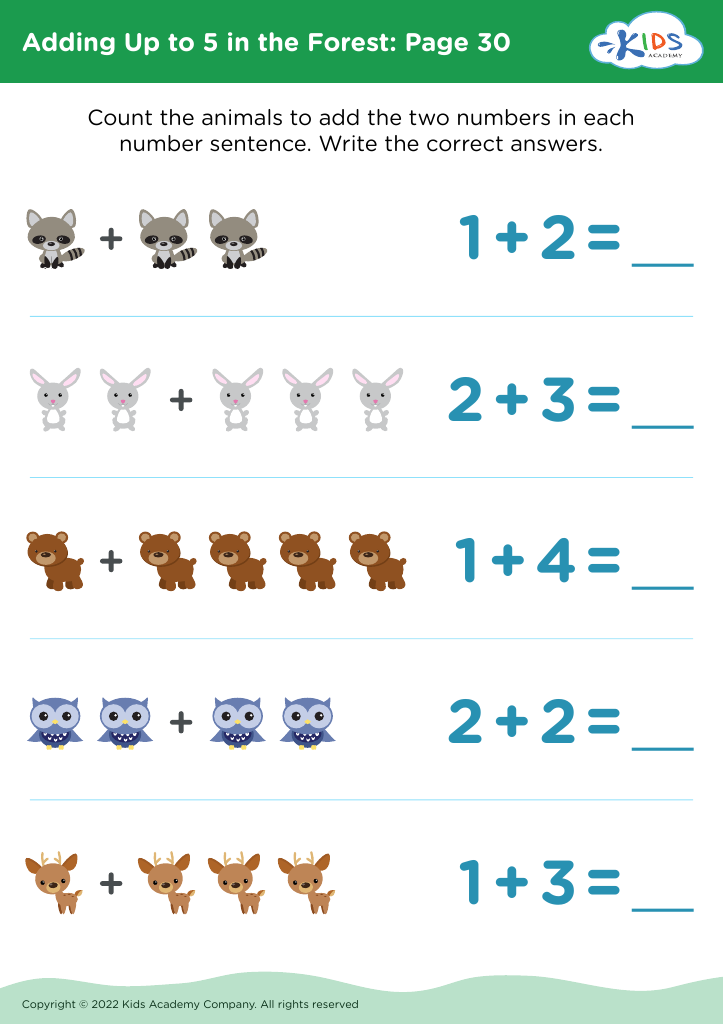
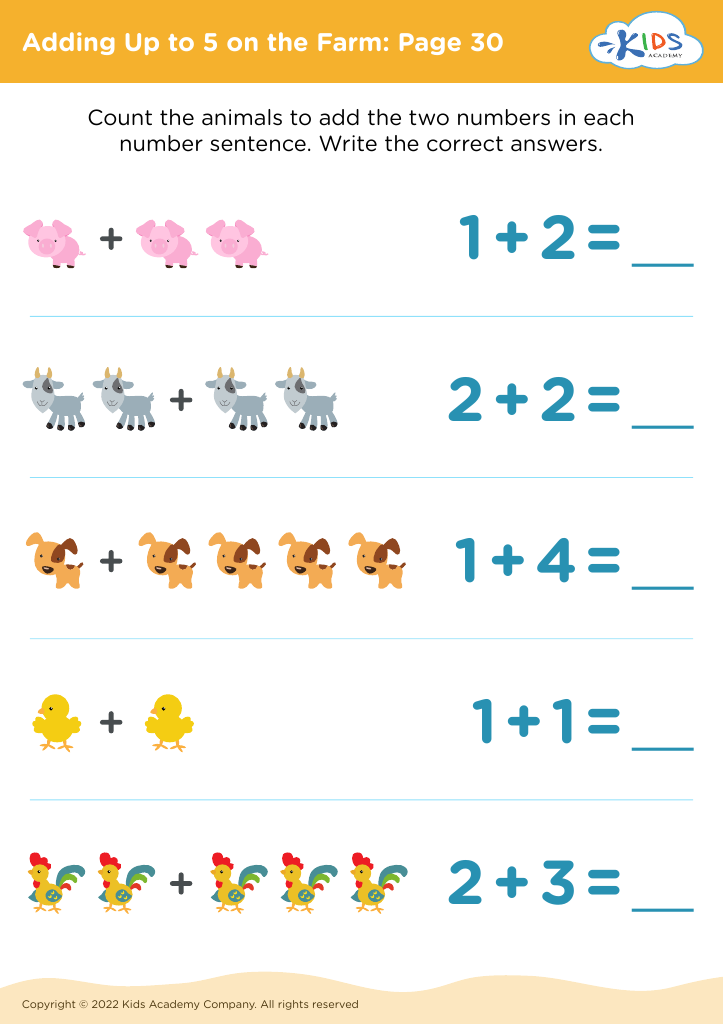
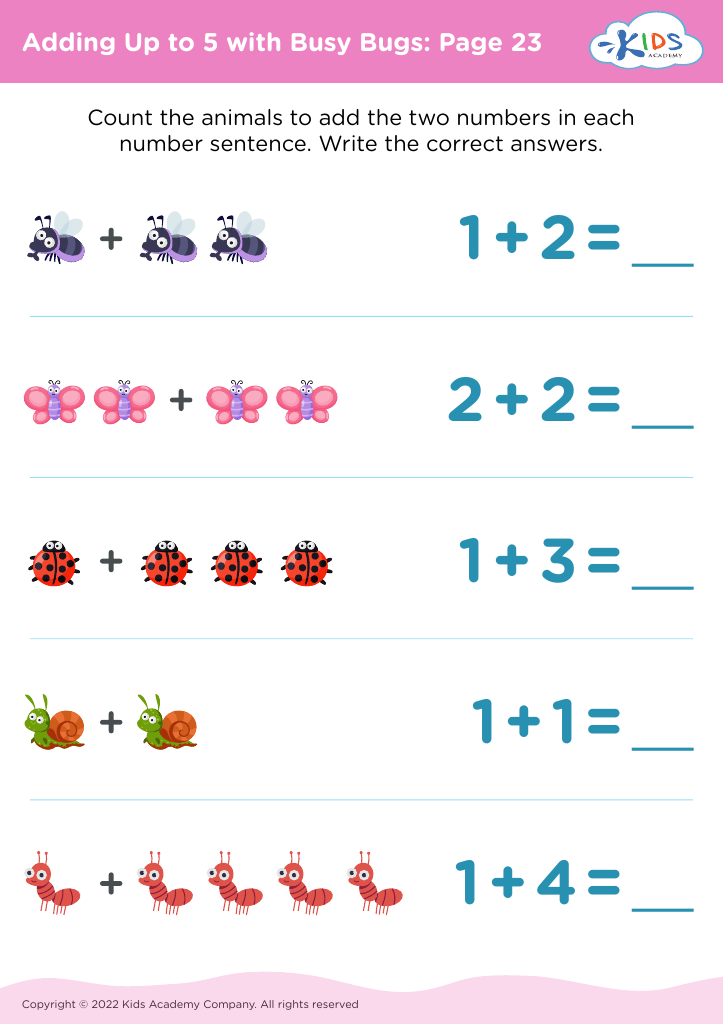
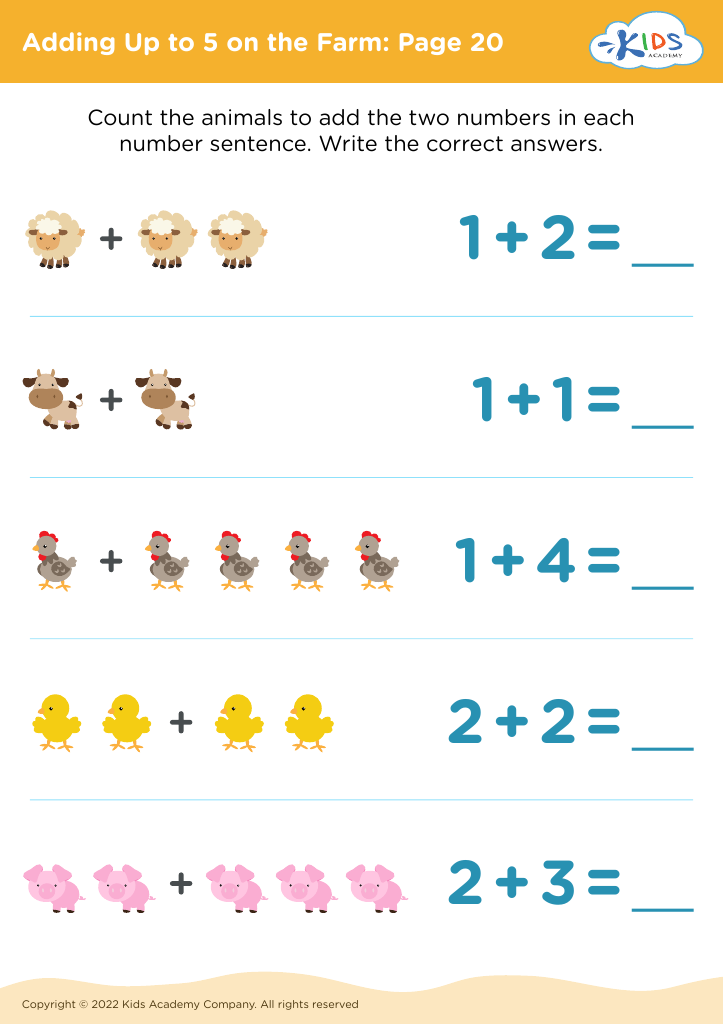
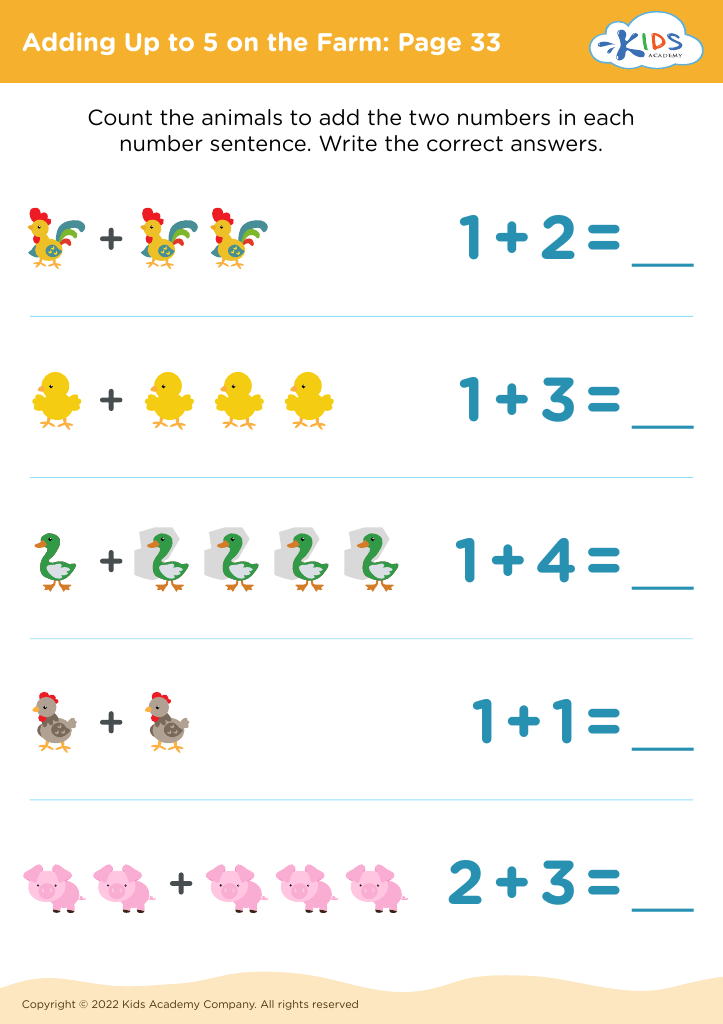
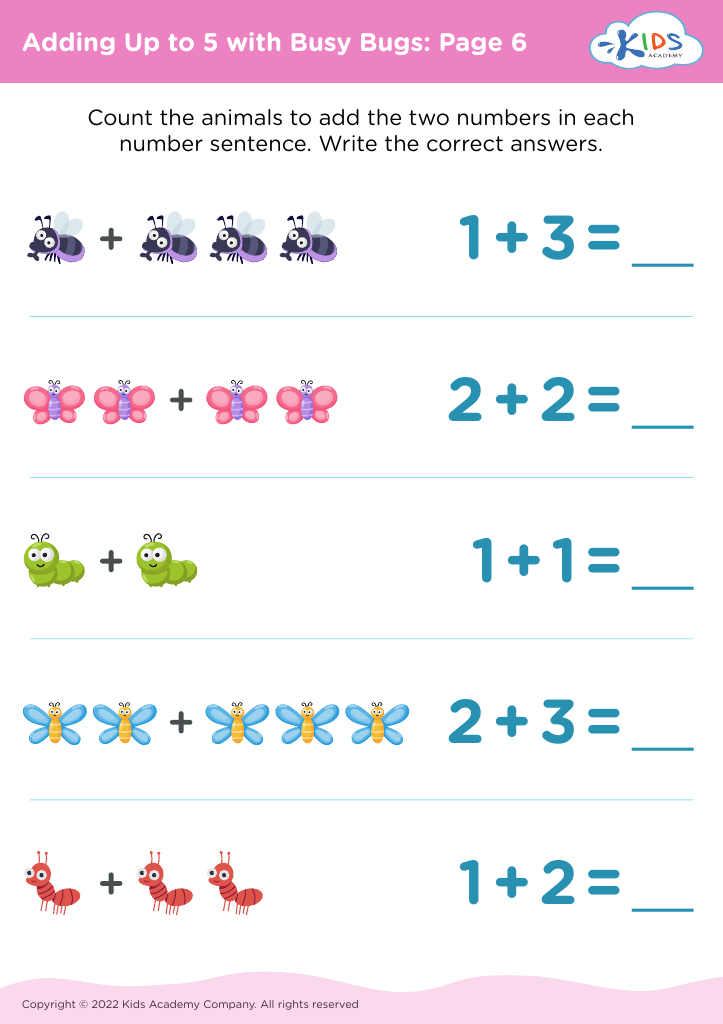
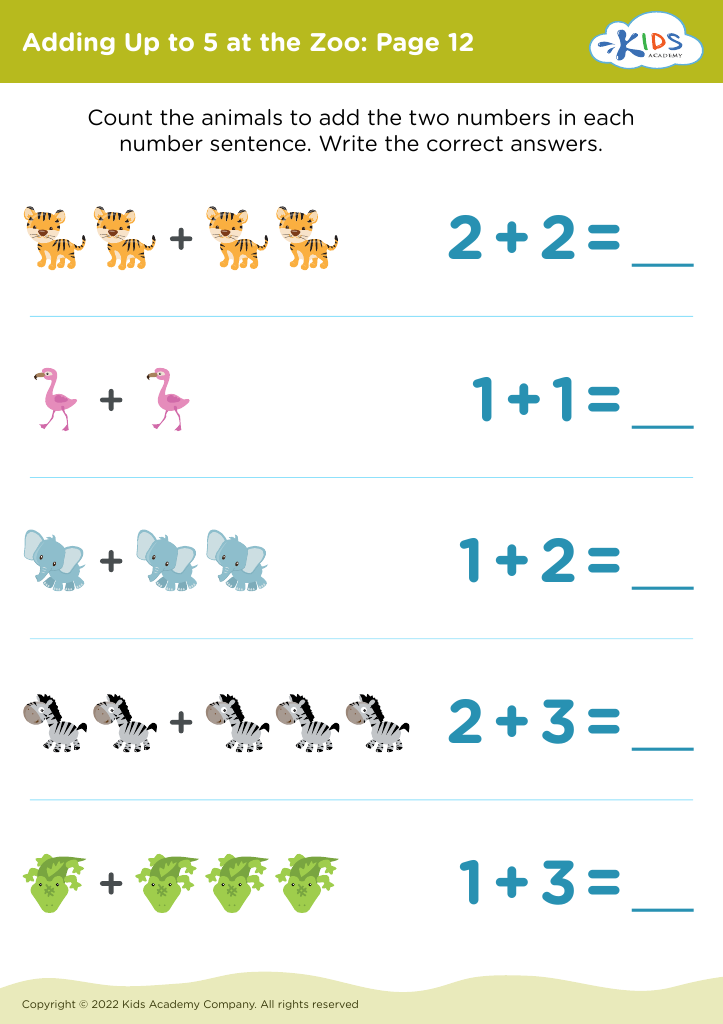
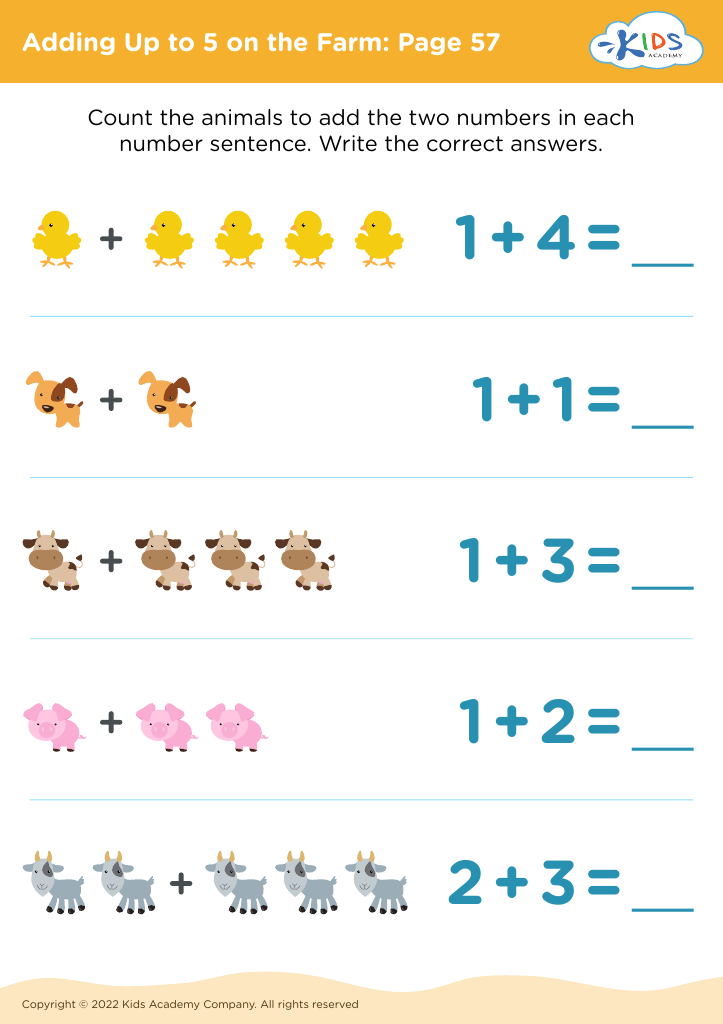
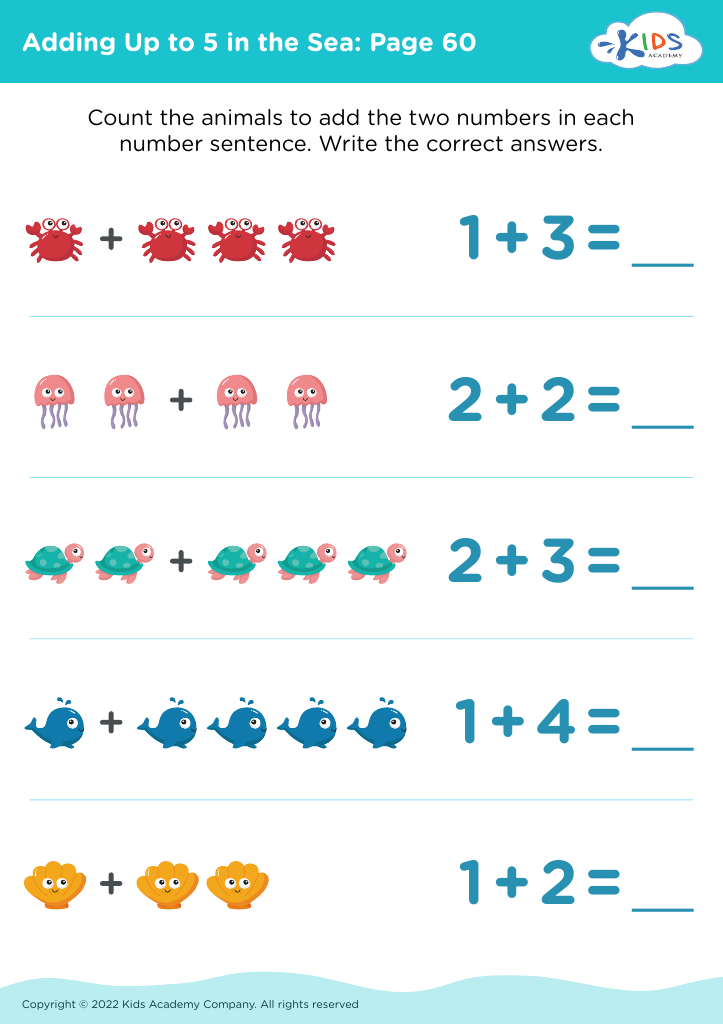





.jpg)

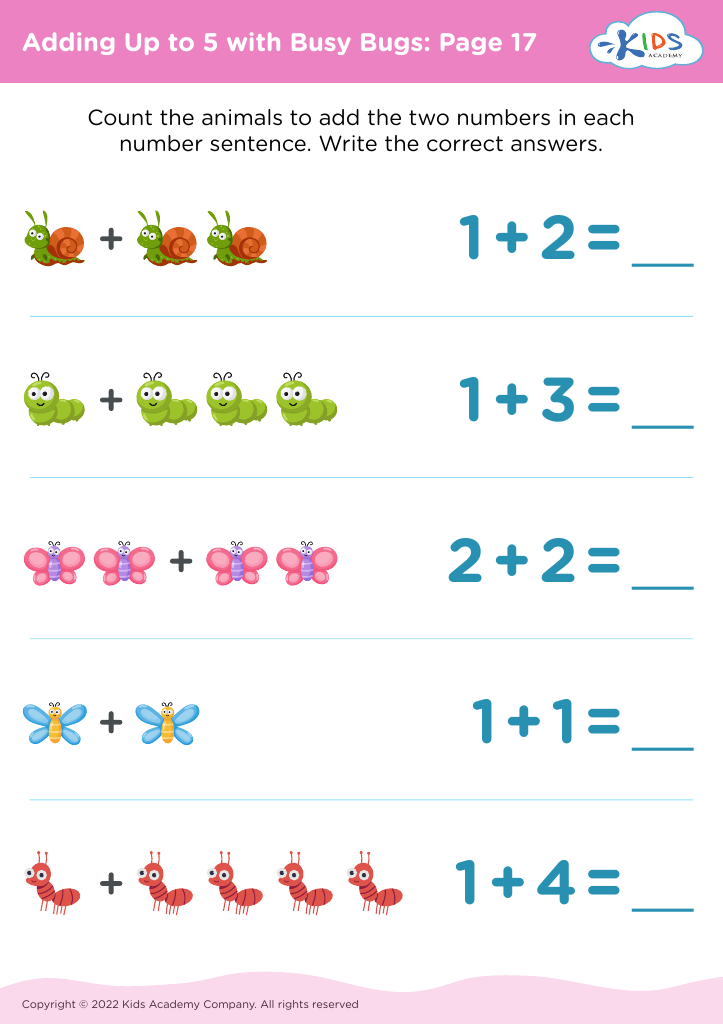
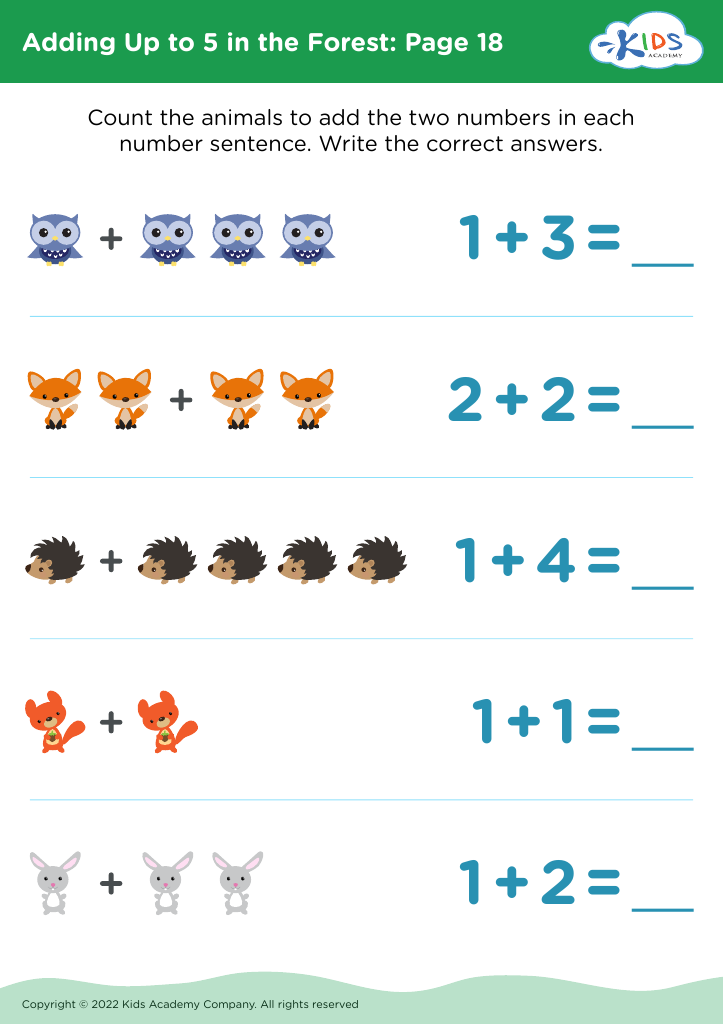
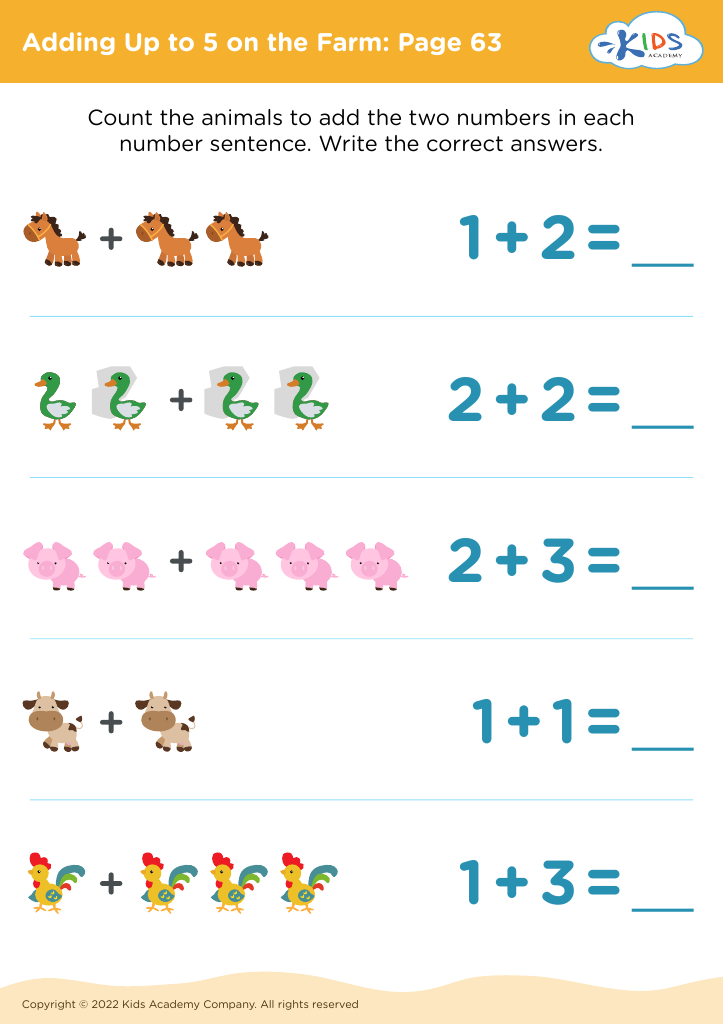
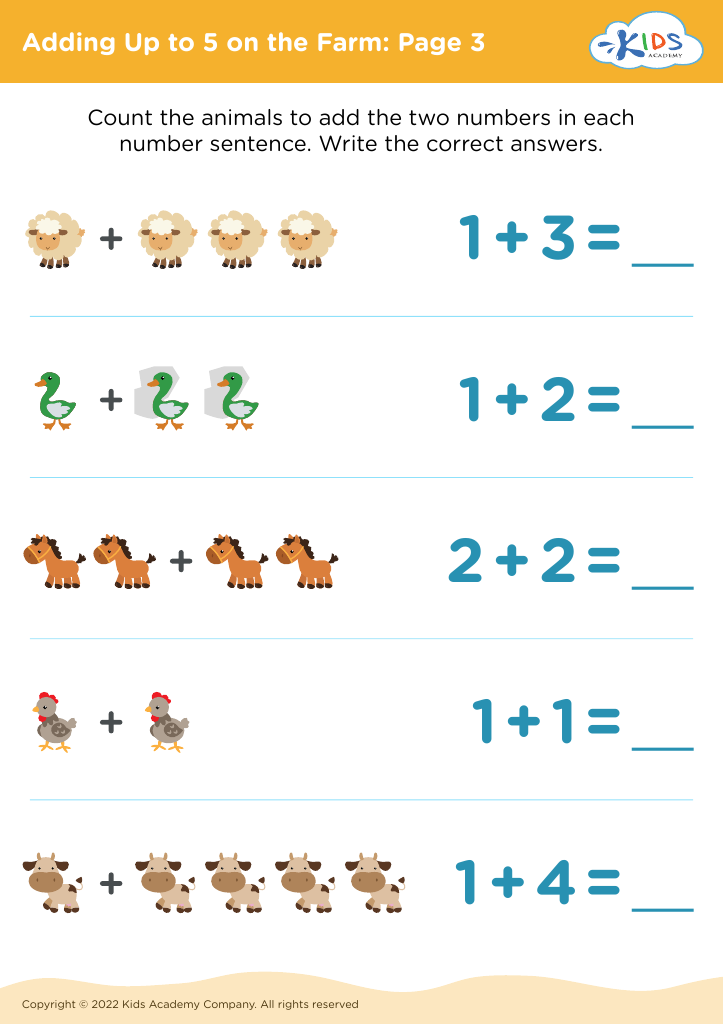
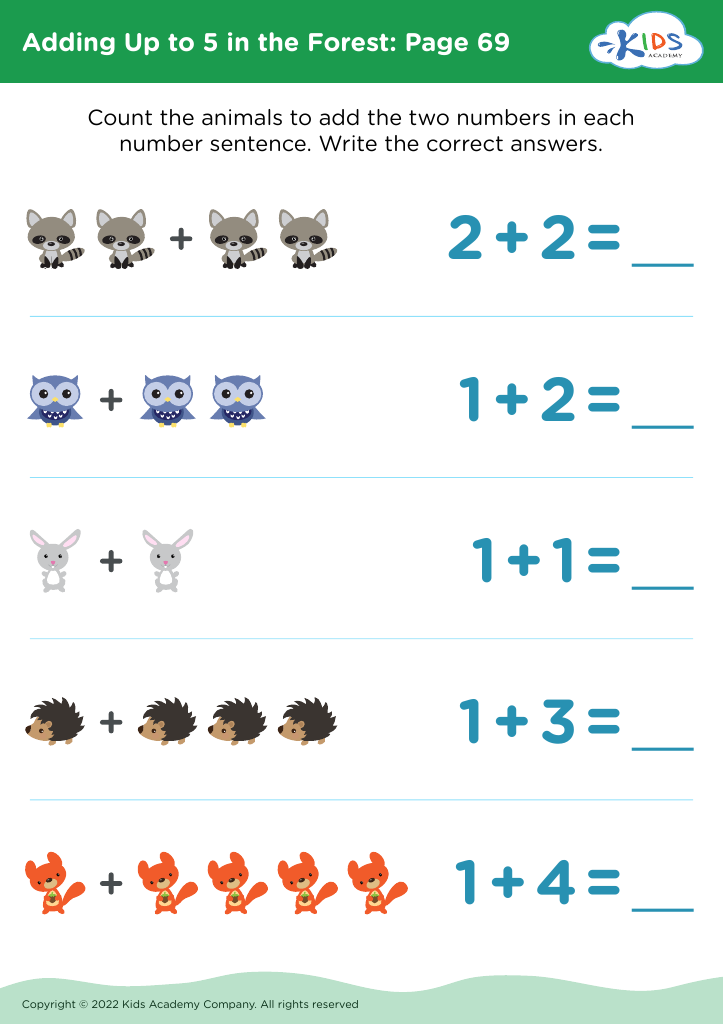
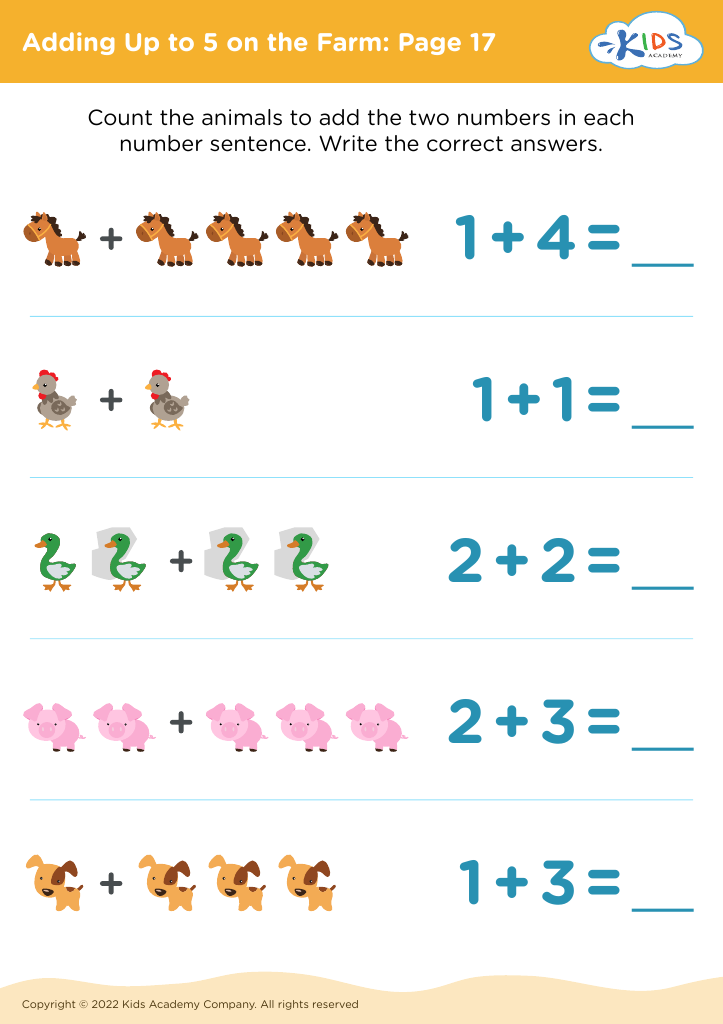
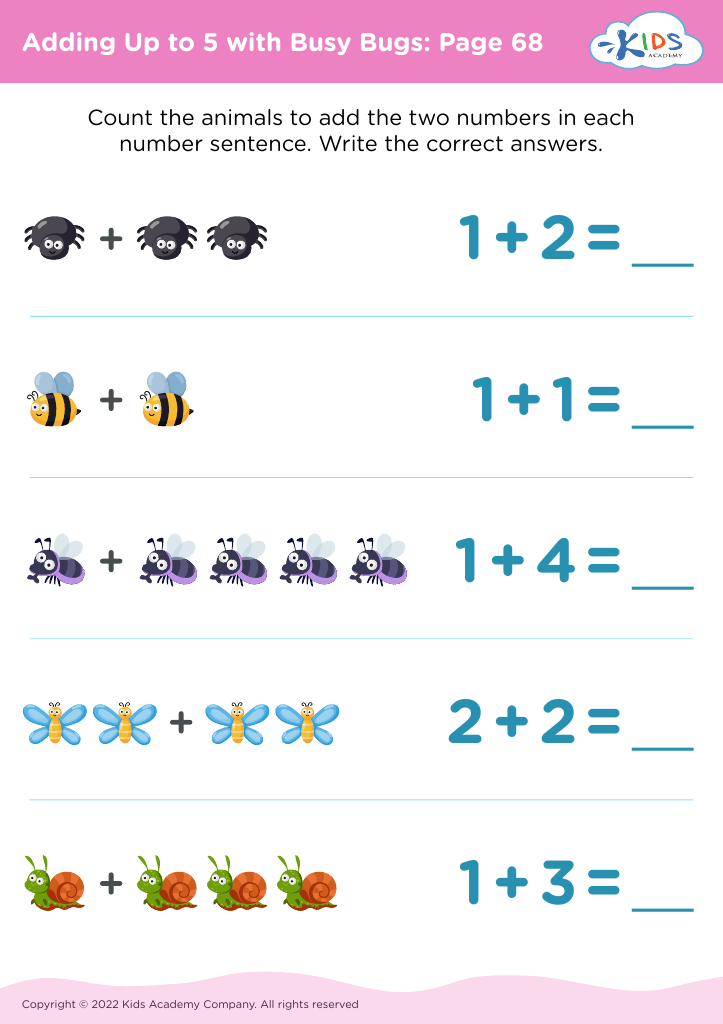
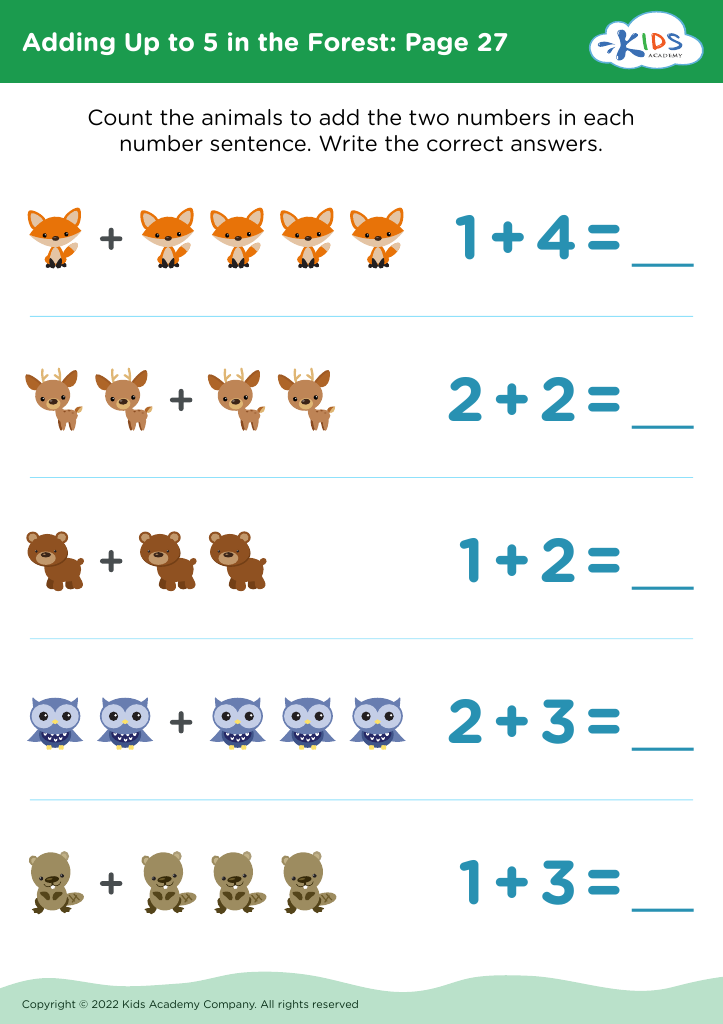
Counting practice and learning to add up to 5 are fundamental skills for children aged 3-6, providing a critical foundation for their numeracy development. During this early stage, young minds are highly receptive and eager to explore new concepts. Building competency in basic counting and addition prepares them intellectually for more complex mathematical operations they will encounter later.
For parents and teachers, prioritizing counting activities and simple addition exercises helps enhance logical thinking and problem-solving skills. When children learn to count items and add small numbers, they also develop important cognitive skills such as pattern recognition, memory, and concentration. Moreover, counting and adding fuel a child’s curiosity and enjoyment in learning numbers, fostering a positive attitude toward mathematics early on.
Incorporating these exercises into daily routines helps children grasp abstract concepts through tangible experiences like counting toys or adding snacks. These enjoyable activities also create meaningful interactions between children and adults, which reinforces learning through encouragement and praise.
Ensuring that young children master these early math skills plays an essential role in their overall academic success. When they establish confidence and competence in basic numeracy, it creates a ripple effect, making future learning experiences more accessible and enjoyable.








