Fine Motor Skills (coloring) Adding Up to 5 Worksheets for Ages 3-6
3 filtered results
-
From - To
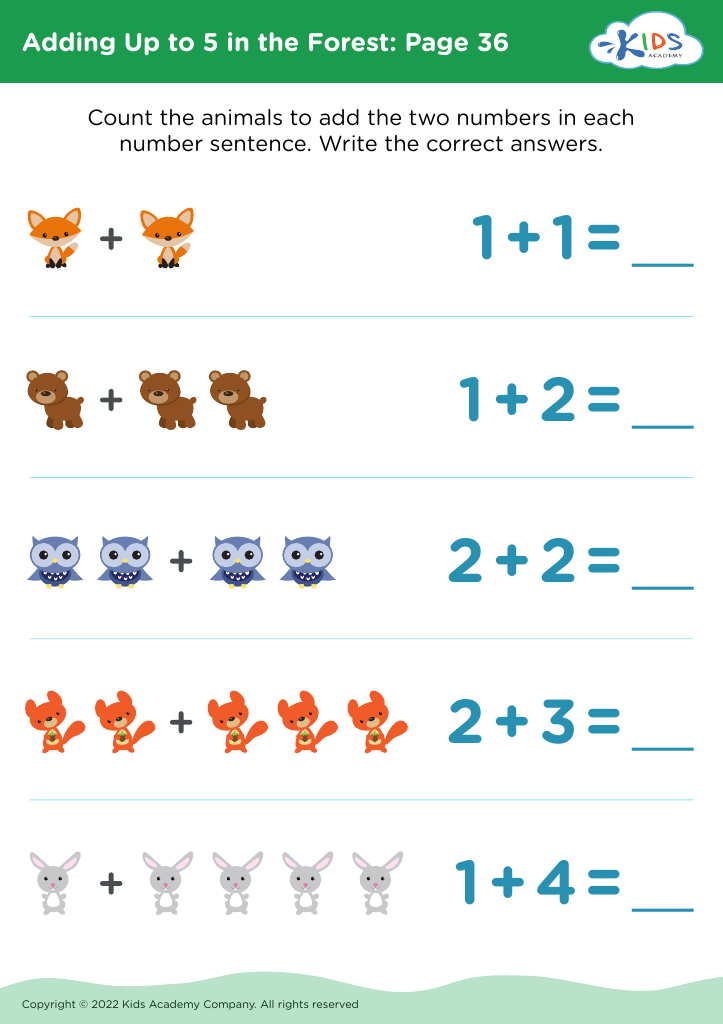
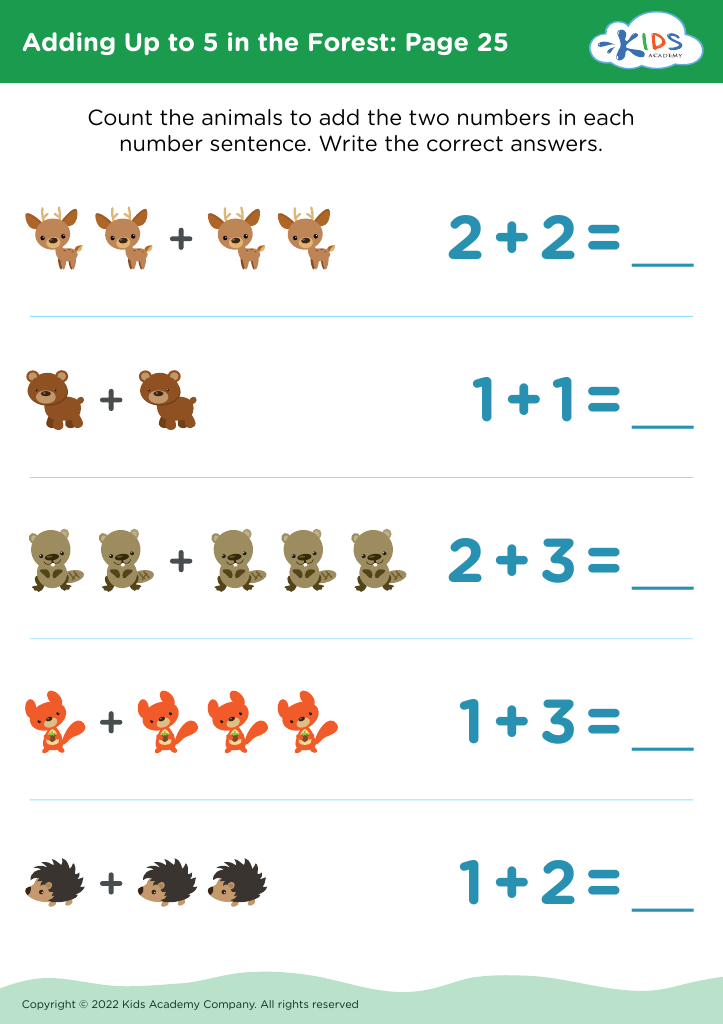
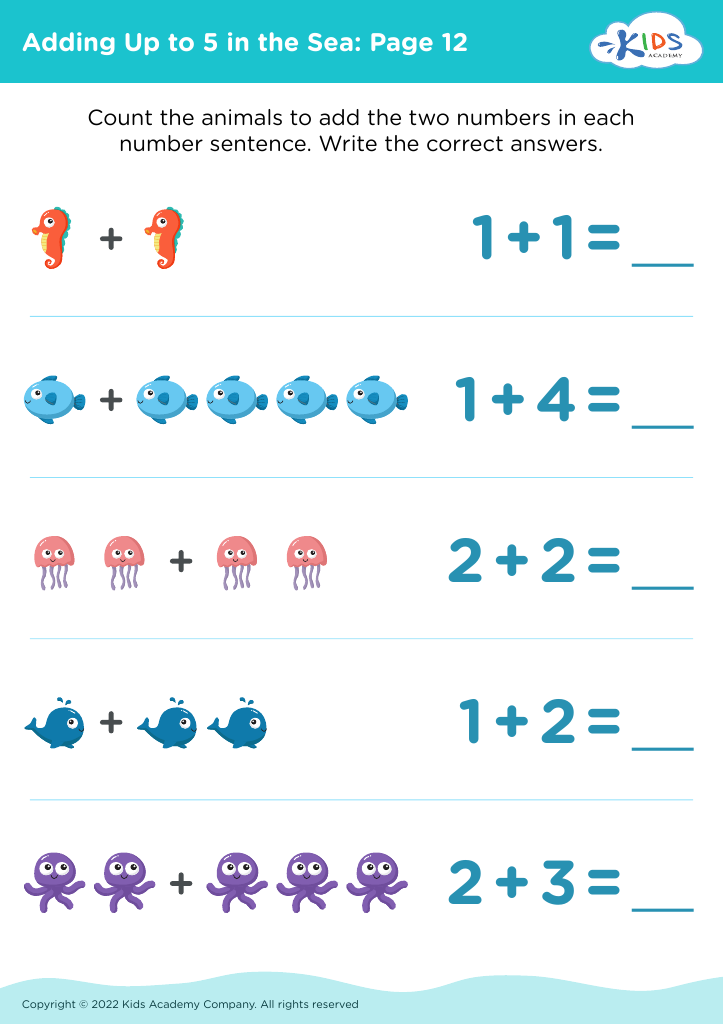
Boost your child's fine motor skills with our "Adding Up to 5" worksheets! Designed for ages 3-6, these engaging activities incorporate coloring to enhance dexterity while learning basic math concepts. Children will enjoy counting and coloring vibrant images as they practice addition skills in a fun, hands-on way. Each worksheet not only strengthens their grip and coordination but also fosters creativity and focus. Perfect for homeschooling or classroom use, these worksheets provide an enjoyable way to support early learning. Download now and watch your child's fine motor skills blossom alongside their foundational math knowledge!





.jpg)


Fine motor skills and early math concepts, such as adding up to 5, are crucial for children ages 3-6, and parents or teachers should prioritize these areas for several reasons.
Firstly, fine motor skills, which involve the coordination of small muscles in hands and fingers, are foundational for numerous everyday tasks. Activities like coloring not only enhance dexterity but also promote hand-eye coordination, crucial for later skills including writing and typing. Consequently, improving these skills through engaging activities can significantly boost a child's academic readiness.
Additionally, learning to add up to 5 cultivates early numeracy skills, laying the groundwork for more complex mathematical concepts. Recognizing numbers and understanding basic addition enrich cognitive development, enhancing problem-solving abilities. These skills correlate with success in later grades.
Moreover, combining fine motor activities like coloring with mathematical tasks can make learning more enjoyable. This integration helps maintain children's interest and motivation while fostering creativity and self-expression.
Ultimately, nurturing fine motor skills and basic math is vital for holistic development, ensuring that children not only gain essential academic skills but also confidence in their capabilities as learners. Parents and teachers play a key role in facilitating these enriching experiences.








