Nature appreciation Adding Up to 5 Worksheets for Ages 3-6
5 filtered results
-
From - To
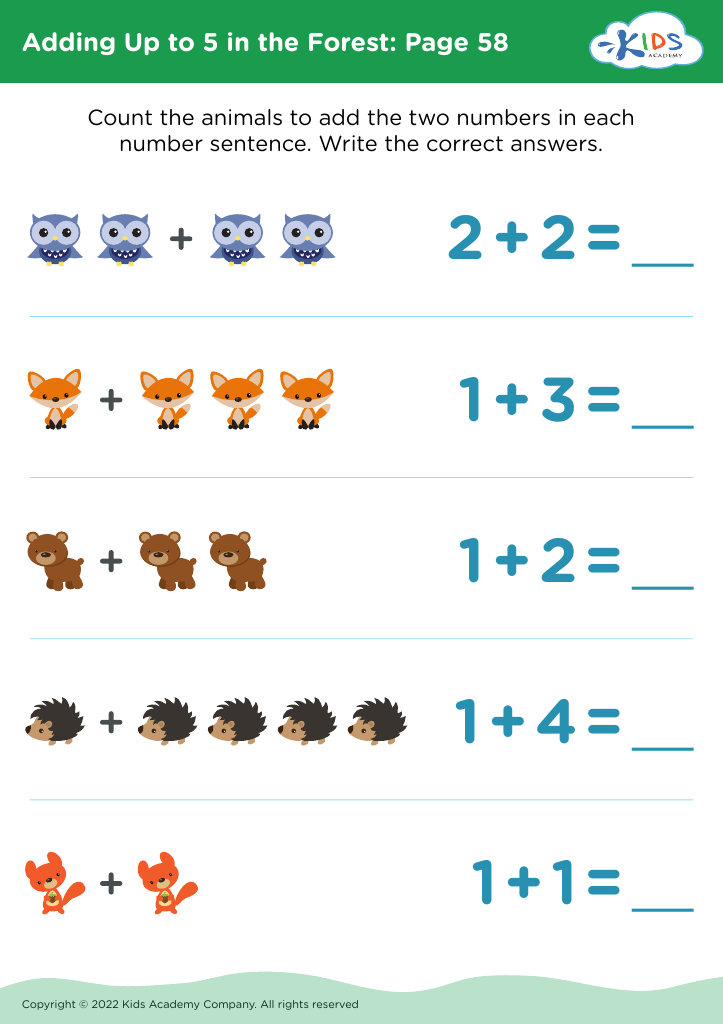
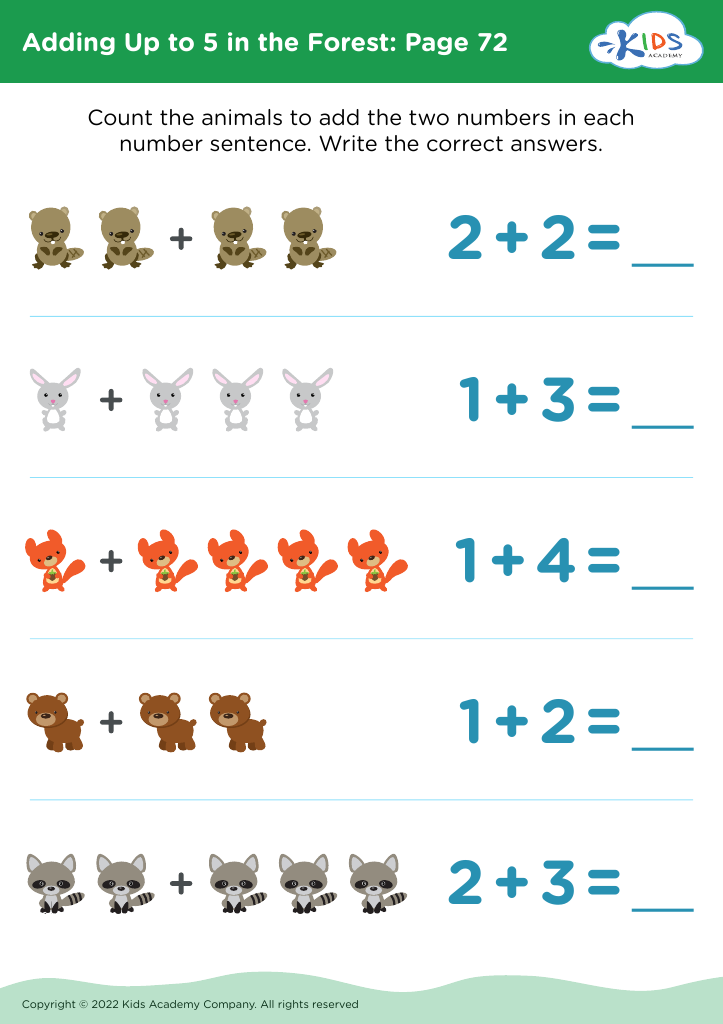
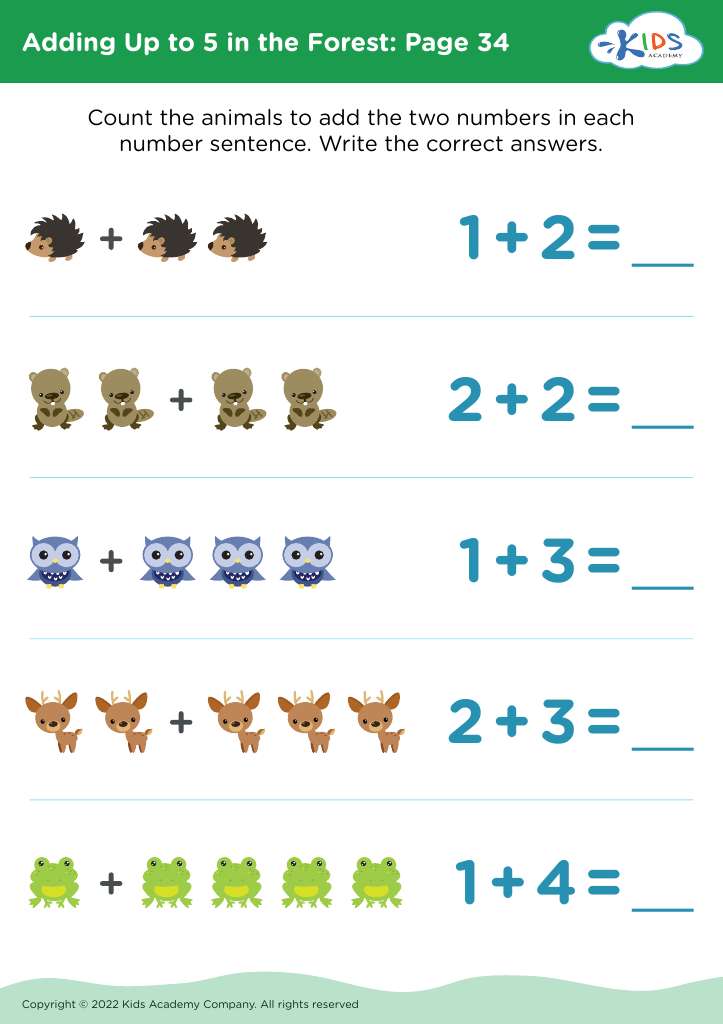
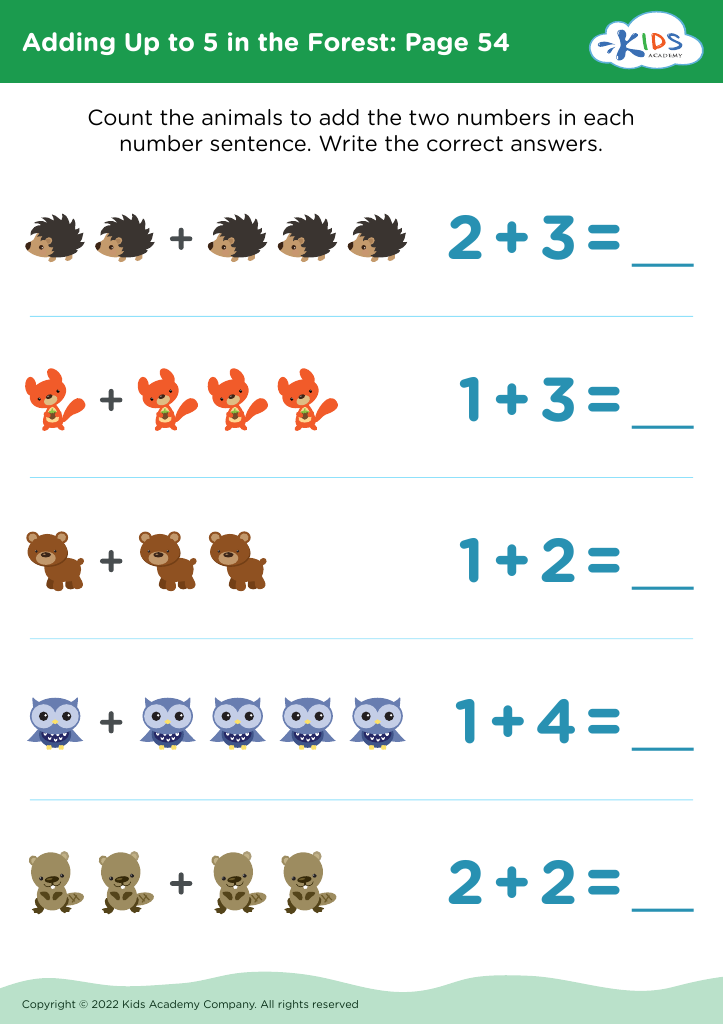
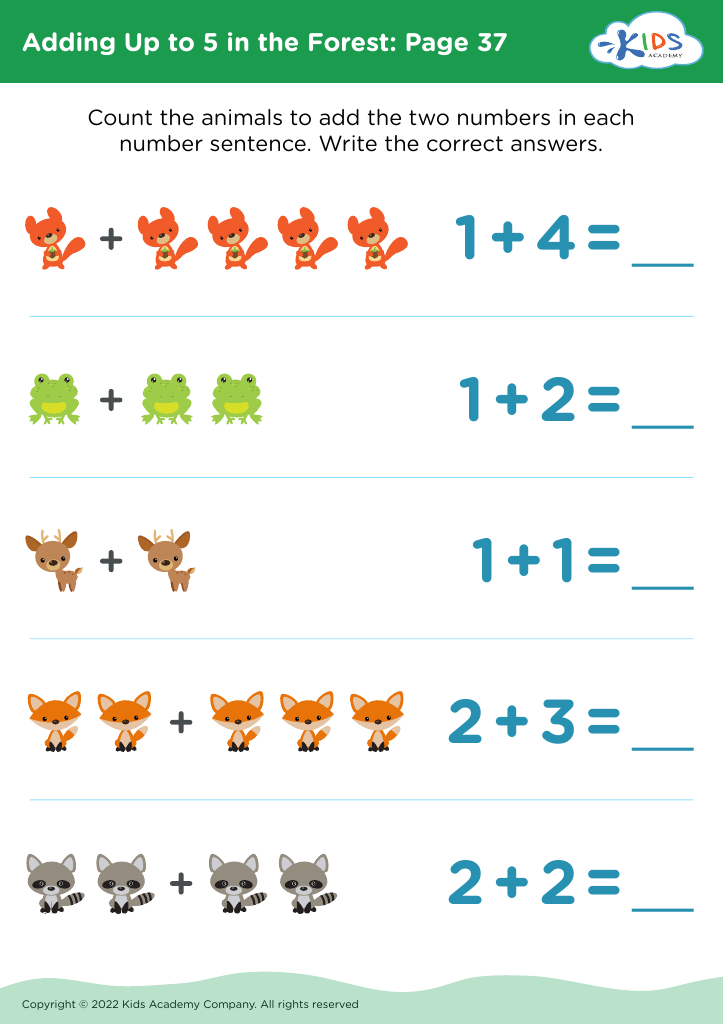
Discover the joy of nature with our "Nature Appreciation: Adding Up to 5" worksheets, designed for children ages 3-6. This engaging set of five worksheets helps develop early math skills while fostering a love for the environment. Through fun, hands-on activities, children will count natural elements like flowers, animals, and leaves, promoting both numeracy and an appreciation of the outdoors. Each worksheet encourages critical thinking and creativity, allowing young learners to explore math in a playful context. Perfect for at-home learning or classroom activities, these worksheets inspire curiosity and connection with the natural world while building essential math foundations.





%20(1).jpg)


Nature appreciation is essential for young children aged 3-6, and both parents and teachers should prioritize it for several reasons. First, engaging with nature fosters curiosity and wonder, laying the foundation for lifelong learning. When children explore their environments, they develop critical thinking and problem-solving skills, as they ask questions and seek answers about the natural world.
Moreover, nature experiences enhance physical health by encouraging outdoor play, which improves coordination and fitness levels. Children who appreciate nature are often more inclined to engage in active play, leading to better overall health outcomes.
Additionally, nurturing a connection to nature promotes social-emotional development. Children learn empathy and respect for living things, cultivating a sense of responsibility. This respect can lead to greater environmental stewardship in the future.
Furthermore, nature appreciation provides opportunities for sensory exploration. Children can touch, smell, and observe natural elements, promoting fine motor skills and language development as they articulate their experiences.
In short, fostering an appreciation of nature not only enriches children’s cognitive, physical, and emotional growth but also encourages them to cherish and protect our planet, creating a sustainable future for all.








