Nature awareness Adding Up to 5 Worksheets for Ages 3-6
8 filtered results
-
From - To
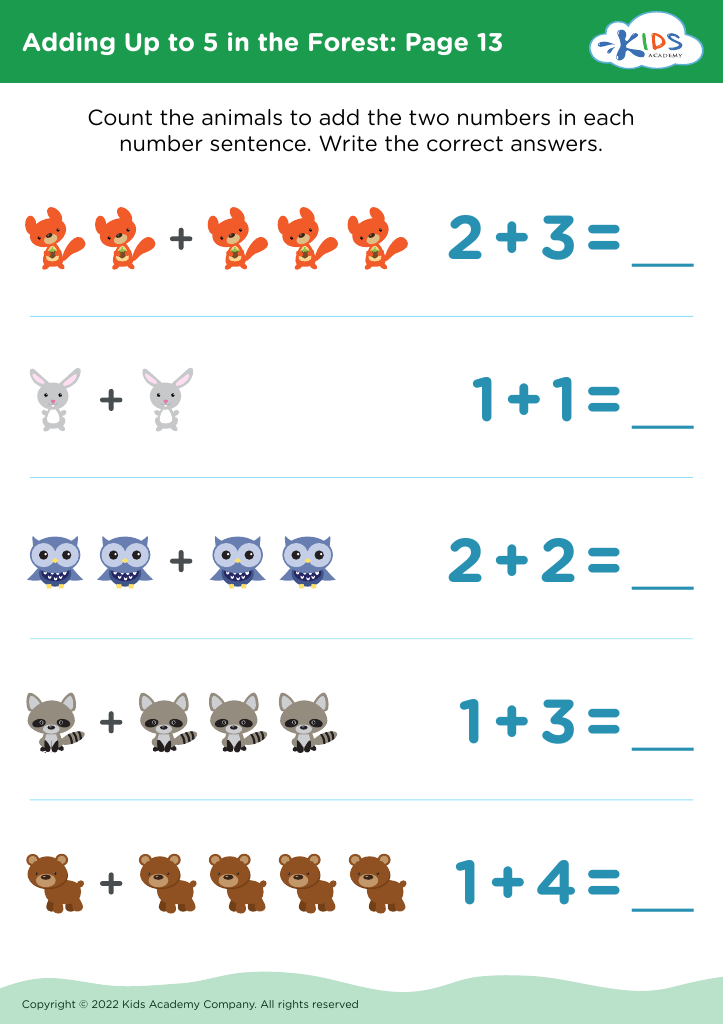
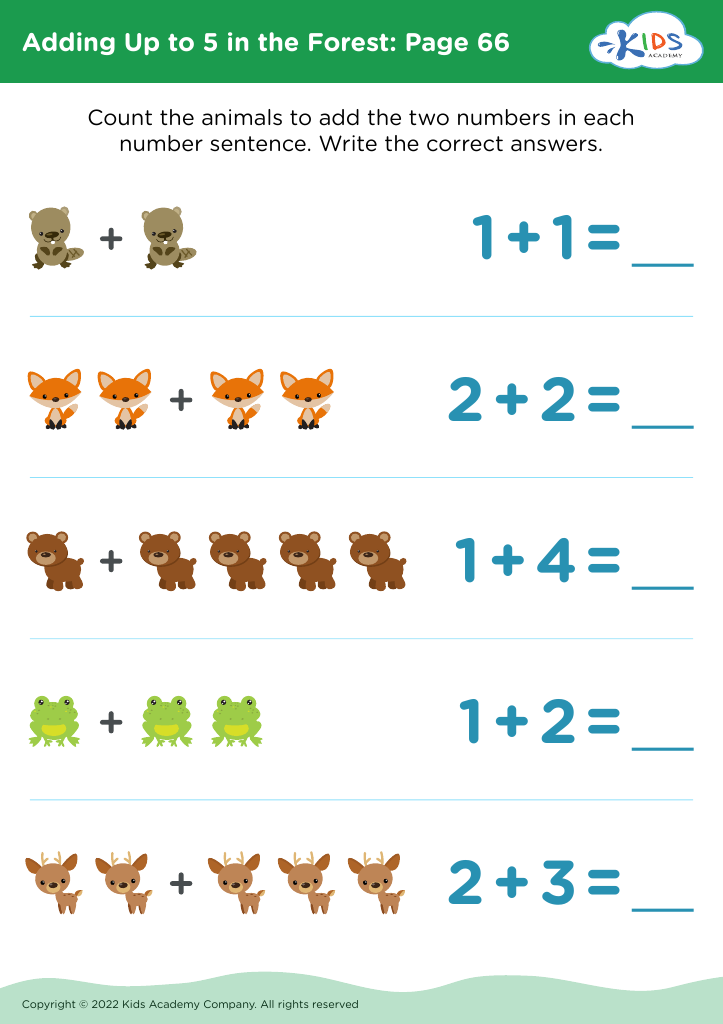
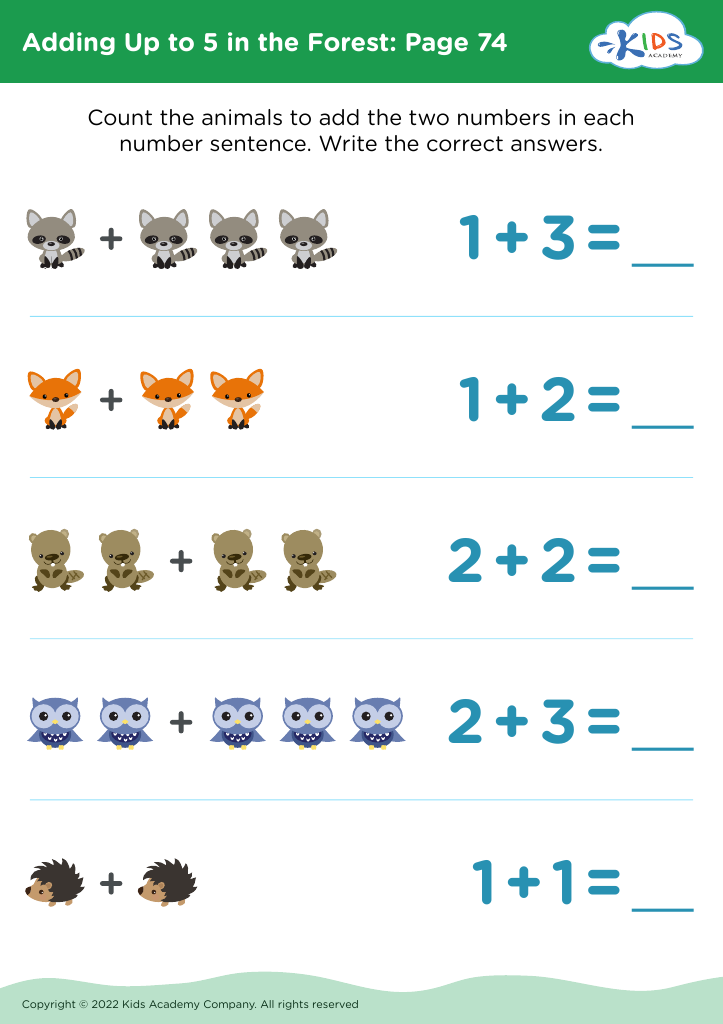
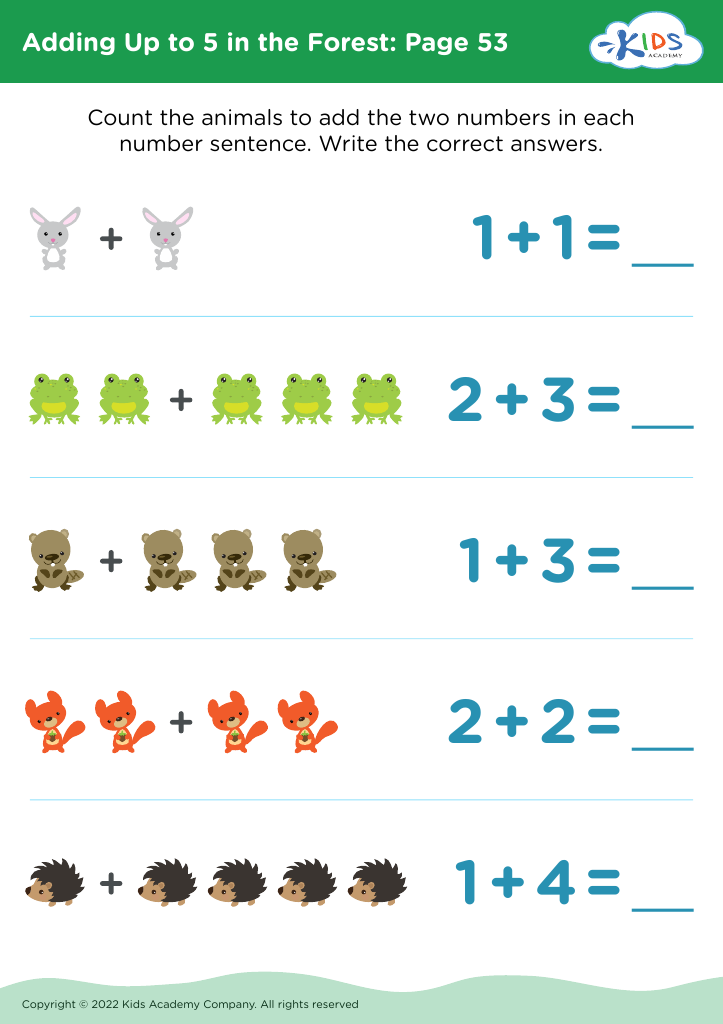
Introduce your little ones to the wonders of math and nature with our "Nature Awareness Adding Up to 5 Worksheets for Ages 3-6". Designed to blend counting with environmental exploration, these worksheets help kids practice adding numbers up to 5 while learning about different plants, animals, and ecosystems. Featuring engaging nature-themed visuals and simple exercises, each worksheet promotes critical thinking and problem-solving skills in a fun, interactive way. Perfect for early learners, these activities not only boost their math abilities but also foster a deeper appreciation for the natural world. Download now to combine learning with adventure!
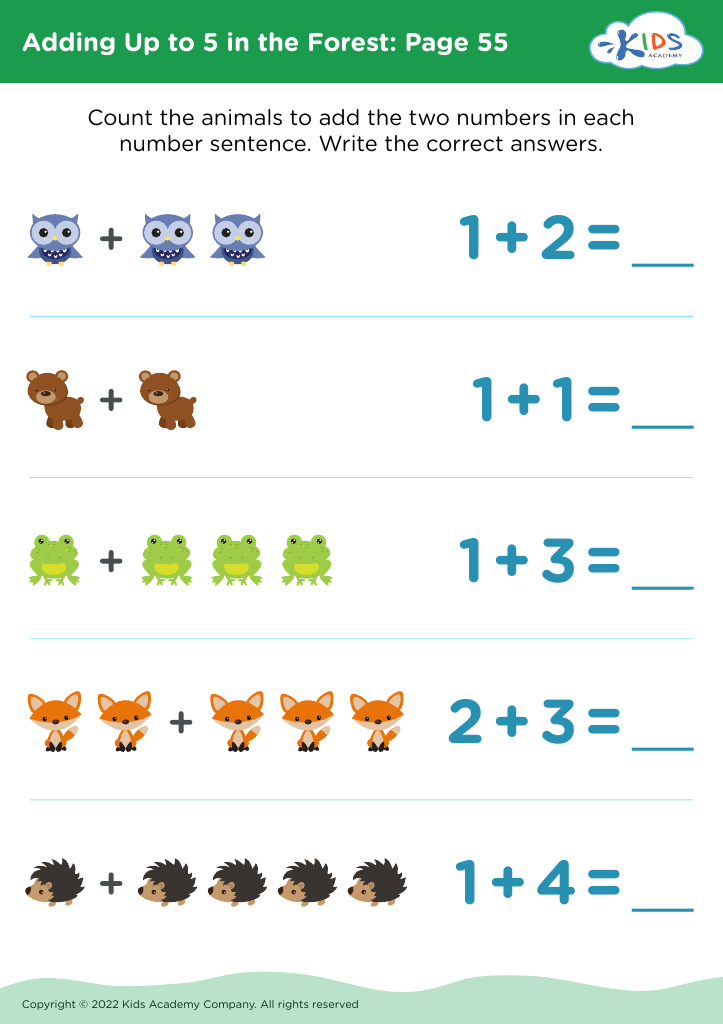
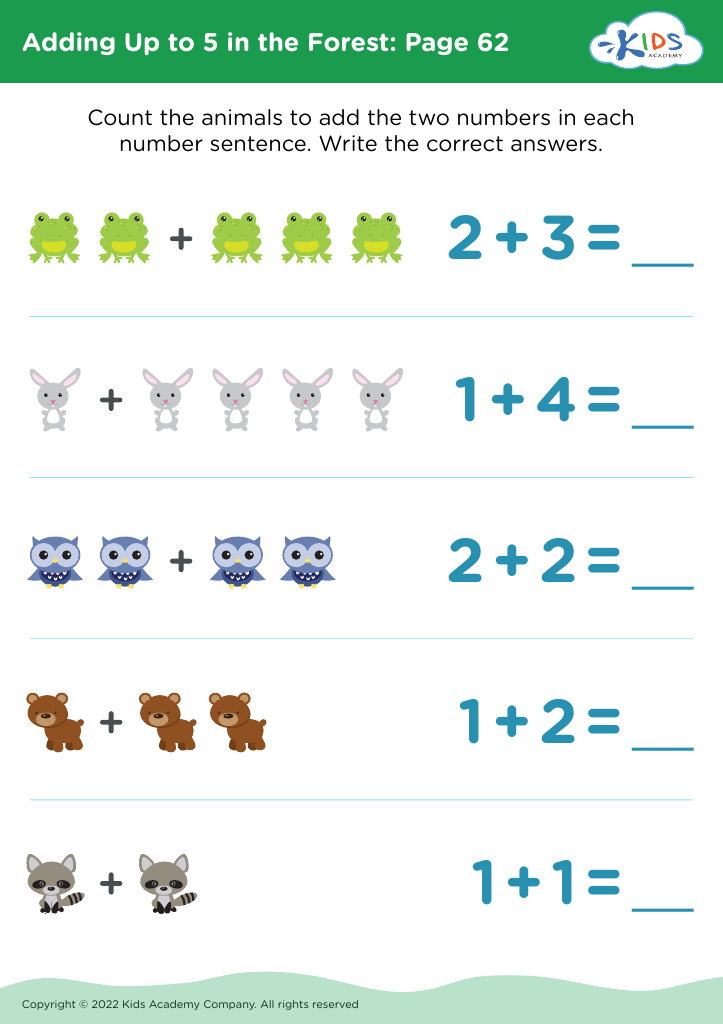
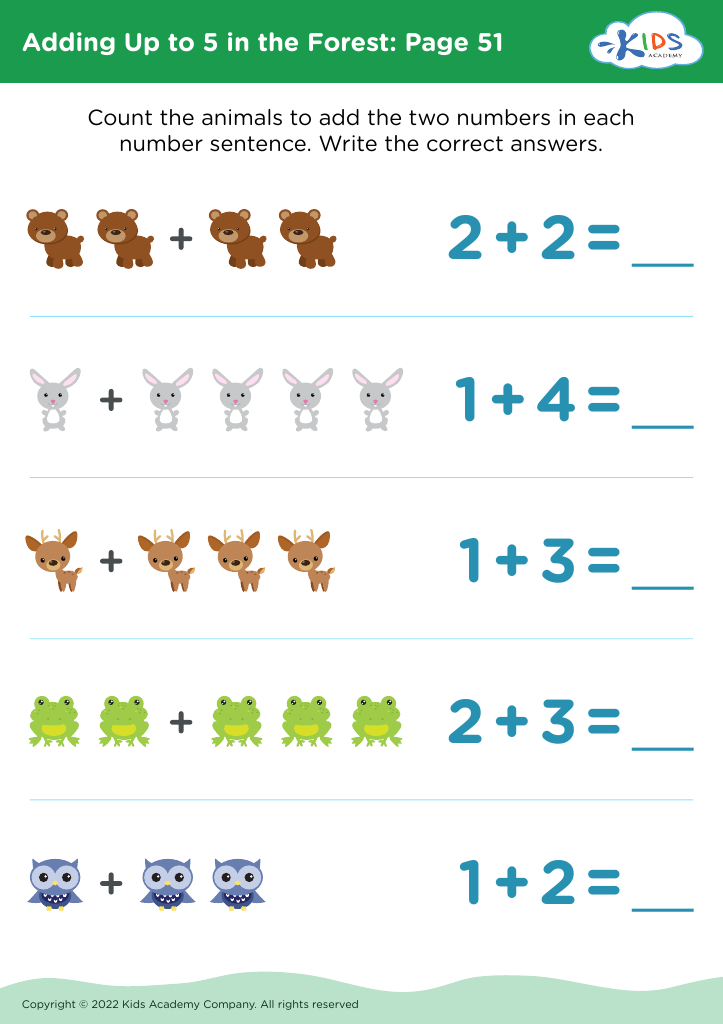
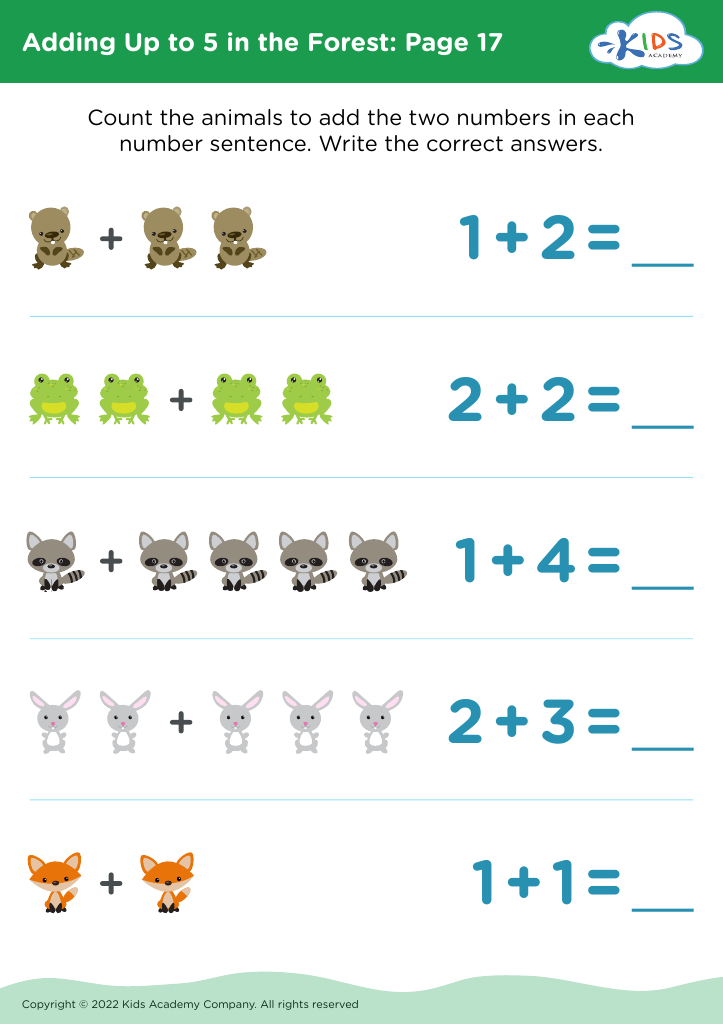








Nature awareness is crucial for young children's development, and incorporating simple activities like "adding up to 5" makes it both educational and enjoyable. For children aged 3-6, who are in the foundational stages of learning, integrating nature with basic math skills offers numerous benefits that parents and teachers should embrace.
Firstly, being outdoors stimulates a child’s sensory experiences and enhances cognitive skills. Activities like counting leaves, stones, or flowers not only make mathematics tangible but also nurture observational skills and curiosity about the natural world. This hands-on approach helps children grasp abstract concepts more readily than traditional classroom settings sometimes allow.
Secondly, learning in a natural environment aids social-emotional development. Tasks performed in pairs or groups, such as finding a specific number of objects, help improve communication, teamwork, and problem-solving abilities. This shared discovery process often leads to a greater appreciation and respect for nature and each other.
Moreover, spending time in nature has well-documented benefits for physical health, including improved motor skills, reduced stress levels, and enhanced overall well-being. Introducing math through nature harmonizes physical and mental health while fostering a lifelong love for both mathematics and the environment.
In sum, nature awareness combined with simple math exercises creates an enriched learning experience that sparks intellectual growth, promotes physical well-being, and instills essential social skills in young children.








