Problem-solving abilities Adding Up to 5 Worksheets for Ages 3-6
13 filtered results
-
From - To
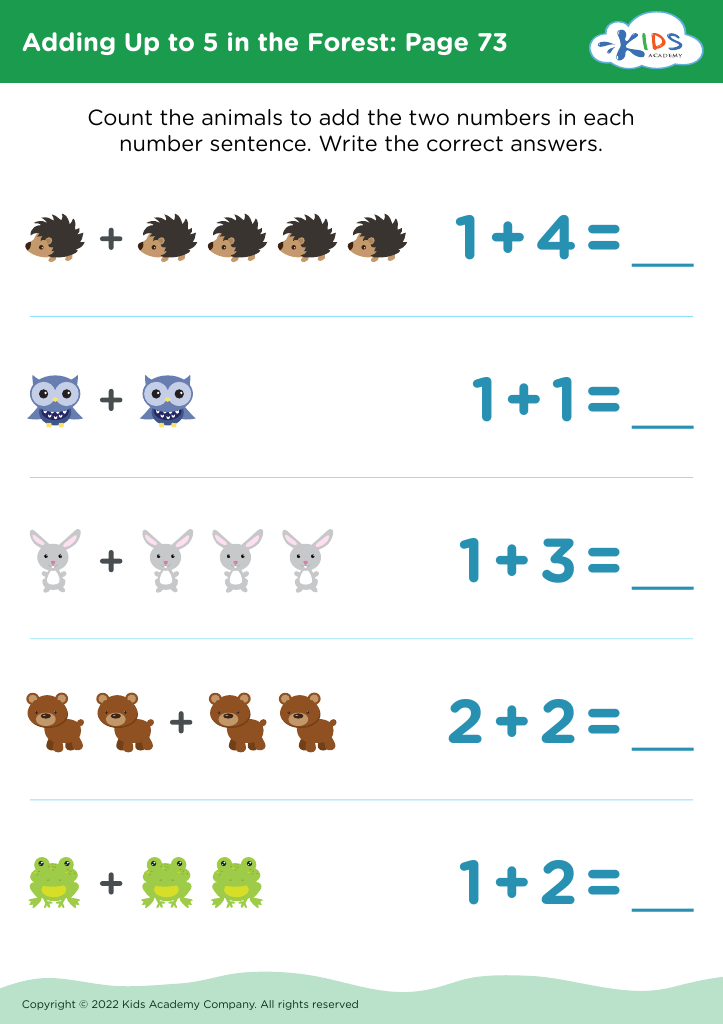
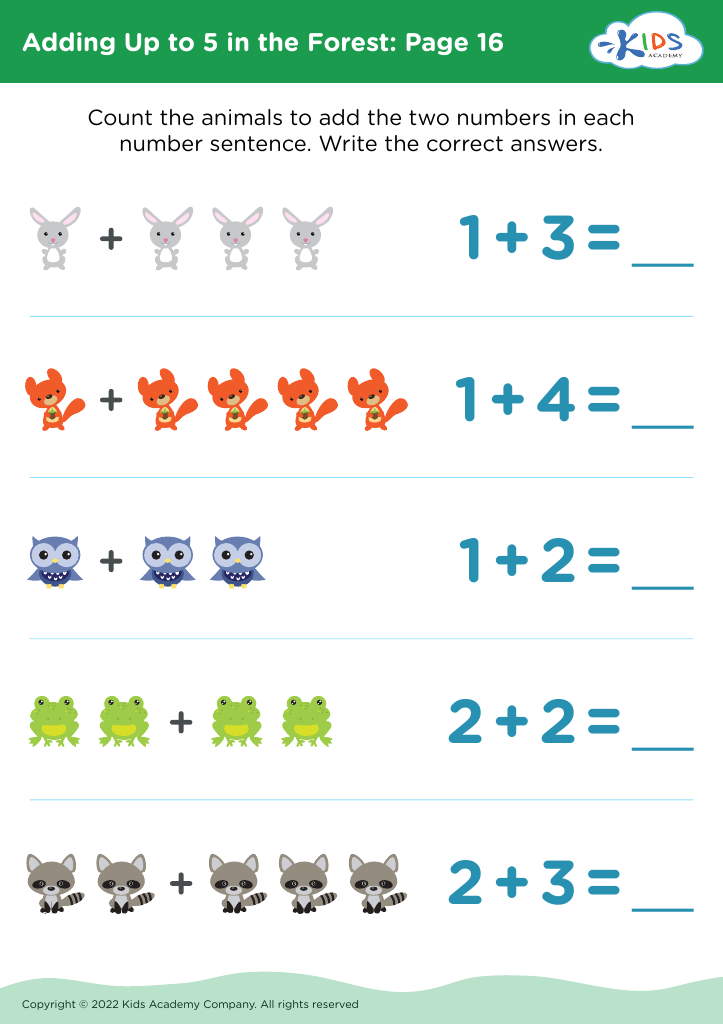
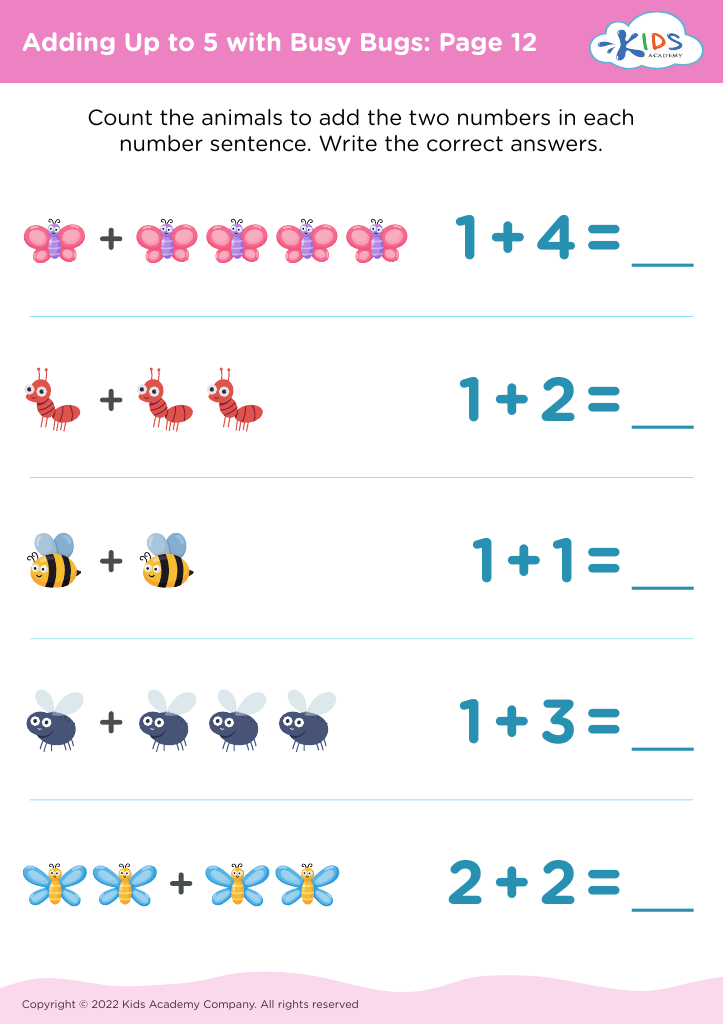
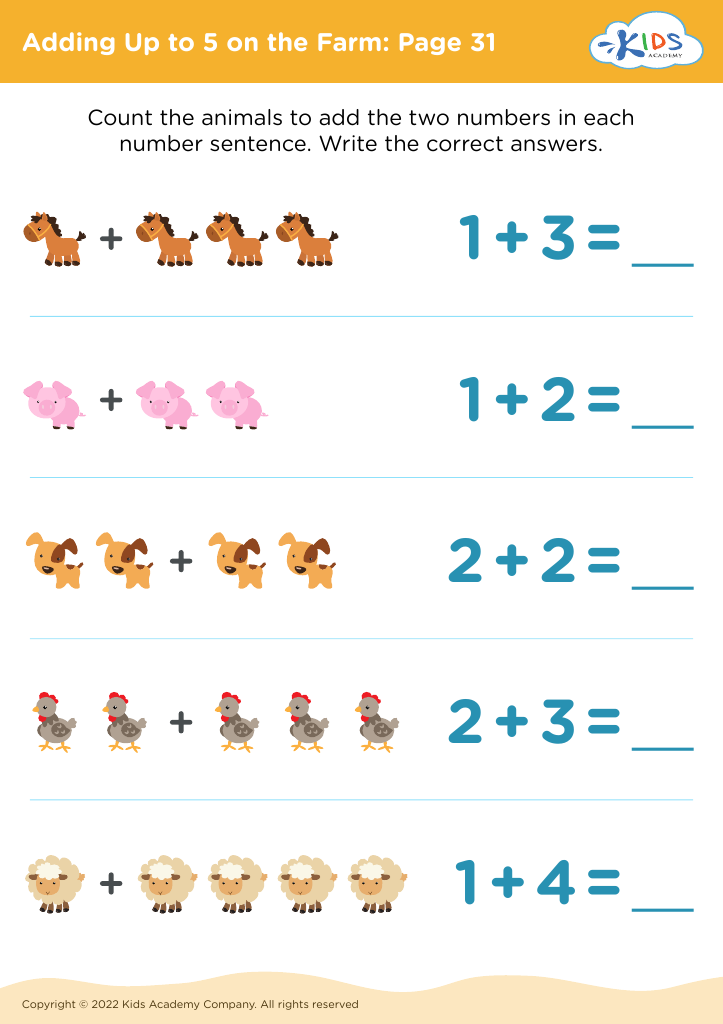
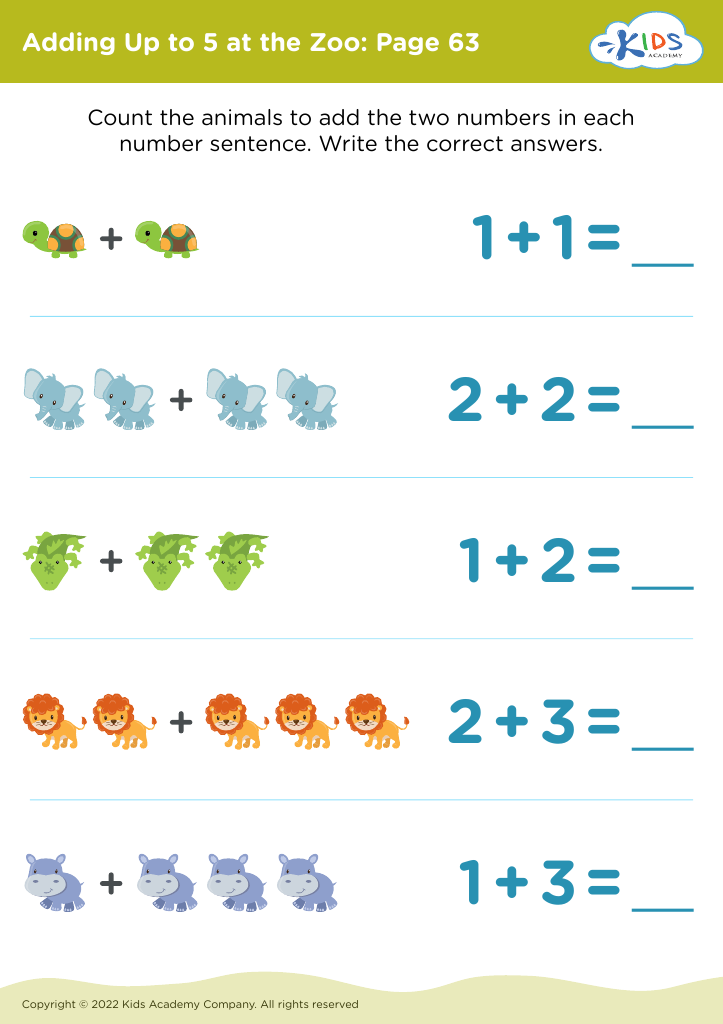
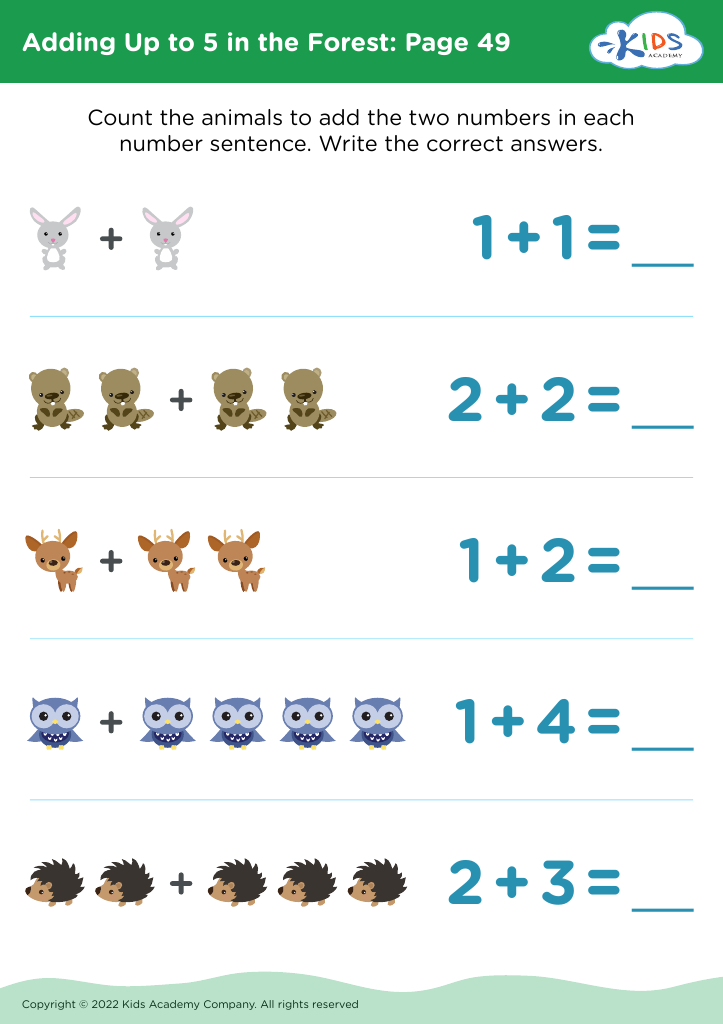
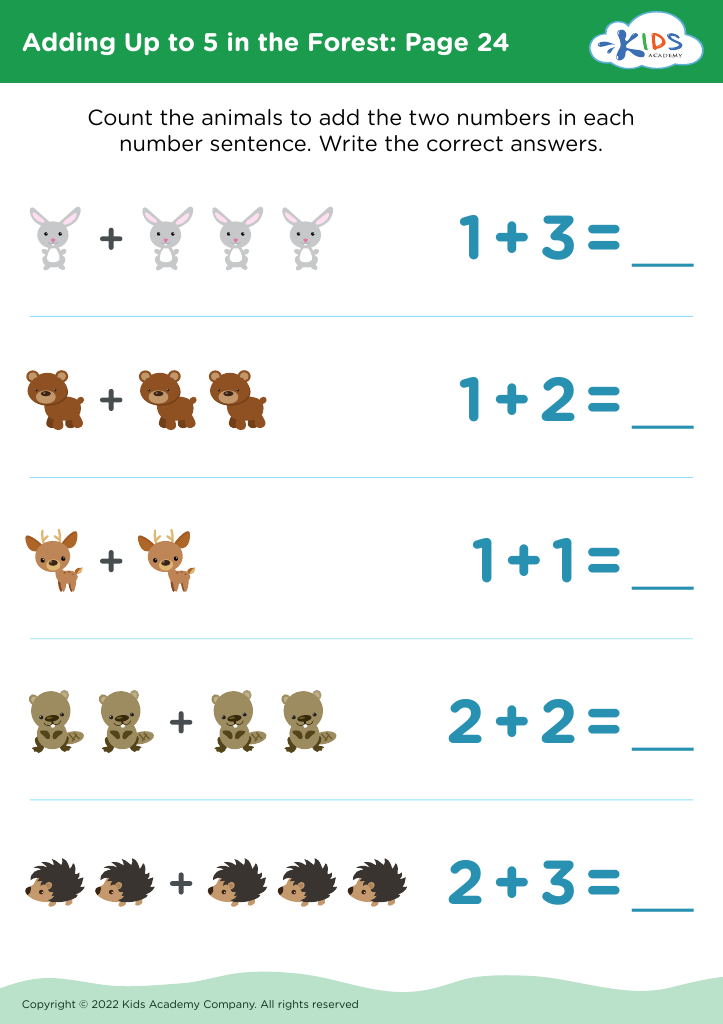
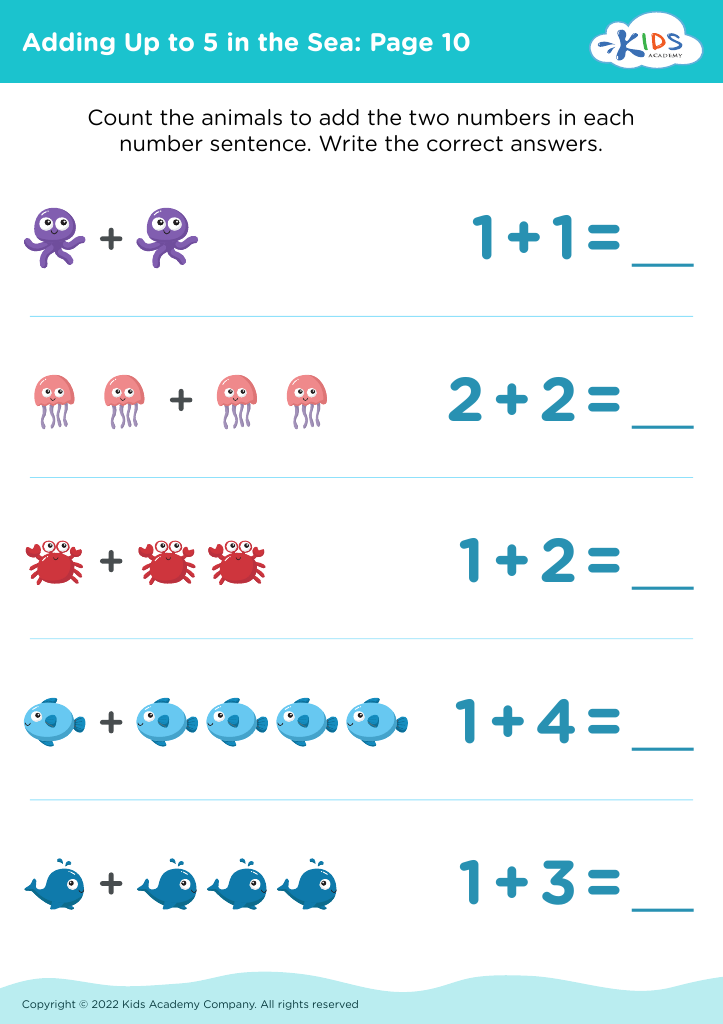
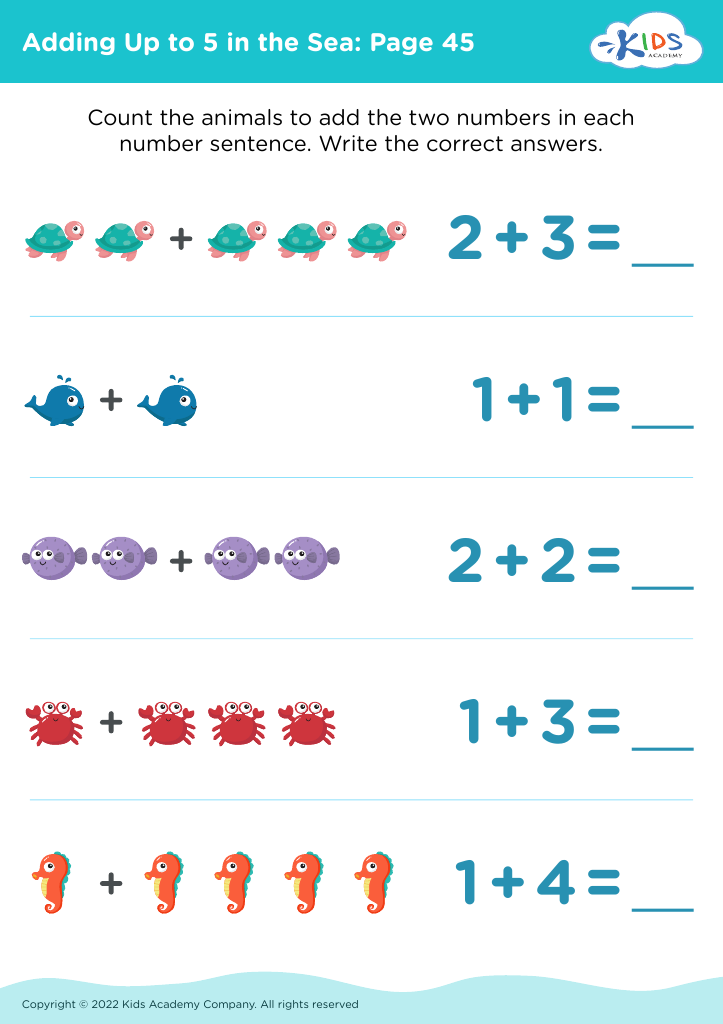
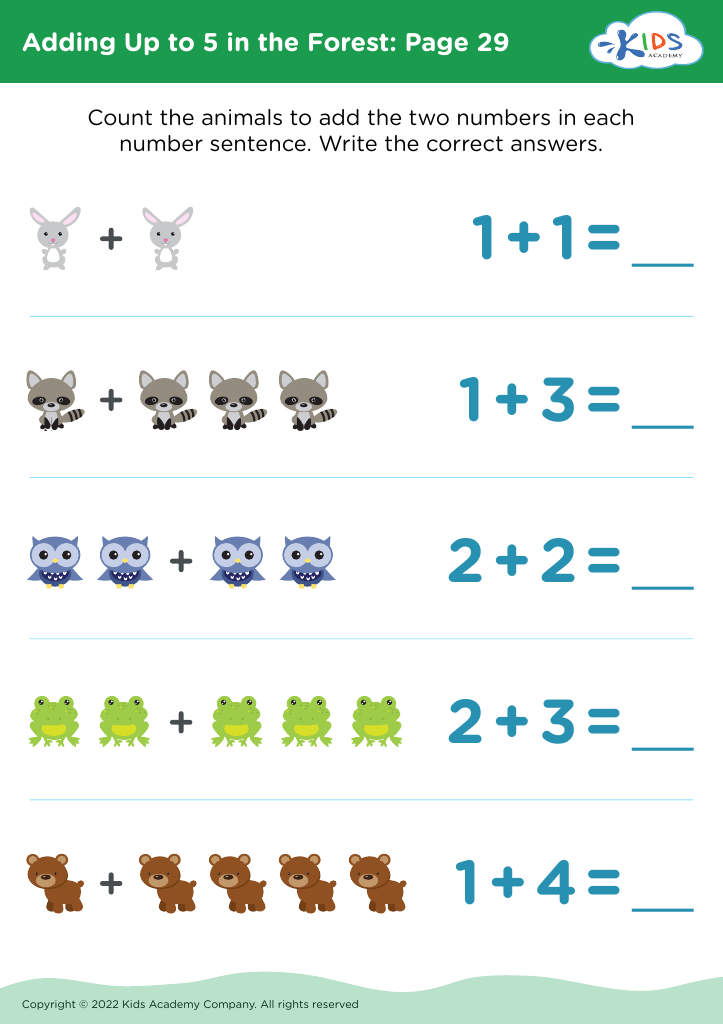
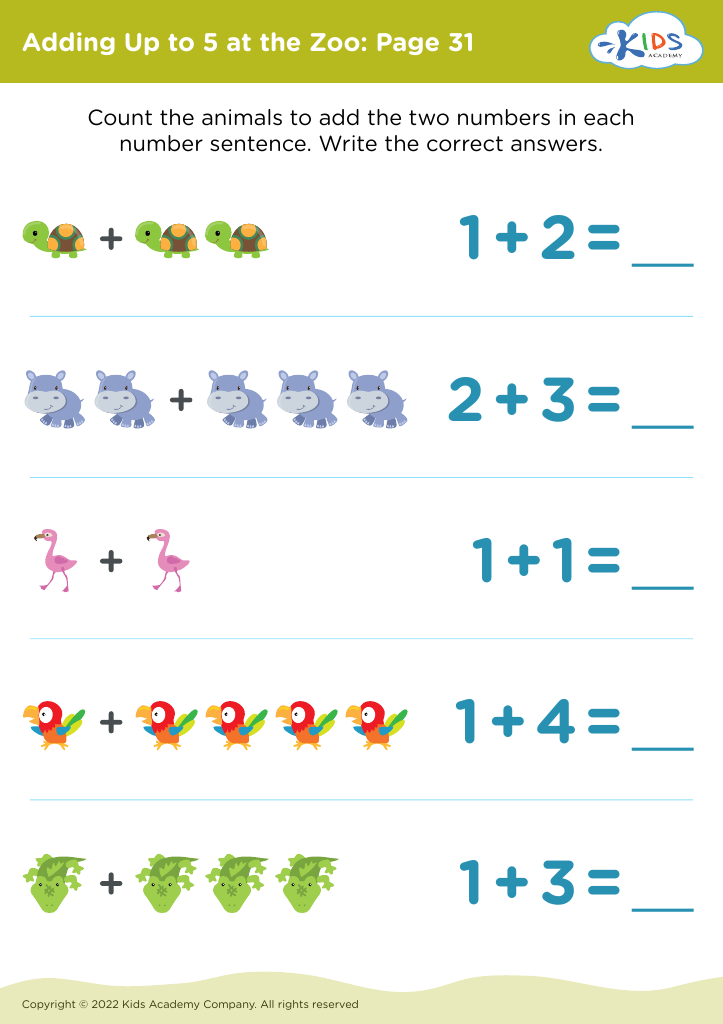
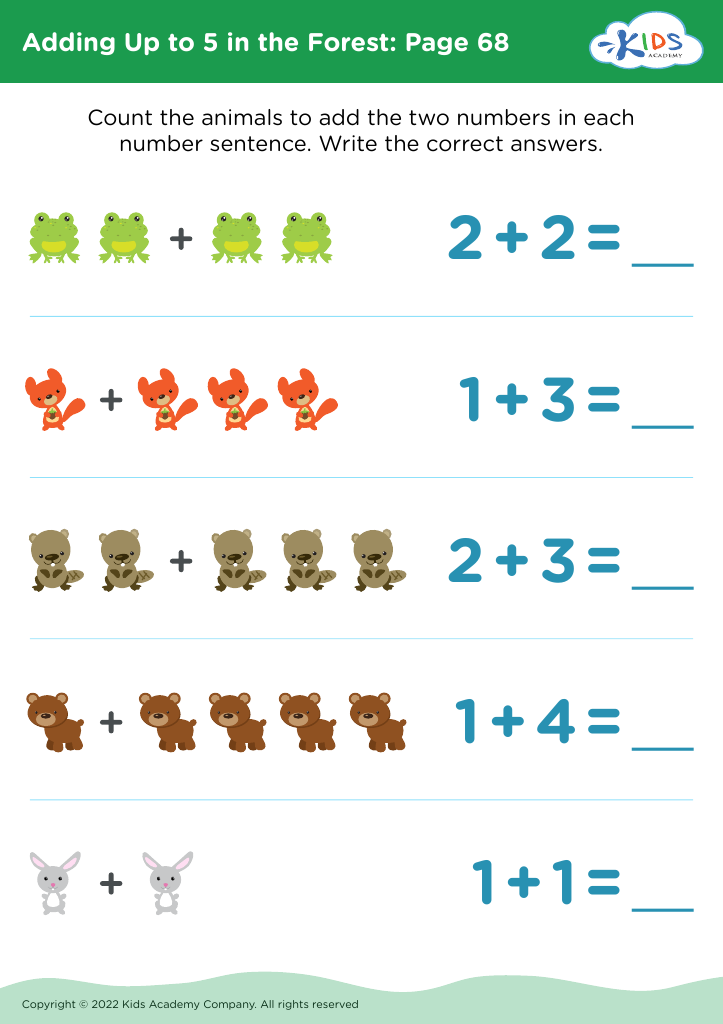
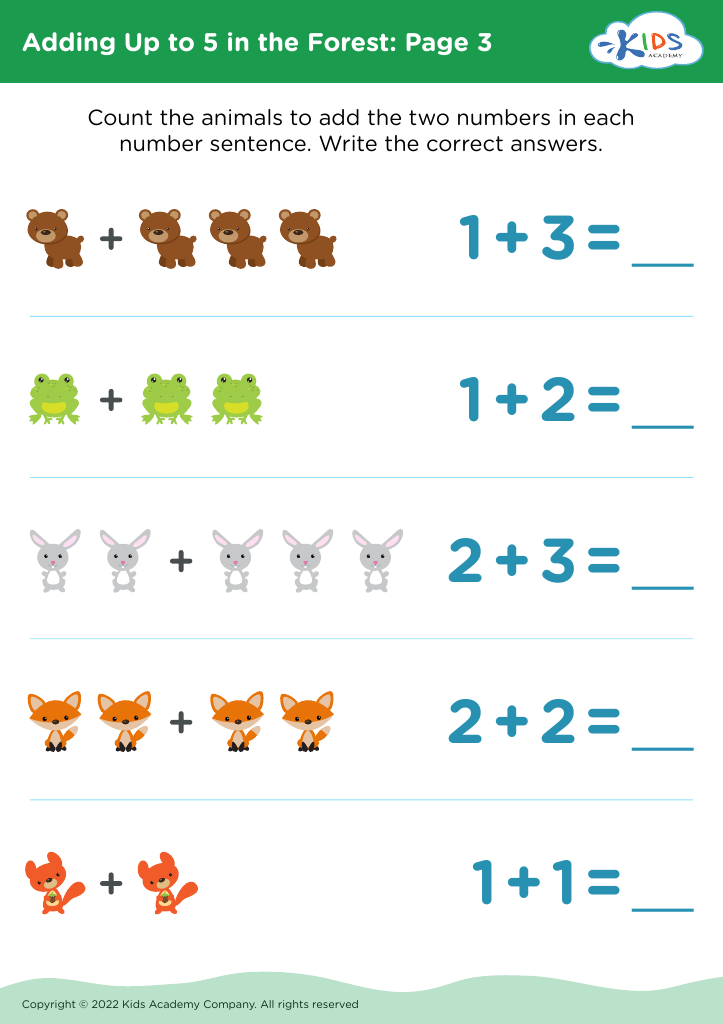
Discover our engaging "Problem-Solving Abilities: Adding Up to 5 Worksheets" designed for kids aged 3-6! These interactive worksheets help young learners enhance their mathematical skills by practicing addition within the number range of five. Using bright colors and entertaining visuals, our resources support early arithmetic comprehension while encouraging critical thinking and problem-solving abilities. Each worksheet offers fun activities that promote number recognition, counting, and simple addition exercises, all aimed at fostering a love for learning. Perfect for homeschooling or classroom use, these worksheets make mastering basic math concepts enjoyable and accessible for your little learners! Start their journey to confidence in math today!




%20(1).jpg)



Problem-solving abilities, particularly in the context of adding numbers up to 5, are foundational skills for children ages 3-6. These early mathematical competencies foster cognitive development, critical thinking, and a strong understanding of basic arithmetic concepts. When children learn to add and solve small problems, they develop not only numeric skills but also analytical thinking that enables them to approach challenges methodically.
Teachers and parents should prioritize these skills, as early mathematical interactions can build a child's confidence and enthusiasm for learning. By introducing addition through engaging activities, such as counting objects, using fingers, or interactive games, we create a positive learning environment. This hands-on approach makes math relatable and fun, which is crucial at such a formative age.
Furthermore, problem-solving activities at this level can enhance language skills as children articulate thought processes and reasoning. These interactions promote collaboration and peer discussions, giving rise to social development. As a strong foundation in these early years can lead to better academic performance in later schooling, it’s essential for both parents and teachers to care about fostering these abilities in young learners, preparing them for future challenges in mathematics and beyond.








