Filters

37 filtered results

Clear all filters
Favorites
With answer key
Interactive

37 filtered results

Difficulty Level

Grade


Check out this FREE Trial Lesson on Adding Up to 5 for age 3-6!

Sorting Objects into 3 Categories

Favorites
With answer key
Interactive
  • 3-6
  • Problem-Solving Skills
  • Adding Up to 5
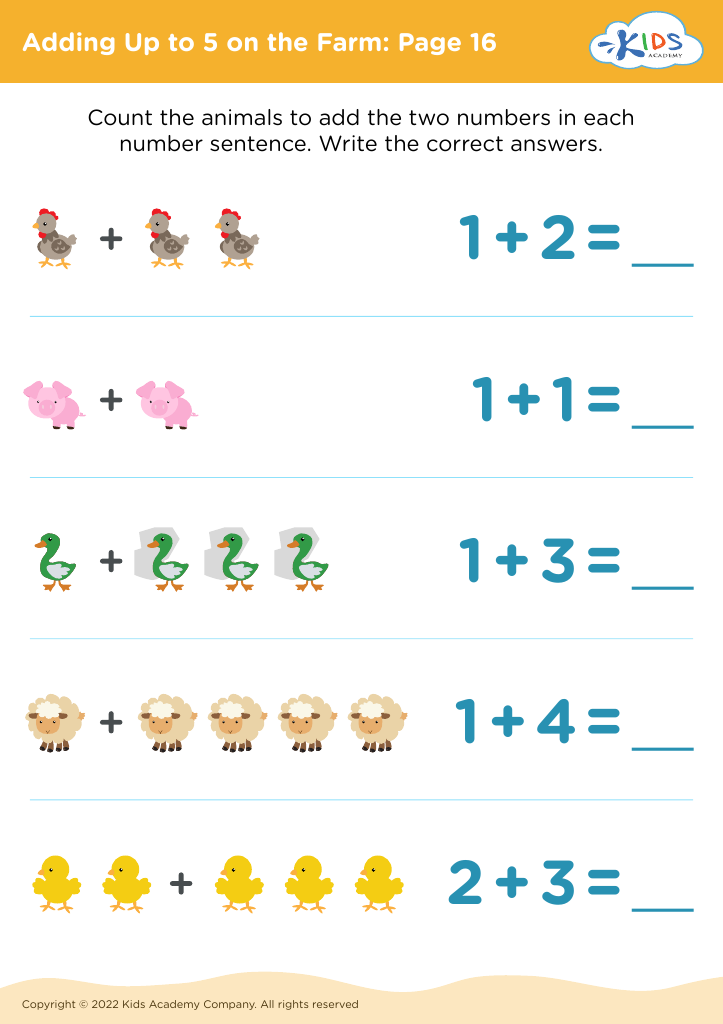
Adding Up to 5 on the Farm: Page 16
Worksheet
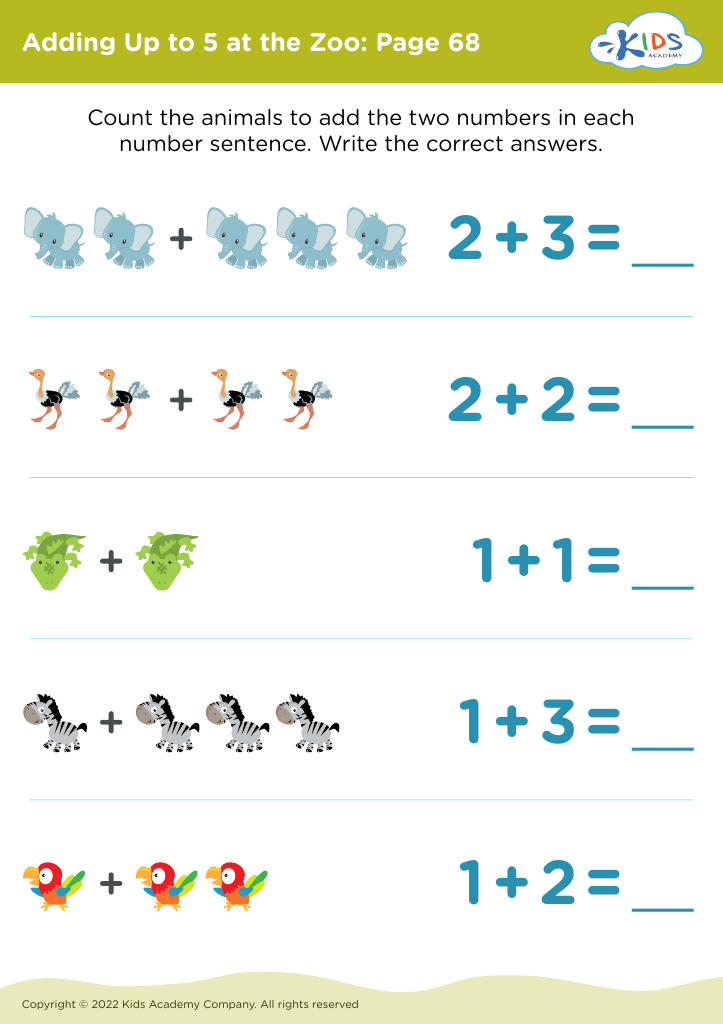
Adding Up to 5 at the Zoo: Page 68
Worksheet
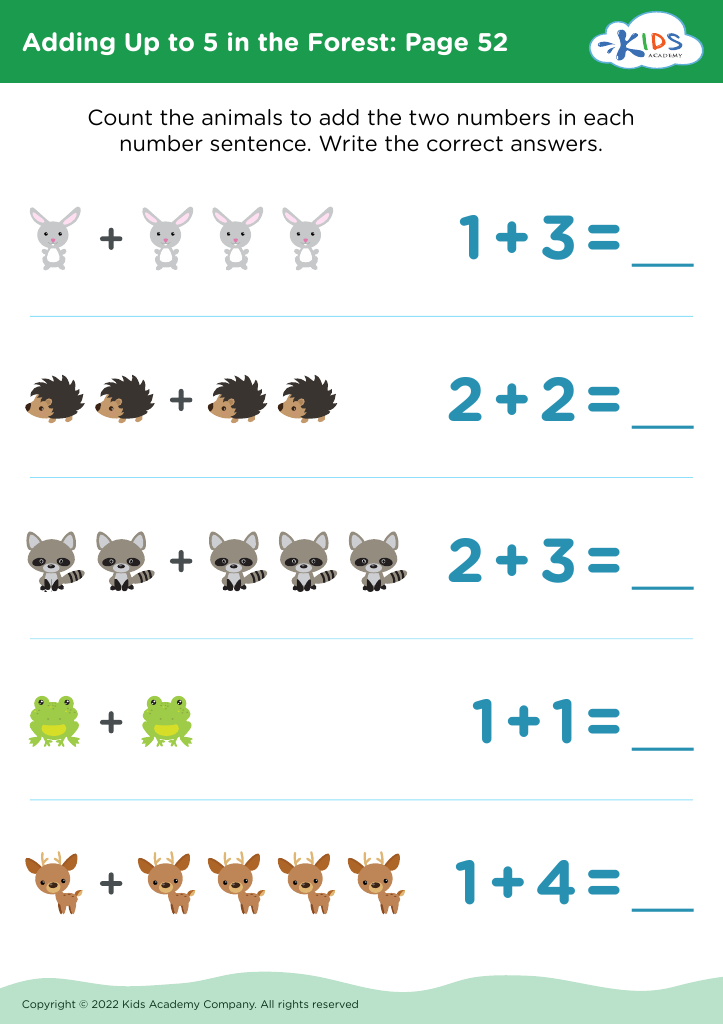
Adding Up to 5 in the Forest: Page 52
Worksheet
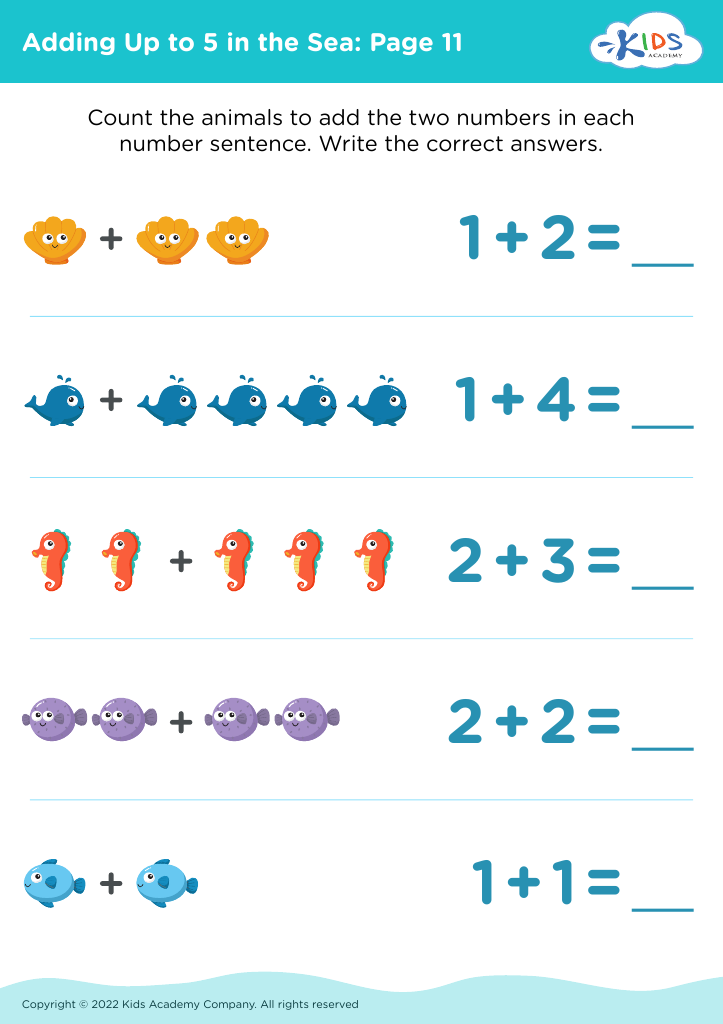
Adding Up to 5 in the Sea: Page 11
Worksheet
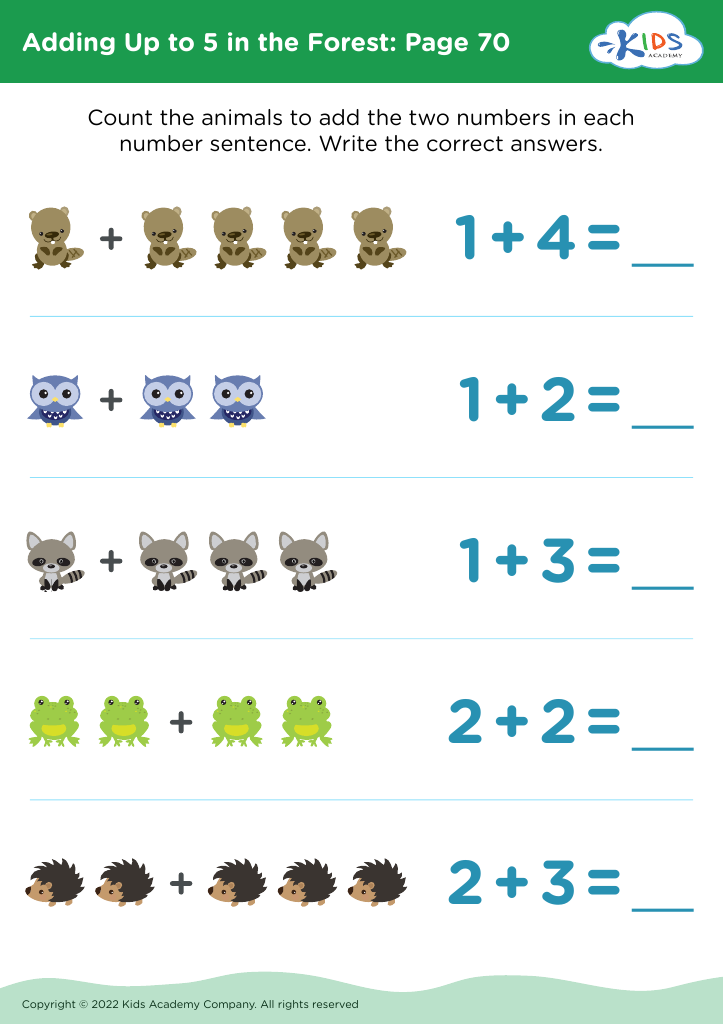
Adding Up to 5 in the Forest: Page 70
Worksheet
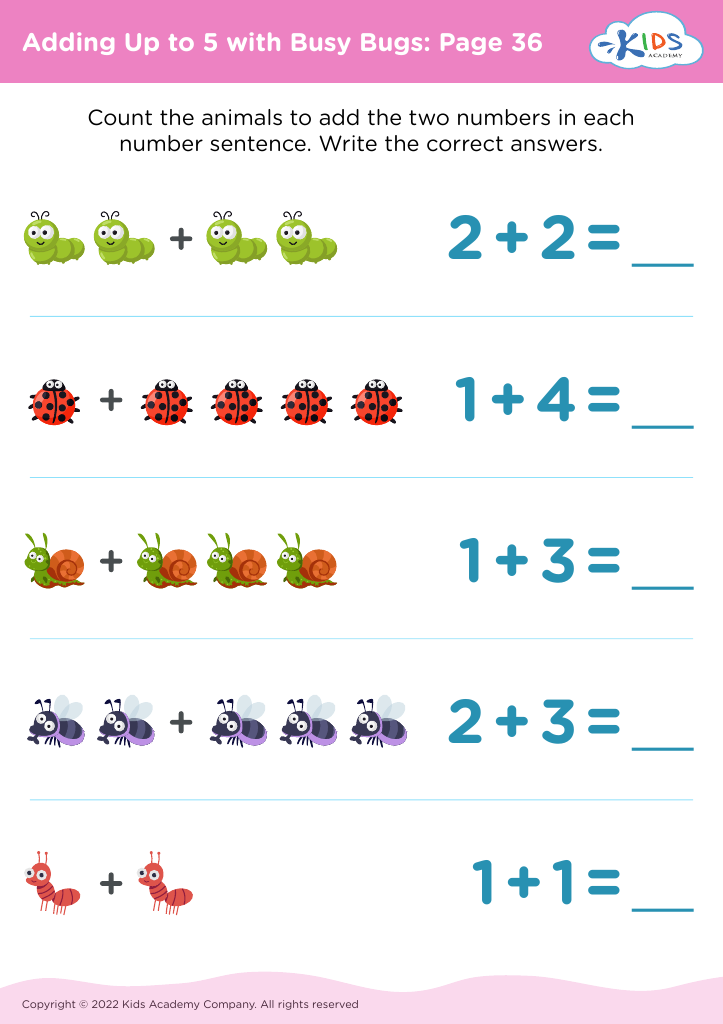
Adding Up to 5 with Busy Bugs: Page 36
Worksheet
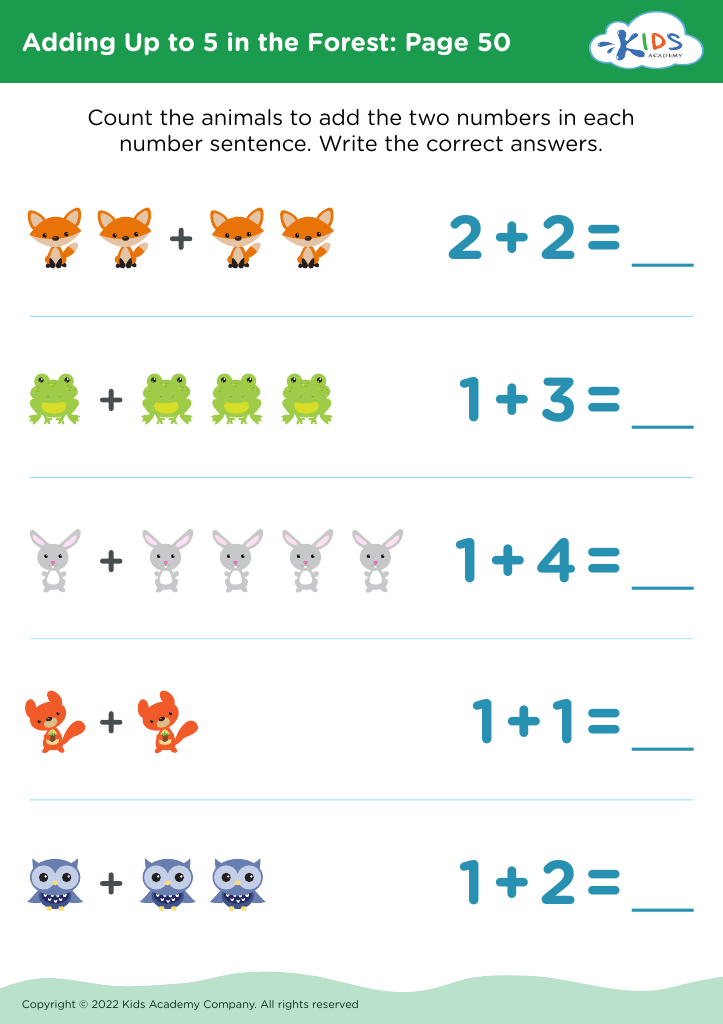
Adding Up to 5 in the Forest: Page 50
Worksheet
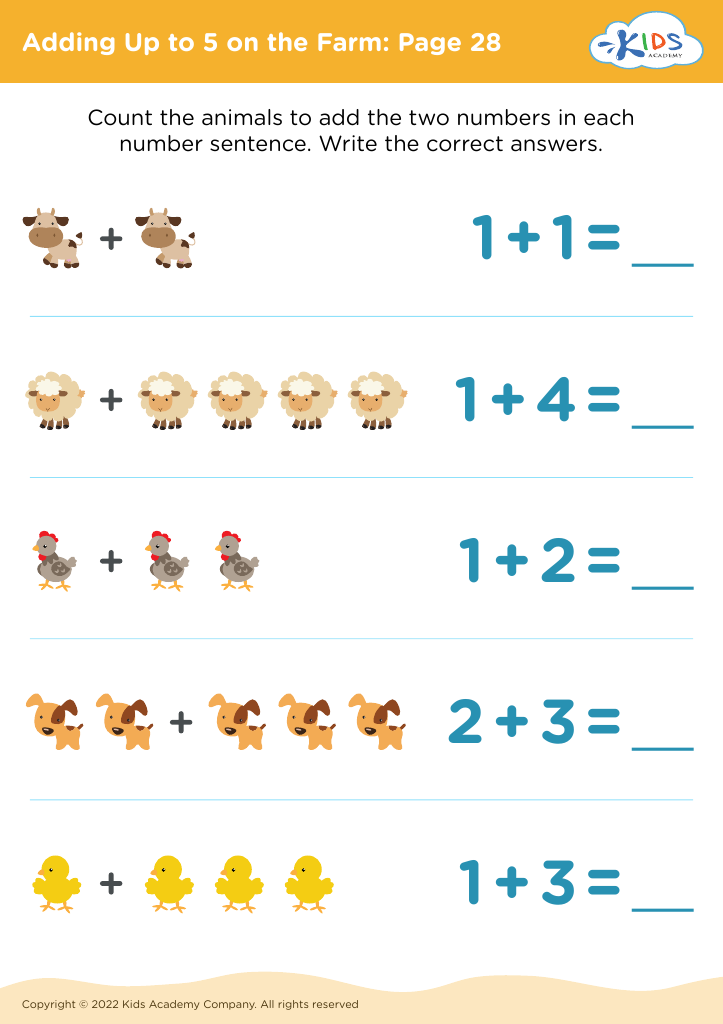
Adding Up to 5 on the Farm: Page 28
Worksheet
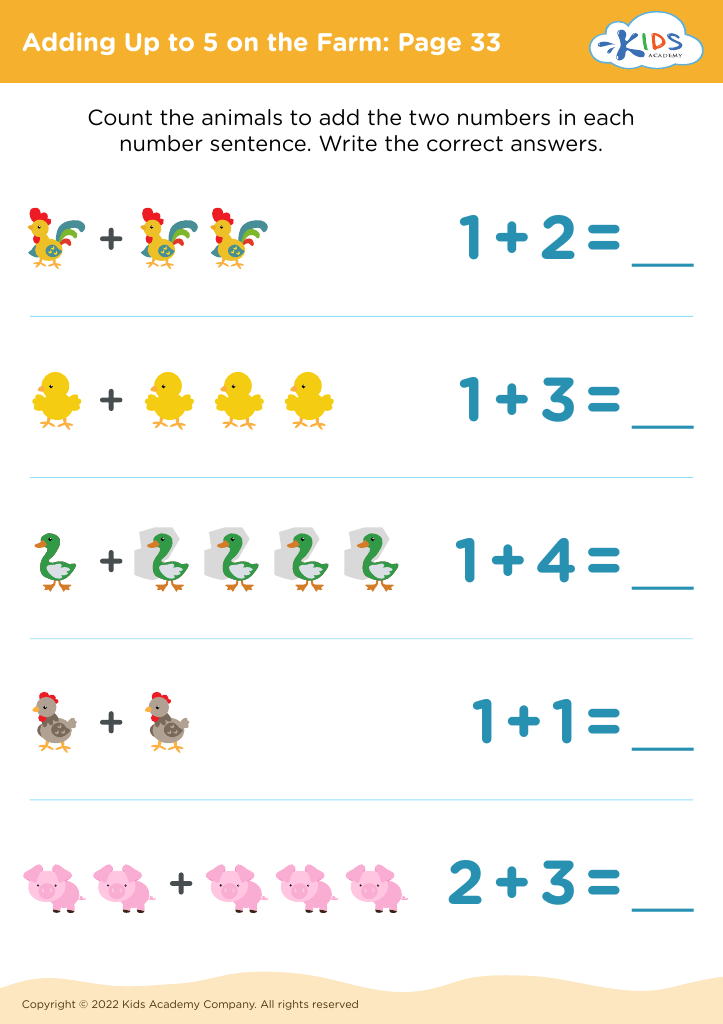
Adding Up to 5 on the Farm: Page 33
Worksheet
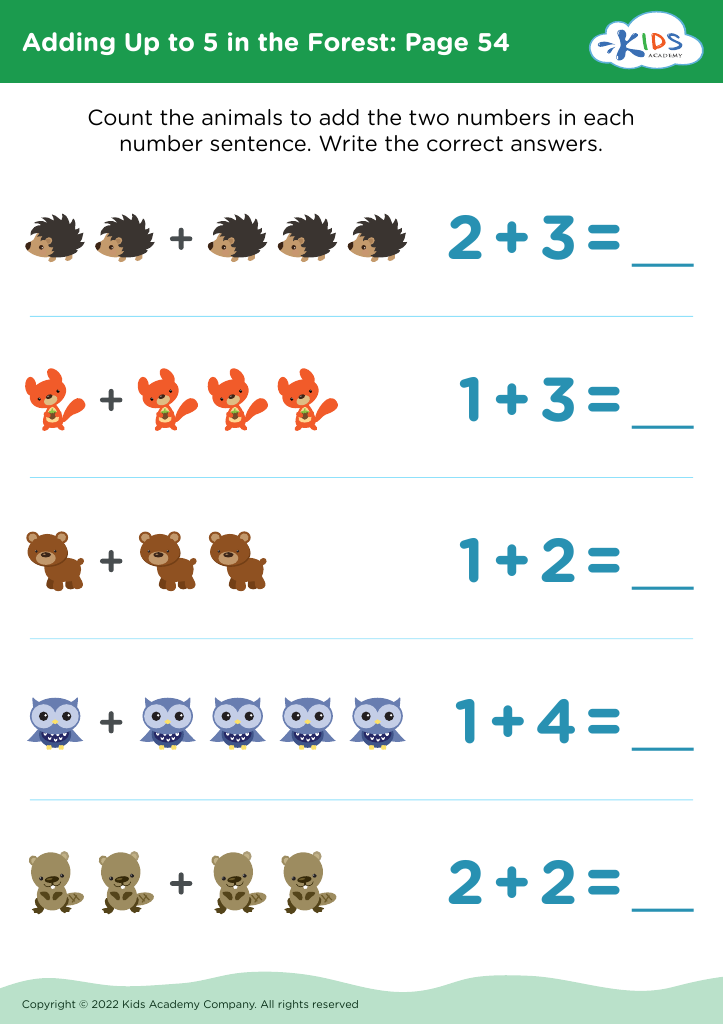
Adding Up to 5 in the Forest: Page 54
Worksheet
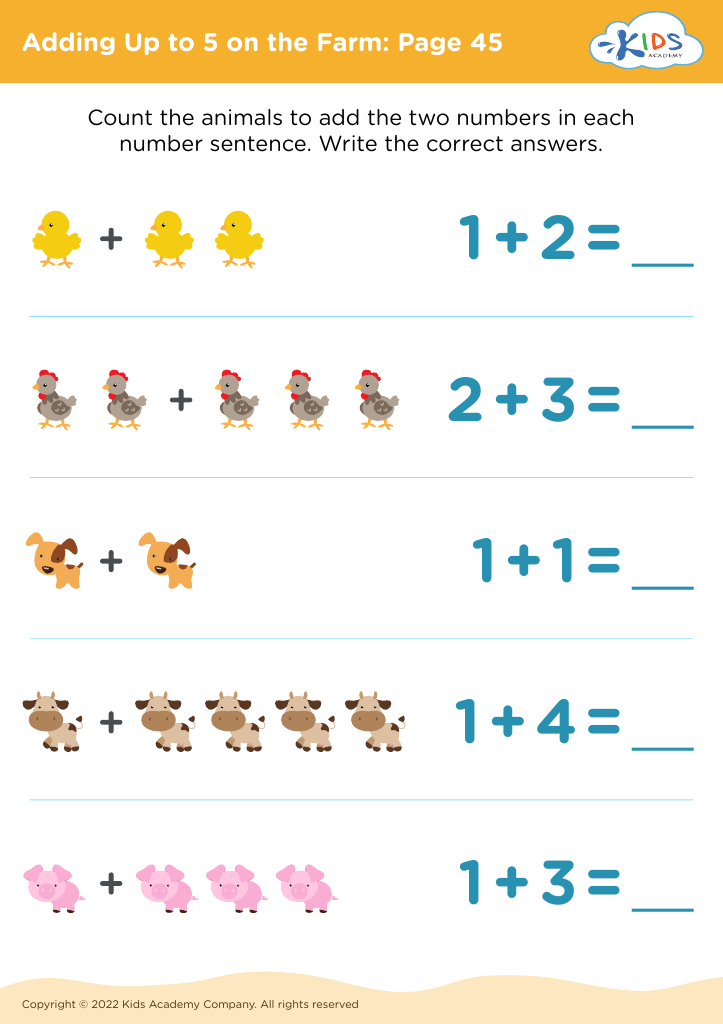
Adding Up to 5 on the Farm: Page 45
Worksheet
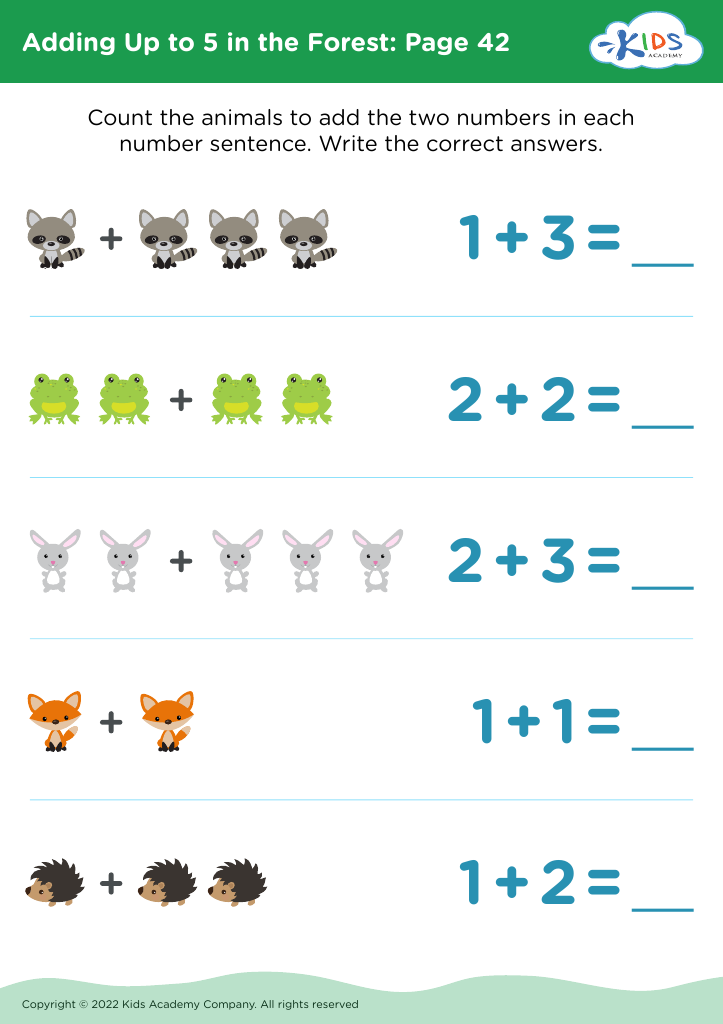
Adding Up to 5 in the Forest: Page 42
Worksheet
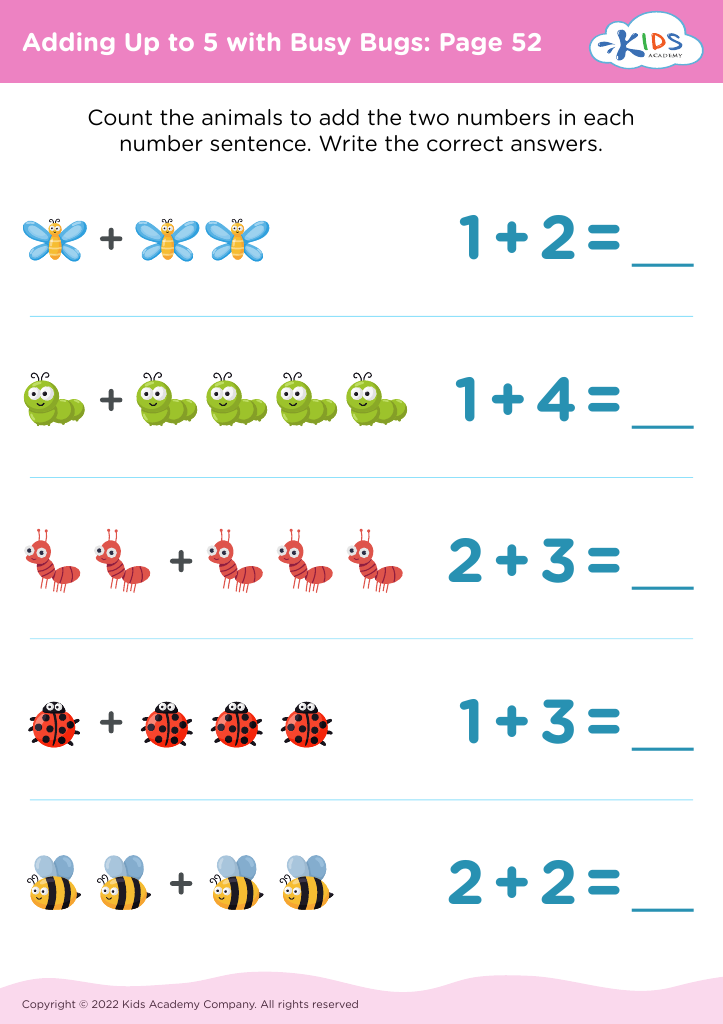
Adding Up to 5 with Busy Bugs: Page 52
Worksheet


Fostering problem-solving skills that involve adding up to 5 for children aged 3-6 is crucial for several reasons. Firstly, at this formative stage, young children are rapidly developing their cognitive abilities, so introducing numerical problem-solving in a simple manner lays the foundation for more advanced mathematical concepts. Using familiar and manageable numbers helps solidify their understanding of addition, an essential building block for future arithmetic skills.

Developing these problem-solving skills enhances cognitive growth by encouraging logical thinking, pattern recognition, and the practical application of concepts. When children successfully solve problems, they build confidence, which motivates them to tackle more complex challenges.

Additionally, problem-solving equips children with essential life skills, such as perseverance, critical thinking, and adaptability. As they work through simple addition problems, they learn to approach challenges systematically and search for solutions, skills that are beneficial beyond mathematics.

By caring about their children's or students' ability to solve problems using addition, parents and teachers are nurturing intellectual curiosity and a love for learning. Furthermore, these early experiences with basic math concepts make subsequent educational endeavors more approachable and less intimidating.

Empowering young learners with these foundational skills creates a positive and proactive attitude toward learning and problem-solving, which are pivotal in their overall academic and personal development.