Understanding number relationships Adding Up to 5 Worksheets for Ages 3-6
3 filtered results
-
From - To
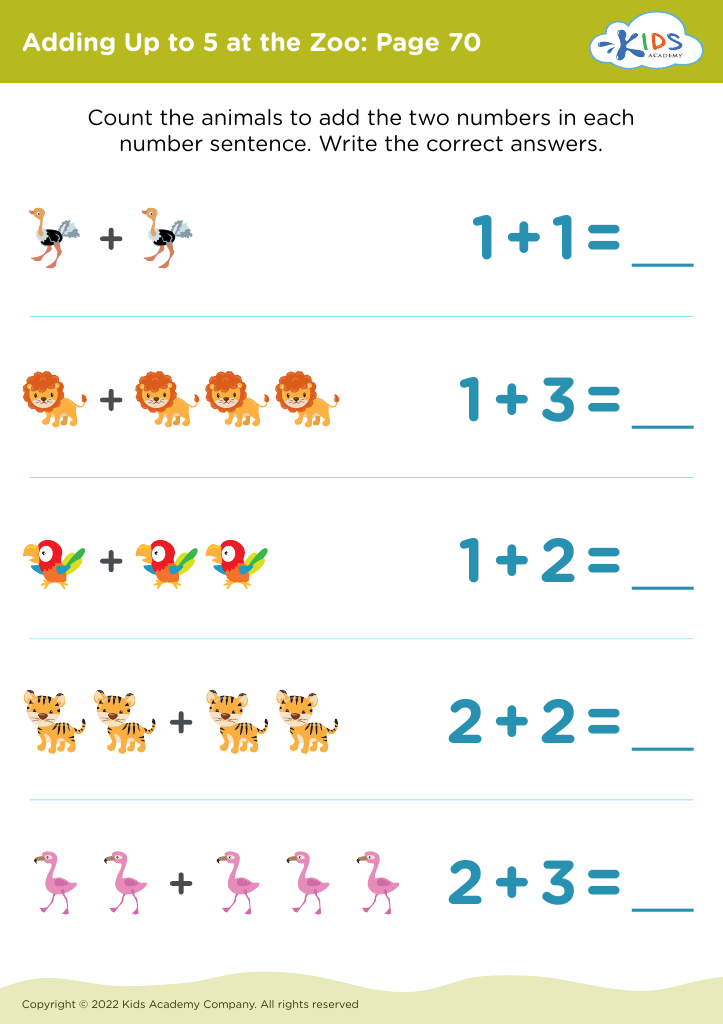
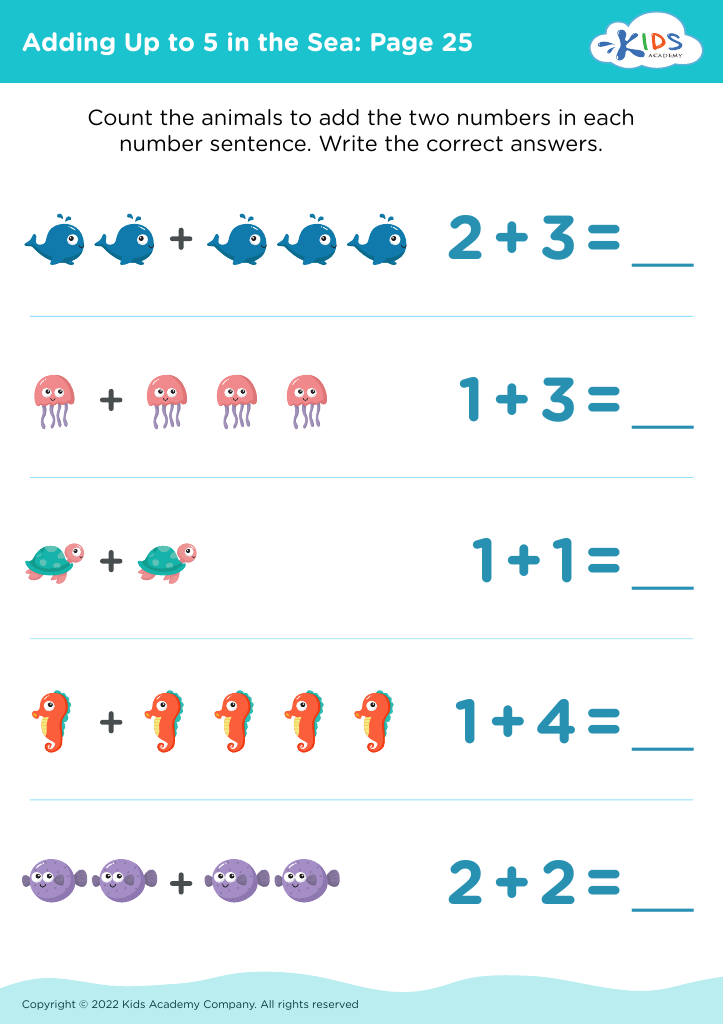
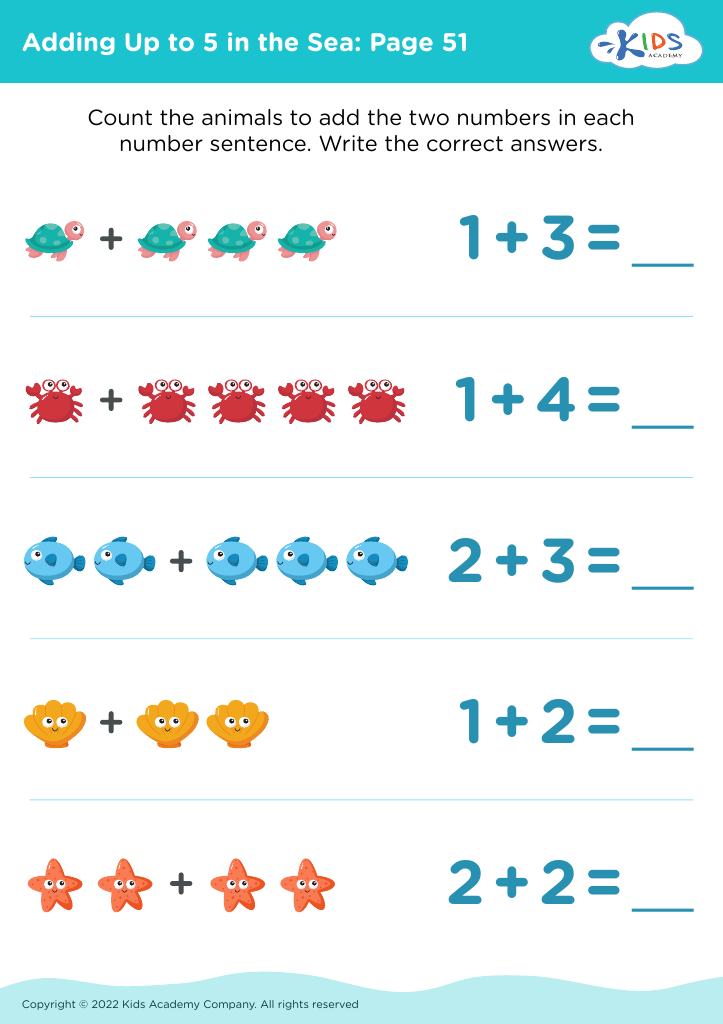
Welcome to our "Understanding Number Relationships: Adding Up to 5 Worksheets" page, designed specifically for children aged 3-6. These engaging worksheets help young learners grasp fundamental math concepts by exploring how numbers relate to one another through simple addition exercises. By practicing with fun and interactive activities, children will develop a strong foundation in counting and number recognition while boosting their confidence in math skills. These resources encourage hands-on learning and play, making math both enjoyable and educational. Start your child's journey to mastering number relationships today with our thoughtfully crafted worksheets tailored for early learners!






.jpg)

Understanding number relationships, particularly in the context of "Adding Up to 5," is crucial for children aged 3-6. At this developmental stage, children are forming the foundational skills necessary for mathematical thinking. Mastering how numbers relate to each other sets the groundwork for more complex concepts, such as addition, subtraction, and eventually more advanced arithmetic.
By focusing on adding up to 5, caregivers help children grasp essential number sense. This understanding enables kids to recognize patterns, make connections between numbers, and understand concepts like "more than" and "less than." It also fosters problem-solving skills, as children learn to navigate different equations and find multiple ways to reach the same total.
Moreover, engaging with these concepts in a playful and supportive environment builds confidence and a positive attitude toward math. As students experience success, they develop a love for learning, which influences their academic journey. For parents and teachers, investing time in these early number relationships cultivates strong math skills and promotes a lifetime of critical thinking and analytical reasoning, ultimately yielding benefits that extend beyond the classroom. Encouraging this understanding is not just about teaching math; it’s about empowering children with essential life skills.








