Visual learning enhancement Adding Up to 5 Worksheets for Ages 3-6
4 filtered results
-
From - To
Boost your child's visual learning with our “Adding Up to 5 Worksheets" designed for ages 3-6! These engaging worksheets utilize vibrant colors and fun images to captivate young learners while enhancing their understanding of basic math concepts. By combining visual stimuli with interactive tasks, children can develop essential counting and addition skills intuitively. Ideal for homeschooling or supplemental education, these worksheets are perfect for fostering a love for numbers in a playful yet educational environment. Encourage your child’s confidence in math through visual reinforcement and make learning fun! Explore our collection today and watch them thrive in their mathematical journey!
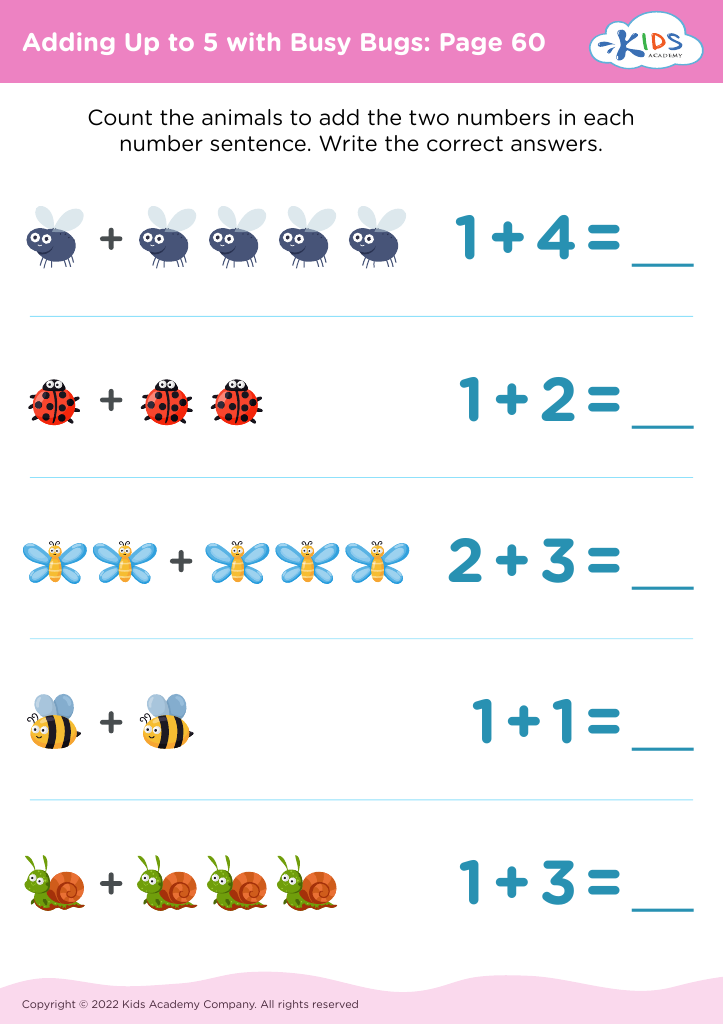
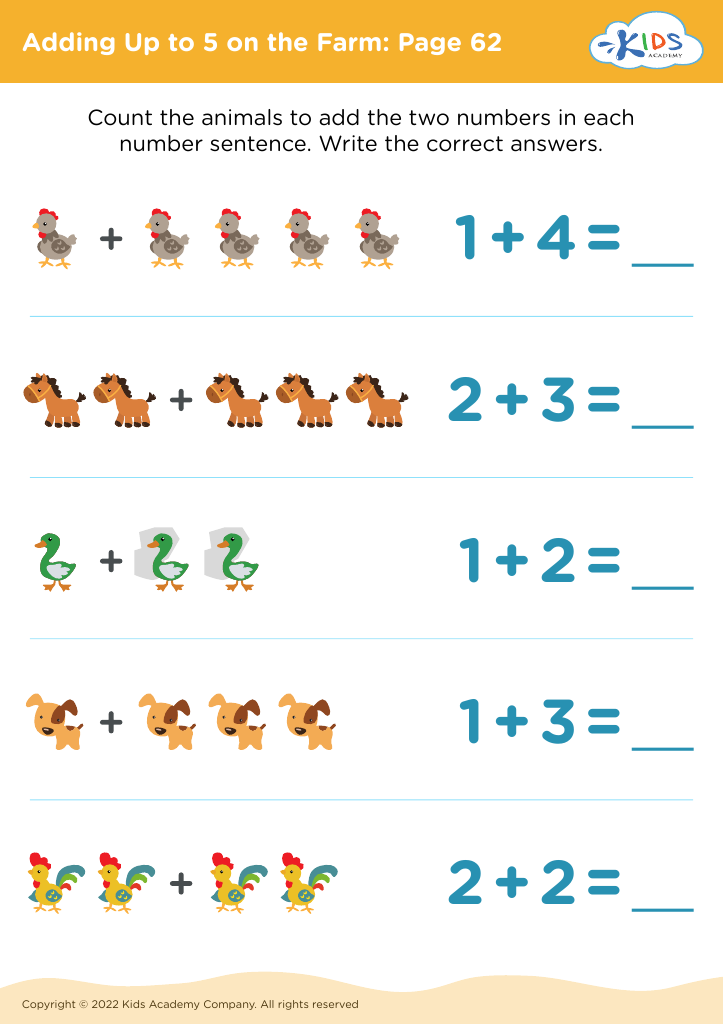
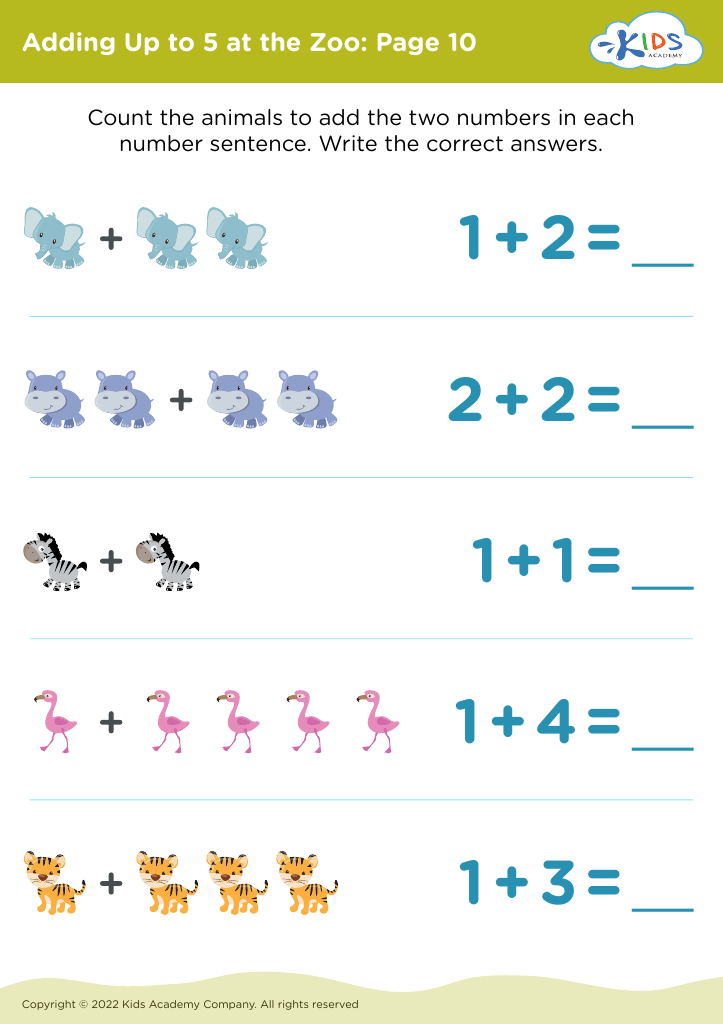
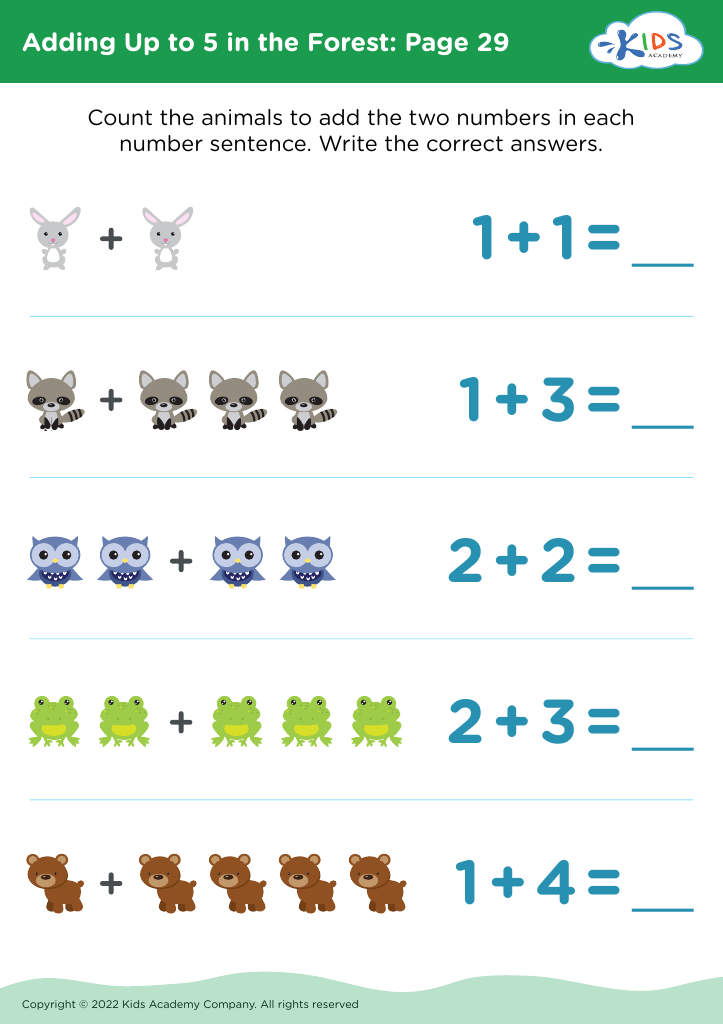








Visual learning enhancement for young children, especially in foundational subjects like math, is crucial for developing cognitive skills. For children aged 3-6, visual aids help them grasp the concept of numbers and understand how to add up to 5 in a tangible way. This method caters to the dominant learning styles of many young children, who often comprehend information better through pictures, diagrams, and hands-on activities.
Through visual learning, teachers and parents can present math concepts in relatable and engaging ways, utilizing pictorial items such as counting blocks, number lines, or illustrations. This approach not only makes learning enjoyable but also fosters a love for math from an early age. Encouraging children to visualize numbers helps establish strong foundational skills, prepping them for more complex math problems later on.
Moreover, visual learning cultivates critical thinking and problem-solving abilities. As children manipulate visual tools to solve addition problems, they develop analytical skills and gain confidence in their ability to work with numbers. Overall, incorporating visual learning strategies into early math education can greatly enhance understanding, retention, and enthusiasm for learning, laying a strong educational foundation that benefits students throughout their academic journey.








