Filters

84 filtered results

Clear all filters
Favorites
With answer key
Interactive

84 filtered results

Difficulty Level

Grade


Check out this FREE Trial Lesson on Adding Up to 5 for age 3-6!

A

Favorites
With answer key
Interactive
  • 3-6
  • Visual Learning
  • Adding Up to 5
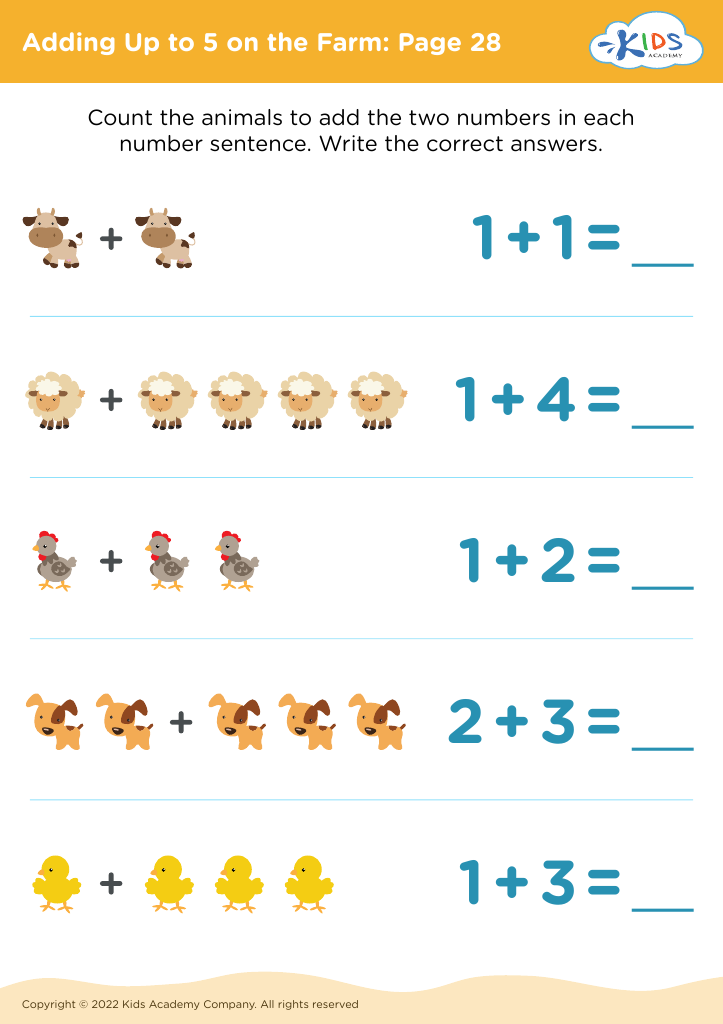
Adding Up to 5 on the Farm: Page 28
Worksheet
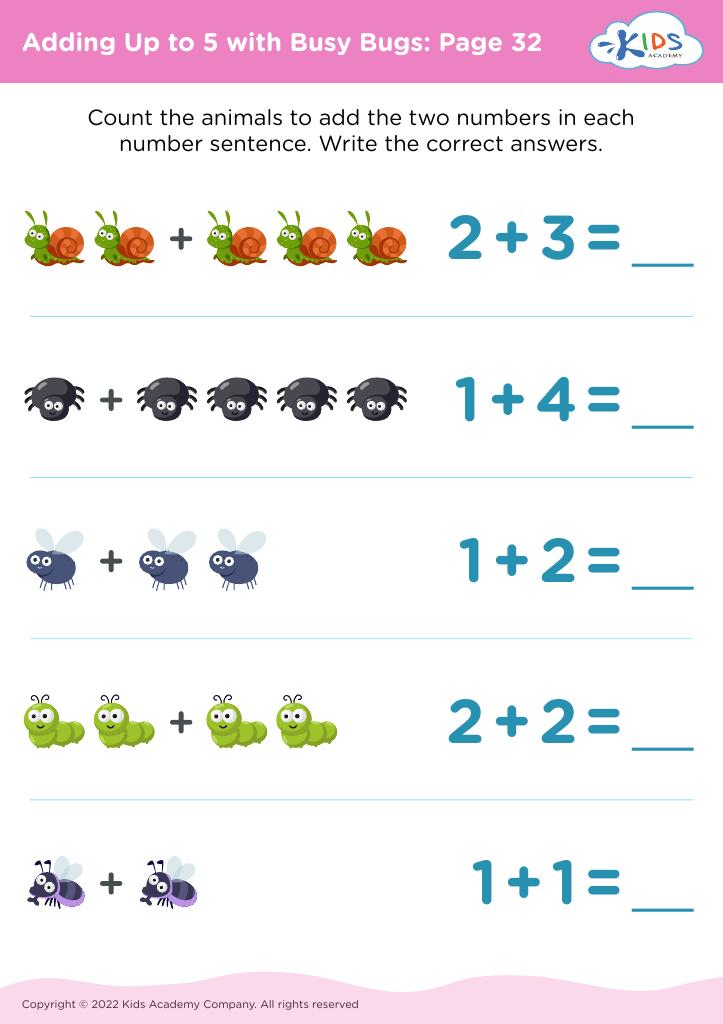
Adding Up to 5 with Busy Bugs: Page 32
Worksheet
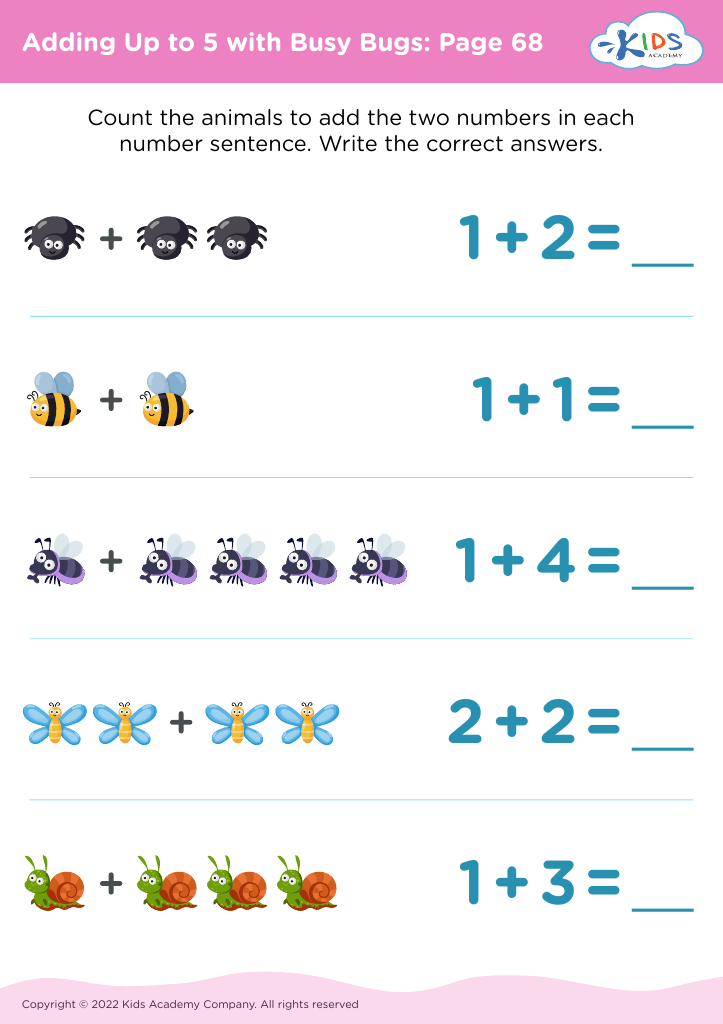
Adding Up to 5 with Busy Bugs: Page 68
Worksheet
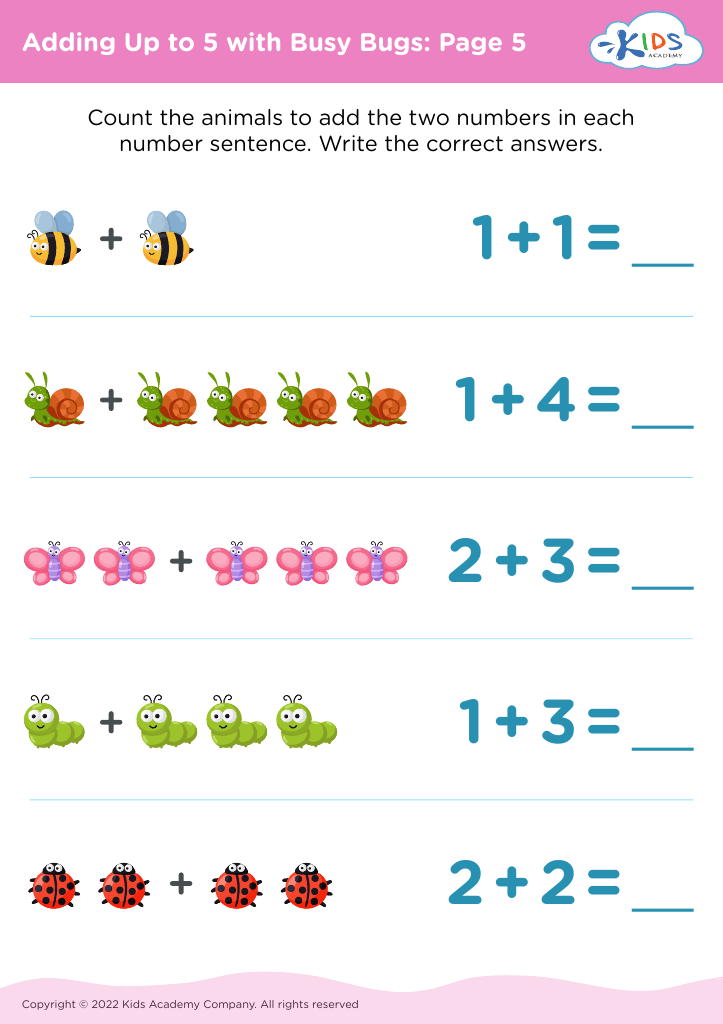
Adding Up to 5 with Busy Bugs: Page 5
Worksheet
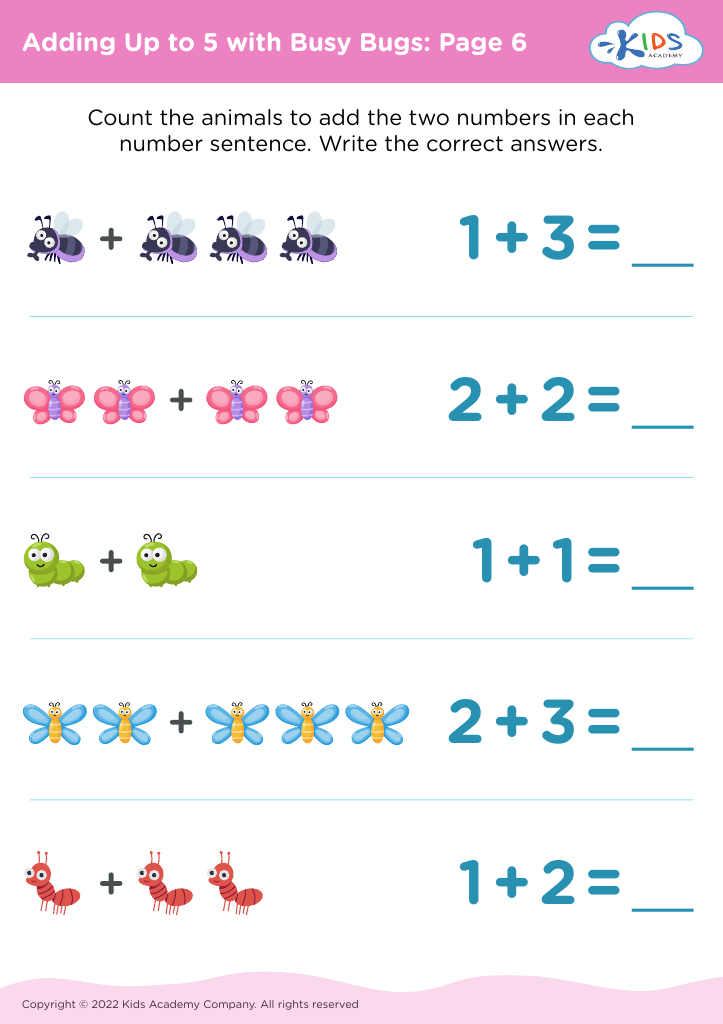
Adding Up to 5 with Busy Bugs: Page 6
Worksheet
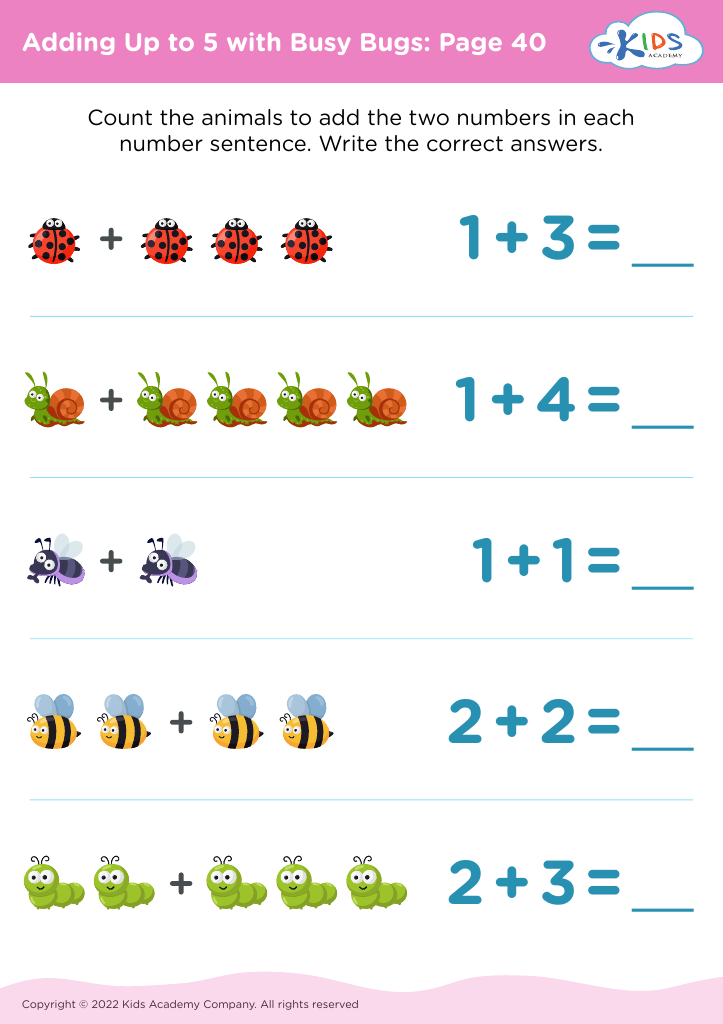
Adding Up to 5 with Busy Bugs: Page 40
Worksheet
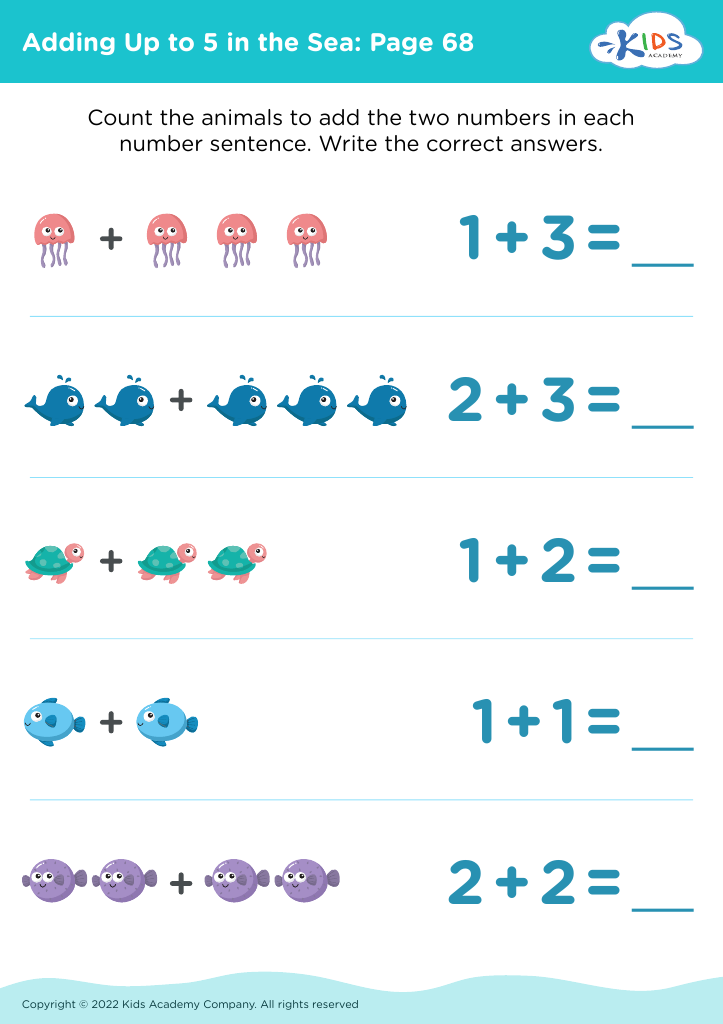
Adding Up to 5 in the Sea: Page 68
Worksheet
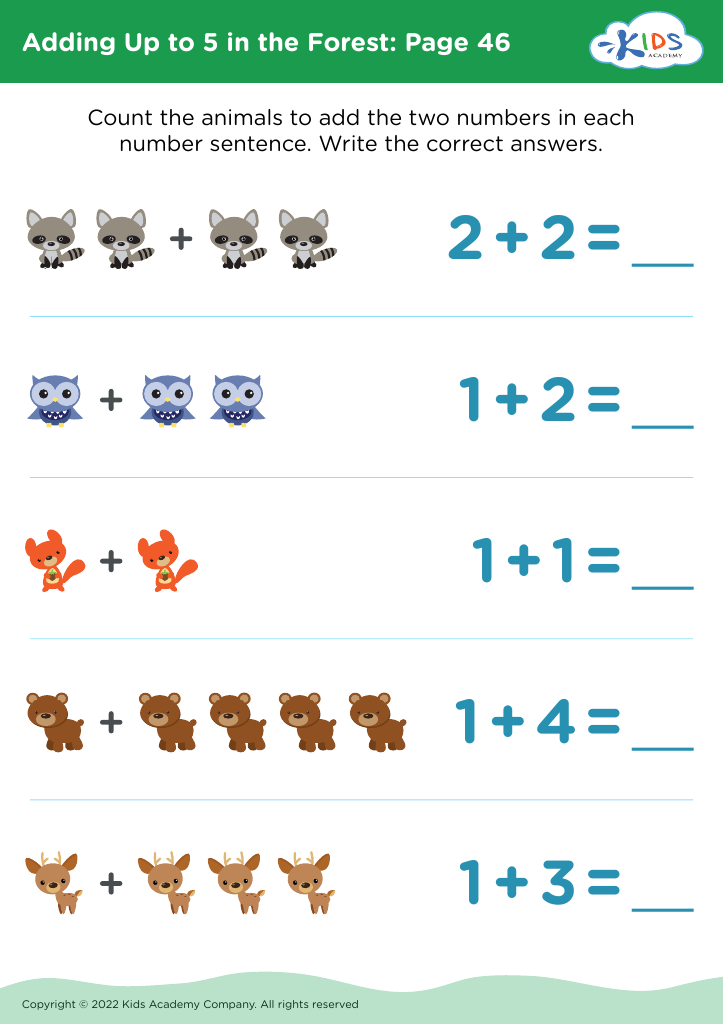
Adding Up to 5 in the Forest: Page 46
Worksheet
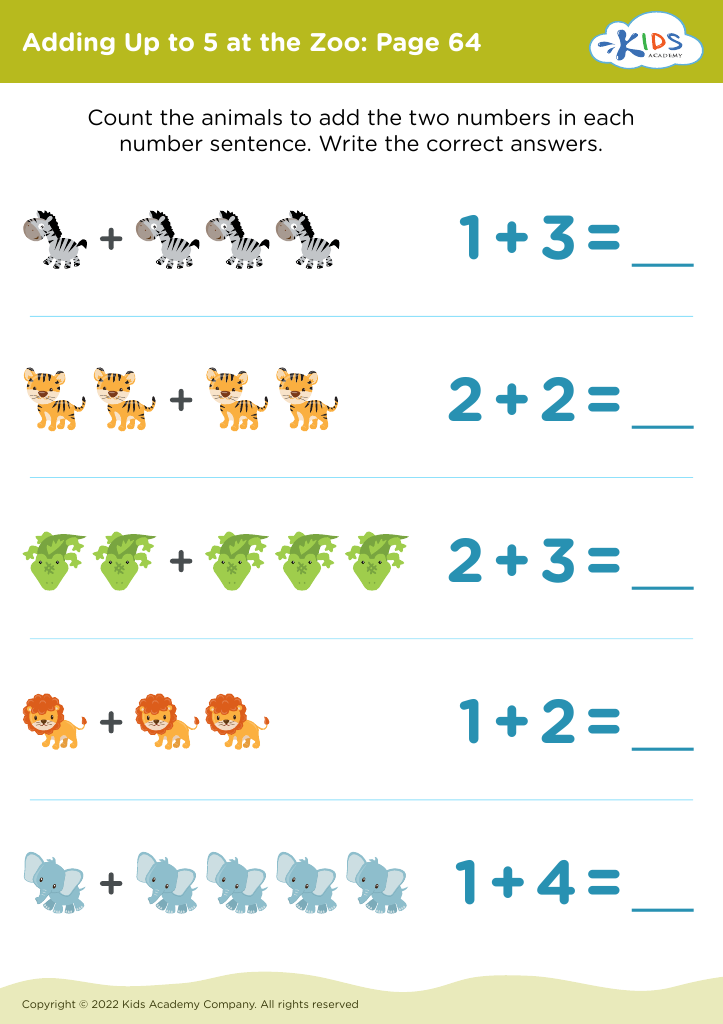
Adding Up to 5 at the Zoo: Page 64
Worksheet
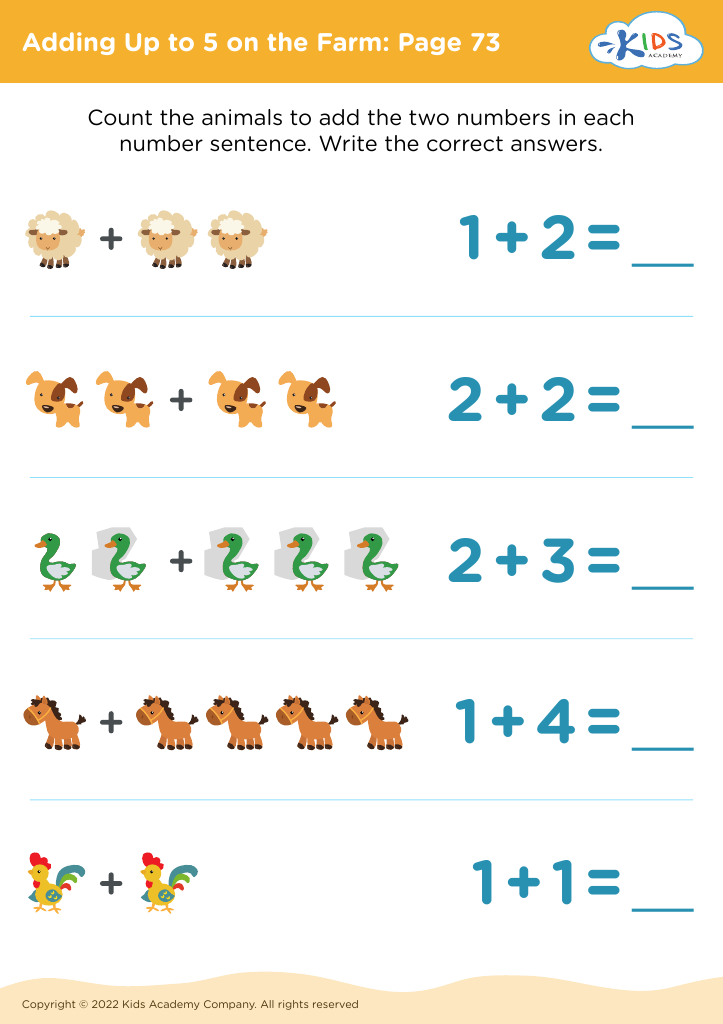
Adding Up to 5 on the Farm: Page 73
Worksheet
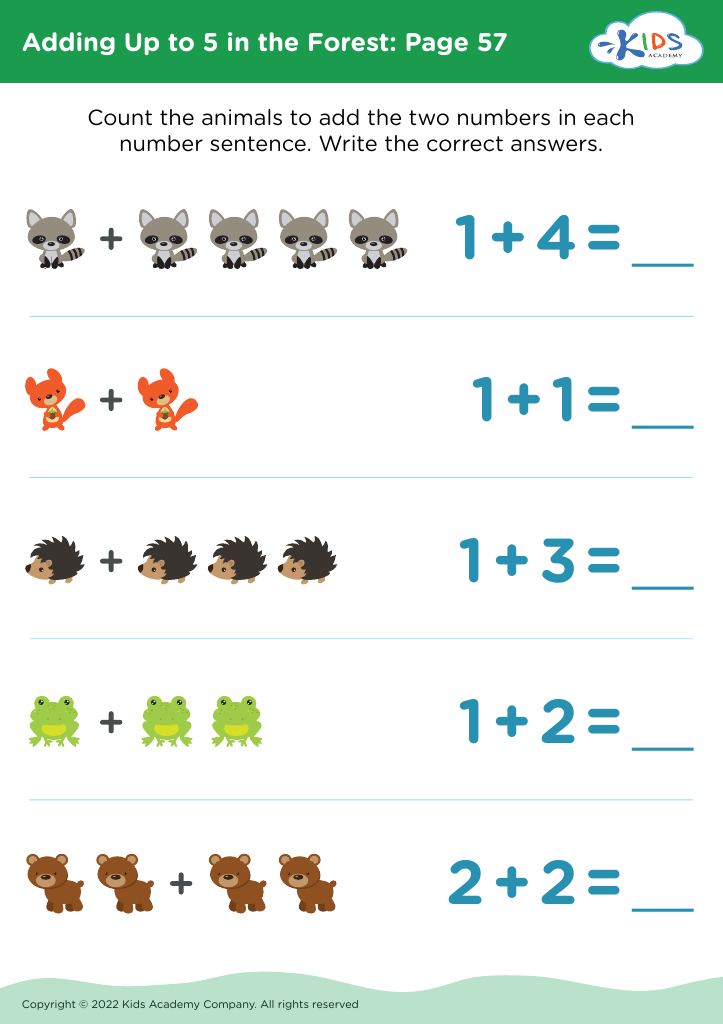
Adding Up to 5 in the Forest: Page 57
Worksheet
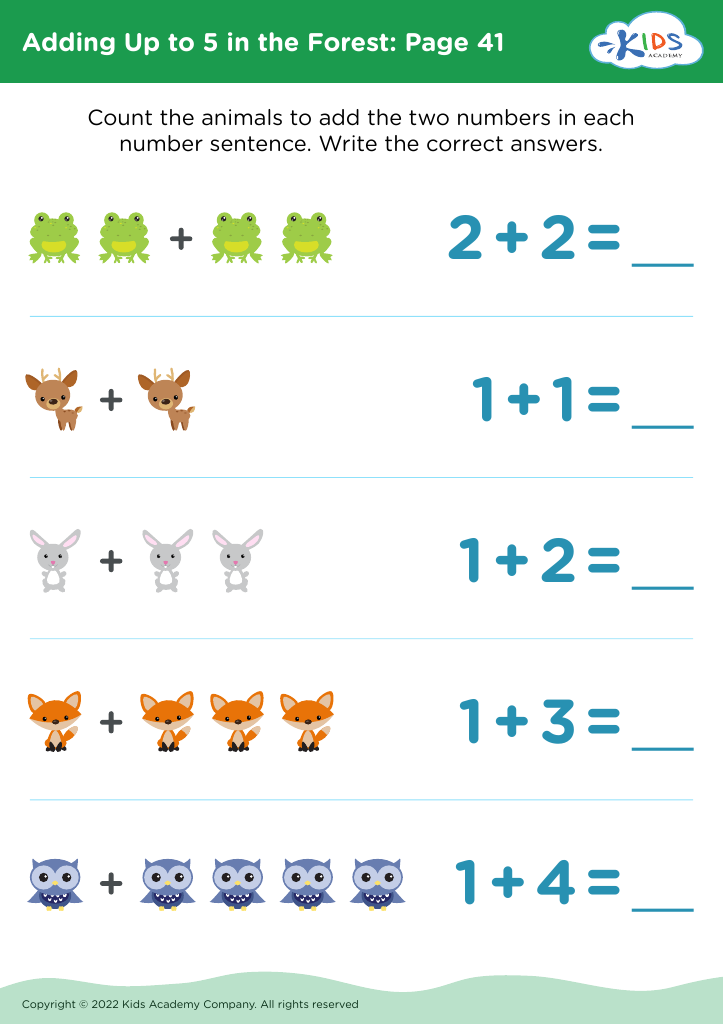
Adding Up to 5 in the Forest: Page 41
Worksheet


... 3 4

Visual learning is crucial for children aged 3-6, particularly when it comes to foundational concepts like adding up to 5. At this developmental stage, children are naturally curious and highly receptive to visual stimuli, which makes engaging them through sight particularly effective. Visual learning aids, such as colorful counters, diagrams, or interactive games, provide concrete representations of abstract numerical concepts. This approach helps young learners develop critical thinking and problem-solving skills in a way that is both enjoyable and relatable.

Understanding addition through visual methods encourages children to explore mathematical relationships, recognize patterns, and foster a growth mindset towards mathematics. This helps alleviate math-related anxieties that often develop later in life. Furthermore, visuals cater to various learning styles—whether a child is a visual, auditory, or kinesthetic learner—and can accommodate different paces of learning.

By applying visual aids in adding up to 5, teachers and parents can lay a solid mathematical foundation. This not only promotes early numeracy but also helps strengthen overall cognitive development by enhancing memory, attention, and comprehension skills. Ultimately, supporting visual learning creates a positive and engaging environment where young children can thrive in their mathematical journeys.