Hand-eye Coordination Adding with Busy Bugs Worksheets for Ages 3-6
5 filtered results
-
From - To
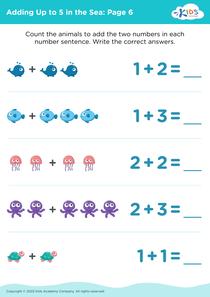
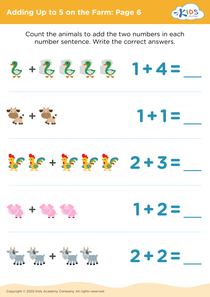
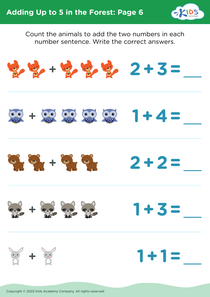
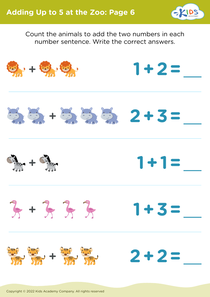
Enhance your child's hand-eye coordination and basic math skills with our "Hand-eye Coordination Adding with Busy Bugs" worksheets designed for ages 3-6. These engaging worksheets utilize colorful bug characters to make learning addition fun and interactive. Each activity promotes fine motor skills as children trace, color, and count, reinforcing their understanding of simple math concepts through hands-on practice. Tailored for young learners, these printable resources encourage critical thinking and problem-solving while keeping children entertained. Support your child's early development with our Busy Bugs worksheets, merging playful learning with essential educational skills! Perfect for homeschooling or classroom use!
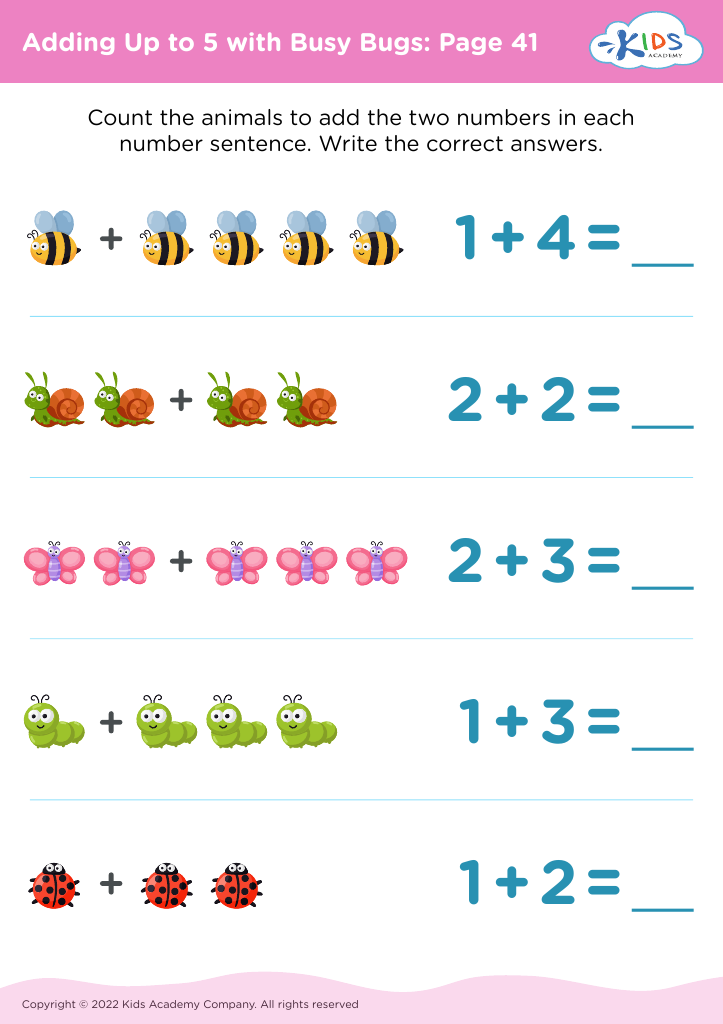
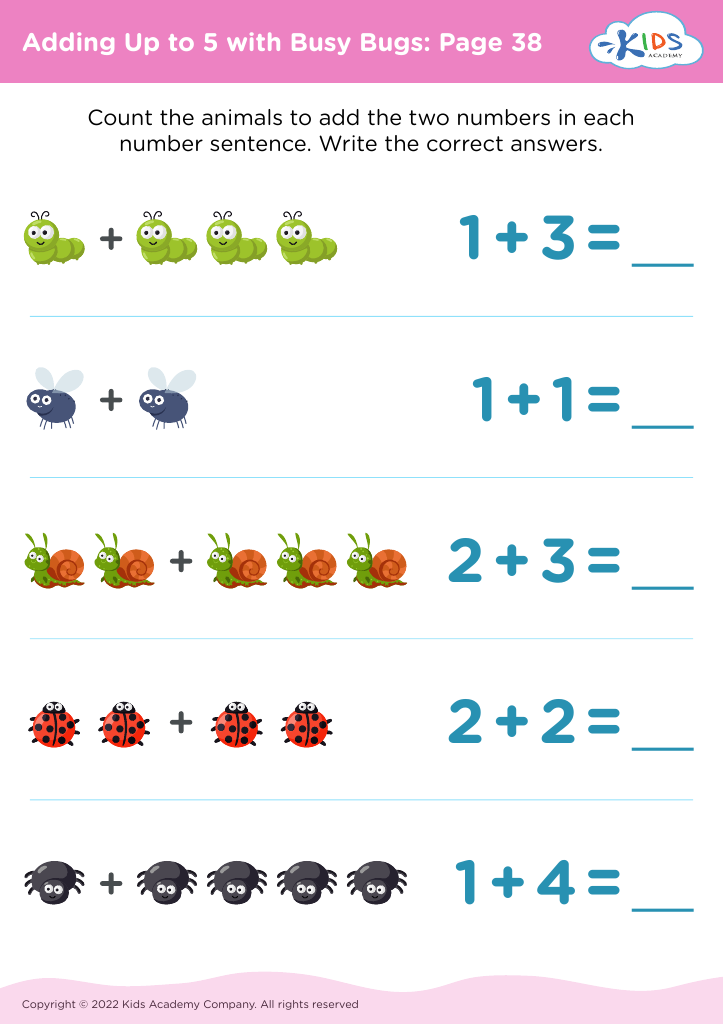
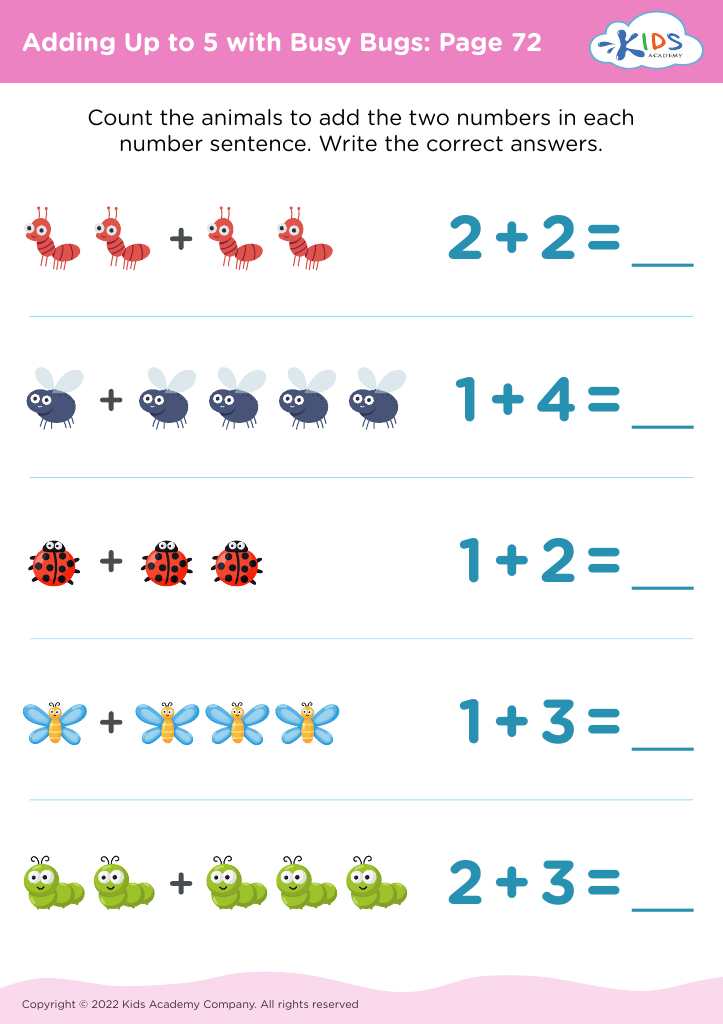
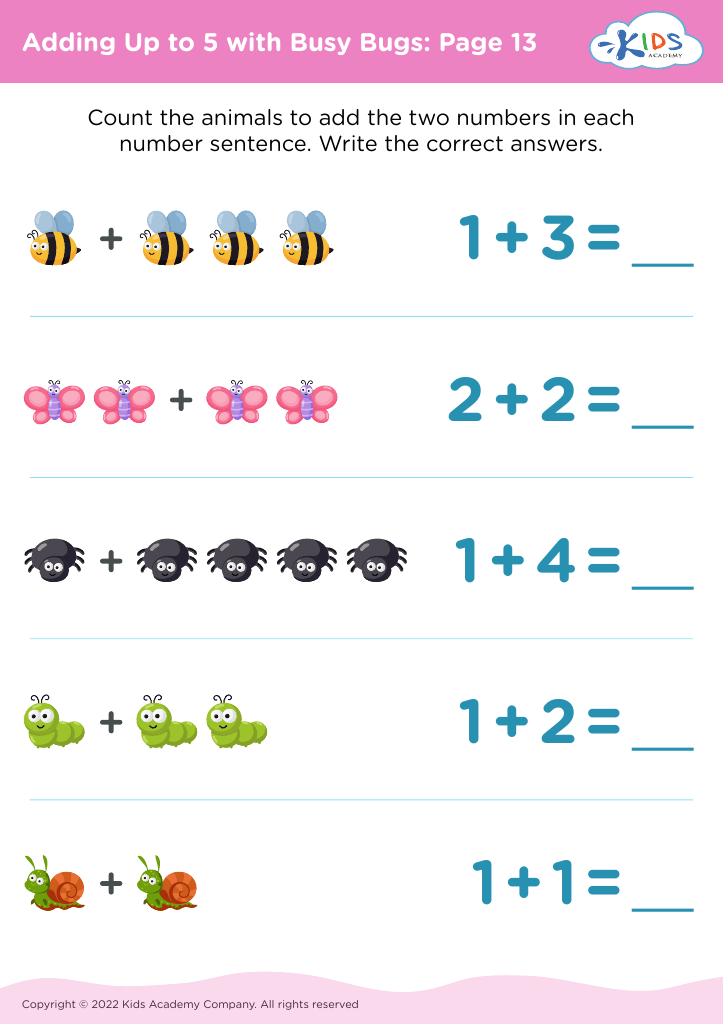
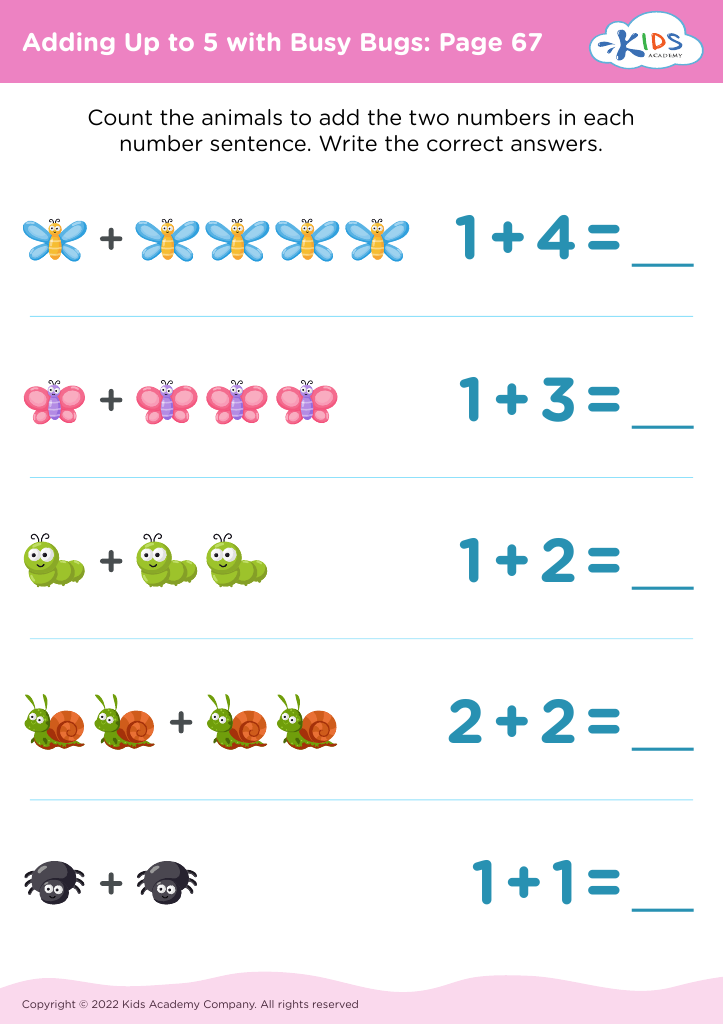



Hand-eye coordination is a crucial skill for young children, impacting their ability to perform everyday tasks and learn new skills. For children ages 3-6, developing this coordination lays the foundation for fine motor skills, which are essential for writing, drawing, and engaging in sports. Busy Bugs, an engaging activity designed for this age group, incorporates fun, interactive elements that help children practice their hand-eye coordination in a playful way.
Parents and teachers should care about these activities because they not only enhance motor skills but also stimulate cognitive development. As children engage with Busy Bugs, they learn to track moving objects, improve their focus, and develop problem-solving skills. This kind of interactive play encourages collaboration, communication, and social skills, as children often work together or compete in friendly challenges.
Furthermore, nurturing hand-eye coordination prepares children for more complex tasks as they grow, ultimately boosting their confidence and independence. By incorporating activities like Busy Bugs, parents and teachers can create a rich learning environment that fosters children's overall development, ensuring they are better equipped for future learning experiences and everyday life. Investing time in hand-eye coordination today can yield lasting benefits for children tomorrow.