Hand-eye Coordination Addition and Subtraction Word Problems Worksheets for Ages 3-6
3 filtered results
-
From - To
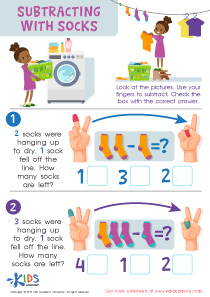
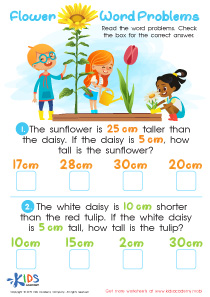
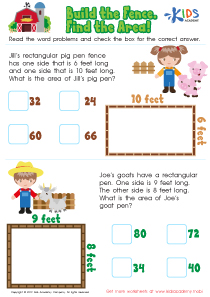
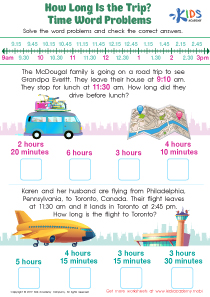
Enhance your child's mathematical abilities and fine motor skills with our "Hand-eye Coordination Addition and Subtraction Word Problems Worksheets for Ages 3-6." These engaging worksheets combine fun, interactive activities with essential math problems designed to improve your young learner's hand-eye coordination. Designed specifically for children ages 3 to 6, these printables make learning addition and subtraction exciting and accessible. Watch as your child's confidence and skills grow while solving kid-friendly word problems, drawing lines, and matching items. Ideal for at-home learning or classroom use, these worksheets are the perfect blend of education and play.
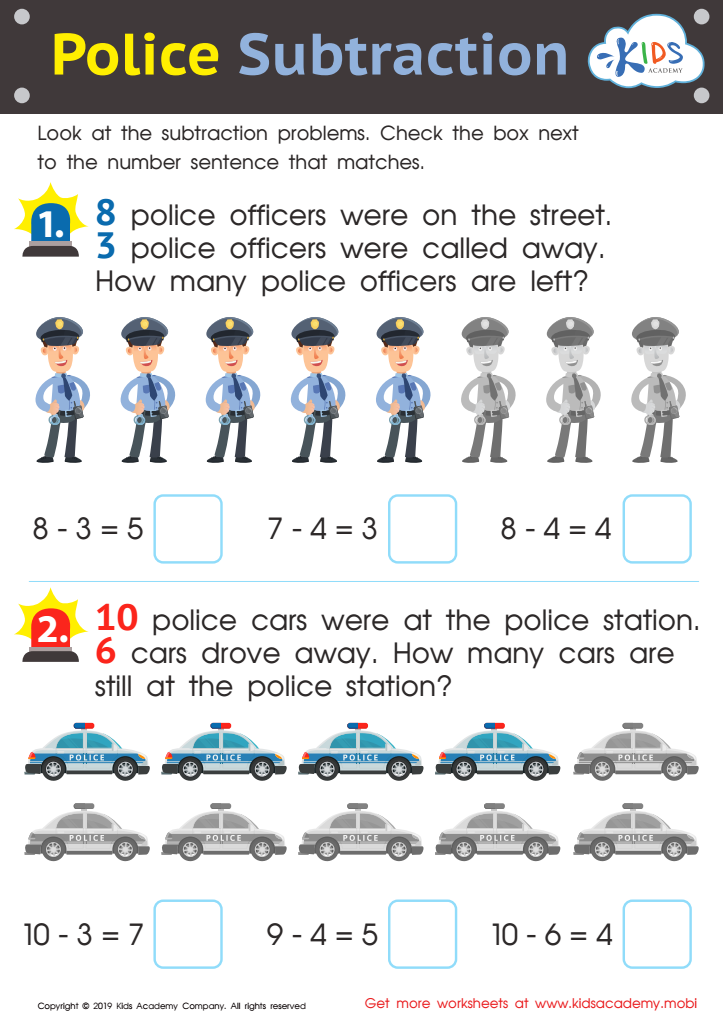
Police Subtraction Worksheet
 Assign to My Students
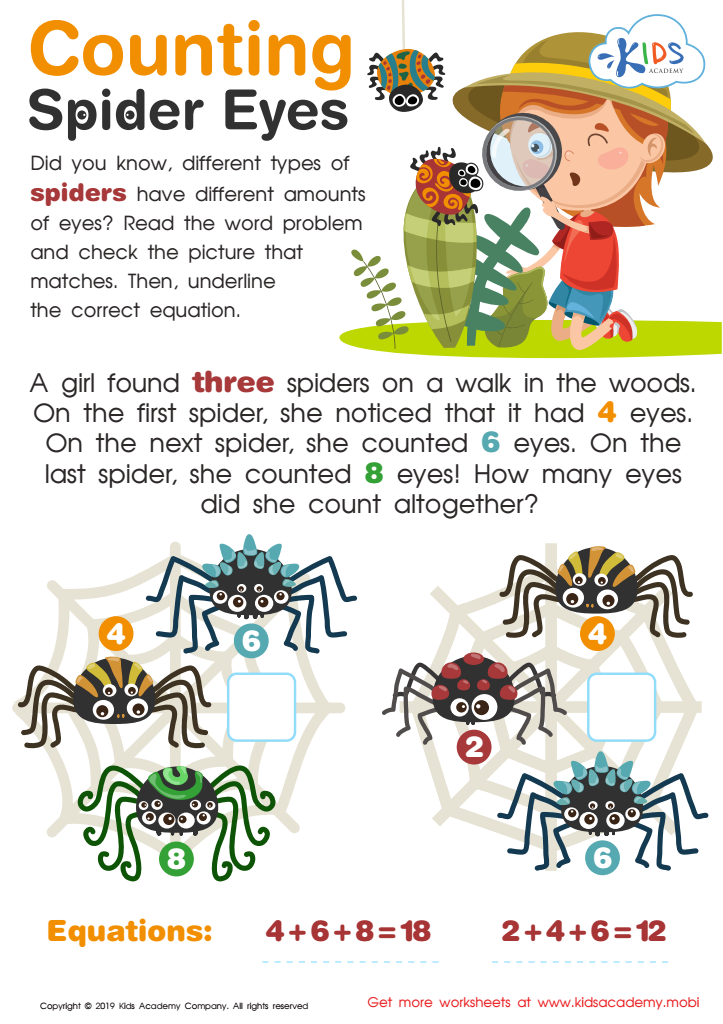
Counting Spider Eyes Worksheet
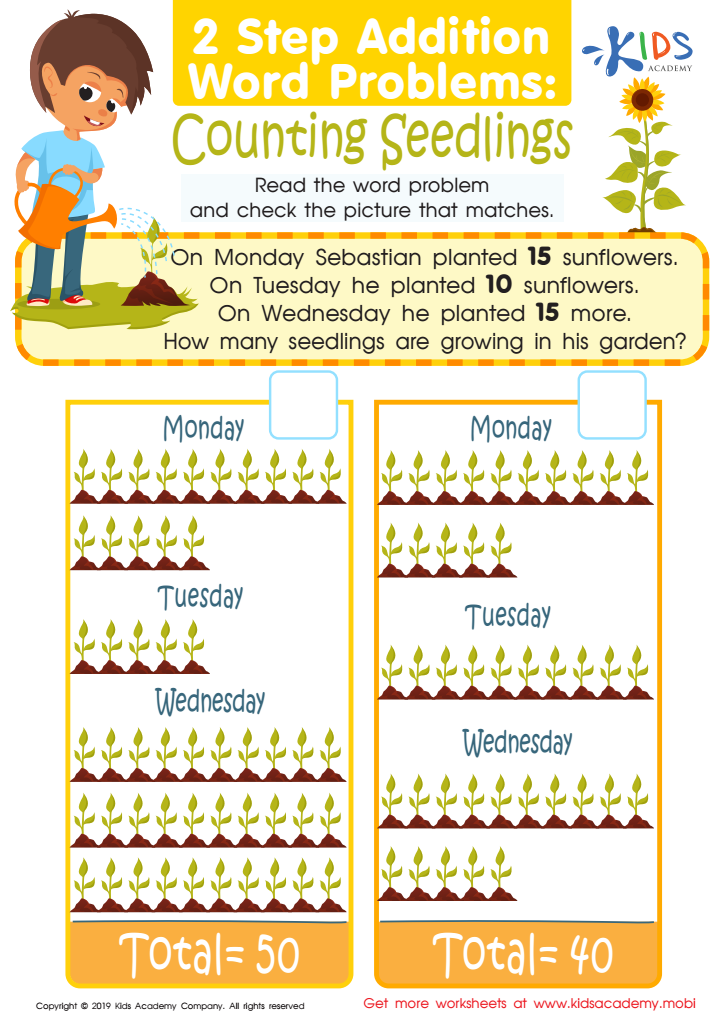
Counting Seedlings Worksheet








Hand-eye coordination addition and subtraction word problems are vital for children ages 3-6 because they integrate cognitive and motor skills development essential for overall growth. At this developmental stage, children are gaining foundational mathematical concepts while simultaneously refining their physical interactions with the world. Addressing both areas concurrently ensures a more holistic development.
Engaging in these problems enhances cognitive skills like counting, comparing, and problem-solving. As children manipulate objects to represent addition or subtraction scenarios, they tangibly grasp abstract mathematical concepts, fostering deeper understanding.
Simultaneously, hand-eye coordination is refined as kids physically move items, draw representations, or use educational tools. Strengthened hand-eye coordination is fundamental not just for math-related tasks, but for everyday activities such as writing, sports, and using technology.
Furthermore, these exercises can be enjoyable and interactive, encouraging children to develop a positive attitude toward math. This early enthusiasm for learning can set a foundation for future academic success.
For parents and teachers, focusing on these activities aligns with holistic educational philosophies, emphasizing intellect, motor skills, and emotional growth. By creating engaging and integrated learning experiences, kids are more likely to thrive both in and out of the classroom.